

We may earn a commission when you buy through links on this page, at no extra cost to you. Learn more.
When comparing chablis vs riesling, the main difference comes down to grape variety, sweetness spectrum, and flavor profile: Chablis is always a dry, mineral-driven 100% Chardonnay from northern Burgundy, while Riesling is an aromatic grape variety produced in styles ranging from bone-dry to lusciously sweet. Chablis delivers crisp notes of green apple, lemon peel, and crushed chalk with almost no oak influence. Riesling leans heavily into expressive orchard fruit, citrus, floral aromas, and lively, mouthwatering acidity that balances any residual sugar.
Both bottles sit firmly in the crisp, high-acid white wine camp, yet they bring completely different personalities to the table. Understanding how each wine is grown, fermented, and labeled makes it easy to pick the right pour for dinner or a casual evening glass, much like other classic white wine matchups in our Wine vs Wine series.
What It Is: Place vs. Grape Variety
The first distinction between these two white wines is conceptual: Chablis is a legally protected wine region in France where every bottle is made exclusively from Chardonnay, whereas Riesling is a specific grape variety grown in cool climates around the world.
Located in the northernmost corner of Burgundy, France, Chablis sits closer to the Champagne region than to the famous slopes of the Côte d’Or. Under French appellation laws, winemakers in Chablis may only plant and bottle Chardonnay. Because the local climate is cool and marginal, the grapes ripen slowly, retaining brisk natural acidity and moderate alcohol levels below 14% ABV. Unlike many Californian or southern Burgundian Chardonnays, Chablis is rarely aged in new oak barrels, preserving a pure, linear profile.
Riesling, by contrast, is an ancient white grape variety native to Germany’s Rhine region. Because it is a grape name rather than a single geographic appellation, bottles labeled Riesling come from Germany, France’s Alsace region, Austria, Australia, New York’s Finger Lakes, and Washington State. Winemakers value Riesling for its late-ripening nature, winter hardiness, and ability to carry intense aromatic compounds alongside piercing natural acidity.
Another fundamental contrast lies in residual sugar. Every official tier of French Chablis is fermented completely dry, meaning virtually no unfermented grape sugar remains in the finished wine. Riesling spans the entire sweetness spectrum, allowing producers to stop fermentation early to retain natural sweetness or ferment the juice all the way to dryness.
Flavor Profile and Style Spectrum
Chablis centers on subtle citrus, orchard fruit, and wet stone minerality, whereas Riesling bursts with expressive stone fruit, lime, floral aromatics, and a distinct petrol-like nuance as it ages.
According to guides from Wine Folly, classic Chablis shows aromas of lemon peel, green apple, quince, and white flowers over a taut, chalky backbone. Most producers ferment and age their wines in stainless steel tanks or neutral older casks, so you will not find heavy vanilla, toast, or buttery flavors. Depending on the vineyard tier—from Petit Chablis up through village Chablis, Premier Cru, and Grand Cru—the texture moves from razor-sharp and zesty to broader, more layered, and subtly savory.
Riesling is one of the world’s most aromatic white varieties. Young bottles typically display bright lime, green apple, white peach, apricot, jasmine, and honeycomb. A signature trait of mature or sun-exposed Riesling is a petroleum or beeswax aroma caused by a natural organic compound called TDN. On the palate, Riesling’s high acidity acts like a squeeze of fresh lemon juice, keeping even off-dry and sweet styles feeling lively rather than heavy or syrupy.
| Feature | Chablis | Riesling |
|---|---|---|
| Classification | French geographic appellation (AOC/AOP) | International white grape variety |
| Grape Used | 100% Chardonnay | 100% Riesling |
| Sweetness Level | Always dry | Bone-dry to dessert-sweet |
| Primary Flavors | Green apple, lemon peel, quince, chalk, wet stone | Lime, white peach, apricot, jasmine, honeycomb |
| Oak Influence | Rarely oaked; typically stainless steel or neutral cask | Virtually never new oak; stainless steel or large neutral fuder |
| Typical ABV | Around 12% to 13.5% | Around 7.5% to 9.5% (off-dry/sweet) or 11.5% to 13% (dry) |
| Serving Temperature | 45°F to 54°F (7°C to 12°C) | 38°F to 50°F (3°C to 10°C) |
Where Each Wine Grows
Chablis comes strictly from a cool, limestone-rich pocket of northern France, while Riesling thrives across multiple cool-climate wine regions in both Europe and the New World.
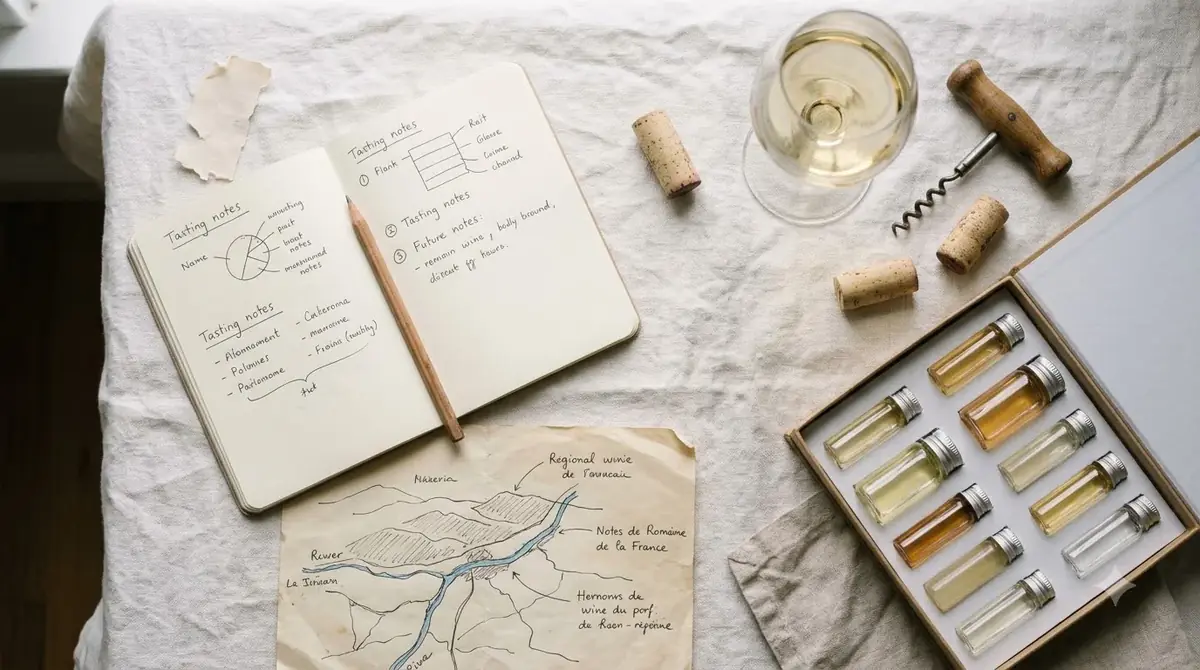
The secret behind Chablis’s unmistakable stony character is its soil. Hundreds of millions of years ago, during the Jurassic period, the region lay beneath an ancient sea. Today, the hillsides consist of Kimmeridgian limestone—chalky gray marl packed with tiny fossilized oyster shells. Petit Chablis vineyards typically sit on younger Portlandian limestone on higher plateaus, yielding lighter, brighter wines, while the prized Premier Cru and Grand Cru slopes rest squarely on Kimmeridgian beds that impart saline, flinty depth.
Riesling reaches its most famous heights in Germany, particularly along the steep, slate-covered slopes of the Mosel River as well as the Rheingau, Pfalz, and Rheinhessen regions. Slate absorbs daytime heat and radiates it back to the vines at night, allowing the grapes to ripen slowly while preserving brisk acidity. Just across the border in Alsace, France, winemakers produce predominantly dry, full-bodied Rieslings on varied soils of granite, limestone, and sandstone.
Outside Europe, Riesling has found celebrated homes in Australia’s Clare and Eden Valleys—known for bone-dry, lime-driven bottlings—as well as Austria’s Wachau Valley, New York’s Finger Lakes, and Washington’s Columbia Valley. If you enjoy crisp European whites, comparing gruner veltliner vs riesling highlights how neighboring Austrian varieties handle cool-climate acidity differently, while looking at chablis vs chenin blanc shows how another French classic balances minerality and fruit.
How to Serve Both Wines
Both wines taste best well chilled, though lighter and sweeter Rieslings benefit from a colder pour than structured, age-worthy bottles of Chablis.
According to recommendations from The Wines of Chablis council, serving temperature depends on the wine’s weight and classification. Crisp Petit Chablis shines around 46°F to 50°F (8°C to 10°C), while standard village Chablis and Premier Cru express their citrus and mineral nuances best at 50°F to 52°F (10°C to 11°C). Top-tier Grand Cru bottles carry richer texture and benefit from a slightly warmer pour around 54°F to 57°F (12°C to 14°C). Standard white wine tulip glasses work well for concentrating Chablis’s subtle stone and citrus aromatics.
Riesling generally prefers a brisker chill, especially when residual sugar is present. Wine Folly recommends serving lighter or off-dry Riesling cold—around 38°F to 45°F (3°C to 7°C)—because cooler temperatures sharpen acidity and keep sweetness from feeling overly prominent. Dry Rieslings from Alsace, Austria, or Australia show more aromatic detail closer to 45°F to 50°F (7°C to 10°C). Neither wine typically requires decanting, though a young, tightly wound Premier Cru Chablis can open up nicely after 30 minutes in a carafe.
Tip: Standard kitchen refrigerators sit around 37°F to 40°F, which is ideal for off-dry Riesling right away, but pull a bottle of Chablis out 15 to 20 minutes before pouring so its stony aromatics are not muted by the cold.
Food Pairing Strengths
Chablis excels alongside briny seafood, delicate poultry, and creamy French sauces, whereas Riesling is unmatched with spicy Asian dishes, cured pork, and sweet-savory glazes.
Because Chablis grows in fossilized seashell soils and finishes with a crisp, saline snap, raw oysters on the half shell are its textbook pairing. That same high acidity and clean, unoaked palate cut effortlessly through sushi, ceviche, grilled white fish, goat cheese, and classic French dishes like chicken tarragon or escargot in garlic herb butter. Unlike heavily oaked Chardonnay, Chablis refreshes the palate between bites without competing against delicate seafood flavors.
Riesling’s versatility at the table comes from the interplay between bright acidity and varying levels of natural grape sugar. Off-dry Riesling is a go-to match for spicy Thai curries, Sichuan dishes, Indian vindaloo, and smoky barbecue because a touch of residual sugar cools chili heat while acidity keeps the palate lively. Dry Riesling pairs smoothly with roast pork, bratwurst, duck, crab cakes, and tangy soft cheeses. For drinkers comparing everyday crisp whites for seafood nights, our breakdown of chablis vs pinot grigio offers further pairing ideas.
How to Choose the Right Bottle
Choosing between Chablis and Riesling starts with checking two things: whether you want guaranteed dryness and what kind of flavor profile suits your meal.
If you want a bone-dry, understated white wine with stony minerality and zero sweetness, reach for Chablis. Every bottle carrying the French Chablis appellation name is dry, making label reading straightforward. Look for village-level Chablis for everyday crispness, or step up to Chablis Premier Cru when serving richer seafood or poultry dishes that call for greater mid-palate weight and length.
When shopping for Riesling, check the label for sweetness clues and alcohol content. German bottles labeled Trocken are dry, while Halbtrocken or Feinherb indicate an off-dry style. If no sweetness term appears, look at the ABV printed on the label: bottles around 7.5% to 9.5% alcohol almost always retain noticeable sweetness, whereas bottles at 12% ABV or higher have fermented nearly all their sugar into alcohol, resulting in a crisp, dry finish.
Frequently Asked Questions
Is Chablis always dry, or can it be sweet like Riesling?
Authentic French Chablis is always fermented completely dry across all four appellation tiers, from Petit Chablis to Grand Cru. Unlike Riesling, which is intentionally made in styles ranging from bone-dry to dessert-sweet, Chablis never contains noticeable residual sugar.
Which wine has higher acidity, Chablis or Riesling?
Both wines are famous for bright, mouthwatering acidity because both thrive in cool growing climates. Riesling often feels slightly sharper and more citrus-driven on the attack, while Chablis balances its brisk acidity with a chalky, saline texture from its limestone soils.
Why does Riesling sometimes smell like gasoline or petrol?
That distinctive petrol or petroleum wax aroma comes from a naturally occurring compound called TDN (1,1,6-trimethyl-1,2-dihydronaphthalene) that develops in Riesling grapes, especially in sun-exposed vineyards or as the wine ages in bottle. Wine enthusiasts prize this trait as a hallmark of authentic, mature Riesling rather than a flaw.
Is Chablis the same grape as regular Chardonnay?
Yes, every bottle of Chablis is made from 100% Chardonnay grapes grown in the Chablis region of northern Burgundy, France. It tastes leaner, crisper, and more mineral than typical warm-climate Chardonnay because of the cool weather, chalky soil, and minimal use of new oak barrels.
Ultimately, both wines reward drinkers who appreciate vibrant acidity and expressive regional character over heavy oak. Reach for Chablis when you crave dry, chalky precision alongside oysters or roast chicken, and pour Riesling whenever aromatic fruit, lively citrus, or a touch of heat-taming sweetness belongs on the table.
More in Wine vs Wine
 Nero d’Avola vs Pinot Noir: Taste, Body, and Pairing DifferencesUpdated Nov 21, 2026
 Chenin Blanc vs Pinot Blanc: Key Differences in Taste, Acidity, and PairingsUpdated Nov 21, 2026
 Chardonnay vs Shiraz: Key Differences in Taste, Serving, and PairingUpdated Nov 21, 2026
 Chardonnay vs Verdejo: How Spain’s Crisp White Compares to the World’s ChameleonUpdated Nov 21, 2026
 Chardonnay vs Sancerre: Key Differences in Taste, Grapes, and PairingUpdated Nov 21, 2026
 Chardonnay vs Malbec: Key Differences in Taste, Body, and PairingUpdated Nov 21, 2026