

We may earn a commission when you buy through links on this page, at no extra cost to you. Learn more.
When comparing nero d avola vs pinot noir, Nero d’Avola is a bold, medium-full-bodied Sicilian red with dark plum, black cherry, and medium-high tannins, whereas Pinot Noir is a light-to-medium-bodied cool-climate red known for red cherry, raspberry, and low, silky tannins. Nero d’Avola typically carries higher alcohol (13.5–15% ABV) and thrives in warm Mediterranean heat, while Pinot Noir stays more moderate (12–14% ABV) and demands long, cool growing seasons. Choosing between them comes down to whether your meal calls for sun-drenched dark fruit and structure or bright acidity and delicate earthy nuance.
Although both grapes produce dry, food-friendly red wines with centuries of Old World heritage, they sit on opposite ends of the red wine weight spectrum. Understanding how their skins, climates, and winemaking traditions shape what lands in your glass makes it much easier to pick the right bottle for dinner or explore new regions.
What Is the Difference Between Nero d’Avola and Pinot Noir?
The core difference between these two red varieties lies in berry skin thickness, climate preference, and overall structural weight. Nero d’Avola produces deeply colored, structured wines often compared to Cabernet Sauvignon or Syrah, while Pinot Noir yields translucent, aromatic wines prized for finesse and terroir transparency.
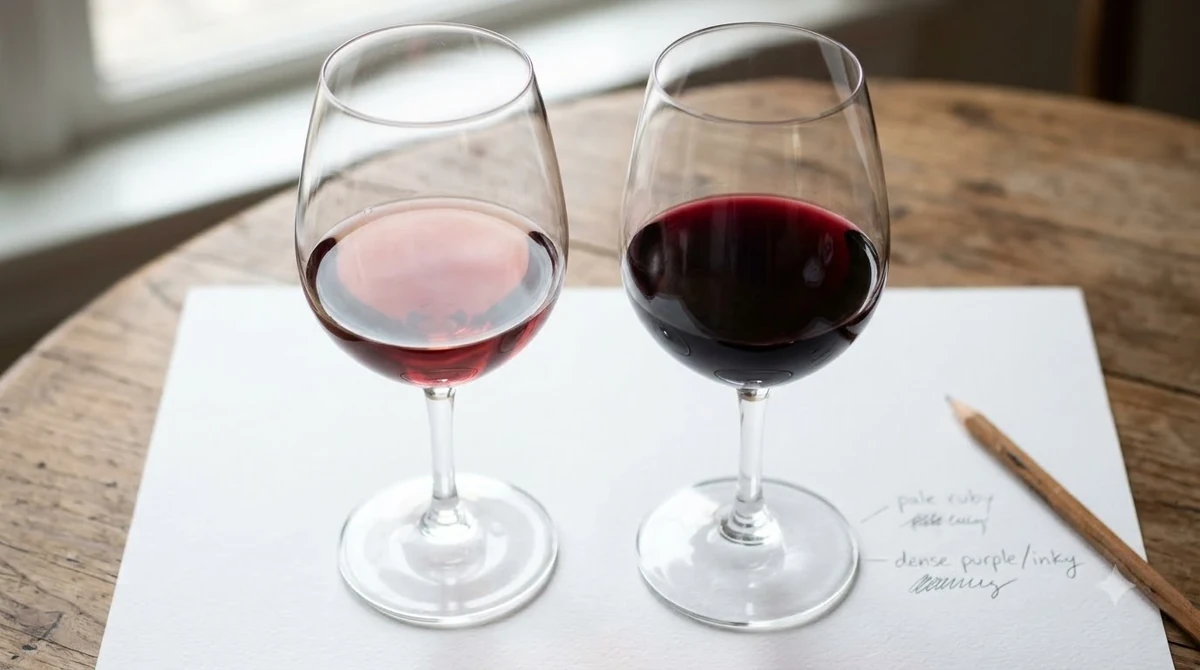
According to Wine Folly’s guide to Nero d’Avola, Sicily’s flagship red grape takes its name from the town of Avola in southeastern Sicily, translating roughly to “the black grape of Avola.” Its thicker skins impart rich anthocyanins, noticeable grip on the gums, and a plush texture that stands up well to oak aging. In the glass, it looks dark ruby to near-purple, signaling concentration before you even take a sip.
Pinot Noir, whose name derives from the French words for “pine” and “black” in reference to its tightly packed, pine-cone-shaped clusters, sits at the opposite extreme. Because its skins are remarkably thin, Pinot Noir extracts far less pigment and tannin during fermentation. Growers frequently call it the “heartbreak grape” because those thin skins make it prone to rot, frost, and vineyard disease, yet that same fragility gives the finished wine its signature elegance and clarity.
| Feature | Nero d’Avola | Pinot Noir |
|---|---|---|
| Primary Origin | Sicily, Italy | Burgundy, France |
| Body | Medium-full to full | Light to medium |
| Tannins | Medium-high | Low |
| Acidity | Medium to moderately high | Medium-high to high |
| Typical ABV | 13.5% – 15% | 12% – 14% |
| Core Fruit Flavors | Black cherry, black plum, prune | Raspberry, red cherry, cranberry |
| Savory & Oak Notes | Licorice, tobacco, chili pepper, cocoa | Mushroom, forest floor, hibiscus, vanilla |
| Serving Temperature | 60–68°F (15–20°C) | 55–60°F (12–15°C) |
Flavor and Styles: Dark Mediterranean Fruit vs. Red-Berried Finesse
In the glass, Nero d’Avola delivers concentrated dark fruit, sweet spice, and savory warmth, while Pinot Noir emphasizes tart red berries, floral lift, and earthy complexity. Both varieties span a spectrum from bright, unoaked bottlings to richer, barrel-aged expressions depending on producer philosophy.
Classic Nero d’Avola leads with ripe black cherry, black plum, and hints of dried fig or prune, backed by savory accents of licorice, dried herbs, and black pepper. Winemakers in Sicily generally craft it in two distinct styles. Modern, oak-aged versions spend time in French or American barrels, layering vanilla, tobacco, and cocoa onto a dense frame that resembles warm-climate Syrah. Conversely, unoaked or stainless-steel-fermented styles highlight snappy red cherry, herbal brightness, and brisk acidity, feeling closer in spirit to a young Nero d’Avola vs Sangiovese comparison.
Pinot Noir trades dark richness for high-toned aromatics and layered subtlety. As noted in Wine Folly’s comprehensive Pinot Noir overview, primary flavors center on fresh raspberry, tart red cherry, and hibiscus flower. As the wine spends time in oak or matures in bottle, secondary and tertiary notes of damp forest floor, wild mushroom, clove, and subtle vanilla emerge. Because Pinot Noir lacks heavy tannic armor, its bright acidity carries the finish cleanly across the palate.
Tip: If you enjoy Pinot Noir’s bright red-fruit energy but want to try Sicily, look for Cerasuolo di Vittoria DOCG—a traditional Sicilian blend pairing Nero d’Avola with the lighter, aromatic Frappato grape.
Where They Grow: Sun-Drenched Sicily vs. Cool Coastal Valleys
Nero d’Avola thrives in hot, arid Mediterranean vineyards where other grapes struggle with drought, whereas Pinot Noir requires cool, marginal climates with long, gentle ripening windows. Their geographic footprints reflect opposite viticultural demands.
Sicily accounts for the overwhelming majority of global Nero d’Avola plantings, where intense sunshine, volcanic and calcareous soils, and dry summer winds ripen the berries fully without losing natural acidity. Within the island, styles shift by elevation and microclimate: coastal vineyards around Noto and Pachino yield plush, velvety wines, while higher-elevation sites inland produce fresher, more structured bottles. Outside Italy, a handful of warm-climate pioneers in McLaren Vale, Australia, and Mendocino County, California, have planted Nero d’Avola for its drought resilience.
Pinot Noir is the sixth most planted red grape worldwide, yet it only excels in specific cool-to-moderate pockets. Burgundy’s Côte d’Or in France remains its spiritual benchmark, where limestone and clay soils produce structured, earthy expressions. In the United States, Oregon’s Willamette Valley and California’s foggy Sonoma Coast and Santa Rita Hills dominate production. Germany (where it is known as Spätburgunder) and New Zealand’s Central Otago also rank among top producers, each translating local soil and sunshine into distinct shades of red fruit and spice.
How to Serve Both Wines for Peak Expression
Serving temperature and glassware noticeably affect both wines because alcohol and tannin react differently to warmth and oxygen. Pinot Noir benefits from a slight chill to preserve its delicate aromatics, while Nero d’Avola performs best closer to cool room temperature with extra aeration.
Pour Pinot Noir between 55°F and 60°F (12–15°C)—roughly 15 to 20 minutes in the refrigerator before opening. If served too warm, its alcohol can overshadow subtle floral and earthy notes. Use a wide-bowled “aroma collector” Burgundy glass with a broad surface area that funnels volatile fruit and forest-floor aromas toward the nose. Young Pinot Noir typically opens nicely after about 30 minutes of breathing in a decanter or glass.
Serve Nero d’Avola slightly warmer, at 60°F to 68°F (15–20°C), in an oversized Bordeaux-style red wine glass. The tall, spacious bowl gives you room to swirl vigorously, softening its medium-high tannins and dispersing the higher alcohol (often 13.5% to 15% ABV). Because bold Sicilian bottlings pack dense extract and firm grip, decanting young, oak-aged Nero d’Avola for up to an hour helps unwind its savory licorice and tobacco layers.
Food Pairing: Matching Weight and Texture at the Table
Pairing food with either wine follows a simple rule of matching dish weight to wine structure: Nero d’Avola’s bold fruit and tannins crave rich, heavily seasoned, or braised dishes, while Pinot Noir’s high acidity and low tannins shine alongside delicate proteins and earthy vegetables.
Nero d’Avola is built for hearty Mediterranean and grilled fare. Its combination of dark plum fruit, firm tannin, and underlying acidity cuts cleanly through marbled beef, slow-braised oxtail, lamb ragù, and smoky barbecue burgers. Sicilian classics like pasta alla Norma—made with fried eggplant, salted ricotta, and rich tomato sauce—highlight the grape’s savory herbal side. For vegetarian meals, roasted portobello mushrooms, black lentils, and dishes seasoned with star anise, sage, or cocoa powder echo the wine’s natural spice notes.
Pinot Noir is famously versatile at the dinner table because its low tannins rarely clash with delicate textures or subtle sauces, while its brisk acidity refreshes the palate between bites. Classic pairings include herb-roasted chicken, duck breast, pan-seared salmon, and pork tenderloin. Earthy ingredients such as wild mushroom risotto, truffle-roasted vegetables, and Gruyère or Brie cheese mirror the savory undertones found in mature Burgundian or Oregonian bottles.
How to Choose a Bottle That Fits Your Palate
Choosing between these two reds becomes straightforward once you match your usual flavor preferences and label cues to the right region and production style. Paying attention to alcohol percentage and oak usage on the back label provides reliable clues before you pull the cork.
Reach for Nero d’Avola if you typically gravitate toward Cabernet Sauvignon, Syrah, or Zinfandel and want deep dark fruit with satisfying grip. Check the front label for appellation clues: bottles labeled Sicilia DOC denote varietal Nero d’Avola (at least 85% of the grape), with higher ABV readings (14% to 15%) signaling a riper, barrel-aged style, while lower readings (around 13.5%) point toward a brighter, fresher profile. If you enjoy comparing Italian reds across regions, exploring nebbiolo vs nero d avola or nero d avola vs primitivo shows how Sicily’s star grape bridges tannic structure and sun-ripened fruit.
Choose Pinot Noir when you prefer lighter body, silky texture, and vibrant acidity over heavy tannin. Let geography guide your pick: look to Oregon’s Willamette Valley or Burgundy for earthier, red-cherry-driven elegance, or choose California’s Russian River Valley and New Zealand’s Central Otago if you want plush, riper dark-cherry fruit. You can also browse more side-by-side varietal guides in our Wine vs Wine archive to compare other classic red grapes.
Frequently Asked Questions
Is Nero d’Avola sweeter than Pinot Noir?
No, both Nero d’Avola and Pinot Noir are vinified as dry red wines with virtually no residual sugar. However, Nero d’Avola often gives a riper, jammy impression on the palate because warm Sicilian sunshine produces higher alcohol levels and concentrated black cherry and plum flavors.
Which wine has more tannins, Nero d’Avola or Pinot Noir?
Nero d’Avola has significantly more tannins than Pinot Noir. Its thicker grape skins impart medium-high tannins that create a noticeable drying grip along the gums, whereas Pinot Noir’s thin skins yield low, silky tannins that feel light and smooth.
Can you age both Nero d’Avola and Pinot Noir?
Yes, quality examples of both grapes can age well for 10 years or more in a cool, dark cellar. Structured, oak-aged Nero d’Avola softens its tannins and develops dried fruit and tobacco notes over a decade, while top-tier Pinot Noir evolves complex aromas of forest floor, mushroom, and sweet spice.
What is a good middle-ground wine between Nero d’Avola and Pinot Noir?
Cerasuolo di Vittoria DOCG from southeastern Sicily offers an ideal middle ground because it blends structured Nero d’Avola with light, aromatic Frappato. You can also look for unoaked, high-elevation Nero d’Avola or riper New World Pinot Noir from California’s Sonoma Coast to bridge the gap in body and fruit profile.
Ultimately, the choice between Nero d’Avola and Pinot Noir comes down to mood and menu rather than one grape outranking the other. Keep Pinot Noir on hand when you want cool-climate grace, brisk acidity, and effortless versatility with lighter dishes, and reach for Nero d’Avola whenever dinner calls for sun-drenched dark fruit and structured Mediterranean warmth.
More in Wine vs Wine
 Chenin Blanc vs Pinot Blanc: Key Differences in Taste, Acidity, and PairingsUpdated Nov 21, 2026
 Chardonnay vs Shiraz: Key Differences in Taste, Serving, and PairingUpdated Nov 21, 2026
 Chardonnay vs Verdejo: How Spain’s Crisp White Compares to the World’s ChameleonUpdated Nov 21, 2026
 Chardonnay vs Sancerre: Key Differences in Taste, Grapes, and PairingUpdated Nov 21, 2026
 Chardonnay vs Malbec: Key Differences in Taste, Body, and PairingUpdated Nov 21, 2026
 Carmenere vs Pinot Noir: Taste, Body, and Food Pairing ComparedUpdated Nov 21, 2026