

We may earn a commission when you buy through links on this page, at no extra cost to you. Learn more.
When comparing chardonnay vs verdejo, the core difference comes down to cellar influence versus herbal freshness: Chardonnay is a global chameleon shaped heavily by oak and malolactic fermentation, while Verdejo is Spain’s crisp, citrus-driven white wine prized for zesty acidity and subtle fennel notes. Chardonnay ranges from lean, apple-scented bottles at 12% ABV to rich, creamy, vanilla-laced wines reaching 15% ABV. Verdejo, grown almost exclusively in Spain’s Rueda region, typically stays light-bodied with bright lime, grapefruit pith, and grassy aromatics, though a small niche of barrel-fermented examples adds nutty weight.
Choosing between these two white grapes depends entirely on what you want from your glass at the dinner table or on a warm afternoon. One offers the world’s broadest spectrum of textures—from razor-sharp sparkling Blanc de Blancs to plush, golden Napa pours—while the other delivers reliable, palate-cleansing refreshment with a distinct botanical edge.
What It Is
Chardonnay is a green-skinned grape originating in Burgundy, France, famous for acting as a blank canvas for winemaking techniques, whereas Verdejo is an indigenous Spanish variety centered in Rueda that expresses vivid citrus and herbal character. Both produce dry white wines with virtually no tannins, yet their personalities diverge sharply in the cellar.
Winemakers often call Chardonnay a “winemaker’s grape” because its neutral starting profile transforms dramatically depending on fermentation vessels and aging choices. According to Wine Folly’s guide to Chardonnay, that signature creamy texture and buttery aroma come from malolactic fermentation—a secondary process that converts tart malic acid into softer lactic acid and produces diacetyl—paired with oak aging that contributes vanillin, lactones, and clove-like spice. Without oak or malolactic conversion, Chardonnay remains crisp, mineral-driven, and focused on green apple and lemon.
Verdejo (pronounced ver-day-ho) occupies a much narrower, more distinctive niche in the wine world. Native to Spain and frequently confused in name with Portugal’s Verdelho—a grape primarily used in fortified Madeira—Verdejo thrives on high-altitude, sandy, and stony vineyards. Most bottles are fermented in stainless steel to preserve fresh aromatics of lime, honeydew, white peach, and wild fennel, alongside a subtle grapefruit-pith bitterness on the finish that makes the wine feel lively and crunchy on the palate. If you enjoy exploring crisp Iberian whites, comparing albarino vs verdejo shows how coastal salinity contrasts with Rueda’s inland herbal snap.
Flavor and Styles
Chardonnay spans everything from high-acid, chalky whites and traditional-method sparkling wines to full-bodied, oak-aged expressions, while Verdejo centers on bright, aromatic, stainless-steel styles with a smaller category of lees-aged or barrel-fermented bottles. Climate and cellar decisions dictate where each bottle lands on the palate.
In cool regions, unoaked Chardonnay displays brisk acidity alongside notes of green apple, lemon zest, and wet stone. In warmer climates, the fruit ripens toward yellow apple, melon, and pineapple, and when winemakers introduce new oak barrels and lees stirring (bâtonnage), layers of toasted hazelnut, brioche, butter, and caramel emerge. With extended bottle age, top Chardonnays develop savory aromas of mushroom and honey, and the grape also serves as the sole variety behind Blanc de Blancs Champagne—a stylistic leap you can examine further in our look at chardonnay vs prosecco.
Verdejo leans consistently toward medium-plus to high acidity and a light-to-medium frame. Classic young Rueda Verdejo bursts with Meyer lemon, lime, white peach, and fresh grass, finishing with a clean herbal bitterness reminiscent of tarragon or fennel seed. However, ambitious Spanish producers also craft old-vine and barrel-fermented Verdejo aged on the lees. According to Wine Folly’s Verdejo profile, these richer interpretations trade some overt grassy zip for creamy mid-palate weight, toasted almond, and subtle spice while keeping their vibrant citrus backbone intact.
| Attribute | Chardonnay | Verdejo |
|---|---|---|
| Primary Origin | Burgundy, France (planted worldwide) | Rueda, Castilla y León, Spain |
| Body | Light-medium (unoaked) to full (oaked) | Light to medium |
| Acidity | Medium-low (warm oak) to high (cool climate) | Medium-high to high |
| Alcohol (ABV) | 12% to 15% | 11% to 13.5% |
| Core Flavor Notes | Green apple, lemon, pineapple, butter, vanilla | Lime, grapefruit pith, honeydew, white peach, fennel |
| Common Aging | Stainless steel, French/American oak, lees | Stainless steel; select old-vine barrel/lees aging |
| Serving Temp | 38–45°F (sparkling/lean) to 54–55°F (oaked) | 38–45°F |
| Aging Potential | 2–3 years (entry) up to 10+ years (fine Burgundy/Napa) | 1–2 years (classic) up to 5 years (barrel-fermented) |
Where It Grows
Chardonnay is planted in virtually every major wine-producing country on earth, whereas Verdejo remains overwhelmingly concentrated in north-central Spain’s Rueda Denomination of Origin. Their geographic footprints reflect centuries of global adaptation versus fierce regional specialization.
From its ancestral home in France’s Burgundy—spanning cool, limestone-rich Chablis in the north to prestigious Côte de Beaune villages like Puligny-Montrachet and Meursault—Chardonnay traveled to become California’s most planted white grape. It flourishes across Napa Valley, Sonoma Coast, Monterey, and Oregon’s Willamette Valley, as well as Australia’s Margaret River, New Zealand, Chile, and Argentina. Because the vine buds early and adapts easily to diverse soils, local climate largely shapes the grape’s ripeness and natural acidity.
Verdejo, by contrast, is almost synonymous with Rueda in Castilla y León, which accounts for the vast majority of global plantings alongside minor footholds in Australia and California. Sitting on a high plateau at roughly 700 to 900 meters above sea level, Rueda experiences scorching summer days and sharply cold nights. That wide diurnal temperature swing locks natural acidity into the grapes while ripening their aromatics, and patches of deep, sandy soils even allowed pre-phylloxera bush vines over a century old to survive intact.
How to Serve
Verdejo should always be served well chilled straight from the refrigerator, while Chardonnay requires adjusting the serving temperature based on whether the bottle is crisp and unoaked or rich and barrel-aged. Temperature control makes a dramatic difference in how each wine balances acidity against texture.
Pour classic stainless-steel Verdejo cold at 38–45°F (3–7°C) in a standard white wine glass to keep its citrus snap and herbal aromatics taut. Serving it too warm dulls its refreshing bitterness and makes the fruit feel flat. Most Verdejo is meant to be enjoyed young within one to two years of the vintage, though structured, barrel-fermented old-vine bottlings can evolve nicely for up to five years and benefit from warming slightly in the glass.
Chardonnay demands a two-tier approach. Serve sparkling Blanc de Blancs very cold at 38–45°F (3–7°C) and lean, unoaked styles like Chablis cool around 45°F (7°C) so their mineral tension shines. For full-bodied, oak-aged Chardonnay, pull the bottle from the fridge 20 to 30 minutes before pouring so it sits closer to 54–55°F (12°C); excessive chill mutes toasted oak, hazelnut, and creamy nuances, whereas a slightly warmer cellar temperature lets those layered aromatics open up.
Tip: Check the bottle silhouette when shopping for Verdejo—tall, high-shouldered Bordeaux-style bottles almost always hold crisp, fruit-forward stainless-steel styles, while heavier, low-shouldered Burgundy-style bottles often signal lees stirring or oak aging.
Food Pairing
Verdejo acts like a squeeze of fresh lime on the plate and excels with vibrant, herb-driven, and citrus-accented dishes, whereas Chardonnay splits into two culinary lanes: shellfish and light fare for unoaked bottles, and rich, creamy, or roasted dishes for oaked styles. Matching weight and sauce intensity is the simplest way to get both pairings right.
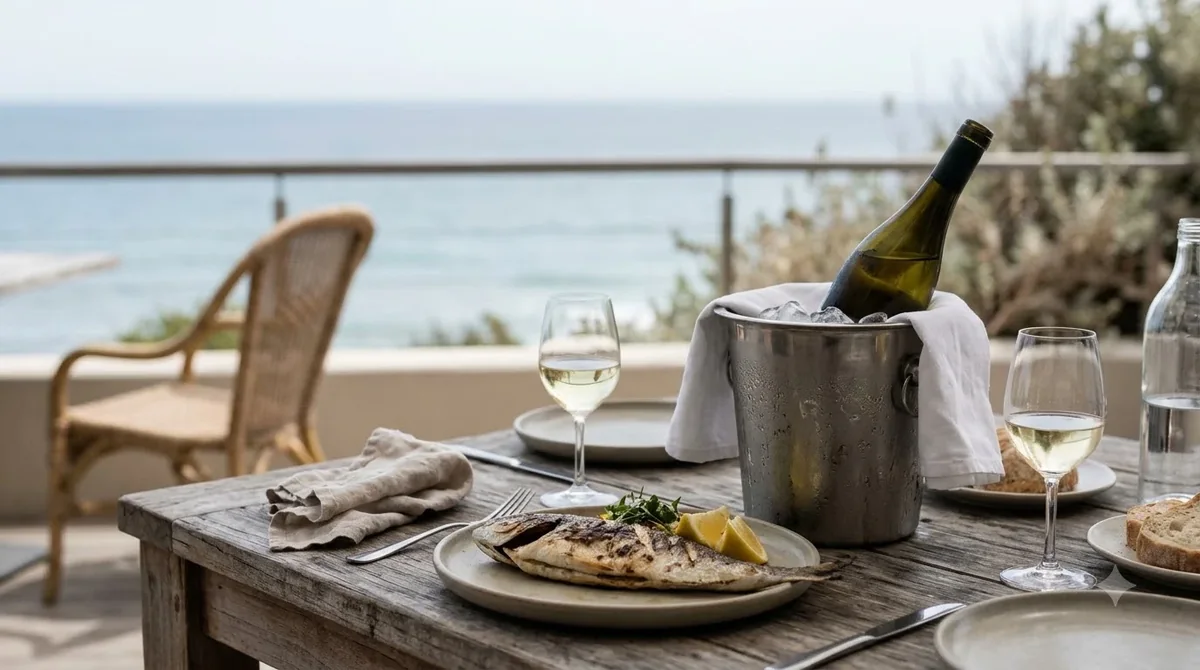
With its brisk acidity and gentle herbal pith, Verdejo cuts effortlessly through fried or grilled seafood, fish tacos, ceviche, and classic Spanish tapas. Reviewers at Wine Folly note a helpful rule of thumb: if a recipe calls for lime, cilantro, parsley, or tarragon, Verdejo will likely click with it. It also handles notoriously tricky green vegetables like asparagus and herb salads, alongside salty sheep’s milk cheeses such as Manchego or feta, while barrel-fermented Verdejo can step up to roast chicken or coconut-based sauces.
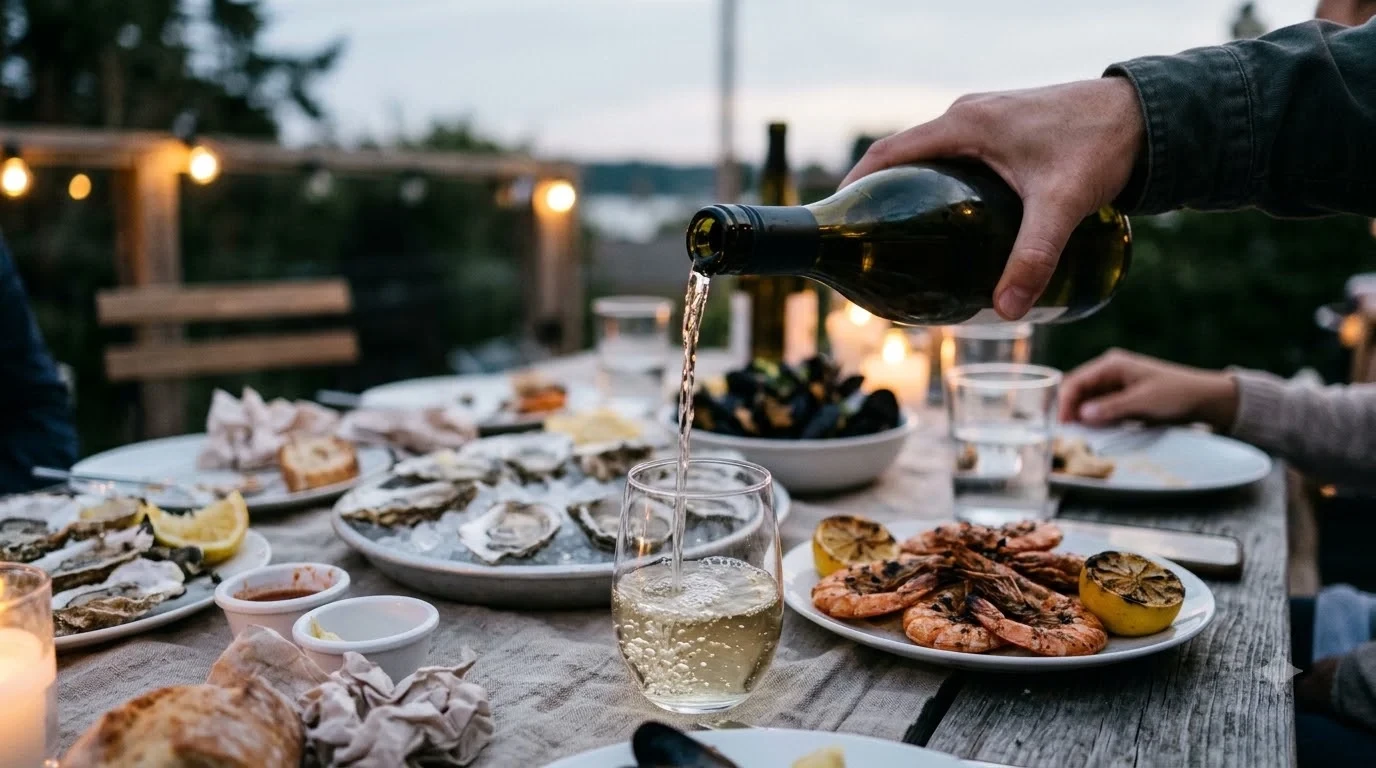
Unoaked Chardonnay mirrors Verdejo’s affinity for raw oysters, steamed mussels, grilled white fish, and goat cheese, offering clean apple and lemon flavors without herbal notes competing against delicate seafood—a dynamic explored alongside Spanish coastal whites in albarino vs chardonnay. Oaked Chardonnay, with its rounder body and lower perceived acidity, wants richer textures: think crab cakes, butter-poached lobster, seared scallops, roast pork tenderloin with apples, mushroom risotto, or creamy poultry dishes.
How to Choose a Bottle
Pick Verdejo when you want dependable, refreshing crunch and herbaceous citrus without oak influence, and choose Chardonnay when you want to dial in a specific level of richness, creaminess, or region-driven minerality. Reading a few key label clues makes finding your preferred style straightforward.
When shopping for Verdejo, look for “Rueda” on the front label; wines labeled simply as Rueda Verdejo are overwhelmingly single-varietal or Verdejo-dominant, while general Rueda white blends may mix in Sauvignon Blanc or Viura. Check the vintage date to ensure you are grabbing a recent harvest for maximum freshness, unless the label specifies fermentado en barrica (barrel-fermented) or sobre lías (aged on the lees), which signals a fuller, nuttier profile.
For Chardonnay, let region and winemaking cues guide you. Words like “Chablis,” “unoaked,” “stainless steel,” or cool coastal appellations such as Sonoma Coast and Oregon’s Willamette Valley point toward crisp, citrus-and-apple precision. Labels mentioning French oak, sur lie aging, or warmer regions like Napa Valley and Paso Robles indicate a lusher, creamier glass. For more side-by-side grape matchups, browse our Wine vs Wine library.
Frequently Asked Questions
Is Verdejo sweeter than Chardonnay?
No, both Verdejo and Chardonnay are typically fermented completely dry with virtually no residual sugar. Verdejo can feel slightly fruitier on the mid-palate due to ripe honeydew and white peach notes, while oaked Chardonnay can give an impression of sweetness from vanilla and caramel oak compounds, yet both finish dry.
Does Verdejo taste like unoaked Chardonnay or Sauvignon Blanc?
Verdejo sits right between unoaked Chardonnay and Sauvignon Blanc in flavor profile. It shares unoaked Chardonnay’s clean orchard fruit and medium-light texture, while offering Sauvignon Blanc’s zesty lime, fresh grass, and herbal snap without the aggressive green bell pepper aromatics.
Are Verdejo and Verdelho the same grape?
No, Verdejo and Verdelho are distinct grape varieties despite their nearly identical names. Verdejo is a Spanish white grape grown mainly in Rueda for crisp dry table wines, whereas Verdelho is a Portuguese grape best known for producing Madeira, though it also makes dry whites in Portugal and Australia.
Which wine is better for someone who dislikes buttery white wines?
Verdejo is the safer default pick if you dislike buttery flavors, because the vast majority of bottles are aged in stainless steel without malolactic fermentation or new oak. You can also enjoy unoaked Chardonnay from regions like Chablis, which delivers crisp green apple and mineral flavors with zero butteriness.
Ultimately, Chardonnay and Verdejo prove how differently two dry white grapes can behave from vineyard to glass. Keep Verdejo on hand whenever you crave bright citrus, subtle herbal lift, and effortless food versatility, and turn to Chardonnay when you want to choose between razor-sharp mineral poise and rich, barrel-aged depth.
More in Wine vs Wine
 Nero d’Avola vs Pinot Noir: Taste, Body, and Pairing DifferencesUpdated Nov 21, 2026
 Chenin Blanc vs Pinot Blanc: Key Differences in Taste, Acidity, and PairingsUpdated Nov 21, 2026
 Chardonnay vs Shiraz: Key Differences in Taste, Serving, and PairingUpdated Nov 21, 2026
 Chardonnay vs Sancerre: Key Differences in Taste, Grapes, and PairingUpdated Nov 21, 2026
 Chardonnay vs Malbec: Key Differences in Taste, Body, and PairingUpdated Nov 21, 2026
 Carmenere vs Pinot Noir: Taste, Body, and Food Pairing ComparedUpdated Nov 21, 2026