

We may earn a commission when you buy through links on this page, at no extra cost to you. Learn more.
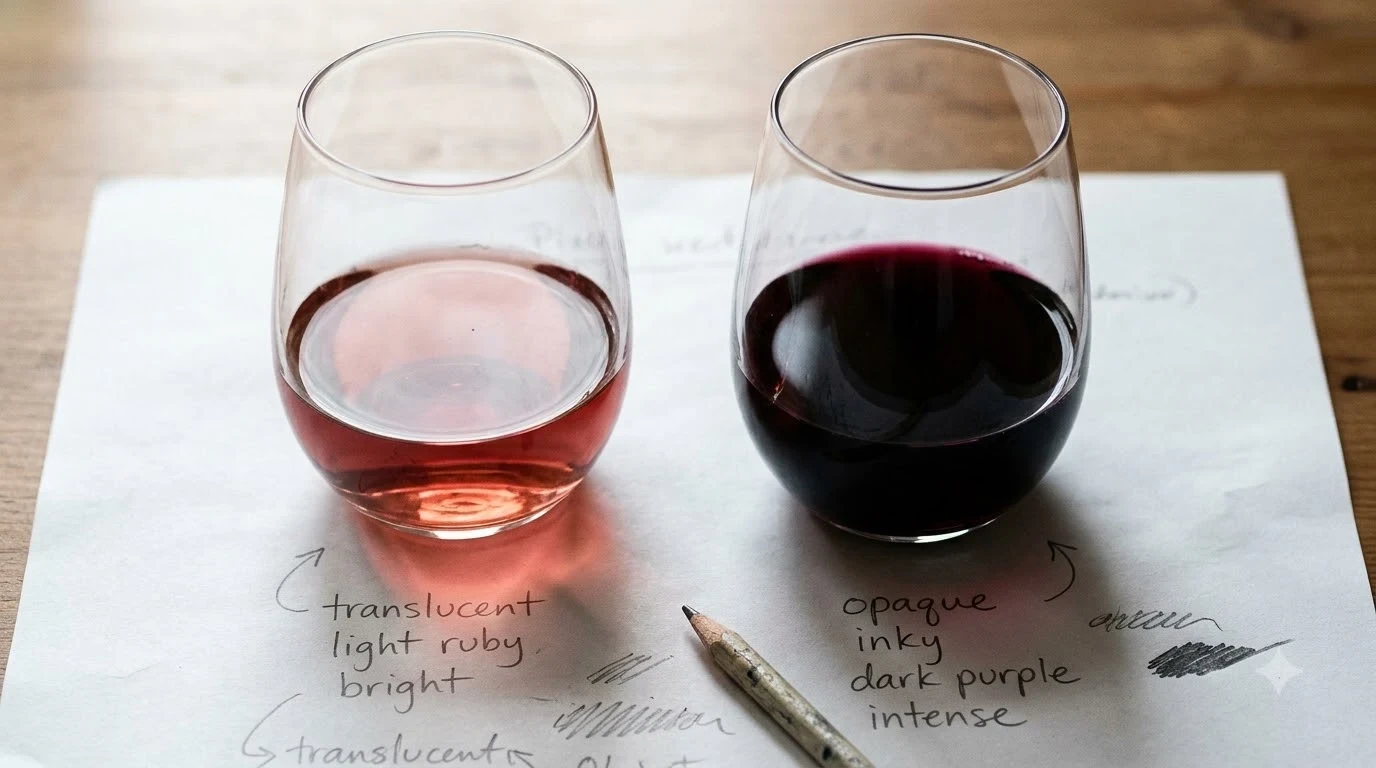
In a beaujolais vs pinot noir comparison, Beaujolais usually means a bright, juicy red made from Gamay, while Pinot Noir is a grape that makes a wider range of light- to medium-bodied reds, especially in Burgundy. Both can show cherry and raspberry, fresh acidity, and restrained tannin, but Gamay often feels more carefree and fruit-forward, while Pinot Noir more readily develops savory, earthy layers. The best choice depends on whether you want an easy-drinking, chillable bottle or a red with greater variation in texture, oak, and site expression.
These wines are close enough in weight and flavor to invite comparison, but they are not interchangeable. Understanding the grape, the place on the label, and the winemaking choices makes it easier to choose a bottle for dinner, a gathering, or a cellar.
Gamay and Pinot Noir Start with Different Grapes
Beaujolais is a regional wine identity built around Gamay, whereas Pinot Noir is a grape variety associated most closely with Burgundy and grown in many other regions. That distinction matters: a bottle labeled Beaujolais points to a place and its local style, while a Pinot Noir label can refer to wines from France, Oregon, California, New Zealand, and beyond.
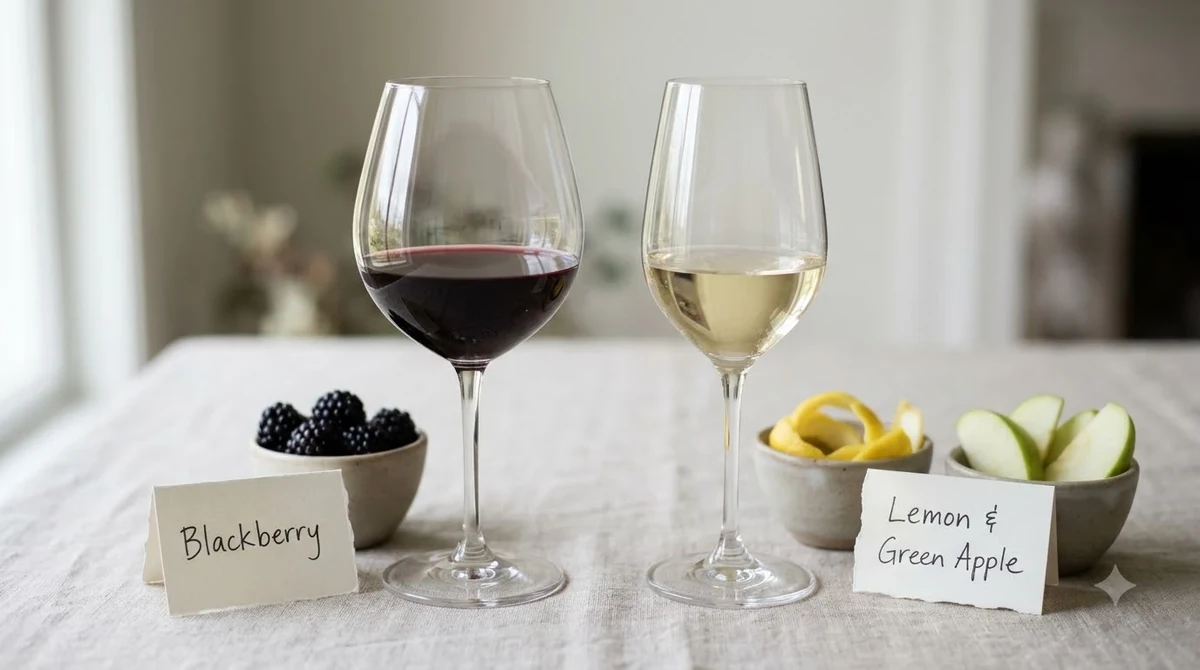
Gamay is the principal red grape of Beaujolais. The regional wine council says it accounts for 98% of the area producing Beaujolais wines, and the variety appears across the region’s 12 appellations. Its thin-skinned, purple-black grapes can make vivid reds with raspberry, wild strawberry, blackberry, and black-cherry aromas. The range runs from lively wines for early drinking to layered examples with structure and cellar potential.
Pinot Noir has a broader geographic footprint. Burgundy remains its reference point, but Oregon’s Willamette Valley, California’s Russian River Valley, and New Zealand’s Marlborough also produce recognizable styles. Wine Enthusiast describes it as typically medium-bodied, aromatic, and not overly tannic. Cool-climate examples can lean toward cranberry, cherry, flowers, and forest floor; warmer-site wines may taste riper and feel more plush.
Flavor, Acidity, Tannin, and Body
Both wines are usually dry, bright-fruited reds with fresh acidity and modest tannin, but Gamay tends to emphasize juicy red fruit and a light, supple feel, while Pinot Noir can carry a broader range of fruit, spice, earth, and texture. Site, ripeness, vintage, fermentation, and oak can change the result.
In a typical Beaujolais, look for red cherry, strawberry, raspberry, and sometimes a floral or peppery note. Carbonic or semi-carbonic fermentation can add a distinctly lifted impression of banana or bubblegum, although not every producer uses the method or aims for those aromas. The palate is often light to medium in body, with bright acidity and delicate tannins, which keeps the wine refreshing rather than drying.
Pinot Noir commonly brings strawberry, raspberry, red or black cherry, and, in some wines, mint, tea, pine, rose, mushroom, or forest-floor character. Its tannin is generally low to medium and often silky, with high acidity in many cool-climate examples. Warmer regions may give the wine darker fruit, more alcohol, and a fuller texture. A comparison with Grenache vs Pinot Noir can help put Pinot’s lighter structure in context, while Nebbiolo vs Pinot Noir shows how different the two grapes can be in tannin and grip.
| Typical feature | Beaujolais (Gamay) | Pinot Noir |
|---|---|---|
| Primary identity | Regional wine based mainly on Gamay | Grape variety used across many regions |
| Fruit profile | Strawberry, raspberry, cherry; sometimes banana | Strawberry, raspberry, cherry; may add tea, spice, or earth |
| Body and tannin | Usually light to medium, delicate tannin | Usually light to medium, low to medium tannin |
| Acidity | Fresh; often lively | Often high, especially in cool-climate examples |
| Useful number | 12 Beaujolais appellations; Gamay covers 98% of the region’s wine-producing area | Typical alcohol range of 12–15% in Wine Enthusiast’s guide |
Think of the table as a starting point, not a scorecard. A structured cru Beaujolais can have more depth and firmer tannin than a very delicate Pinot Noir, and a ripe California Pinot can feel richer than a light Beaujolais-Villages. If texture matters most, compare actual regions and producers instead of relying on the grape name alone. For a broader framework for comparing wine styles, the Wine vs Wine approach is useful: begin with structure, then consider flavor and setting.
Terroir: Beaujolais Granite and Pinot Noir’s Many Homes
Place is one of the clearest reasons these wines can taste different. Beaujolais is a relatively compact French region with a strong Gamay identity and a range of soils, including granite, while Pinot Noir spans distinct sites from Burgundy’s limestone slopes to cool-climate vineyards in the New World.
In Beaujolais, granite is an important part of the story, especially for the northern crus. The ten named crus are Brouilly, Côte de Brouilly, Régnié, Morgon, Chiroubles, Fleurie, Moulin-à-Vent, Chénas, Juliénas, and Saint-Amour. They are appellations where Gamay reflects differences in slope, soil, exposure, and producer choices. Fleurie and Chiroubles often suggest fragrant, graceful styles; Morgon and Moulin-à-Vent are more often associated with structure and aging potential.
Beaujolais as a whole also includes Beaujolais and Beaujolais-Villages wines beyond the ten crus. These broader appellations can offer direct, fruit-led expressions that are easy to serve at a casual meal. Gamay adapts to different terroirs across the region’s 12 appellations, so producer and site matter alongside the appellation name. The council’s Gamay overview from the Beaujolais wine council explains the grape’s regional importance and the range of styles it supports.
Pinot Noir’s range is wider because the grape is planted across many countries and climates. In Burgundy, the region’s wine body emphasizes the way Pinot Noir reflects small differences in site, including limestone geology and the position of individual vineyards. Outside France, Oregon’s Willamette Valley and California’s Russian River Valley are established reference points, while Marlborough in New Zealand offers another recognizable expression. A cool site can preserve bright acidity and bring savory detail; a warmer one can produce denser fruit and a more generous palate. The region name is therefore essential information, not decorative wording.
Winemaking Choices Shape the Glass
Beaujolais is closely associated with carbonic maceration and related whole-cluster methods, which help explain its vivid fruit and sometimes candied aromas. Pinot Noir is made through a wider range of fermentation and maturation choices, so oak, whole clusters, extraction, and time in bottle can play a larger visible role in the wine’s final personality.
In carbonic maceration, intact grape clusters ferment in a carbon-dioxide-rich environment, allowing fermentation to begin inside individual berries before the fruit is pressed. The method can preserve fresh fruit character and produce aromas such as banana, bubblegum, strawberry, and cherry. Semi-carbonic approaches combine whole bunches with juice released as grapes settle and crush one another, so the tank can contain both intracellular and conventional fermentation. Producers vary the method: some destem, while others adjust maceration to the vintage, appellation, and desired texture.
That range helps explain why Beaujolais Nouveau and a serious cru should not be treated as the same wine. Nouveau is made for prompt release and immediate, youthful fruit; a cru such as Morgon or Moulin-à-Vent can be built with more extraction, structure, and aging in mind. Decanter notes that Gamay from the ten crus can make ageworthy reds, and that carbonic maceration contributes to the variety’s famously juicy profile. Not every Beaujolais tastes like banana candy or needs to be consumed within a few months.
Pinot Noir winemaking can be equally varied, but the conversation often centers on preserving aromatic detail without overwhelming the grape. Fermentation may use destemmed fruit, whole clusters, or a combination; extraction can be gentle or more assertive; aging may take place in neutral or new French oak. Modest oak can add spice and texture while leaving cherry, raspberry, and site character in focus. More prominent new oak can make the wine feel broader and add toast or vanilla notes. Wine Enthusiast’s essential Pinot Noir guide outlines the variety’s typical structure and its sensitivity to climate.
Food Pairings for Each Style
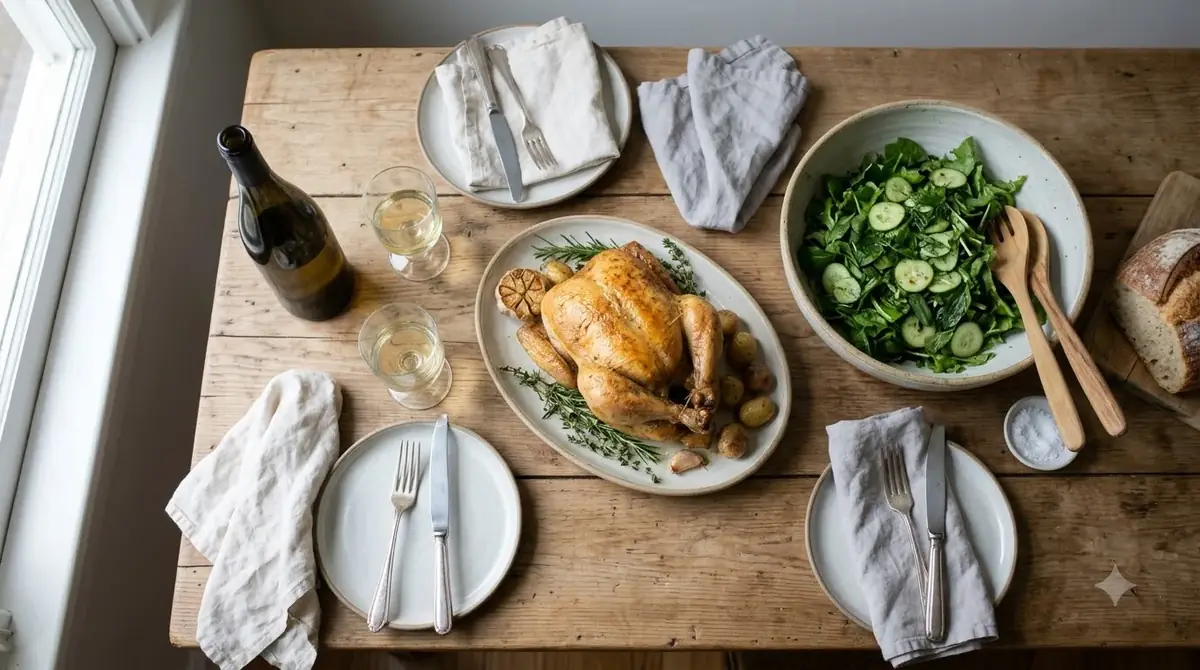
Beaujolais is a natural choice for casual, savory food because lively acidity and low tannin work well with salt, herbs, poultry, pork, and many cheeses. Pinot Noir is similarly versatile, but its wider range of body and savory detail gives it an especially strong place beside roast poultry, duck, mushrooms, and some seafood dishes.
For Beaujolais, start with charcuterie, pâté, roast chicken, pork tenderloin, grilled sausages, mushroom tart, or a cheese board. Gamay’s acidity refreshes the palate after fatty or salty bites, while its generally gentle tannin avoids the drying sensation that can make some reds difficult with delicate foods. A lightly chilled Beaujolais-Villages can suit picnic fare and a simple roast chicken; a more structured Morgon can stand up to braised pork, duck confit, or richer mushroom dishes. Match the intensity of the cru to the intensity of the plate rather than assuming all Beaujolais is equally light.
Pinot Noir pairs comfortably with roast chicken, duck breast, pork belly, stuffed mushrooms, salmon, and fresh tuna. Burgundy-style Pinot can echo earthy ingredients such as mushrooms and lentils, while fruitier Oregon or California examples can complement roast poultry with herbs or a berry-accented sauce. Pinot’s low-to-medium tannin is generally more compatible with fish than a heavily tannic red, though preparation still matters: delicate poached fish calls for a lighter wine than grilled salmon with browned edges. For acidic dishes, choose a wine with equal or higher acidity so the food does not make the wine taste flat.
For either wine, salt and fat soften the impression of tannin, which is one reason pork, duck, and cheese can work so well. Chili heat is different: alcohol and tannin can intensify the burn, so a lower-alcohol, less structured Gamay may be the more comfortable red for mildly spicy food. Very hot sauces can overwhelm both wines. With a sweet glaze or fruit sauce, choose a wine at least as sweet as the dish; a dry red can taste sharp beside a sweet preparation.
Tip: When the menu is uncertain, choose a fresh Beaujolais or a lighter Pinot Noir, serve it slightly cool, and keep the most intensely spicy or sugary dishes from dominating the plate.
How to Choose, Serve, and Store the Bottle
Choose Beaujolais when you want direct red fruit, lively freshness, and a relaxed table wine; choose Pinot Noir when you want more choice in region, savory complexity, and texture. For either grape, the appellation or growing region is often a better buying clue than a broad promise such as “smooth” or “rich.”
For Beaujolais, the label gives a practical progression. Beaujolais and Beaujolais-Villages are useful starting points for fresh, fruit-led wines, while the ten crus offer more specific regional identities. Fleurie or Chiroubles often suit drinkers who prefer perfume and grace; Morgon or Moulin-à-Vent offer a route to more depth and structure. Beaujolais Nouveau is a separate, youthful style, not a synonym for the entire region. For Pinot Noir, begin with the region: Burgundy ranges from Bourgogne Rouge to site-specific village and premier or grand cru bottlings, while Oregon’s Willamette Valley, California’s Russian River Valley, New Zealand, and Chile offer distinct expressions. Wine Enthusiast gives a typical Pinot Noir alcohol range of 12% to 15%; cooler regions often sit toward the lower end and warmer areas toward the higher end.
Serve light reds at 55–60°F, a useful range for most Beaujolais and lighter Pinot Noir. A fuller, oak-influenced Pinot can be served closer to 60–65°F. A short refrigerator chill is often enough to bring a room-temperature bottle into range. Use a standard 5-ounce pour; a 750-milliliter bottle provides about five glasses. Store unopened bottles on their side in a cool, steady place near 55°F, away from direct light and temperature swings.
Most everyday Beaujolais and Pinot Noir do not need a long decant. A young, structured Pinot or firm cru Beaujolais may benefit from 30–60 minutes of air; lighter examples are often best opened shortly before serving. After opening, recork and refrigerate the bottle; most still wines keep for about 3–5 days, with freshness gradually fading.
Frequently Asked Questions
Is Gamay genetically related to Pinot Noir?
Yes. The Beaujolais wine council identifies Gamay Noir à Jus Blanc as a natural cross between Pinot Noir and Gouais Blanc, a white grape. That relationship helps explain why the two reds can share some aromatic and structural traits, even though their regional identities and usual styles differ.
What is Pinot Noir called in Germany?
In Germany, Pinot Noir is commonly known as Spätburgunder. The name appears on German labels, so it is useful to recognize when shopping for a lighter-bodied red from regions such as Baden or the Ahr.
Can Pinot Noir be used to make sparkling wine?
Yes. Pinot Noir is one of the principal grapes used in Champagne, where it may be blended with Chardonnay and Pinot Meunier before the second fermentation in bottle. It contributes structure and red-fruit character even when the finished sparkling wine is white.
Can Beaujolais be made as a rosé?
Yes. The Beaujolais wine council notes that Gamay is used for rosé as well as red wines in the Beaujolais and Beaujolais-Villages appellations. These rosés are distinct from the familiar red wines but come from the same regional grape identity.
When does Pinot Noir first appear in written records?
The Bourgogne wine body cites 1375 as the first written record of the variety under the name Pinot Noir or “Plant Fin.” That long history is one reason Burgundy remains central to the grape’s identity, even though Pinot Noir now grows in many wine regions.
Beaujolais and Pinot Noir both reward drinkers who enjoy red-fruited wines with freshness rather than heavy tannin. Choose Gamay for lively, generous fruit and the distinct personalities of its ten crus; choose Pinot Noir when regional expression, savory complexity, and a wider range of textures are the priority. Tasting them side by side with the same meal is one of the clearest ways to discover which style suits your palate.
More in Wine vs Wine
 Nero d’Avola vs Pinot Noir: Taste, Body, and Pairing DifferencesUpdated Nov 21, 2026
 Chenin Blanc vs Pinot Blanc: Key Differences in Taste, Acidity, and PairingsUpdated Nov 21, 2026
 Chardonnay vs Shiraz: Key Differences in Taste, Serving, and PairingUpdated Nov 21, 2026
 Chardonnay vs Verdejo: How Spain’s Crisp White Compares to the World’s ChameleonUpdated Nov 21, 2026
 Chardonnay vs Sancerre: Key Differences in Taste, Grapes, and PairingUpdated Nov 21, 2026
 Chardonnay vs Malbec: Key Differences in Taste, Body, and PairingUpdated Nov 21, 2026