

We may earn a commission when you buy through links on this page, at no extra cost to you. Learn more.
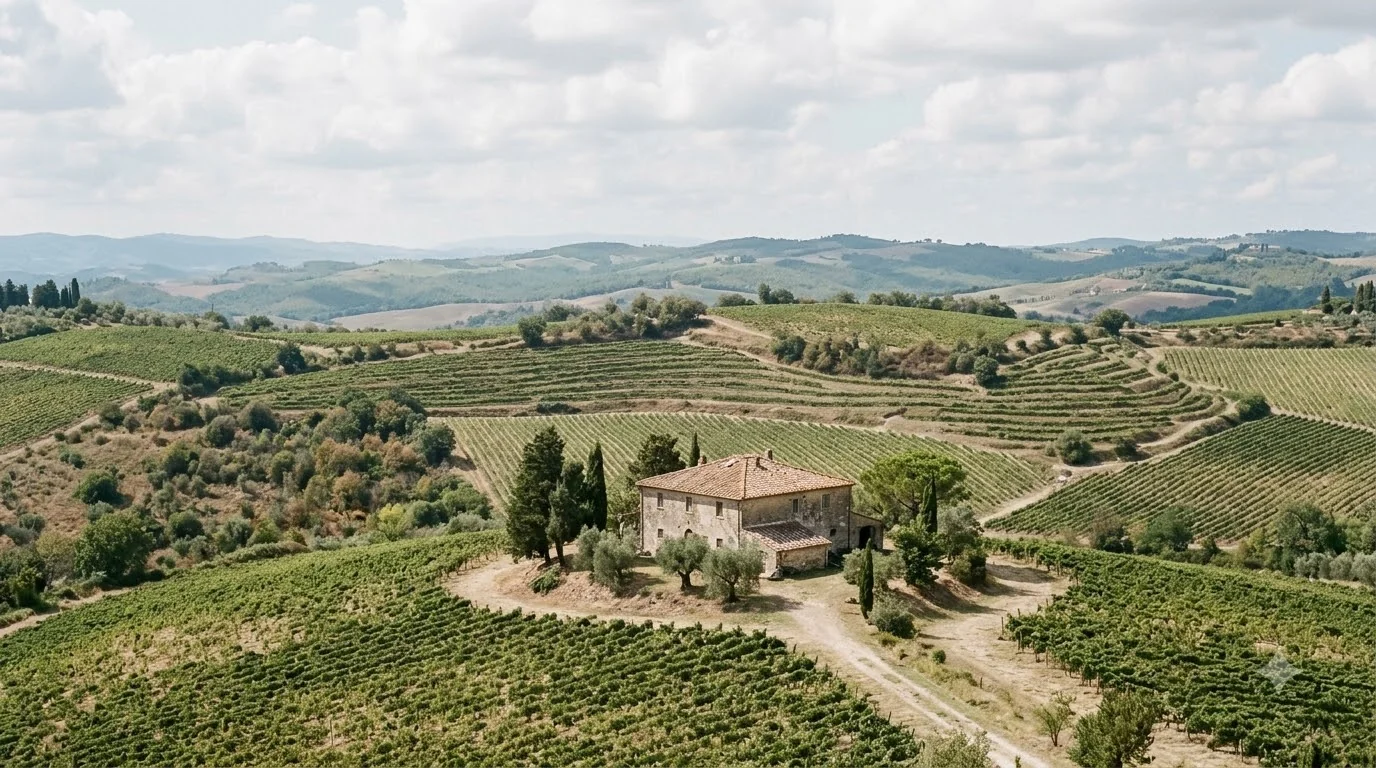
Where is gamay from? Gamay originated in Burgundy, in eastern France, before becoming the signature red grape of neighboring Beaujolais. Its history stretches back to at least the 14th century, when it was already known in Burgundy. Although a historical decree pushed it out of the region’s most prestigious vineyards, Gamay found ideal growing conditions farther south. Today, Beaujolais is its best-known home, producing everything from fresh, youthful reds to structured wines that can develop for years in the bottle.
Gamay is one of France’s most recognizable red wine grapes, but its geographical identity can be confusing. Wine drinkers often associate it exclusively with Beaujolais, while its historical roots lie in Burgundy. Understanding the distinction reveals why the grape became so closely associated with one region and how its expression changes across different French vineyards. It also helps explain why a bottle labeled Beaujolais, Beaujolais-Villages, or Morgon can contain the same principal grape yet deliver a noticeably different experience. Exploring other French varieties, including where is Merlot from, also shows how regional history has shaped the identity of familiar wine grapes.
Gamay Originated in Burgundy, France
Gamay originated in Burgundy, a historic wine-producing region in eastern France. Its name comes from a hamlet near Saint-Aubin in the Côte de Beaune, and historical records establish that the grape was known in the region by the 14th century. Although modern wine drinkers generally connect Gamay with Beaujolais, its early history belongs to the wider Burgundian wine tradition.
The Burgundy wine authorities identify Gamay as an ancient variety related to Pinot Noir. Its full name, Gamay Noir à Jus Blanc, distinguishes it from other varieties carrying the Gamay name. The grape has dark purple-black skin, but its juice is naturally colorless, as is the juice of Pinot Noir. The color in red Gamay wine comes from contact between the juice and grape skins during winemaking.
Gamay also has a genetic connection to two important historical grape varieties. It is a natural crossing of Pinot Noir and Gouais Blanc, an old white grape that contributed to the ancestry of several European varieties. This relationship helps explain why Gamay belongs so naturally to Burgundy’s traditional grape-growing history, even though it eventually developed a much stronger reputation in Beaujolais.
The distinction between the grape’s birthplace and its modern center of production is important. Burgundy is the answer when discussing historical origin, while Beaujolais is the answer when discussing its most recognizable contemporary wine region. Both descriptions are correct, provided they refer to different parts of Gamay’s story.
The Burgundy wine authorities’ profile of Gamay explains its historical connection with the region, including its relationship with Pinot Noir and its importance in southern Burgundy. The same profile identifies Gamay as an ingredient in several regional wine categories beyond Beaujolais.
How Gamay Moved From Burgundy to Beaujolais
Gamay’s move toward Beaujolais followed a major political decision in medieval Burgundy. In 1395, Philippe the Bold, Duke of Burgundy, ordered the removal of Gamay from the Duchy because he considered its high productivity a threat to the prestige of Pinot Noir. The decree changed the grape’s geographical fortunes and helped establish its long association with southern Burgundy and Beaujolais.
At the time, grape-growing reputation was closely tied to the perceived quality of the wines produced by particular varieties. Pinot Noir was favored for prestigious Burgundian vineyards, while Gamay’s ability to produce substantial quantities of fruit made it less desirable in the duke’s preferred wine-growing areas. The order targeted Gamay in the Duchy of Burgundy, particularly the Côte-d’Or, rather than eliminating the grape throughout France.
Gamay survived because southern Burgundy and neighboring Beaujolais offered suitable growing conditions. Over subsequent centuries, local growers developed experience managing its vigorous production and adapting vineyard practices to different sites. By the beginning of the 17th century, Gamay was established in Beaujolais, where it became central to the identity of the regional vineyard.
It is important not to interpret the 1395 decree as the moment Gamay was created in Beaujolais. The grape was already established in Burgundy before the decree, and its development in southern vineyards was a gradual historical process. The region’s growers subsequently refined vineyard management and winemaking practices to make the most of its natural characteristics.
The historical relationship between the two areas remains visible in modern wine geography. Beaujolais lies at the southern end of Burgundy, but it has a distinctive wine identity and its own appellation system. VinePair describes Beaujolais as an eastern French wine region with a slightly warmer climate than northern Burgundy and a reputation built around Gamay.
This history also explains why describing Gamay simply as a Beaujolais grape misses an important detail. It was not created in Beaujolais, nor did it originate as a response to the region’s modern wine industry. Rather, it was an older Burgundian variety that found a particularly successful home after its fortunes changed in the late 14th century.
Why Beaujolais Became Gamay’s Most Famous Home
Beaujolais became Gamay’s defining wine region because its climate, soils, and vineyard traditions suit the grape particularly well. The region’s granite-rich growing areas are especially important, helping produce wines with bright fruit, freshness, and a distinctive sense of place. The Beaujolais wine council identifies the grape as the common thread running through the region’s 12 appellations.
Gamay is naturally productive, so controlling yields is an important part of producing balanced wine. Beaujolais growers have traditionally used short pruning methods, including the gobelet or bush-vine system, to manage the vine’s growth. This approach helps control the quantity of fruit and directs attention toward grape quality rather than simply maximizing harvest volume. Other training methods, including fan and cordon systems, are also used.
The region’s importance is reflected in its share of global Gamay production. According to the Beaujolais wine council, approximately 30,000 hectares of Gamay are planted worldwide, with around half located in Beaujolais. The grape accounts for approximately 98% of the vineyard area producing Beaujolais wines, making it fundamental to the region’s identity.
Beaujolais also benefits from considerable variation between vineyards. Northern areas contain many of the region’s celebrated cru appellations, where granite and other geological differences influence the resulting wines. Further south, different soil compositions contribute to generally fruitier and more immediately approachable styles. These variations mean that Gamay is not a single, uniform wine experience.
The region’s reputation has also expanded beyond Beaujolais Nouveau. Although the annual release remains a recognizable celebration of the harvest, producers make many other styles, including wines intended for restaurant lists, serious collectors, and extended bottle aging. This wider range has helped establish Beaujolais as a major source of distinctive French red wine rather than simply a region associated with one seasonal release.
The Beaujolais Appellations and Ten Famous Crus
Beaujolais has three main levels of regional classification: Beaujolais, Beaujolais-Villages, and the ten individual crus. Each level provides a different indication of geographical origin and the style of wine a drinker might encounter. The cru appellations generally offer the greatest variation in structure, complexity, and aging potential.
The basic Beaujolais appellation covers the broadest geographical area and includes many fresh, fruit-driven wines. Beaujolais-Villages represents a more specific group of designated growing areas, with 38 villages eligible for the classification according to VinePair. At the highest geographical level are the ten crus, which identify individual wine-growing areas rather than using the broader regional name.
| Classification or cru | Number or share | Typical characteristics |
|---|---|---|
| Beaujolais | 1 broad appellation | Fresh fruit and approachable structure |
| Beaujolais-Villages | 38 designated villages | Greater variation in body and structure |
| Cru Beaujolais | 10 crus | Distinctive regional expressions |
| Cru production | About 15% | A smaller, more specialized part of regional production |
| Brouilly | About 20% of cru vineyard area | Generally approachable and fruit-forward |
| Morgon | 1 cru | Earthy, structured wines with aging potential |
| Moulin-à-Vent | 1 cru | Powerful wines with notable structure |
The ten crus are Brouilly, Chénas, Chiroubles, Côte de Brouilly, Fleurie, Juliénas, Morgon, Moulin-à-Vent, Régnié, and Saint-Amour. Each has a distinct geographical identity. Brouilly is the largest cru, while Chénas is the smallest. Chiroubles is known for vineyards at some of Beaujolais’s highest elevations, and Côte de Brouilly occupies the higher slopes of Mont Brouilly.
Fleurie is associated with elegant, perfumed wines, often showing floral aromas and bright red fruit. Saint-Amour is the northernmost cru and can produce wines with spicy characteristics. Juliénas frequently offers a more substantial expression, while Régnié combines ripe fruit with a range of textures depending on its vineyard sites and production methods.
Morgon and Moulin-à-Vent are particularly useful appellations for drinkers interested in more structured Gamay. Morgon can show earthy, concentrated fruit characteristics, while Moulin-à-Vent is known for powerful wines that sometimes receive oak aging. VinePair notes that wines from both appellations can age for as long as 20 years in favorable vintages, although many examples are enjoyable much earlier.
These distinctions are useful when choosing a bottle. A simple Beaujolais is generally a good introduction to the grape’s lively fruit, while a Fleurie offers an opportunity to explore a more perfumed style. For a more concentrated red with greater aging potential, Morgon and Moulin-à-Vent are particularly interesting places to begin.
What Gamay Tastes Like and How Winemakers Make It
Gamay typically produces dry red wines with bright acidity, relatively soft tannins, and prominent fruit aromas. Raspberry, strawberry, cherry, blackberry, and violet are common characteristics. Lighter examples can feel juicy and refreshing, while more concentrated wines from appellations such as Morgon and Moulin-à-Vent can show deeper fruit, earthy notes, and firmer structure.
The grape’s naturally early ripening helps it develop fully in suitable growing conditions. Its relatively thin skin and productive growth habit also influence vineyard and cellar decisions. Growers need to control yields, while winemakers can choose techniques that emphasize freshness and fruit or extract additional structure for wines intended to develop with age.
Carbonic maceration and semi-carbonic maceration
Carbonic maceration is closely associated with Beaujolais and is particularly useful for producing light, fruit-forward Gamay. In this method, intact grape clusters are placed in a sealed vessel filled with carbon dioxide. Fermentation begins inside individual berries under anaerobic conditions, producing wines with vivid fruit character and relatively little tannin extraction.
In full carbonic maceration, fermentation inside intact berries continues until the fruit breaks down and releases juice. Conventional alcoholic fermentation then takes place. This method can encourage aromas associated with ripe banana, candy, and fresh fruit, making it particularly recognizable in some Beaujolais Nouveau wines.
Semi-carbonic maceration follows a related principle but does not require winemakers to introduce carbon dioxide in the same way. The weight of the grape clusters naturally crushes fruit at the bottom of the tank, releasing juice that begins fermenting with ambient yeast. The resulting carbon dioxide creates an environment that encourages intracellular fermentation in the remaining intact berries.
Not every Gamay wine is made using carbonic or semi-carbonic maceration. Conventional fermentation and different extraction methods can create wines with greater structure, darker fruit flavors, and more noticeable tannins. Some producers also use oak vessels to add texture and complexity, particularly for wines from the ten crus.
These winemaking choices are one reason Gamay can appeal to different wine drinkers. Someone looking for a refreshing, uncomplicated red can choose a youthful Beaujolais, while someone interested in greater depth can explore a bottle of Morgon or Moulin-à-Vent. The grape’s identity remains recognizable even as the finished wines vary considerably.
Gamay Beyond Beaujolais and How to Serve It
Although Beaujolais is Gamay’s most famous home, the grape continues to grow elsewhere in Burgundy and in other wine-producing countries. The Mâconnais, in southern Burgundy, is particularly important for Gamay-based red wines. It also appears in other Burgundy wine categories, demonstrating that its historical relationship with the region remains active rather than merely historical.
According to the Burgundy wine authorities, Gamay is used in Coteaux Bourguignons, Bourgogne Passe-Tout-Grain, and certain Crémant de Bourgogne sparkling wines. These categories illustrate how the grape can contribute to different wine styles, from still reds to sparkling wine. Its role depends on the specific appellation and the permitted grape varieties.
Outside France, Gamay is also grown in Switzerland, Canada, and the United States. The wines produced in these areas can differ from traditional Beaujolais because of climate, vineyard conditions, harvest timing, and winemaking choices. A cooler growing site may emphasize acidity and delicate fruit, while warmer conditions can encourage riper flavors.
Serving temperature and glassware
Gamay generally benefits from slightly cool serving temperatures. Light-bodied examples are best served around 55–60°F, while fuller-bodied versions can be served closer to 60–65°F. A brief period in the refrigerator can help a room-temperature bottle feel fresher, particularly during warmer weather.
A standard red wine glass with a moderately wide bowl works well. It gives the wine enough room to release its aromas without requiring an oversized glass. A 5-ounce pour is a practical serving size, and a standard 750 ml bottle provides approximately five such glasses.
Food pairings for Gamay
Gamay’s bright acidity and moderate tannins make it versatile at the dinner table. It works especially well with roast chicken, pork, charcuterie, grilled sausages, mushrooms, and dishes featuring fresh herbs. Its fruit character can also complement tomato-based foods and vegetable dishes, while its acidity helps balance richer preparations.
French charcuterie is a classic match, particularly when served with pâté, cured ham, or mild cheeses such as Brie and Camembert. The relatively soft tannins allow Gamay to work with foods that might make a more tannic red wine feel harsh. Braised beef and slow-cooked meats are particularly suitable for fuller-bodied examples from Morgon or Moulin-à-Vent.
Gamay can also pair with some lighter fish dishes, especially when the wine has restrained tannins and is served slightly chilled. However, strongly tannic reds are generally poor matches for oily fish. For spicy food, moderate alcohol and softer tannins are preferable because alcohol and tannin can intensify chili heat.
Tip: Start with a lightly chilled Beaujolais or Beaujolais-Villages if you want to understand Gamay’s fresh, fruity side. For a more substantial comparison, try a Morgon or Moulin-à-Vent. Tasting these different appellations side by side makes the influence of vineyard location and winemaking easier to recognize.
Gamay also provides a useful comparison with other French red grapes. For example, where is Syrah from introduces a variety associated with a different set of growing conditions and generally more substantial tannin. Comparing the two helps illustrate how grape variety and regional traditions influence the finished wine. Readers exploring more varieties can find additional background in Wine by Type.
Frequently Asked Questions
Is Gamay genetically related to Chardonnay?
Gamay is a natural crossing of Pinot Noir and Gouais Blanc. Gouais Blanc is also a parent of Chardonnay, making Gamay and Chardonnay part of a wider family of historically related European grape varieties. Their genetic connection does not mean they produce similar wines, since their grape characteristics and typical wine styles are quite different.
What does the name Gamay Noir à Jus Blanc mean?
The French name translates approximately as black Gamay with white juice. It describes the contrast between the grape’s dark skin and its naturally colorless juice. This distinction is useful because the wine’s red color develops through skin contact during fermentation rather than coming from naturally red grape juice.
Can Gamay produce sparkling wine?
Yes. Gamay is permitted in certain Crémant de Bourgogne wines, according to the Burgundy wine authorities. These sparkling wines are distinct from the familiar still red wines of Beaujolais and demonstrate the grape’s versatility beyond traditional red wine production.
Is Gamay the same as Gamay Beaujolais grown in California?
No. The historical American designation Gamay Beaujolais was applied to a Pinot Noir clone that was mistakenly identified as true Beaujolais Gamay. The California grape commonly associated with that old name is therefore genetically different from Gamay Noir à Jus Blanc. This naming confusion is one reason the full French varietal name is useful when discussing the authentic grape.
What is the official release day for Beaujolais Nouveau?
Beaujolais Nouveau is traditionally released on the third Thursday of November. The date is associated with the celebration of the recently completed harvest and has become an international event. Bottles are distributed to markets around the world in time for the annual release.
Gamay began in Burgundy but found its greatest international recognition in Beaujolais, where generations of growers developed the grape into a regional specialty. Its range extends from fresh, uncomplicated reds to distinctive cru wines with considerable structure and aging potential. Exploring Beaujolais alongside Gamay from the Mâconnais is an excellent way to understand the grape’s history, versatility, and continuing importance in French wine.
More in Wine Types & Grapes
 What Does Mourvèdre Taste Like? Flavor Profile, Regions, and PairingsUpdated Nov 20, 2026
 What Does Marsanne Taste Like? Flavors, Styles, and Food PairingsUpdated Nov 20, 2026
 What Does Malvasia Taste Like? Styles, Flavors, and Food PairingsUpdated Nov 20, 2026
 What Does Grenache Blanc Taste Like? Flavor Profile, Styles, and PairingsUpdated Nov 20, 2026
 What Does Garnacha Taste Like? Key Flavors, Styles, and Pairing TipsUpdated Nov 20, 2026
 What Does Fruit Wine Taste Like? A Complete Flavor and Style BreakdownUpdated Nov 20, 2026