

We may earn a commission when you buy through links on this page, at no extra cost to you. Learn more.
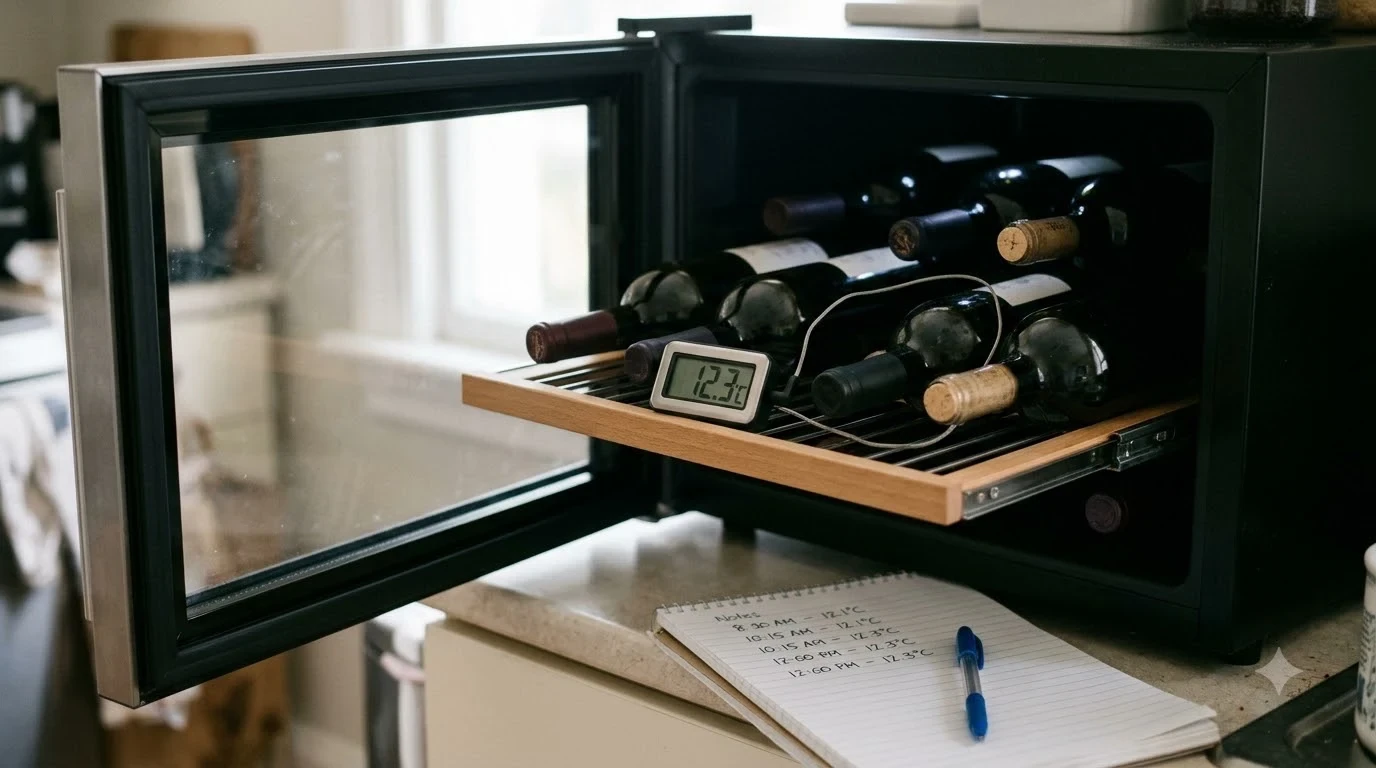
The best wine fridge for long term storage is a compressor unit that holds a steady temperature near 55°F (13°C) with very little swing. For bottles you plan to age for years, stability matters more than capacity or finish. Look for reliable thermostat control, a door seal that keeps light and warm air out, low vibration, and shelves that let bottles rest flat so the cork stays moist.
Storing wine for a decade is a different job from keeping a few bottles chilled for dinner. A bottle that sits for years faces the same stresses again and again: temperature swings, light, vibration, and dry air that can shrink corks. A wine fridge can handle all of these if it is chosen for steady performance rather than for looks or a long feature list. The sections below group the options by the kind of collection and space you have, then explain how to choose among them.
Quick Comparison
Long-term storage needs differ by collection size, the mix of red and white, and the room the unit will sit in. The table compares the main storage needs and the features that matter most for each.
| Storage need | What to prioritize | Typical fit |
|---|---|---|
| A few bottles aged for three to five years | Tight temperature control and a sealed door | Compact single-zone unit |
| A growing collection held for a decade or more | Stable compressor and spare shelf capacity | Freestanding unit sized for 100 or more bottles |
| Reds and whites aged at different temperatures | Two independent zones with separate set points | Dual-zone unit, under-counter or freestanding |
| A basement, garage, or warm utility room | Insulation and a rated ambient temperature range | Unit built for the room’s real temperature |
Best for Stable Temperature Over Many Years
A unit that holds its set point is the first requirement for long-term aging, because temperature drives how fast wine changes.
The Wikipedia article on wine cellars describes 13°C (55°F) as ideal for both short-term storage and long-term aging, and says wines age normally between 10°C and 14°C (50°F to 57°F). It also warns that swings of 14 degrees or more can make wine breathe through the cork, which speeds aging. A fridge that cycles widely or drifts when the door opens works against a long hold, so compressor units with a tight, stable setpoint are usually the better pick for this use.
When comparing models, look for a digital display that shows the actual interior temperature, not just the target. Check whether the manufacturer lists a control range that includes 55°F. If the unit does not reach that range, it is a poor fit for multi-year storage no matter how well it is built.
Best for Collections That Need Room to Grow
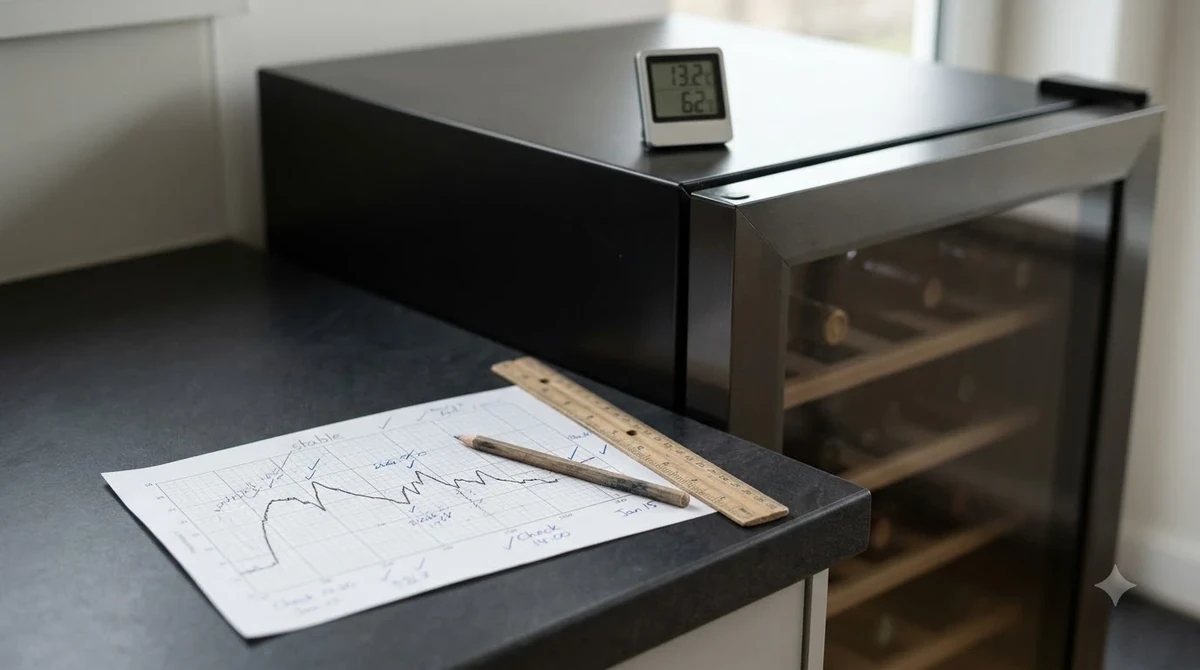
Buyers who expect their cellar to expand should size the unit for the bottles they will own in five years, not just the ones they own today.
Large capacity helps in two ways. It leaves space to rotate stock as new bottles arrive, and it keeps the interior from being packed tight, which makes airflow more even. Tightly packed shelves can create warm pockets near the door and make it hard to see the labels you need. Units sold as 100-bottle or larger models generally suit collectors who buy by the case and hold wine for years.
Keep in mind that a bigger cabinet takes more floor space and draws more power. Check the room’s ventilation, since a freestanding unit needs clearance at the back and sides for heat to escape. A unit that is too large for its spot may run harder and last less time than a right-sized one.
Best for Mixed Red and White Cellars
Collectors who age both reds and whites usually need two zones so each style can rest at a suitable temperature.
Dual-zone units hold separate set points in two compartments. Reds are often kept near the cellar range, while whites are sometimes held a little cooler. A single-zone unit forces one compromise on both styles, which is workable for a small mixed collection but less precise over long holds. Dual-zone models also make it easier to store Burgundy, Champagne, and Bordeaux bottles under the conditions each one prefers, since not every bottle ages best at the same point.
Check the zone sizes before buying. Some dual-zone units split the cabinet evenly, which may leave too little room for a larger red section. Others offer a larger lower zone for reds and a smaller upper zone for whites. Match the layout to the bottles you already own. If you collect mostly tall bottles, see the guide to wine fridges for Burgundy bottles for shelf depth and height notes.
Best for Warm or Variable Rooms
Garages, utility rooms, and rooms near heat sources can push a fridge outside its comfortable range, so ambient temperature tolerance matters.
Most wine fridges are designed for indoor rooms that stay within a moderate range. In a warm room, a compressor has to work harder to hold the set point, and the interior may drift. Units with better insulation and a higher-rated ambient range handle these spaces more reliably. Look for the manufacturer’s stated operating range, not just the target temperature.
Cool basements are a different case. The room may hold a steady temperature on its own, but a fridge in a very cold space can struggle to start, and some models run less often than expected. Check whether the unit includes a low-temperature setting or a rating for cooler rooms. Placing any fridge away from direct sun, heaters, and hot appliances helps it hold a steady temperature regardless of the room.
Best for Tight Spaces and Built-In Installs
Under-counter and built-in units suit kitchens and bars where floor space is limited but a long hold is still the goal.
Built-in and under-counter models are often front-venting, which lets them sit flush in cabinetry. Front venting matters because a unit that breathes heat out the top or sides will overheat once it is enclosed. Read the installation manual for minimum clearance before buying, and confirm that the cabinet opening matches the unit’s dimensions with the door hinge and handle included.
These units usually hold fewer bottles than freestanding cabinets, so they fit better as a secondary cellar than as a full collection store. If your space is limited, the guide to wine fridges for small spaces covers compact footprints in more detail.
How to Choose
A strong long-term unit comes down to a few measurable traits. Compare each candidate against the list below before deciding.
| Criterion | What to look for | Why it matters for aging |
|---|---|---|
| Temperature control | Setpoint range that includes 55°F, with an interior display | Steady temperature slows unwanted change |
| Swing | Small variation between cycles | Large swings can make wine breathe through the cork |
| Zones | Single or dual, matched to your red and white split | Each style may age best at a different point |
| Door seal and light | Tight gasket and a solid or UV-filtered door | Keeps out warm air and light |
| Shelving | Shelves that support bottles lying flat | Keeps corks in contact with wine |
| Ambient range | Rating that matches the room’s real temperature | Prevents drift in warm or cold spaces |
Tip: Place the fridge where the temperature changes least across the day, and avoid spots next to ovens, dishwashers, or windows.
Frequently Asked Questions
What temperature is best for storing wine for years?
According to the Wikipedia article on wine cellars, 13°C (55°F) is ideal for long-term aging, and wines age normally between 10°C and 14°C (50°F to 57°F). Choose a unit that can hold a setpoint in that range and keeps swings small.
Does humidity matter in a wine fridge?
Opinions differ. The Wikipedia article notes that some experts argue the sealed bottle keeps humidity high, while others warn that very dry air can dry organic corks. Most sealed fridges manage this well, and a stable, moist interior is the goal rather than a precise humidity number.
Can a regular refrigerator be used for long-term storage?
A standard refrigerator runs colder than the cellar range and cycles more widely, so it is generally a poor choice for aging. A wine fridge built for storage keeps the warmer, steadier temperature that suits wine better.
How many bottles should a long-term wine fridge hold?
Plan for the bottles you expect to own in five years, leaving some empty shelf space for rotation. Knowing how many glasses a bottle yields can help you estimate how fast a collection turns over; see how many glasses are in a bottle of wine for that math.
Choosing a long-term wine fridge is mostly a question of stability. Pick a unit that holds a steady setpoint near 55°F, seals well against light and warm air, and keeps bottles flat. Use the comparison table and the criteria above to match the unit to your room and your collection, then check the installation clearances before the unit arrives. A well-chosen fridge does the quiet work of aging for you.
More in By Room & User
 Wine Fridge in Bedroom: Choose Quiet Storage That Fits Your SpaceUpdated Nov 20, 2026
 Wine Fridge in Living Room: Choose the Right Size, Style, and SetupUpdated Nov 20, 2026
 Wine Fridge In Dining Room: Choose the Right Size and StyleUpdated Nov 20, 2026
 Wine Fridge In Pantry: Choose the Right Size and SetupUpdated Nov 20, 2026
 Wine Fridge In Kitchen: Choose the Right Fit and PlacementUpdated Nov 20, 2026
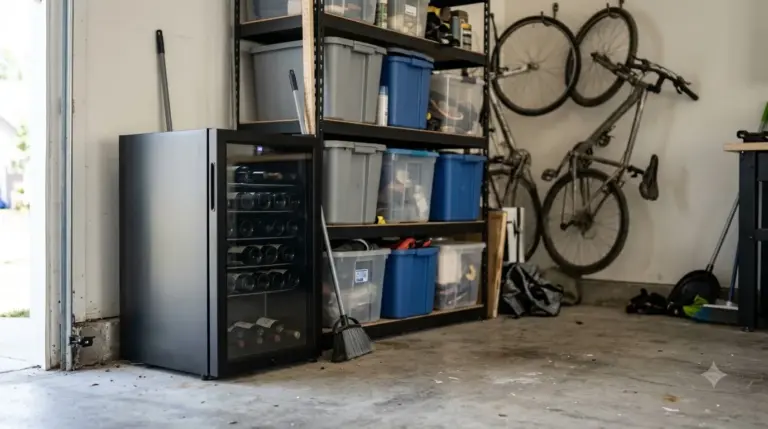
 Wine Fridge In Garage: Choose a Cooler That Handles Temperature SwingsUpdated Nov 20, 2026