

We may earn a commission when you buy through links on this page, at no extra cost to you. Learn more.
The best wine fridge for burgundy bottles is a compressor-cooled cellar with wide-spaced, adjustable, or removable beechwood shelves built to handle wider 3.5-inch bottle diameters without scraping labels or reducing usable capacity. Full-height single-zone cabinets with universal shelving work best for long-term Pinot Noir and Chardonnay aging, while front-venting undercounter models fit smooth kitchen renovations. Compact freestanding coolers with removable wire or wood racks cover smaller apartment collections on a tighter footprint.
Standard wine cooler capacities are almost always measured using slim, straight-sided 750 mL Bordeaux bottles that measure roughly 3 inches across, whereas classic Burgundy bottles feature curved sides, gently sloping shoulders, and a wider 3.5-inch base according to VinePair’s guide to wine bottle shapes and sizes. Slide those broader Pinot Noir, Chardonnay, or Rhône bottles onto tightly spaced standard racks and you will quickly run into jammed shelves, torn paper labels, and a real-world bottle count that drops well below the number printed on the box. Choosing a cabinet engineered around flexible shelf pitch and sturdy gliding rails solves the geometry problem before your collection outgrows its racks.
Quick Comparison
Different cabinet architectures solve the Burgundy bottle width problem in distinct ways depending on your available floor space, aging timeline, and serving habits.
| Wine Fridge Type | Shelf Configuration | Cooling System | Best Bottle Capacity | Ideal Placement |
|---|---|---|---|---|
| Full-Height Single-Zone Cellar | Universal or adjustable gliding wood racks | Inverter or standard compressor | 80 to 250+ bottles | Dining room, basement, or dedicated wine nook |
| Built-In Undercounter Fridge | Removable telescopic wood shelves | Front-venting compressor | 30 to 50 bottles | Kitchen islands and lower base cabinetry |
| Dual-Zone Serving Cooler | Split-zone scalloped wood shelves | Dual-evaporator compressor | 40 to 150 bottles | Open-concept living and entertaining spaces |
| Label-Forward Display Cabinet | Horizontal cradle racks | Low-vibration compressor | 28 to 155 bottles | Showpiece dining areas and home bars |
| Compact Freestanding Cooler | Removable wire or scalloped wood racks | Compressor or solid-state | 12 to 34 bottles | Apartments, offices, and countertops |
Best for Long-Term Aging: Full-Height Single-Zone Wine Cellars
Full-height single-zone cabinets prioritize uniform 55-degree storage and generous vertical spacing between telescopic wood shelves, making them the strongest choice for aging collectible Pinot Noir and white Burgundy. Removing the internal divider required by multi-zone coolers frees up extra vertical clearance so wider 3.5-inch bottles rest comfortably without touching the rack above.
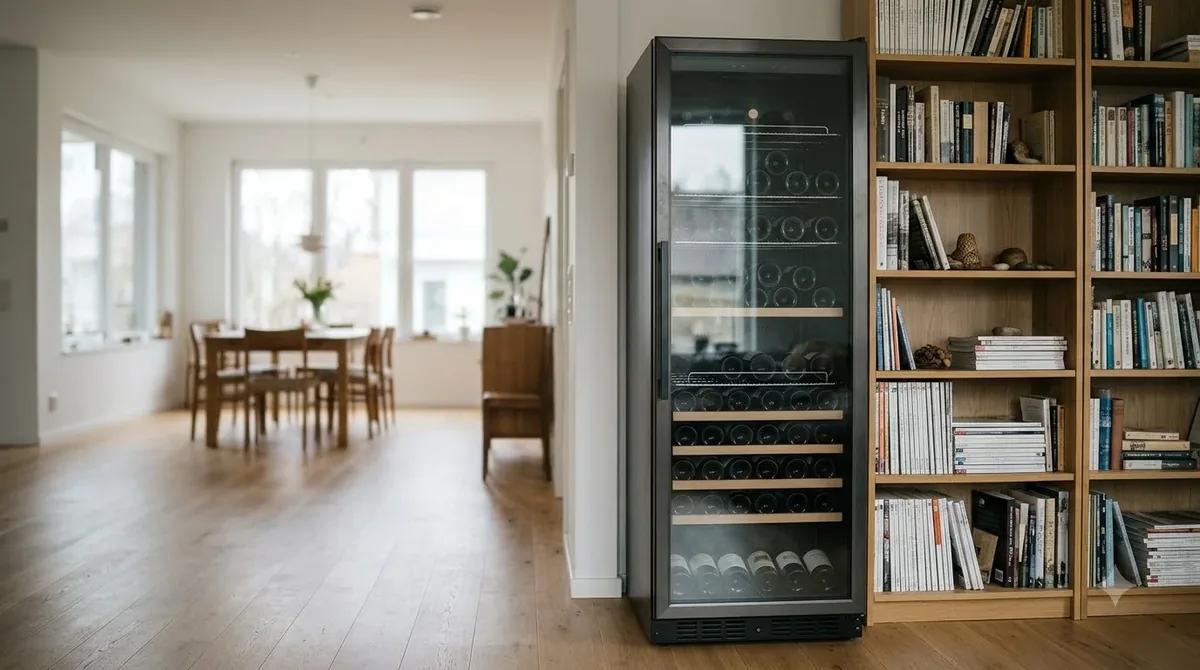
Why it stands out: Reviewers at Wine Enthusiast note that full-height cabinets equipped with universal shelving and steady-temperature inverter compressors maintain consistent climate conditions while cushioning heavier glass formats against micro-vibrations. Because single-zone interiors lack a middle partition, you can reposition or remove individual beechwood shelves to create double-height bays for wide-bottomed bottles, Champagne, or even magnums without sacrificing airflow.
Keep in mind: Even on universal racks, storing exclusively Burgundy-shaped bottles typically lowers a cabinet’s maximum rated capacity by 15 to 25 percent compared to slim Bordeaux cylinders. Measure the interior width and shelf-to-shelf height carefully, and prioritize full-extension ball-bearing rails so you never have to reach blindly into the back row and risk scuffing delicate vintage labels.
Best for Kitchen Remodels: Front-Venting Undercounter Wine Fridges
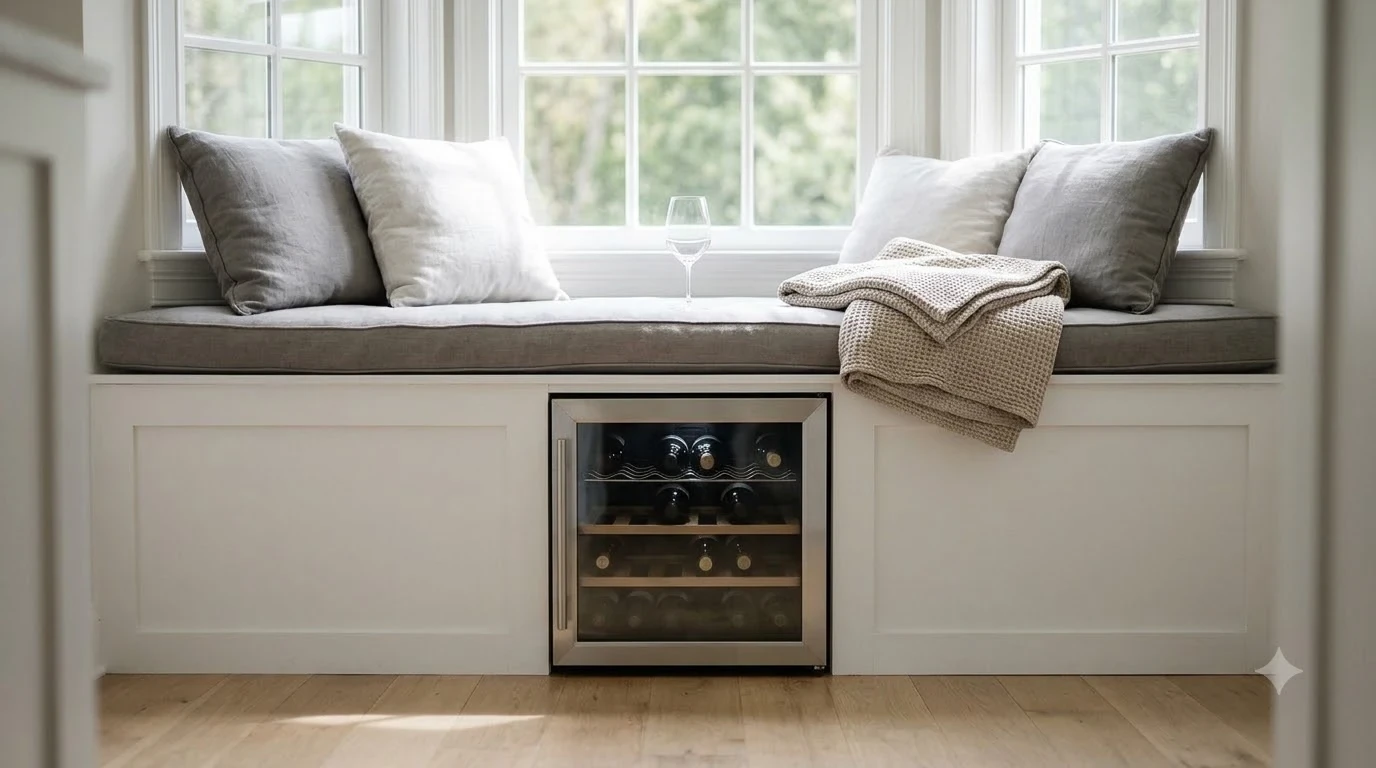
Front-venting undercounter units slide flush beneath standard 24-inch kitchen cabinetry while offering removable beechwood shelves that adapt to broader bottle bases. Exhausting warm air through a bottom toe-kick grille prevents overheating inside tight cabinet cutouts where rear-venting appliances would fail.
Why it stands out: According to Wine Enthusiast’s wine cellar buying guide, modern 24-inch undercounter cellars pair universal shelving with quiet compressor cooling that stays below typical dishwasher noise levels. Many designs include scalloped wood slats that cradle sloping Burgundy shoulders gently, and pulling out a single middle shelf instantly creates enough headroom for a row of wider bottles or oversized reserve releases.
Keep in mind: Undercounter dimensions leave zero margin for error once countertops are installed, so verify both cabinet cutout height and door swing clearance before ordering. Because compact 24-inch frames pack 40 to 50 standard slots into a tight vertical span, plan on removing at least one rack if your collection leans heavily toward Pinot Noir and Oregon Chardonnay.
Best for Mixed Red and White Collections: Dual-Zone Compressor Wine Fridges
Dual-zone compressor fridges separate the interior into two independently controlled climate compartments, letting you hold white Burgundy crisp in the upper section while keeping red Pinot Noir at proper cellar or serving temperature below. Look for models that dedicate deeper shelf spacing to the larger lower red zone where broader bottles naturally congregate.
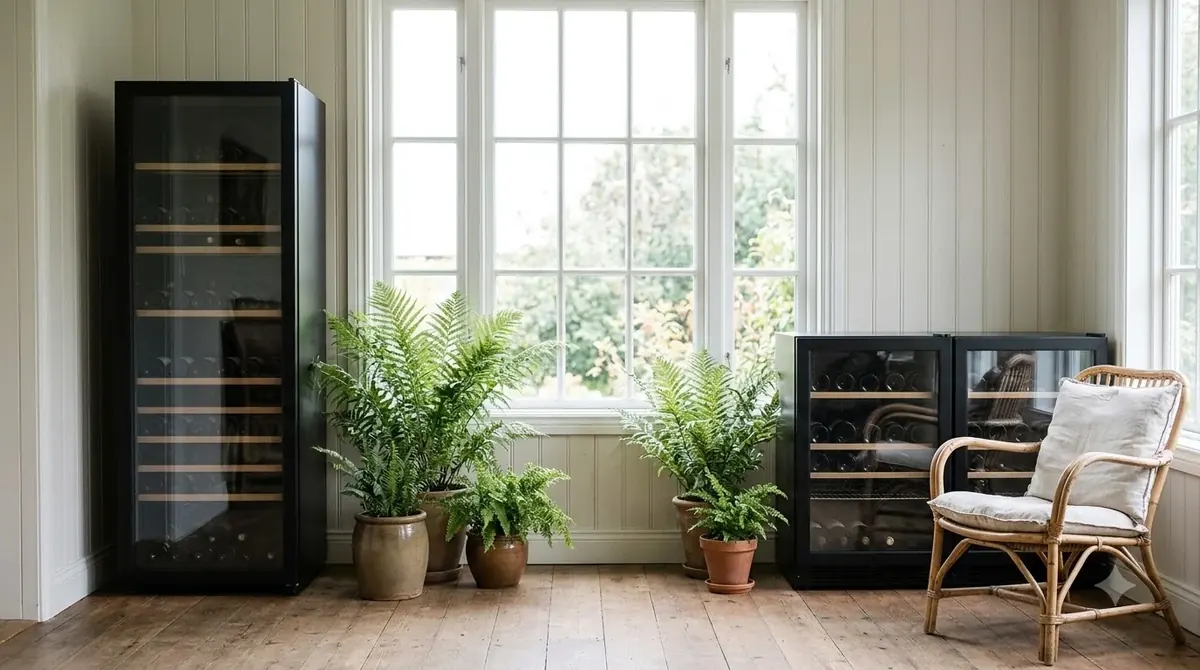
Why it stands out: Separate thermostats eliminate the compromise of storing every bottle at a single middle-ground temperature, allowing you to pull chilled Chardonnay or Chablis straight from the top racks while red Burgundy rests at 55 to 60 degrees underneath. Higher-tier dual-zone cabinets use smooth-gliding hardwood shelves with soft rubber or wood grooves that keep sloped necks from rolling forward whenever the door opens.
Keep in mind: The insulated divider wall between zones consumes roughly one full row of vertical height, which tightens shelf spacing compared to a single-zone cabinet of identical exterior size. Check whether the upper white-wine zone offers removable racks so wider Chardonnay bottles do not wedge against the divider or ceiling.
Best for Showcasing Labels: Label-Forward Display Wine Cabinets
Label-forward wine cabinets orient bottles horizontally parallel to the glass door rather than neck-out, cradling the wider belly of a Burgundy bottle sideways so every vintage and producer remains visible at a glance. This layout eliminates the need to tug heavy bottles out of tight slots just to read the front label.
Why it stands out: Sideways cradle racks naturally accommodate the curved profile of Burgundy and Rhône bottles because each bottle rests along its length rather than squeezing side-by-side through narrow vertical tines. Tinted triple-pane glass doors filter harmful UV light while soft interior LED illumination turns prized bottles into an organized visual inventory.
Keep in mind: Storing bottles parallel to the door reduces total storage density compared to traditional neck-in, neck-out double-deep racking. If maximizing bottle count per square foot matters more than instant visual browsing, a deep universal-rack cellar will hold more wine in the same floor footprint.
Best for Apartments and Tight Corners: Compact Freestanding Wine Coolers
Compact freestanding coolers between 10 and 20 inches wide bring reliable temperature control to apartments, home offices, and dining corners where full-size cabinetry will not fit. Choosing a model with removable shelves—and optional upright storage for opened bottles—keeps everyday Pinot Noir accessible without demanding dedicated floor space.
Why it stands out: If you are shopping for the best wine fridge for small spaces, slimline compressor units around 10 to 18 inches wide easily tuck beside a sideboard or pantry wall while still cooling down to the mid-forties in warm rooms. Removable wavy metal or beechwood racks let you take out every second shelf to fit wider Burgundy bases comfortably, and built-in vertical slots prevent recorked bottles from leaking between pours—handy when keeping track of how many glasses in a bottle of wine remain after dinner.
Keep in mind: Small cabinets under 30 bottles almost always feature tight default rack spacing engineered around slim Bordeaux glass, meaning advertised capacities drop noticeably once you insert wider bottles. Avoid budget thermoelectric boxes if your room regularly warms above 75 degrees, and leave a few inches of breathing clearance along the back and sides for rear-venting models.
How to Choose
Selecting the right cooler for wider bottle shapes comes down to physical rack geometry just as much as cooling hardware. Evaluate these five specifications before committing to a cabinet:
- Shelf pitch and adjustability: Standard Bordeaux racks sit roughly 3.25 to 3.5 inches apart vertically, which leaves almost no clearance for a 3.5-inch Burgundy base. Prioritize adjustable shelf rails, mixed-format shelving, or removable racks that let you expand vertical spacing to at least 3.75 or 4 inches.
- Drawer rail quality: Wide bottles carry extra glass weight and sit closer to neighboring racks. Full-extension telescopic ball-bearing glides slide smoothly without tilting, preventing bottle necks from catching on the shelf above.
- Compressor vs. thermoelectric cooling: Compressor-driven systems hold steady temperatures even in warm kitchens and cool white Burgundy below 50 degrees effortlessly. Thermoelectric units run nearly silent with zero vibration, making them viable only in cool, climate-controlled bedrooms or studies.
- Ventilation placement: Front-venting grilles at the base are mandatory for built-in installation under counters or inside millwork, whereas rear-venting cabinets require open clearance behind and beside the unit.
- Door glazing and humidity control: Dual- or triple-pane UV-tinted glass blocks light damage, while active humidity management or integrated water reservoirs keep natural corks supple during multi-year aging.
Tip: Multiply any manufacturer’s stated bottle capacity by 0.75 to estimate how many Burgundy bottles will actually fit comfortably without stacking or scraping labels.
Frequently Asked Questions
Why do Burgundy bottles not fit in standard wine fridges?
Classic Burgundy bottles measure roughly 3.5 inches across at the base with gently sloping shoulders, compared to about 3 inches for straight-sided Bordeaux bottles. Because manufacturers space fixed racks around slim Bordeaux dimensions to advertise higher capacities, wider Pinot Noir and Chardonnay bottles often rub against the shelf above or refuse to slide in side-by-side.
How many Burgundy bottles fit in a 50-bottle wine fridge?
A 50-bottle wine fridge typically holds around 35 to 40 Burgundy bottles once you account for the extra half-inch of width per bottle and remove one shelf for vertical clearance. Looking for universal shelving or alternating neck-in and neck-out placement helps recover some of that lost space without crushing labels.
What temperature should I set my wine fridge for Burgundy wines?
For long-term aging of both red and white Burgundy, set a single-zone cellar to 55 degrees Fahrenheit with steady humidity. If you use a dual-zone cabinet for immediate serving, keep white Burgundy and Chablis between 48 and 52 degrees in the upper zone and red Pinot Noir between 55 and 60 degrees in the lower compartment.
Can I put a Burgundy wine fridge in a home bar or entertainment room?
Yes, provided you match the ventilation style and vibration damping to the room layout. A front-venting bar wine fridge builds cleanly into wet-bar cabinetry, while quiet inverter compressors prevent hum during conversation; you can also compare room-specific layouts in our By user placement guide.
Matching your cabinet’s shelf spacing and ventilation design to the broader silhouette of Burgundy glass protects both your corks and your labels from unnecessary wear. Whether you need a full-height single-zone cellar for multi-year Pinot Noir aging or a compact freestanding cooler with removable racks for weeknight bottles, prioritizing adjustable beechwood shelving ensures every bottle slides in smoothly.
More in By Room & User
 Wine Fridge in Bedroom: Choose Quiet Storage That Fits Your SpaceUpdated Nov 20, 2026
 Wine Fridge in Living Room: Choose the Right Size, Style, and SetupUpdated Nov 20, 2026
 Wine Fridge In Dining Room: Choose the Right Size and StyleUpdated Nov 20, 2026
 Wine Fridge In Pantry: Choose the Right Size and SetupUpdated Nov 20, 2026
 Wine Fridge In Kitchen: Choose the Right Fit and PlacementUpdated Nov 20, 2026
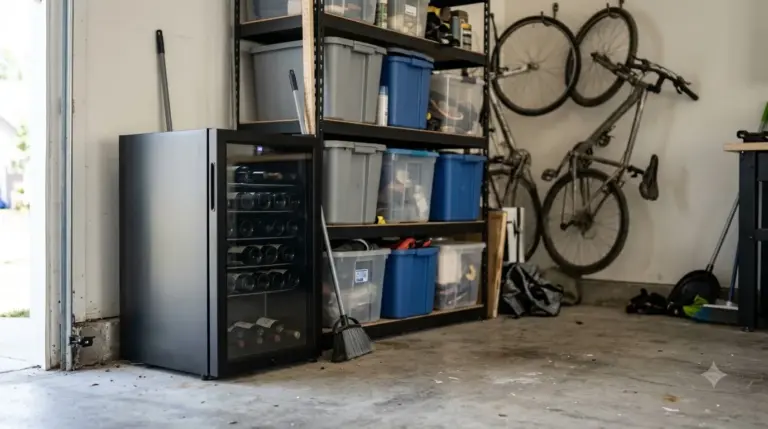
 Wine Fridge In Garage: Choose a Cooler That Handles Temperature SwingsUpdated Nov 20, 2026