

We may earn a commission when you buy through links on this page, at no extra cost to you. Learn more.
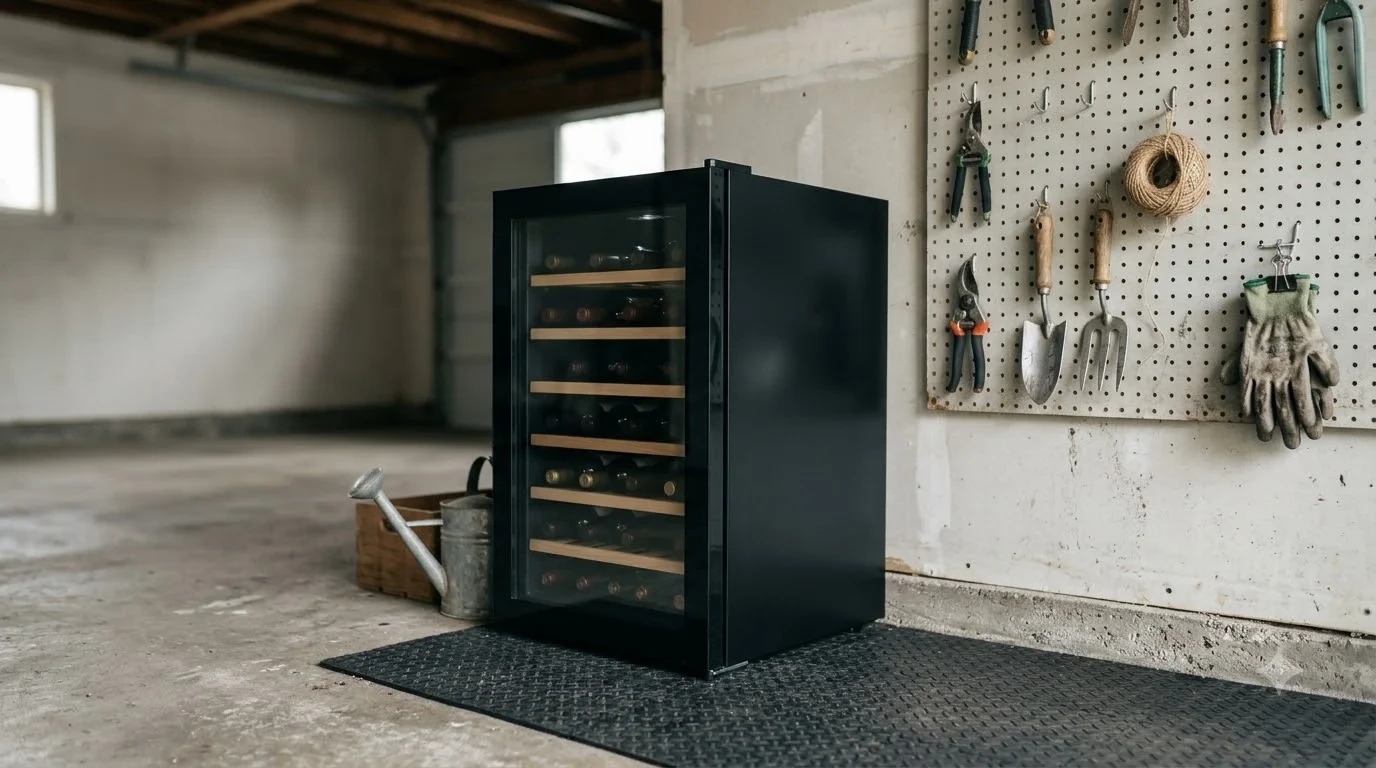
A wine fridge in garage installations needs a compressor cooling system and a manufacturer-approved ambient operating range that covers the garage’s hottest and coldest temperatures. A standard indoor wine cooler may struggle in an unheated garage because summer heat and winter cold can interfere with its ability to maintain a consistent interior temperature. Before buying, compare the manufacturer’s ambient-temperature specifications, cooling technology, ventilation requirements, and storage capacity rather than relying on the advertised bottle count alone.
A garage can provide useful extra storage space for a wine collection, particularly when the kitchen, dining room, or basement has limited room. However, it is a more demanding environment than a temperature-controlled living area. A garage wine refrigerator must cope with changing room conditions while protecting bottles from direct sunlight, excessive heat, cold air, dust, and vibration. The right choice depends on the garage itself as much as the appliance. This guide explains what to look for, how to compare models, and when another location makes more sense.
Who This Garage Wine Refrigerator Guide Is For
A garage wine refrigerator makes the most sense for homeowners who need additional bottle storage and have a garage with suitable electrical service, ventilation, and reasonably controlled temperatures. It can be a practical solution for a growing collection, provided the appliance is specifically approved for the conditions in that location.
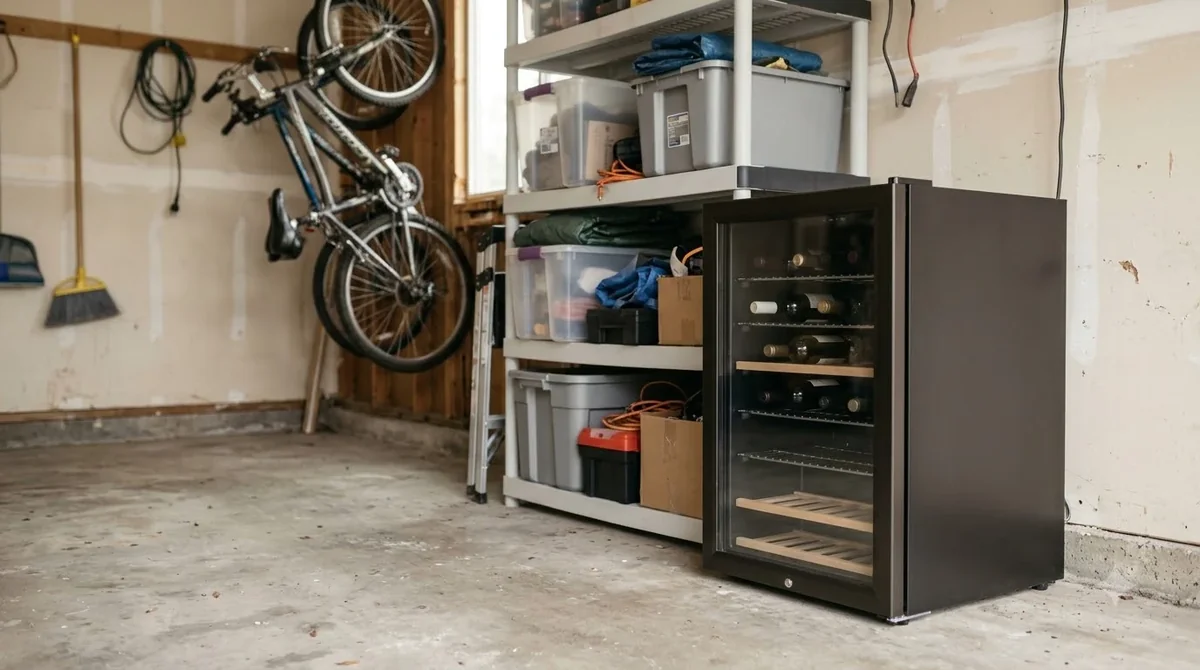
This setup is particularly relevant for people who already use their garage as a utility or entertaining space. A wine cooler can occupy a dedicated section of the room without taking up valuable kitchen cabinets or pantry shelving. However, the installation should be treated as an appliance project rather than simply moving an indoor refrigerator into an unused corner.
Consider three common situations:
- Attached, temperature-controlled garages: A garage with reliable heating or cooling may stay within the operating range of a conventional wine refrigerator. Measure the room temperature through different seasons before choosing a model.
- Unheated garages: These spaces require much more careful selection. Winter temperatures can fall below the minimum operating limit, while summer afternoons can push the room above the maximum rating.
- Workshop garages: A garage used for woodworking, vehicle maintenance, or storage may contain dust, fumes, and additional heat sources. The appliance needs a clean, ventilated position away from these conditions.
People with valuable bottles intended for long-term aging should be especially selective. Wine benefits from stable storage conditions, and a refrigerator that regularly struggles against extreme ambient temperatures is not a suitable substitute for a properly controlled cellar. If the garage experiences severe seasonal changes, an indoor location may be the more sensible choice. A basement wine fridge may offer a more naturally stable environment, depending on the home’s insulation and humidity.
There is also an important distinction between keeping wine ready for drinking and storing wine for years. A garage cooler used for everyday Chardonnay, Sauvignon Blanc, Pinot Noir, or sparkling wine has different practical demands from a cabinet holding collectible bottles that will remain untouched for a decade. Buyers should establish the intended use before deciding how much to spend or how much capacity they need.
Key Factors to Compare When Buying a Garage Wine Cooler
The most important buying criteria are ambient operating range, compressor performance, ventilation, temperature control, and physical capacity. These specifications determine whether a wine cooler can function in a garage rather than merely whether it can reach a particular temperature inside the cabinet.
Start with the ambient operating range. This describes the surrounding room temperature in which the appliance is designed to work. It is not the same as the internal temperature range used to store wine. For example, the Whynter WC-201TD manual recommends an installation environment of 70°F to 78°F, while its internal settings cover different wine-storage temperatures. That distinction matters because a cooler with a suitable internal setting may still struggle in a garage that exceeds its permitted room-temperature range.
| Buying factor | What to compare | Why it matters |
|---|---|---|
| Ambient temperature | Manufacturer’s minimum and maximum room temperatures | Determines whether the garage environment is suitable |
| Cooling system | Compressor or thermoelectric | Affects cooling capacity and performance under changing conditions |
| Temperature range | Approximately 45°F to 65°F or the model’s published range | Helps accommodate different wine-storage needs |
| Capacity | Approximately 20, 34, or 50 bottles | Helps match cabinet size to the collection |
| Cooling zones | One or two independently controlled zones | Allows different serving temperatures in one cabinet |
| Ventilation | Required side, rear, and top clearances | Allows the refrigeration system to release heat |
| Construction | Insulation, door seal, shelves, and UV protection | Supports more consistent storage conditions |
| Electrical requirements | Grounded outlet, circuit rating, and manufacturer instructions | Supports safe, reliable operation |
Compressor cooling deserves particular attention. According to Vintec’s comparison of compressor and thermoelectric systems, compressor appliances generally provide more consistent temperature control and greater cooling capability. Thermoelectric units use the Peltier effect to move heat between two sides of a device, but their limited temperature pull-down capability makes them less suitable for demanding environments. Read Vintec’s comparison of compressor and thermoelectric wine cabinets for a closer explanation of these differences.
That does not mean every compressor wine refrigerator is automatically garage-ready. The model still needs a published ambient operating range that accommodates the garage’s actual seasonal temperatures. A compressor unit rated for an ordinary indoor environment can be just as unsuitable for an unheated garage as a smaller thermoelectric model.
Capacity is another area where advertised specifications can be misleading. Bottle counts generally assume standard Bordeaux-shaped 750 ml bottles. Champagne bottles, Burgundy bottles, and wider sparkling-wine formats can reduce usable capacity. Shelving configuration also affects how many bottles fit without removing shelves or stacking bottles in inconvenient positions.
For buyers comparing compact cabinets, a 20-bottle cooler may work for a modest collection. A 34-bottle unit offers more flexibility, while a 50-bottle cabinet provides additional room for different grape varieties and drinking occasions. The actual internal shelf dimensions matter more than the headline capacity.
Finally, compare the temperature controls and display. A readable digital display, reliable thermostat, and clearly defined temperature zones make everyday use easier. Some models also provide temperature alarms or door alarms, which can be useful in a garage where the appliance may be checked less frequently than a kitchen refrigerator.
Step-by-Step: How to Choose the Best Wine Fridge for Garage Installation
Choosing the best wine fridge for garage installation starts with measuring the room’s temperature, not browsing bottle capacities. Follow these steps before committing to an appliance.
-
Measure the garage’s seasonal temperatures.
Use a thermometer with minimum and maximum readings to monitor the room during both summer and winter. Record the hottest afternoon and coldest overnight conditions. A single measurement on a mild day is not enough to establish whether a wine refrigerator will operate reliably throughout the year.
-
Check the manufacturer’s ambient operating range.
Find the installation-temperature specification in the exact model’s manual. Compare both ends of the published range with your garage readings. For instance, the Whynter WC-201TD requires an installation environment of 70°F to 78°F, so it would not be an appropriate choice for an unheated garage that regularly falls below 70°F or rises above 78°F. Do not confuse this requirement with its internal wine-temperature settings. The Whynter WC-201TD owner’s manual provides the model’s installation and operating instructions.
-
Choose compressor cooling for demanding conditions.
Look for a compressor-based wine cabinet with documented environmental limits. Compressor technology generally offers better cooling capability than thermoelectric technology when room temperatures fluctuate. Nevertheless, the manufacturer’s garage approval and ambient rating remain more important than the cooling technology alone.
-
Calculate the storage capacity you actually need.
Count the bottles you currently own and consider how quickly your collection grows. A household with 15 to 20 bottles may not need a large cabinet. Someone storing 40 to 50 bottles may prefer a larger model to avoid overcrowding and repeated rearranging.
-
Decide between single-zone and dual-zone cooling.
A single-zone refrigerator is appropriate when most bottles will be stored at a similar temperature. A dual-zone model is useful for keeping white wines and reds at different serving temperatures. For example, light whites can be served around 45°F to 50°F, while fuller-bodied reds generally suit approximately 60°F to 65°F.
-
Measure the installation space.
Measure the appliance’s height, width, and depth, including the room needed for the door to open and shelves to slide out. Add the manufacturer’s specified ventilation clearance. A cabinet that physically fits between shelves or workbenches may still be unsuitable if the compressor cannot release heat.
-
Review electrical and installation requirements.
Check the voltage, grounded-outlet requirements, circuit recommendations, and any restrictions on extension cords or power strips. Avoid sharing a circuit with equipment that could overload it. Follow the appliance’s installation instructions and applicable local electrical requirements.
-
Plan for monitoring and maintenance.
Choose a position where the temperature display is easy to read and the door can be checked regularly. A separate thermometer can help confirm the temperature around the stored bottles. Consider how easily the ventilation openings and condenser area can be cleaned.
Tip: Before ordering a garage wine cooler, photograph the appliance’s specification label and the manual’s ambient-temperature requirements. Compare those numbers against the garage’s recorded summer maximum and winter minimum. If either condition falls outside the approved range, choose another installation location or a genuinely garage-rated model.
These steps also help prevent a common purchasing mistake: assuming that a refrigerator’s ability to reach 40°F or 60°F inside the cabinet means it can operate in a room at any temperature. Cooling performance always depends partly on the surrounding environment, and the manufacturer determines the conditions under which its product is designed to operate.
Wine Cooler Types and Styles Explained
Different wine refrigerator designs suit different garage conditions and collection sizes. The main distinctions are cooling technology, installation style, temperature zones, and the level of environmental protection built into the cabinet.
Compressor Wine Refrigerators
Compressor models are generally the strongest starting point for a garage installation. Their refrigeration systems circulate refrigerant through components that remove heat from the cabinet. This active cooling approach offers more capacity to maintain the selected internal temperature than most small thermoelectric systems.
According to Vintec’s technical comparison, compressor systems offer consistent temperature control, can be serviced by competent refrigeration technicians, and use replaceable individual components. The trade-offs include greater manufacturing complexity and potentially more operating noise than some thermoelectric alternatives.
For a garage, prioritize compressor models with documented ambient limits, adequate insulation, and a ventilation design suitable for the intended position. A quiet compressor is helpful if the garage is attached to a living space, but quiet operation should not take priority over temperature suitability.
Thermoelectric Wine Coolers
Thermoelectric wine coolers are often compact and relatively simple in construction. They do not use a conventional refrigerant compressor, making them attractive for small indoor spaces where low operating noise is important.
The limitation is cooling capability. Vintec explains that thermoelectric systems have limited temperature pull-down performance and are less effective outside their specified ambient operating conditions. A hot garage can therefore make it difficult for this type of cooler to maintain the intended interior temperature.
A thermoelectric model may be acceptable in a consistently climate-controlled garage if its manufacturer permits the installation conditions. However, it is not the preferred choice for an unheated or unconditioned garage with significant seasonal changes.
Single-Zone Wine Refrigerators
A single-zone cabinet maintains one general temperature throughout the storage area. It is a straightforward choice for collectors who primarily store wine rather than preparing several varieties for immediate serving.
For example, a collection containing Cabernet Sauvignon, Merlot, and Pinot Noir can share a cellar-style storage temperature. The bottles can then be brought to their individual serving temperatures when needed. This approach is often simpler than maintaining separate zones for a small collection.
Dual-Zone Wine Refrigerators
Dual-zone cabinets provide two temperature-controlled sections. They are useful when a collection includes both reds and whites that are intended to be served at different temperatures.
A practical setup might keep Sauvignon Blanc and Chardonnay in one zone around 45°F to 50°F, with Pinot Noir and Cabernet Sauvignon in the other zone around 55°F to 65°F, depending on serving preference. The exact temperature range and available settings vary by model.
Dual-zone appliances may also be useful for households that store sparkling wines alongside still wines. Sparkling wine is generally served colder, around 40°F to 50°F, than most full-bodied reds.
Garage-Rated Wine Cabinets
A garage-rated wine refrigerator is designed and approved for a wider range of surrounding temperatures than a conventional indoor cooler. This is the category to investigate first when the garage is not heated or cooled.
Look for a manufacturer-published ambient range rather than relying on marketing phrases such as heavy-duty, insulated, or all-season. The specification should identify the lowest and highest permitted room temperatures. It should also explain any installation restrictions, including ventilation and exposure to moisture.
Not every appliance described as garage-ready has the same operating limits. A model approved for a moderately warm garage may still be unsuitable for a location that experiences freezing winter temperatures. The exact environmental rating is what matters.
Common Mistakes When Installing a Wine Fridge in Garage Spaces
The biggest garage wine cooler mistakes involve choosing an indoor appliance, ignoring ventilation, and assuming that the cabinet can compensate for extreme outdoor weather. These errors can lead to unstable temperatures, longer compressor operation, and unnecessary equipment wear.
Buying a Standard Indoor Model
A conventional wine cooler is usually designed for a relatively controlled indoor environment. The manufacturer’s ambient limits may be much narrower than the temperature swings experienced in an unheated garage.
The Whynter WC-201TD manual illustrates why model-specific research matters. Its recommended installation environment is 70°F to 78°F. A garage that becomes colder than that during winter or hotter than that during summer is outside its recommended conditions.
Another example is the Vinotemp VT-34 manual, which specifies an ambient range of 50°F to 90°F and warns that the unit is not designed for garage or basement installation where a controlled environment cannot be maintained. A model’s advertised internal range cannot override an explicit installation restriction.
Confusing Internal and Ambient Temperatures
This is one of the most frequent buying errors. An appliance may advertise an internal temperature setting of 39°F to 65°F, but that does not mean it can maintain those temperatures when the surrounding garage is extremely hot or cold.
For a garage wine refrigerator, always compare the ambient range first. Then examine the internal temperature settings to determine whether the appliance can store the wine at the desired temperature.
Ignoring Direct Sunlight and Heat Sources
Positioning a cooler beside a sunny garage door, water heater, furnace, or workshop heater creates unnecessary heat exposure. The compressor may have to work harder to remove heat, particularly during summer afternoons.
Choose a shaded indoor position away from heat-producing appliances. Avoid placing the cabinet next to an exterior wall that receives strong afternoon sunlight if another location is available.
Blocking the Ventilation System
Freestanding and built-in wine refrigerators have different ventilation designs. A freestanding model may require open space around its rear and sides, while a front-venting built-in model may be designed for installation under a counter.
Never assume that a freestanding wine cooler can be enclosed inside garage cabinetry. Restricted airflow can interfere with heat removal and cooling performance. Follow the exact clearance dimensions in the manual.
Overlooking Dust, Fumes, and Vibration
Garages often contain more airborne dust than living spaces. Sawdust, cardboard fibers, and workshop debris can accumulate around ventilation openings and cooling components. Regular cleaning is especially important in these environments.
Keep the cabinet away from gasoline, solvents, paint fumes, and chemical storage. The Whynter manual specifically warns against keeping gasoline and other flammable vapors or liquids near the appliance. Also avoid locations beside a frequently operated garage door, vibrating workshop equipment, or heavy machinery.
Assuming Winter Cold Is Helpful
A cold garage does not automatically create good wine-storage conditions. Most wine coolers are cooling appliances, not heating cabinets. If the room becomes colder than the selected internal temperature, the cooling system cannot warm the wine back to the target setting.
This means an unheated garage can be unsuitable even if the appliance handles summer heat well. Both seasonal extremes must be considered before installation.
Care, Storage, and Temperature Tips for a Garage Wine Refrigerator
Good installation and regular maintenance help a garage wine cooler maintain more consistent conditions. Monitor the cabinet, keep the ventilation area clean, and store bottles in a way that minimizes unnecessary door openings.
Choose a Suitable Wine Storage Temperature
For longer-term storage, a temperature near 55°F is a useful general target for a mixed collection. The exact temperature is less important than maintaining a reasonably stable environment without repeated extreme changes.
Serving temperatures are different from long-term storage temperatures. Use these practical ranges when selecting settings for a dual-zone cabinet or preparing bottles for drinking.
| Wine style | Serving temperature | Storage consideration |
|---|---|---|
| Sparkling wine | 40°F to 50°F | Keep colder for serving |
| Light white wine | 45°F to 50°F | Suitable for a cooler serving zone |
| Full-bodied white wine | 50°F to 55°F | A slightly warmer serving temperature works well |
| Rosé wine | 45°F to 50°F | Chill before serving |
| Light-bodied red wine | 55°F to 60°F | Avoid serving excessively warm |
| Full-bodied red wine | 60°F to 65°F | Allow young, tannic reds to warm appropriately |
| Sweet white wine | 43°F to 50°F | Serve well chilled |
These are serving guidelines rather than mandatory settings for long-term storage. A single-zone cabinet set around 55°F can be suitable for a mixed collection, with individual bottles chilled or warmed before serving.
Keep Bottles Protected From Light
Direct sunlight is undesirable for wine storage because light exposure can damage wine, particularly bottles in clear glass. A garage cabinet should be positioned away from windows and direct sunlight entering through the garage door.
UV-resistant glass is a useful feature, but it should not be treated as complete protection against sunlight or excessive room heat. A solid door also offers an alternative for buyers who prefer to keep the collection out of sight.
Maintain Proper Ventilation
Check the ventilation openings regularly and remove accumulated dust. A garage cabinet may require more frequent cleaning than an indoor appliance, especially if the room doubles as a workshop.
Keep the required clearance around the refrigerator. Do not place boxes, tools, or stored equipment directly against its ventilation openings. If the cooler has a condenser that requires cleaning, follow the manufacturer’s maintenance instructions rather than opening sealed refrigeration components.
Monitor Temperature Changes
A separate digital thermometer can provide a useful second reference for the cabinet’s displayed temperature. Place it near the bottles rather than directly against a cooling outlet, and observe readings over several days.
Some temperature movement is normal. TCL explains that compressor cycling and automatic defrost can cause temporary internal temperature increases. Its support guidance identifies fluctuations of approximately 6°F to 8°F as possible during normal operation. However, repeated large changes or an inability to return to the selected setting should prompt further investigation.
Load and Organize Bottles Carefully
A cabinet should not be packed so tightly that air circulation is restricted. Leave the manufacturer’s recommended space around shelves and vents, and arrange bottles so the door can close fully.
Standard 750 ml Bordeaux bottles generally fit most wine refrigerator shelves, but larger Champagne and Burgundy bottles may need additional space. Avoid forcing oversized bottles into narrow shelf positions.
For cork-finished bottles, horizontal storage is a traditional way to keep the cork in contact with the wine. This is particularly useful for bottles intended for extended storage. Organize everyday drinking bottles near accessible shelves and reserve less accessible positions for bottles that will remain stored longer.
Plan for Power Interruptions
Garage electrical circuits can be affected by workshop equipment, refrigerators, and other appliances. Use the grounded electrical connection specified by the manufacturer and avoid unsuitable extension cords or power strips.
For a valuable collection, consider how the bottles will be protected during an extended outage. If the cooler loses power and the cabinet temperature begins moving outside the desired range, avoid repeatedly opening the door. Move valuable bottles to a more stable storage location if the interruption is prolonged.
If your garage cannot maintain a suitable environment, moving the appliance indoors is often more practical than trying to compensate with additional insulation or improvised heating. A apartment wine fridge may be a better solution for a smaller indoor collection, while a bar wine fridge can suit a dedicated entertaining area. For more installation ideas, explore the By room selection guide.
Frequently Asked Questions
Can you put a wine fridge in an unheated garage during winter?
Only if the manufacturer explicitly permits operation at the garage’s lowest expected ambient temperature. A conventional wine cooler generally cannot heat its interior when the surrounding air becomes colder than the selected setting. Some appliances also have compressor operating restrictions at low ambient temperatures, so winter suitability must be verified independently of summer performance.
Does a garage wine refrigerator need a special electrical outlet?
Requirements depend on the appliance and local electrical codes. For example, the Whynter WC-201TD manual specifies a grounded three-prong outlet and recommends a separate circuit. Garages may also require additional electrical protection depending on the installation, so have the outlet checked by a qualified electrician if its suitability is uncertain.
Can a wine cooler be installed inside a garage cabinet?
Only if the appliance is designed for built-in installation and the cabinet provides the required ventilation. Some wine refrigerators release heat through their rear and side panels, while front-venting models are designed differently. Enclosing a freestanding model without following its clearance requirements can prevent proper heat removal.
How long does a new garage wine cooler take to reach its set temperature?
The initial cooling period depends on the appliance, its starting temperature, the number of bottles loaded, and the surrounding room conditions. Some manufacturers advise allowing up to 24 hours for an appliance to reach its selected temperature under specified conditions. Avoid judging performance immediately after switching on a newly installed, fully loaded cabinet.
Should wine be stored near paint, gasoline, or automotive chemicals?
No. Keep the wine refrigerator away from stored gasoline, solvents, paint, and other chemical products. Besides the appliance’s electrical safety requirements, strong odors and potential contamination are undesirable around wine intended for extended storage. A separate enclosed storage area is preferable for workshop chemicals.
The best wine fridge in garage installations is one that matches the garage’s full seasonal temperature range, provides reliable compressor cooling, and has sufficient ventilation for its intended position. For an attached, climate-controlled garage, a suitable indoor wine refrigerator may work perfectly well. For an unheated garage, prioritize a genuinely garage-rated cabinet with published ambient specifications rather than relying on bottle capacity or cooling technology alone.
More in By Room & User
 Wine Fridge in Bedroom: Choose Quiet Storage That Fits Your SpaceUpdated Nov 20, 2026
 Wine Fridge in Living Room: Choose the Right Size, Style, and SetupUpdated Nov 20, 2026
 Wine Fridge In Dining Room: Choose the Right Size and StyleUpdated Nov 20, 2026
 Wine Fridge In Pantry: Choose the Right Size and SetupUpdated Nov 20, 2026
 Wine Fridge In Kitchen: Choose the Right Fit and PlacementUpdated Nov 20, 2026
 Wine Fridge In Cabinet: How to Choose the Right Built-In FitUpdated Nov 20, 2026