

We may earn a commission when you buy through links on this page, at no extra cost to you. Learn more.
The best wine fridge in bedroom spaces is usually a compact, quiet thermoelectric model with enough ventilation, stable temperature control, and capacity for your regular bottle collection. Thermoelectric coolers are attractive because they avoid conventional compressor operation, although their cooling performance depends on room temperature. If your bedroom gets warm or you need storage for a larger collection, a well-insulated compressor model may be a better choice. The right purchase balances nighttime noise, available floor space, bottle capacity, and reliable cooling.
A bedroom wine refrigerator can make a small collection accessible without requiring a separate cellar, basement, or kitchen storage area. However, choosing one for a sleeping space involves different priorities from selecting an appliance for a kitchen or entertainment room. Noise, vibration, ventilation, lighting, and the distance between the appliance and your bed all deserve attention. This guide explains how to compare bedroom-friendly wine refrigerators, measure your available space, and choose a setup that protects your bottles without disrupting your room.
Who This Is For: Bedroom Wine Refrigerator Buyers
A bedroom wine fridge makes sense for someone who wants convenient access to a modest wine collection and has a suitable location with electrical access and ventilation. It is particularly useful in a studio apartment, a large primary bedroom, or a guest suite where the kitchen is not the most convenient place to store wine.
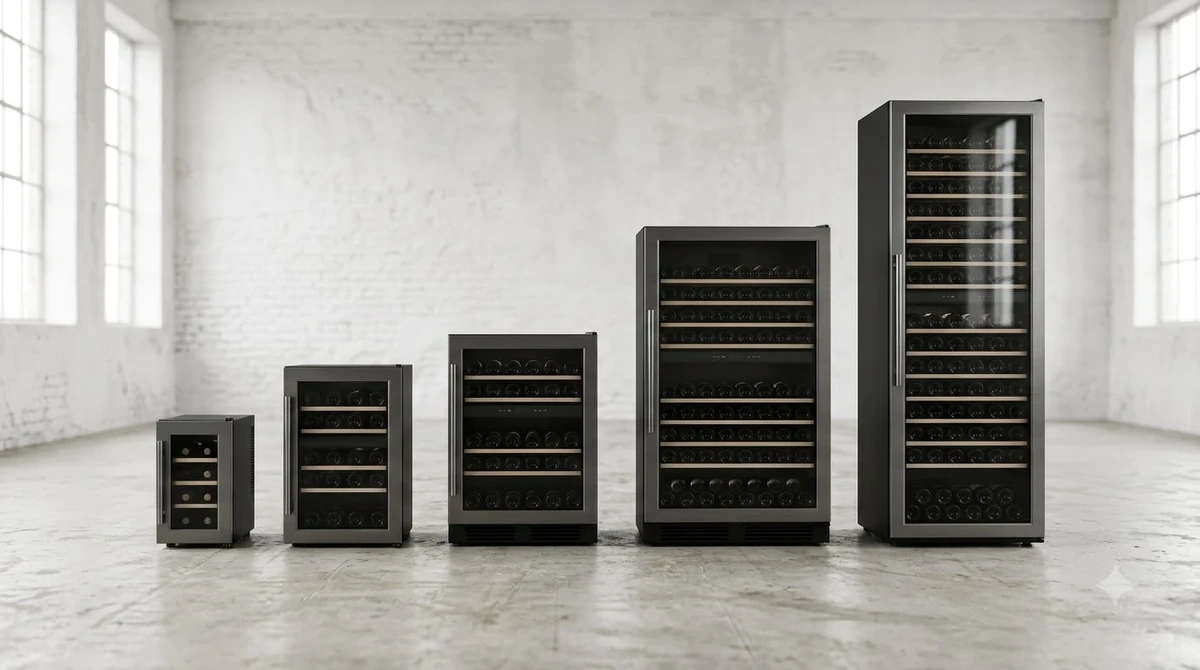
Consider this setup if you regularly keep approximately 6–20 bottles available and want a dedicated appliance rather than using a kitchen refrigerator. A smaller refrigerator can fit beside a dresser, along an open wall, or in a designated corner of a bedroom. The actual footprint matters more than the advertised bottle count because shelving arrangements and bottle shapes affect usable capacity.
Bedroom placement also makes sense for people who value appearance. A glass-front wine cooler with subdued interior LED lighting can complement modern furniture, while a solid-door model may blend more naturally into a traditional bedroom. The important distinction is that appearance should never take priority over ventilation or temperature performance.
There are situations where a bedroom is not the right location. A very small room with limited floor space, an enclosed closet without airflow, or a bedroom that regularly becomes hot can make wine refrigeration difficult. A conventional compressor refrigerator may also become noticeable when it cycles during a quiet night.
Think about your collection before shopping. Someone keeping six bottles for occasional dinners has different requirements from someone storing 18 bottles of Cabernet Sauvignon, Pinot Noir, Chardonnay, and sparkling wine. The second buyer may need more capacity, separate temperature zones, and a stronger cooling system.
If the bedroom is part of a compact home, compare the requirements with an apartment wine fridge as well. Apartment-oriented choices often address limited floor space, shared living areas, and practical installation restrictions.
Key Factors to Compare Before Buying a Bedroom Wine Fridge
The most important buying considerations are cooling technology, operating noise, bottle capacity, temperature control, and physical dimensions. These factors determine whether an appliance will work comfortably in a sleeping environment rather than simply fit into an available corner.
| Buying factor | What to look for | Bedroom consideration |
|---|---|---|
| Cooling technology | Thermoelectric or compressor | Thermoelectric generally avoids compressor cycling noise |
| Capacity | Approximately 6–20 bottles for a modest collection | Match usable capacity to actual bottle shapes |
| Storage temperature | About 55°F for general storage | Prioritize consistent temperature |
| Operating environment | Within the manufacturer’s specified ambient range | Important in bedrooms that become warm |
| Ventilation | Manufacturer-specified clearance | Do not trap heat against furniture or walls |
| Lighting | Low-heat LED interior lighting | Look for an independent light switch |
| Door design | Reversible or suitable door swing | Allow room for opening and removing bottles |
| Temperature zones | Single-zone or dual-zone control | Choose according to the wine collection |
Noise and nighttime comfort
Noise deserves particular attention because a sound that disappears into normal household activity may become noticeable in a quiet bedroom. Compressor refrigerators produce operating sounds as the cooling system starts and stops. Fans, refrigerant circulation, and minor vibrations can also contribute to the overall sound.
Vinotemp explains that thermoelectric wine coolers generally operate quietly because they do not use a conventional compressor. However, they still have fans that circulate air. This means thermoelectric does not automatically mean completely silent.
Look for manufacturer-published decibel information when available. Compare measurements taken under similar conditions rather than assuming that a smaller refrigerator must be quieter. Also consider where the sound measurement was taken and whether the specification includes fan operation.
Capacity and physical dimensions
Advertised bottle capacity usually assumes standard 750 ml Bordeaux-style bottles. Burgundy bottles, Champagne bottles, and other wider formats can occupy more shelf space. A cooler advertised for 18 bottles may therefore hold fewer bottles if your collection contains several wide sparkling wine bottles.
Measure the available width, depth, and height before considering capacity. Include the door handle, ventilation clearance, power cord, and door-opening space in your measurements. A refrigerator that fits tightly between a bed and dresser may become inconvenient if its door cannot open far enough to remove a bottle.
Temperature control and glass doors
A stable temperature matters more for general wine storage than an elaborate digital display. A setting around 55°F is a useful starting point for mixed collections, while the appropriate serving temperature depends on the wine style.
For bedroom use, consider whether the display can be dimmed or switched off. A bright digital panel can be distracting at night, especially when the appliance sits within direct sight of the bed. UV-protective glass is another useful feature because wine can be affected by prolonged exposure to ultraviolet light.
Step-by-Step: Choosing and Installing the Right Bedroom Wine Fridge
A successful purchase begins with measuring the room, identifying your collection requirements, and checking the appliance’s installation instructions. Following a practical selection process reduces the chance of buying a refrigerator that is too loud, too large, or unsuitable for your bedroom’s temperature conditions.
- Measure the available location. Record the width, depth, and height of the intended space. Measure from the nearest furniture, wall, and doorway. Include room for the door to swing open and for the appliance to receive adequate ventilation.
- Estimate your bottle collection. Count the bottles you normally keep at home rather than choosing capacity based on a future collection you may never build. A 6-bottle unit may suit occasional drinkers, while a 12–20-bottle appliance offers more flexibility for regular entertaining.
- Choose the cooling system. Consider thermoelectric cooling if quiet operation is your highest priority and the bedroom remains within the manufacturer’s recommended ambient temperature. Choose a compressor system if stronger cooling performance is more important, particularly in a warmer room.
- Decide between single-zone and dual-zone storage. A single-zone model is generally simpler for a collection that is primarily intended for storage. Dual-zone refrigerators provide separate temperature settings for people who regularly keep red and white wines ready for different serving conditions.
- Check the operating noise information. Look for published decibel measurements, compressor descriptions, fan specifications, and owner feedback about nighttime operation. Remember that the sound produced by a refrigerator may be more noticeable in a quiet bedroom than in a busy kitchen.
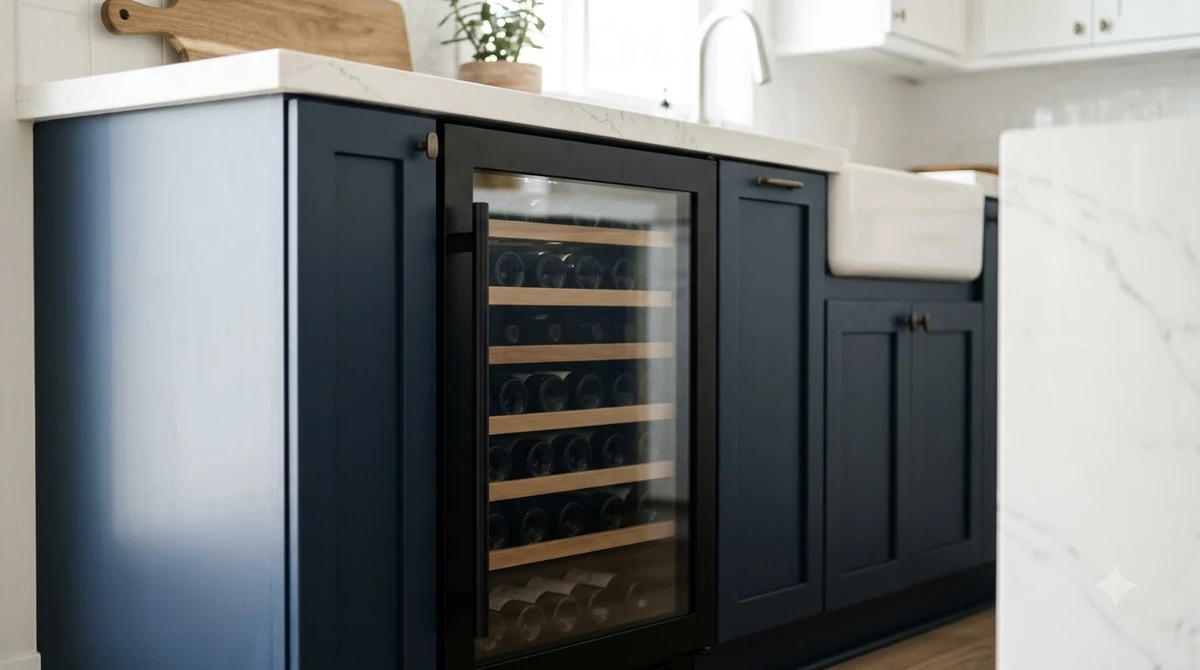
- Verify installation clearances. Read the manufacturer’s instructions for the exact appliance. Confirm whether it is freestanding or designed for built-in installation. A rear-vented freestanding refrigerator must not be placed in an enclosed cabinet.
- Choose a practical location. Position the cooler away from direct sunlight, radiators, heating equipment, and other heat sources. A stable location near an appropriate electrical outlet is preferable to a cramped space beside the bed.
- Install and monitor the refrigerator. Level the appliance, allow it to settle after transportation according to the instructions, and set the desired temperature. Monitor the interior temperature and operating noise before filling every shelf.
One useful installation reference is the Midea FP-20RWC096LMNV-T1 manual. It specifies more than 30 cm of clearance above the appliance and more than 10 cm at the sides and rear for that particular model. Those measurements are not universal requirements, but they illustrate why installation dimensions should be checked before purchasing.
For another useful reference, read NewAir’s explanation of thermoelectric wine refrigerators, which discusses cooling technology, ambient temperature, and ventilation considerations.
Types of Wine Refrigerators Explained for Bedroom Use
Bedroom wine refrigerators generally fall into four practical categories: compact thermoelectric units, compressor-powered units, single-zone refrigerators, and dual-zone refrigerators. These categories describe different characteristics, so a refrigerator can belong to more than one category at the same time.
Compact thermoelectric wine coolers
Thermoelectric cooling uses an electrical process to transfer heat rather than relying on a conventional compressor. The absence of compressor cycling can make this technology appealing in bedrooms, offices, and other spaces where operating noise matters.
However, thermoelectric systems have an important limitation: their cooling ability depends on the surrounding room temperature. Vinotemp explains that its typical thermoelectric guidance involves cooling approximately 10–12°F below ambient temperature. This is a consideration in bedrooms that become warm during summer or receive strong afternoon sunlight.
These refrigerators are best suited to modest collections and rooms with relatively stable temperatures. They are less attractive when the appliance must overcome substantial heat from the surrounding environment.
Compressor wine refrigerators
Compressor models use a refrigeration system similar in principle to a household refrigerator. They can provide stronger cooling performance and are generally more suitable for larger collections or warmer environments.
The trade-off is operating noise and potential vibration. A compressor may produce a humming sound during operation, while startup can be more noticeable. Electrolux’s wine cooler owner guidance identifies compressor operation as a normal source of audible sound and explains that startup can temporarily sound louder.
For a bedroom, a compressor model makes more sense when the cooling requirements outweigh sensitivity to noise. A properly insulated cabinet, vibration-dampening components, and stable installation can help improve the experience.
Single-zone refrigerators
A single-zone refrigerator maintains one main temperature setting throughout its storage compartment. This design is straightforward and can work well for someone storing a consistent collection of red wines or keeping mixed bottles at a general storage temperature.
For example, a bedroom collection consisting mainly of Merlot, Cabernet Sauvignon, and Pinot Noir may not require separate zones. A setting near 55°F is a reasonable general storage target when the refrigerator supports it.
Dual-zone refrigerators
Dual-zone appliances provide two independently controlled storage areas. This arrangement is useful for someone who regularly stores red and white wines and wants each group closer to its preferred serving temperature.
Light whites and rosé are generally served around 45–50°F, while full-bodied reds are generally served around 60–65°F. A dual-zone refrigerator can make this separation convenient, although it is not essential for every bedroom collection.
Tip: If nighttime quiet is more important than rapid cooling or large storage capacity, begin your search with compact thermoelectric models. If your bedroom is regularly warm, compare the actual ambient operating limits before choosing one. A quiet appliance that cannot maintain its intended temperature is not a useful wine storage solution.
Common Mistakes When Placing a Wine Fridge in a Bedroom
The most common bedroom installation mistakes involve restricted ventilation, inadequate floor support, incorrect appliance selection, and poor positioning near heat sources. Avoiding these problems helps maintain cooling performance and prevents unnecessary operating noise.
Putting a freestanding refrigerator inside a closet
A closet may look like an attractive place to conceal a small wine refrigerator, but an enclosed space can restrict airflow. The appliance needs to release heat produced by its cooling system. When that heat cannot escape, the refrigerator may operate less efficiently and struggle to maintain its internal temperature.
NewAir specifically warns against placing freestanding thermoelectric coolers inside cabinetry. Its guidance recommends at least 5 inches of clearance around the freestanding units discussed in its article. This is a manufacturer-specific recommendation, not a substitute for the installation instructions supplied with another refrigerator.
Choosing a compressor refrigerator without considering nighttime sound
A compressor model can be an excellent storage appliance but still be an uncomfortable choice for a particularly quiet bedroom. The sound may be most noticeable during startup or when the compressor operates after the room has become quiet.
Electrolux also identifies refrigerant circulation, metal expansion and contraction, and vibration from an unlevel appliance as possible sources of normal operating sounds. These distinctions matter because not every sound indicates a mechanical problem.
Buying based on advertised capacity alone
Capacity figures can be misleading when your collection includes several different bottle shapes. Standard Bordeaux bottles are relatively uniform, while Burgundy and Champagne bottles can be wider. Shelves designed for narrow bottles may not accommodate every bottle comfortably.
Consider your actual wine purchases before choosing the capacity. If you regularly buy sparkling wine, inspect the shelf spacing and arrangement rather than relying only on the headline bottle count.
Placing the refrigerator beside a heat source
Radiators, heating vents, direct sunlight, and other warm surfaces can affect the surrounding temperature. This is particularly important for thermoelectric refrigerators because their cooling performance depends on the difference between interior and ambient temperatures.
Do not assume that a glass door with UV protection makes direct sunlight harmless. UV protection addresses light exposure, not the additional heat that sunlight can introduce into the appliance.
Ignoring the door swing and electrical connection
A refrigerator placed beside a bed may have enough space for its body but insufficient room to open its door. This makes accessing the bottles awkward and can increase the time the door remains open.
Electrical access also deserves attention. Use an appropriate grounded outlet and follow the appliance’s electrical instructions. Avoid improvising with extension cords or adapters when the manufacturer prohibits them.
Care and Storage Tips for Bedroom Wine Refrigerators
Good maintenance involves keeping the ventilation openings clear, controlling the interior temperature, minimizing unnecessary door openings, and placing bottles correctly. These habits support consistent refrigeration and help protect wine quality during storage.
Maintain a consistent temperature
For general wine storage, approximately 55°F is a useful target. Vinotemp identifies 45–65°F as a desirable general storage range and emphasizes the importance of avoiding major temperature fluctuations.
Serving temperature is different from storage temperature. A bottle stored around 55°F can be adjusted before serving according to its style:
- Sparkling wine: 40–50°F.
- Light-bodied whites and rosé: 45–50°F.
- Full-bodied whites: 50–55°F.
- Light-bodied reds: 55–60°F.
- Full-bodied reds: 60–65°F.
- Sweet white wines: 43–50°F.
Do not constantly change the refrigerator setting every time you want a different wine. A stable storage temperature is generally more useful than trying to make every bottle immediately ready for serving.
Keep the ventilation system clean
Dust can accumulate around ventilation grilles and fan openings. Inspect these areas periodically and clean them according to the manufacturer’s maintenance instructions. Always disconnect the appliance from power before performing maintenance that requires access to internal or electrical components.
Make sure furniture, curtains, clothing, and decorative objects do not cover the ventilation openings. A bedroom may have more soft furnishings than a kitchen, so checking the surrounding area is especially important.
Reduce vibration and unnecessary movement
Place the refrigerator on a hard, level, stable surface. Avoid soft carpet when possible because an unstable base can increase vibration and affect how the door closes. If the unit has adjustable feet, use them to eliminate rocking.
Do not allow bottles to knock against each other or the refrigerator walls. Arrange shelves carefully, avoid overloading them, and leave enough room for internal air circulation.
Protect bottles from light
UV exposure can accelerate unwanted changes in wine. A refrigerator with UV-protective glass is useful when the bedroom receives daylight, but positioning the appliance away from windows is still preferable.
Choose an interior LED light rather than a lighting system that generates substantial heat. If the refrigerator has a separate lighting control, turn it off overnight to prevent unnecessary illumination.
Store bottles in the correct position
Store cork-sealed bottles horizontally for longer-term storage so the wine remains in contact with the cork. This helps keep the cork from drying out. Bottles with screw caps do not require the same horizontal storage arrangement, so their orientation can be determined by shelf design and available space.
Keep bottles away from the rear interior wall if the manual recommends doing so. Midea’s instructions specifically advise preventing bottles from touching the back of its cooler to maintain air circulation.
Allow space for future purchases
A refrigerator should not be packed beyond its intended capacity. Overcrowded shelves can obstruct airflow and make bottles difficult to remove. Keeping some available space also makes it easier to accommodate a wider bottle without rearranging the entire collection.
For a larger collection that no longer fits comfortably in the bedroom, a basement wine fridge may be a more practical alternative if the basement’s temperature and humidity conditions are suitable for the selected appliance. Buyers comparing different household locations can also explore wine refrigerator options by room before deciding where to install a larger unit.
Frequently Asked Questions
Can a wine fridge make a bedroom warmer?
Yes. Like other refrigeration appliances, a wine cooler transfers heat from its interior to the surrounding room. A small appliance generally has a limited effect, but a poorly ventilated installation can cause additional heat to accumulate around the cabinet. This is one reason to avoid enclosed closets and blocked ventilation openings.
Should a bedroom wine refrigerator run all night?
A wine refrigerator is designed to maintain its temperature automatically rather than being switched off every night. Turning it off regularly can create unnecessary temperature fluctuations. If nighttime operation is a concern, choose an appropriately quiet appliance and place it where normal operating sounds are less noticeable.
Can a wine fridge be placed on a wooden bedroom floor?
Yes, provided the floor is flat, stable, and capable of supporting the fully loaded appliance. Protect the flooring from accidental spills and check that adjustable feet do not damage the surface. A suitable protective floor mat can help, provided it does not compromise appliance stability or ventilation.
Does a bedroom wine fridge need a humidity control feature?
Not necessarily for a modest collection that is consumed within a relatively short period. Humidity becomes more relevant for long-term bottle storage, especially when bottles have natural cork closures. Vinotemp discusses approximately 70% relative humidity as an ideal target for storage lasting 10 years or longer, with 50–80% described as a safe range in its guidance.
Can a bedroom wine refrigerator store opened bottles?
Yes, provided opened bottles are properly resealed and stored upright to reduce the chance of leakage. The refrigerator does not prevent oxidation completely, so wine quality will still decline after opening. A vacuum stopper or suitable sparkling-wine closure can help manage the remaining wine, depending on its style.
A bedroom wine refrigerator can be a practical addition when its cooling system, capacity, and installation requirements match the room. For most noise-sensitive buyers, a compact thermoelectric unit is a sensible starting point, while a compressor model deserves consideration when stronger cooling is necessary. Measure the space, prioritize ventilation, and choose stable temperature control over unnecessary features to create a convenient and wine-friendly bedroom storage setup.
More in By Room & User
 Wine Fridge in Living Room: Choose the Right Size, Style, and SetupUpdated Nov 20, 2026
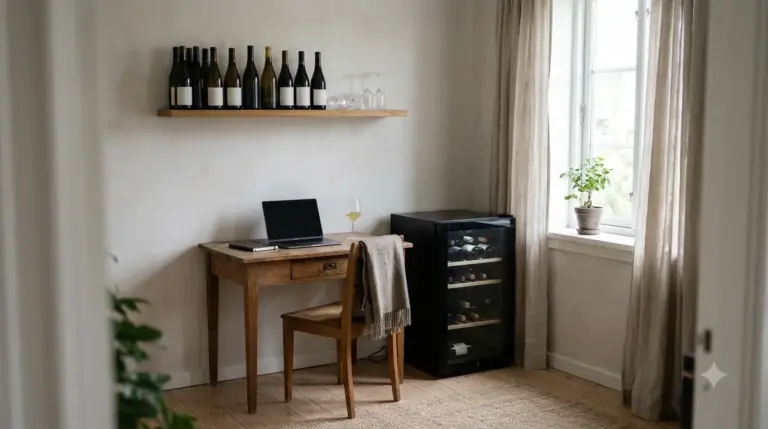 Wine Fridge In Dining Room: Choose the Right Size and StyleUpdated Nov 20, 2026
 Wine Fridge In Pantry: Choose the Right Size and SetupUpdated Nov 20, 2026
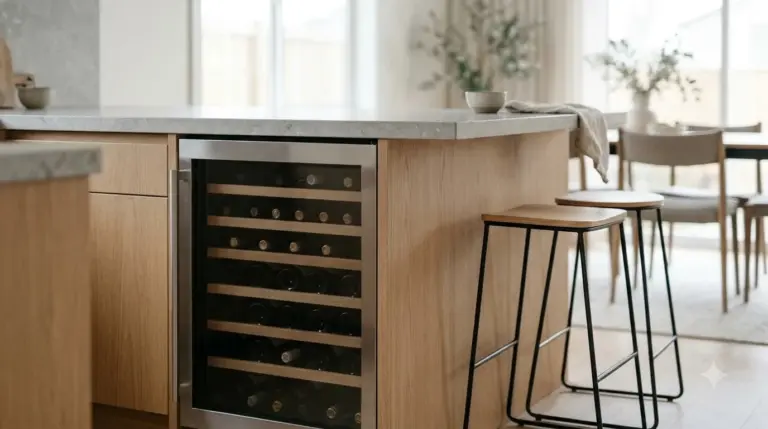 Wine Fridge In Kitchen: Choose the Right Fit and PlacementUpdated Nov 20, 2026
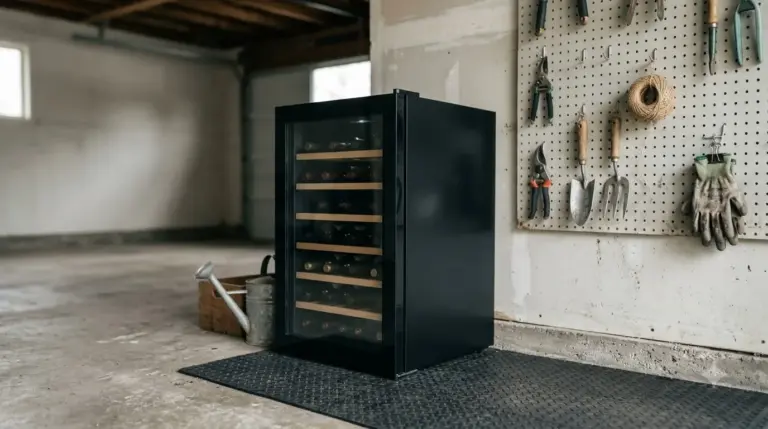 Wine Fridge In Garage: Choose a Cooler That Handles Temperature SwingsUpdated Nov 20, 2026
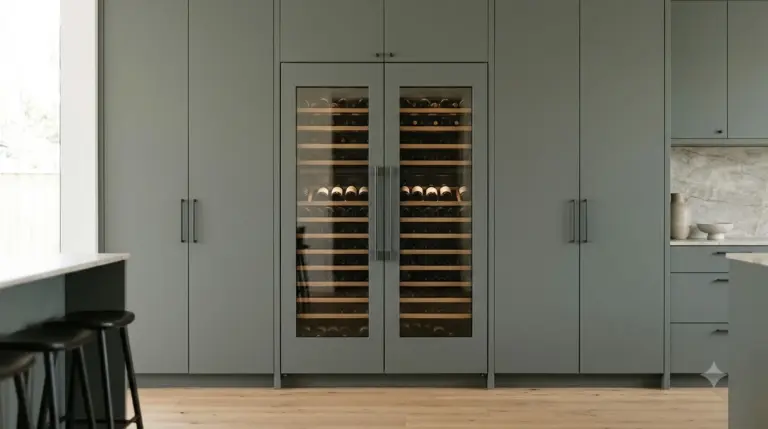 Wine Fridge In Cabinet: How to Choose the Right Built-In FitUpdated Nov 20, 2026