

We may earn a commission when you buy through links on this page, at no extra cost to you. Learn more.
How many glasses in a bottle of wine? A standard 750 ml bottle holds about five glasses at a 5-ounce pour. If your glasses are larger, the count drops to four or even three, and if you pour smaller tasting portions, you can get six or more. The bottle is always 25 US fluid ounces, so the number of glasses depends mainly on how much you pour into each one.
This guide shows how the count works, what a standard pour looks like, how bottle size and glass size change the answer, and how to plan for a dinner or a party. It is written for anyone who wants to buy the right number of bottles without guessing.
The short answer for a standard bottle
Most wine sold in the United States comes in a 750 milliliter bottle, which is about 25 US fluid ounces. A common pour in a restaurant or at home is 5 fluid ounces. Dividing 25 by 5 gives five glasses. That is the number most people use as their baseline when they plan a meal.
The answer changes when the pour changes. A generous pour of 6 ounces gives about four glasses, while a smaller pour of 4 ounces gives about six. For planning purposes, five glasses is a sensible default that works for most dinners, and you can adjust it up or down based on your guests and the glasses you use.
What a standard pour looks like
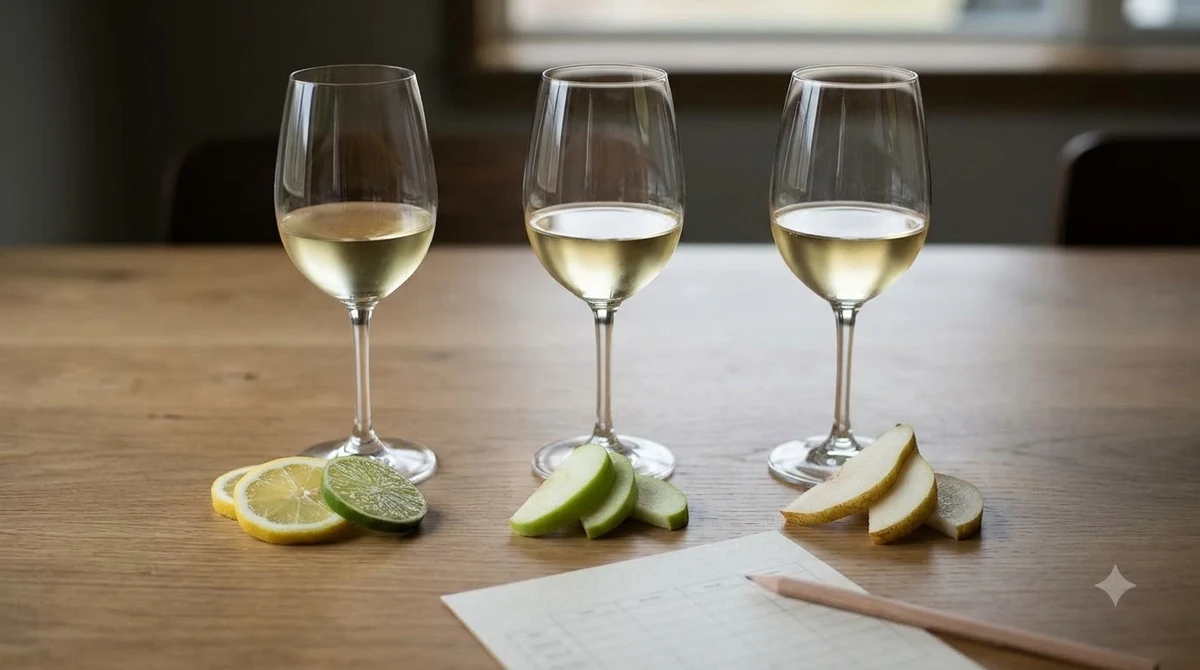
A standard pour is usually defined by the amount of wine in the glass rather than the size of the glass itself. In the United States, a typical wine serving is 5 US fluid ounces, or about 150 milliliters. This figure appears in the alcohol-counting guidance used for health labeling. The CDC guidance on standard drink sizes describes a 5-ounce pour of 12 percent alcohol wine as one standard drink, which is a useful reference when you want to count servings rather than glasses.
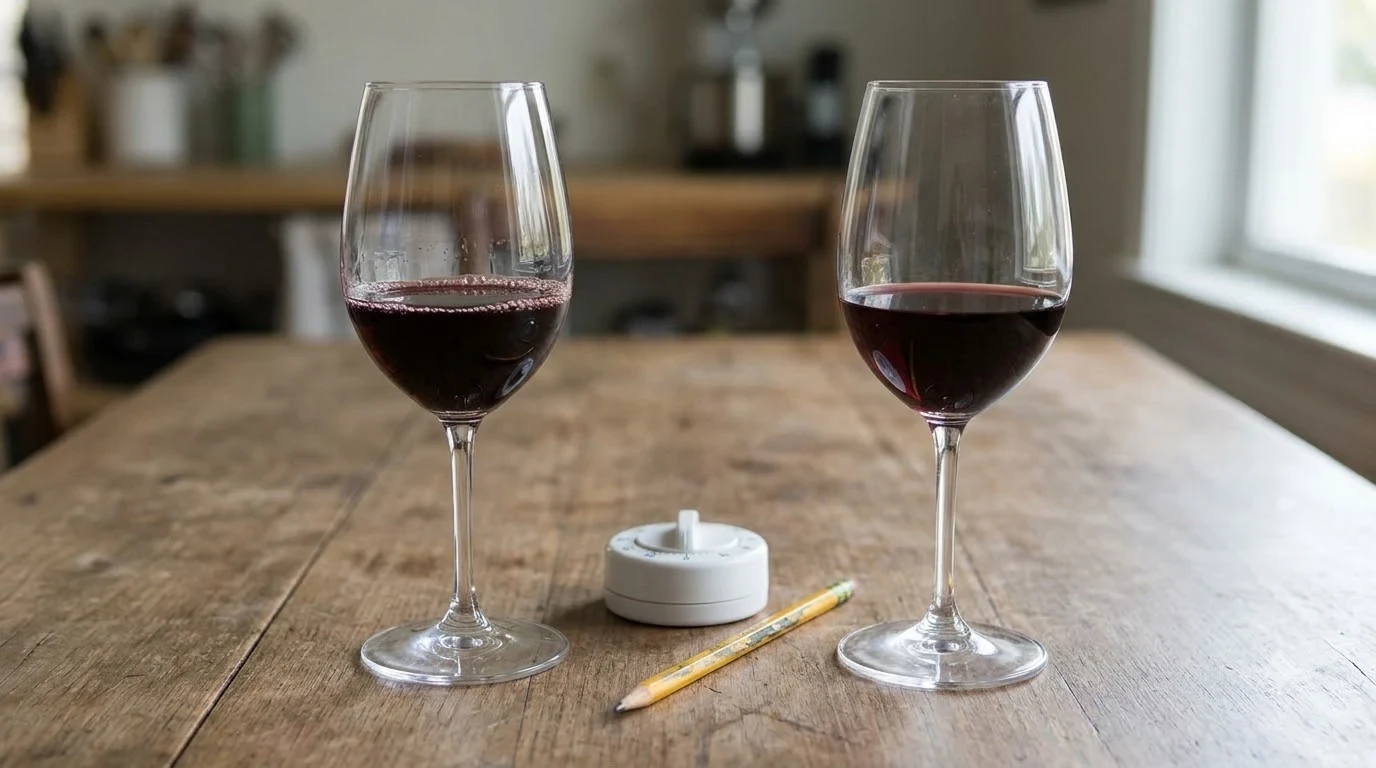
Many people pour more than 5 ounces without noticing. A glass that is only half full can still hold 5 ounces, while a glass filled to the widest part may hold 8 or more. Measuring once with a jigger or a kitchen measuring cup is the quickest way to see what your usual pour really is.
Because most wine today is stronger than 12 percent alcohol, the same 5-ounce pour can contain more than one standard drink. That is worth keeping in mind when you are planning how much wine a group will drink over an evening.
How glass size changes the count
Glass size is where most of the confusion comes from. A small white wine glass may hold 8 to 10 ounces when full, and a large red wine glass can hold 15 ounces or more. If you fill each glass to the bowl, you will pour far less wine per glass, and the bottle stretches to more servings. If you fill each glass to the widest point, the bottle runs out faster.
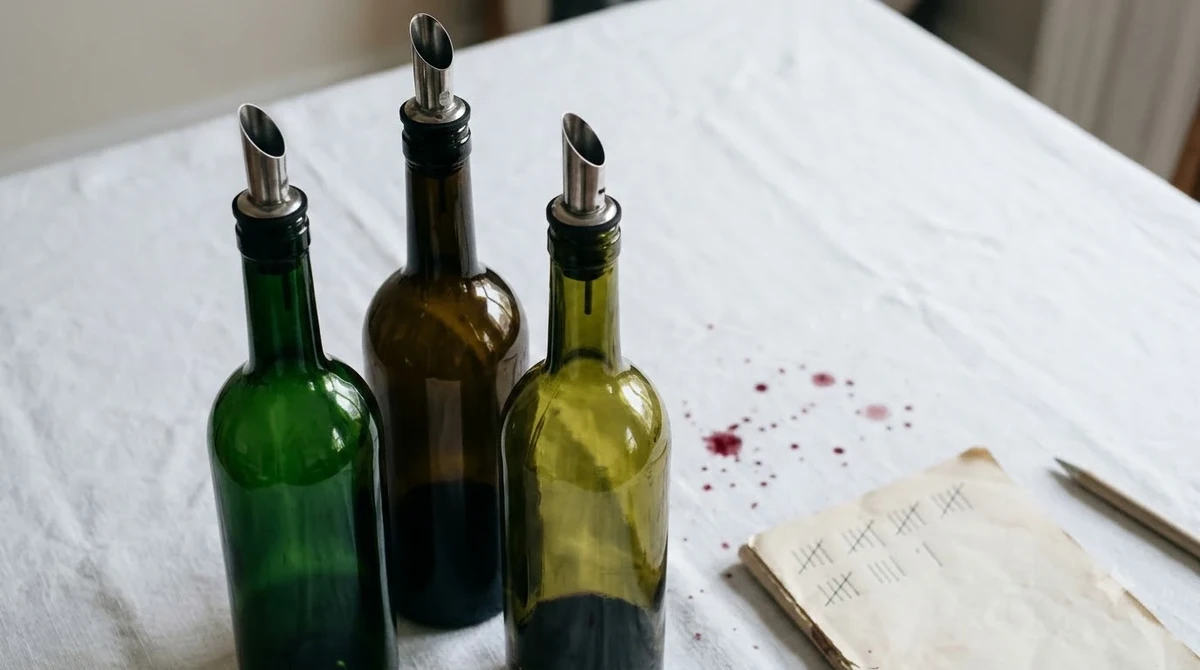
A practical approach is to fill each glass to about one-third to one-half full for a red and a little less for a white. That keeps the pour near 5 ounces while leaving room to swirl and smell the wine. It also gives you a clear way to count when you are pouring for a group.
| Pour size | Glasses per 750 ml bottle | Typical use |
|---|---|---|
| 4 ounces | About 6 | Tasting or a light pour |
| 5 ounces | About 5 | Standard restaurant pour |
| 6 ounces | About 4 | Generous home pour |
| 8 ounces | About 3 | Large-bowl red glass, full pour |
Bottle sizes that change the math
The 750 milliliter bottle is the standard for most wine, but you will also find other sizes. A half bottle holds about 375 milliliters, which gives roughly two or three glasses. A magnum holds 1.5 liters, or about two standard bottles, and it works out to about ten standard glasses at 5 ounces each. Larger formats are used for celebrations and tend to be more dramatic than practical for everyday meals.
Many wine and spirits sold in the United States are measured in milliliters, but restaurant menus and older recipes often use ounces. If you see a bottle described in liters, divide by about 0.03 to convert to US fluid ounces, or simply remember that 750 ml is about 25 ounces.
Sparkling wine and champagne often come in the same 750 milliliter size, but they are poured in flutes that hold less than a still-wine glass. Plan for the same five-glass estimate, and expect the flutes to empty more slowly because the pours are smaller.
How many glasses to plan for a dinner party
For a dinner party, most hosts plan on about half a bottle per guest for the full evening, but this changes with the food, the length of the meal and whether other drinks are served. A relaxed dinner with one wine often uses fewer bottles than a long celebration with courses and toasts. Start with the glass count, then divide by the number of guests.
A simple example helps. If six guests will each have two glasses of wine over dinner, that is twelve glasses. At five glasses per bottle, you need about three bottles. Add one spare bottle for second helpings or late arrivals, and you have a comfortable plan without overbuying.
Tip: Pour a little less for the first round and top up later. Guests often finish a small glass faster than they expect, and it is easier to refill than to hand back a pour that cannot be drunk.
Why the count matters for serving
Knowing the count is about more than shopping. It also helps you pace a meal, decide when to open a second bottle, and plan how much wine to keep chilled. Once you know a bottle is five glasses, you can plan each course with the right number of pours. That keeps the wine flowing without leftovers you cannot use.
The count also matters for responsible drinking. A standard drink in the United States is about 14 grams of alcohol, so a full bottle of 12 percent wine contains more than five standard drinks. Know your limits, plan for water and food, and do not drive after drinking. Wine is best enjoyed slowly and with a meal.
Frequently Asked Questions
How many glasses of wine are in a 750 ml bottle?
A 750 ml bottle holds about five glasses at a standard 5-ounce pour. If you pour 6 ounces, you will get about four glasses, and at 4 ounces you will get about six.
How many glasses are in a bottle if the glasses are large?
Large glasses usually mean you pour more into each one, so the bottle yields fewer servings. If you pour 8 ounces into a large-bowl red glass, you will get about three glasses from one bottle. Measuring the pour once helps you count accurately.
How many glasses are in a magnum of wine?
A magnum holds 1.5 liters, which is about two standard bottles. At a 5-ounce pour, that works out to roughly ten glasses. It is a good option for celebrations where you want fewer bottle changes.
How much wine should I buy for a party?
Start by estimating the glasses each guest will drink, then divide by five for a standard bottle. Many hosts plan around half a bottle per guest for a full evening, adjusted for food, length of the event and other drinks. Buy one spare bottle for extra servings.
Five glasses is the most useful starting point for a standard bottle, and it adjusts easily once you know your pour size. To plan more carefully, read how many ounces are in a bottle of wine or check how many bottles fit in a box with how many bottles are in a case of wine. You can also find more serving basics in the Wine Basics guide.
More in Wine Basics
 What Is The Best Wine For Mimosas? Choose Bubbly That Balances Orange JuiceUpdated Nov 20, 2026
 Which Prosecco Is Best for Your Taste and OccasionUpdated Nov 20, 2026
 Which Wine Is Best For Health? Understand the Risks and BenefitsUpdated Nov 20, 2026
 Which Champagne Is Best for Your Taste and OccasionUpdated Nov 20, 2026
 What To Put In A Wine Gift Basket For A Thoughtful, Memorable GiftUpdated Nov 20, 2026
 What Is the Best Wine for Mulled Wine? Choose a Smooth, Fruity RedUpdated Nov 20, 2026