

We may earn a commission when you buy through links on this page, at no extra cost to you. Learn more.
The best wine cooler for large bottles is a full-height compressor cellar engineered with wide shelf spacing—ideally four inches between racks—and removable or rolling shelves that accommodate wider bases and 1.5-liter magnums without scraping labels. While standard wine refrigerators calculate capacity using slim 750-milliliter Bordeaux bottles, oversized formats like Champagne, Pinot Noir, Turley-style Zinfandels, and magnums require wider shelf clearances or modular storage cradles. Choosing the right cabinet design depends on whether you are cellaring multi-year magnums, mixing everyday wide-shoulder reds with sparkling wines, or fitting an appliance into a tight undercounter kitchen cutout.
Anyone who has tried sliding a heavy Champagne bottle or a 1.5-liter magnum onto a standard wire rack knows the frustration of jammed shelves, torn foil, and scuffed labels. Because manufacturers rate almost every wine refrigerator using narrow, straight-sided Bordeaux bottles, real-world storage drops quickly once wider-diameter bottles enter the mix. Below, we break down the five best wine cooler configurations built to handle oversized formats cleanly while maintaining stable cellar temperatures and proper humidity.
Quick Comparison
Each wine cooler configuration handles oversized diameters, tall necks, and heavy magnum weights differently depending on its internal racking and cooling layout.
| Cooler Type | Best Bottle Formats | Shelf Spacing & Mechanism | Temperature Zones | Ideal Placement |
|---|---|---|---|---|
| Luxury-Spacing Full-Height Cellars | Magnums (1.5L), Champagne, wide Pinot Noir | 4-inch vertical clearance, full-extension rolling wood shelves | Single or Dual Zone | Living room, dining area, or home cellar |
| Adjustable Cradle & Modular Racking Cabinets | Mixed 750 mL shapes, magnums, wooden cases | Customizable individual cradles and height-adjustable rails | Single or Multi-Zone | Dedicated wine room or freestanding floor space |
| Removable-Shelf Undercounter Coolers | Wide-base 750 mL reds, Champagne, occasional magnums | Slide-out beechwood racks that pull out to double shelf height | Dual Zone | Built-in kitchen island or wet bar cabinetry |
| Label-Forward Display Cellars | Showpiece magnums, collectible Burgundy & Rhône bottles | Horizontal cradles displaying bottle profiles lengthwise | Single or Dual Zone | Dining room, home bar, or entertaining space |
| Vertical-Stand & Open-Bottle Hybrid Coolers | Tall-neck Riesling, magnums, opened oversized bottles | Dedicated upright rack plus removable lower cradles | Single or Dual Zone | Apartment, kitchen corner, or office |
Best for Heavy Magnums and Wide-Base Bottles: Luxury-Spacing Full-Height Cellars
Full-height compressor cellars designed with luxury shelf spacing offer roughly four inches of vertical clearance between shelves—nearly an inch more than conventional racks—allowing thick-walled magnums and wide-shoulder bottles to glide smoothly without friction.
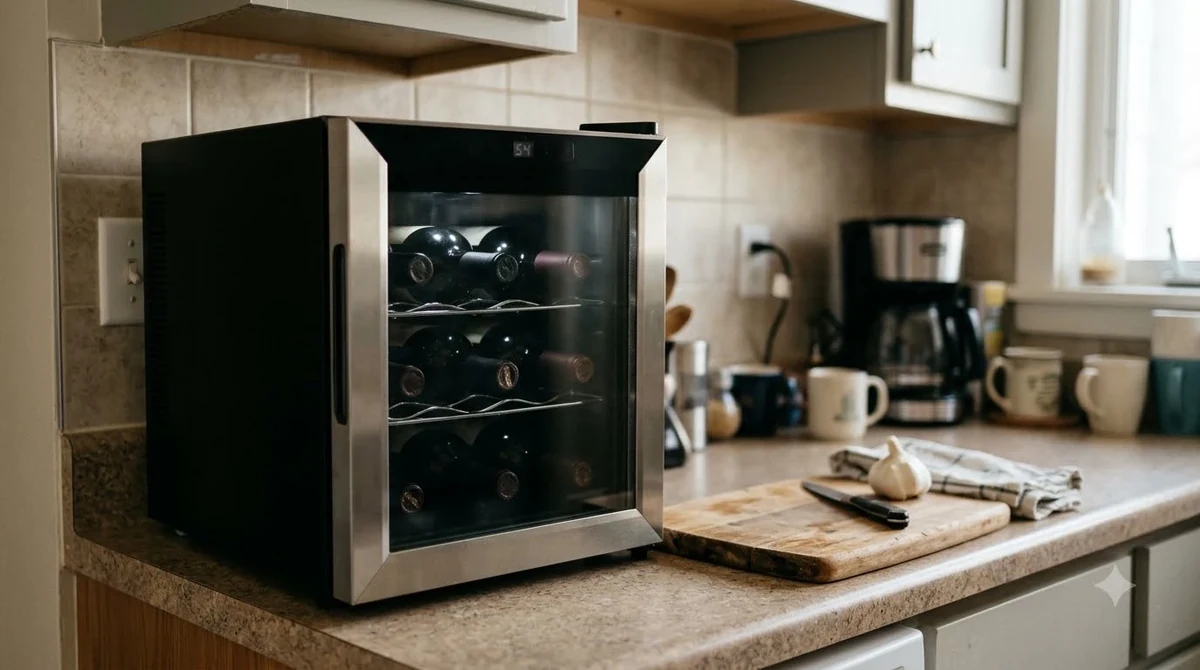
Why it stands out: According to Wine Enthusiast’s guide to luxury wine spacing, conventional wine racks are spaced just over three inches apart, which forces collectors to wedge wider bottles in at an angle or skip every other row. Cabinets built around four-inch spacing pair generous vertical height with extra-wide, ball-bearing beechwood shelves that support heavy 1.5-liter glass without bowing. Because the shelves roll out fully, you can inspect and lift weighty bottles from the back row without straining your wrists or disturbing neighboring corks.
Keep in mind and best for: Choosing wider vertical spacing means trading away peak Bordeaux bottle counts in exchange for effortless access and zero label damage, and these tall cabinets require solid, level flooring to support their loaded weight. This design is the best match for collectors who regularly buy 1.5-liter magnums, Champagne, and thick-glass New World reds and want every shelf immediately usable right out of the box.
Best for Mixed Collections and Wooden Cases: Adjustable Cradle & Modular Racking Cabinets
Modular wine cabinets replace fixed wire rows with height-adjustable rails and flexible bottle cradles, letting you reconfigure the interior as your ratio of standard bottles, wide Burgundies, and large-format bottles shifts over time.
Why it stands out: Reviewers at specialty cellar retailers and manufacturer technical guides highlight modular cradle systems—such as soft-tipped individual bottle supports mounted on steel frames—for cradling irregular silhouettes without pressure points. When you acquire a three-liter double magnum or a wooden six-pack crate, you can unclip a shelf, reposition the side rails, or stack crates directly onto a reinforced lower grid. Many of these single-zone aging cabinets also incorporate activated charcoal filters and humidity cassettes to protect natural corks during multi-decade maturation.
Keep in mind and best for: Reconfiguring rails takes a few minutes of planning before loading, and adding extra shelves reduces total capacity if you later switch back to tall bottles. This setup works best for serious collectors building an evolving cellar who need one cabinet capable of holding standard 750-milliliter bottles alongside magnums and original wooden cases.
Best for Kitchen Islands and Wet Bars: Removable-Shelf Undercounter Coolers
Front-venting undercounter wine coolers with removable beechwood shelves fit standard 24-inch cabinetry cutouts while letting you pull out a middle rack to create double-height bays for magnums and Champagne.
Why it stands out: Built-in undercounter units exhaust heat through a lower front grille rather than the back or sides, allowing flush installation beneath countertops without overheating the compressor. When all shelves are installed, they hold wider 750-milliliter formats—similar to what you would look for in the best wine fridge for burgundy bottles—and removing a single sliding rack opens up plenty of headroom for bulky sparkling magnums before a dinner party. Dual temperature zones also let you chill white and sparkling formats in the lower compartment while keeping reds at cellar temperature above.
Keep in mind and best for: Because undercounter dimensions are capped at roughly 34 inches high, removing a shelf to fit magnums noticeably lowers your overall bottle count, and most rolling racks carry a 55-pound weight limit per shelf. This category is ideal for home cooks and hosts who want smooth kitchen integration and chilled large-format bottles within arm’s reach of the dining table.
Best for Showpiece Labels and Easy Browsing: Label-Forward Display Cellars
Label-forward wine coolers orient bottles horizontally parallel to the glass door rather than neck-first, turning wide-bodied bottles and large-format centerpieces into an easy-to-read visual gallery.
Why it stands out: Traditional neck-out shelving hides labels in the dark and forces you to pull heavy shelves out just to read a vintage. Label-forward cradles hold bottles sideways along the width of the cabinet, naturally accommodating wide-shouldered Rhône, Pinot Noir, and magnum silhouettes without jamming against adjacent necks. Warm interior LED lighting illuminates the front row clearly through UV-resistant glass, making it easy to grab the exact bottle you want without letting warm room air rush into the cabinet.
Keep in mind and best for: Sideways racking prioritizes visibility and wider bottle tolerance over maximum density, so a label-forward cabinet holds fewer total bottles than a neck-out cellar of identical exterior dimensions. It is best suited for entertainers and design-focused homeowners who display collectible large-format bottles in a dining room or living area.
Best for Tall Necks and Opened Magnums: Vertical-Stand & Open-Bottle Hybrid Coolers
Hybrid wine coolers combine horizontal lower shelving with a dedicated upright standing zone, solving both the length problem of extra-tall bottles and the headache of recorked magnums that cannot lie flat.
Why it stands out: Tall-necked German Rieslings, Alsatian flutes, and oversized party bottles often hit the back wall or glass door when laid horizontally in compact fridges. An upright upper or side rack lets tall bottles stand safely without tipping, while also keeping opened bottles leak-free after dinner. If you have ever wondered how many glasses in a bottle of wine you will pour at a gathering—ten five-ounce glasses from a standard 1.5-liter magnum—having upright cold storage ensures leftover wine stays fresh until the next evening.
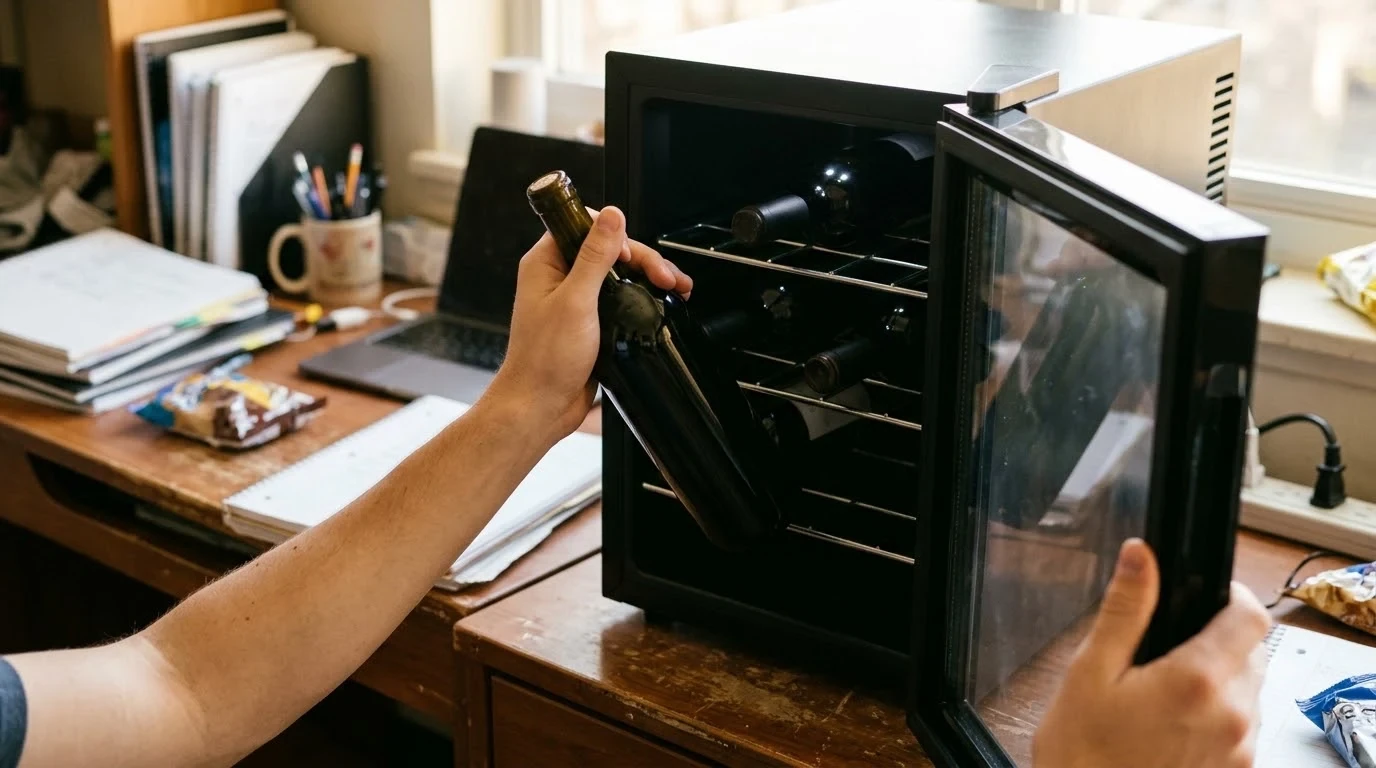
Keep in mind and best for: Upright compartments sacrifice horizontal stacking density and work best for short- to medium-term storage rather than decades-long cork aging, since vertical corks can dry out over many years. This compact format is a smart pick for apartments, smaller entertaining corners, or even a quiet office wine cooler setup where opened bottles need secure standing space.
How to Choose
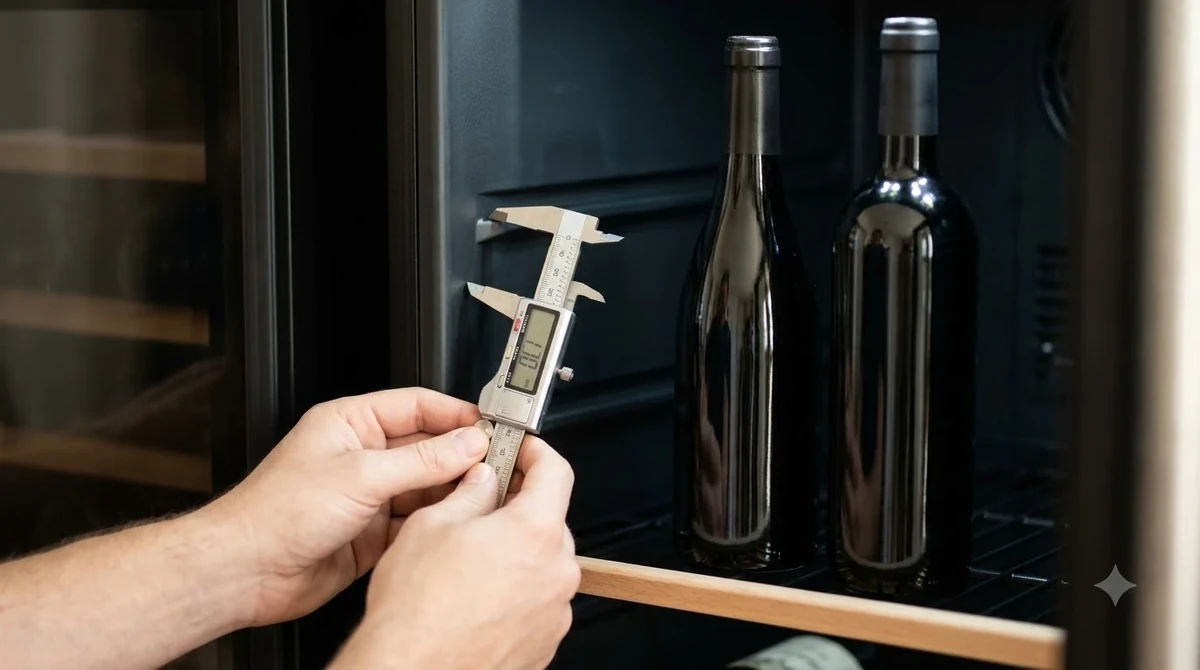
Shopping for a large-bottle wine cooler comes down to verifying interior geometry rather than trusting the headline bottle count on the box. Start by measuring the widest and longest bottles in your collection—a standard Bordeaux bottle measures roughly 3 inches in diameter and 11.8 inches tall, whereas a 1.5-liter magnum stretches closer to 3.5 to 4 inches wide and nearly 14 inches long. Check that the interior depth exceeds 14 inches with the door closed so long necks never press against the glass or block airflow vents.
Next, evaluate the shelf material and weight rating. Heavy-gauge beechwood or steel-framed cradles mounted on ball-bearing glides handle the added mass of thick-walled glass far better than thin wire racks, which can sag under full loads. Also confirm whether the appliance uses a compressor cooling system rather than thermoelectric cooling; compressor units hold steady temperatures between 41°F and 68°F even when loaded with dense, thermal-mass-heavy magnums in warm rooms. As sommeliers interviewed by VinePair explain, a single-zone cooler works reliably for long-term storage of both reds and whites, while dual-zone units are best reserved for hosts who want whites and sparkling magnums chilled to immediate serving temperatures.
Finally, match the ventilation layout to your room. Freestanding cabinets require two to four inches of clearance around the sides, back, and top to dissipate heat, whereas front-venting built-in models slide flush into cabinetry. You can compare layout ideas By user and room size to ensure your floor space, electrical outlet, and door swing clearance support a larger cabinet.
Tip: Expect real-world capacity to drop by 25 to 35 percent compared to the manufacturer’s stated Bordeaux rating once you load wide-base Pinot Noir, Champagne, and magnum bottles. Always buy a cabinet one size larger than your current bottle count.
Frequently Asked Questions
How many magnum bottles can fit in a standard wine cooler?
A wine cooler rated for 150 standard Bordeaux bottles typically holds between 60 and 90 magnums once you remove select shelves or use wide-spaced cradles. Because 1.5-liter magnums are both wider and taller than 750-milliliter bottles, you will usually fit four to five magnums across a standard 24-inch-wide shelf rather than six or seven standard bottles.
Can I store Champagne and sparkling wine magnums on their sides?
Yes, storing sparkling wine and Champagne magnums horizontally in a vibration-dampened compressor wine cooler keeps the cork moist and maintains carbonation pressure. Just make sure the shelf spacing is tall enough—or a rack is removed—so the bulbous base of the sparkling bottle does not press upward against the shelf above it.
Do I need a single-zone or dual-zone cooler for large-format bottles?
Choose a single-zone cooler if your primary goal is long-term aging, since red, white, and sparkling wines all age safely around 55°F and single-zone cabinets offer slightly more usable interior volume. Opt for a dual-zone cooler if you entertain frequently and want one compartment kept at 41°F to 48°F so large-format whites and bubbles are ready to pour immediately.
Will removing shelves to fit large bottles hurt cooling performance?
Removing one or two shelves will not harm cooling performance and can actually improve internal air circulation around oversized bottles. Just avoid blocking the interior fan vents along the back wall with long magnum necks, and obey the manufacturer’s maximum shelf weight limit—usually around 55 pounds per rolling rack—when consolidating heavy bottles onto remaining shelves.
Finding the right storage for oversized bottles comes down to shelf clearance, sturdy glides, and honest capacity planning rather than flashy extras. By matching your cabinet style to the bottle shapes you buy most often, you can protect valuable labels, keep corks properly sealed, and pull every magnum smoothly when celebration night arrives.
More in By Room & User
 Wine Fridge in Bedroom: Choose Quiet Storage That Fits Your SpaceUpdated Nov 20, 2026
 Wine Fridge in Living Room: Choose the Right Size, Style, and SetupUpdated Nov 20, 2026
 Wine Fridge In Dining Room: Choose the Right Size and StyleUpdated Nov 20, 2026
 Wine Fridge In Pantry: Choose the Right Size and SetupUpdated Nov 20, 2026
 Wine Fridge In Kitchen: Choose the Right Fit and PlacementUpdated Nov 20, 2026
 Wine Fridge In Garage: Choose a Cooler That Handles Temperature SwingsUpdated Nov 20, 2026