

We may earn a commission when you buy through links on this page, at no extra cost to you. Learn more.
Albarino vs Verdejo comes down to climate: Albarino is a saline, citrus-driven white from the cool, wet Atlantic coast of Galicia, while Verdejo is a herbal, fennel-scented white from the dry, high plateau of Castile and Leon. Both are dry, aromatic whites that suit seafood and tapas, so the right pick depends on whether you want sharp, sea-air brightness or a rounder, herb-driven glass. Albarino usually has the higher acidity and the more pronounced salty finish, while Verdejo carries a bitter almond edge and a fuller texture. The sections below show how those differences play out in the glass and on the plate.
People often grab a Spanish white because the label looks interesting, then find the bottle tastes nothing like they expected. Albarino and Verdejo are the two grapes most likely to cause that confusion, because both are pale, dry, and aromatic, and both are sold as lively alternatives to Sauvignon Blanc or Pinot Grigio. The differences are real, though, and they trace back to the land each grape grows on, the weather during ripening, and the choices winemakers make after harvest. Once you know what to look for, the two wines are easy to tell apart and easy to match with dinner.
Where Each Grape Comes From
Albarino is the signature white of Galicia in northwest Spain, and Verdejo is the signature white of Castile and Leon in the country’s central interior. In each case the grape and the appellation are so closely tied that naming one almost names the other.
Albarino’s home base is the Rias Baixas Denominacion de Origen, which won official DO status in 1988. Regional council figures cited by Decanter put Albarino at about 96 percent of the planted area, and the council is headquartered in Pontevedra, so nearly every vineyard in the zone is planted to one variety. Decanter’s panel tasted 83 Albarino and Alvarinho wines in a single study, and the Spanish entries came almost entirely from Rias Baixas, with most of them from the Salnes subzone.
Verdejo’s story runs through Rueda, which became the first DO in Castile and Leon when it received official status in 1980. The modern style took shape in 1972, when Marques de Riscal began making fresh, unoaked Verdejo with the French oenologist Emile Peynaud. Today the appellation is built on many small family estates alongside a few large houses, which gives shoppers a wide range of Verdejo styles to choose from.
Across the border in Portugal, the same grape is called Alvarinho, and it features prominently in Vinho Verde. If you want to see how the Portuguese version differs from the Spanish one, our Albarino vs Vinho Verde breakdown walks through the main contrasts.
Climate and Soil Drive the Difference
The biggest gap between these two wines is the weather. Albarino grows near the Atlantic in a cool, rainy setting, while Verdejo grows inland on a high plateau with hot days and chilly nights.

Rias Baixas gets its character from the ocean. The regional profile published by Foods and Wines from Spain’s Rias Baixas profile describes average rainfall of about 67 inches a year and roughly 2,223 hours of sunshine, with summer highs near 78 F and winter lows near 43 F. That mix of mild temperatures and steady moisture keeps the vines growing vigorously while the grapes ripen with plenty of natural acidity intact.
The soil matters just as much. Albarino grows mostly on sandy, decomposed granite known locally as xabre, a free-draining layer that stops vines from sitting in water during the rainy months. Its proximity to the estuaries and the granite bedrock are widely credited for the wines’ salty, mineral edge, which many drinkers notice before anything else.
Rueda sits on a flat plateau between about 600 and 780 meters, far from any ocean influence. Winters can drop to around 30 F, and summers climb toward 86 F, with big swings between day and night. Those swings preserve acidity while the grapes build aroma, which is why Verdejo tastes so fresh despite the heat. The soils are stony and limestone-rich, and in parts of Segovia, deep sand has protected some ungrafted vines from phylloxera, so some of the oldest Verdejo vines in Spain survive there.
Aroma and Flavor Profiles Compared
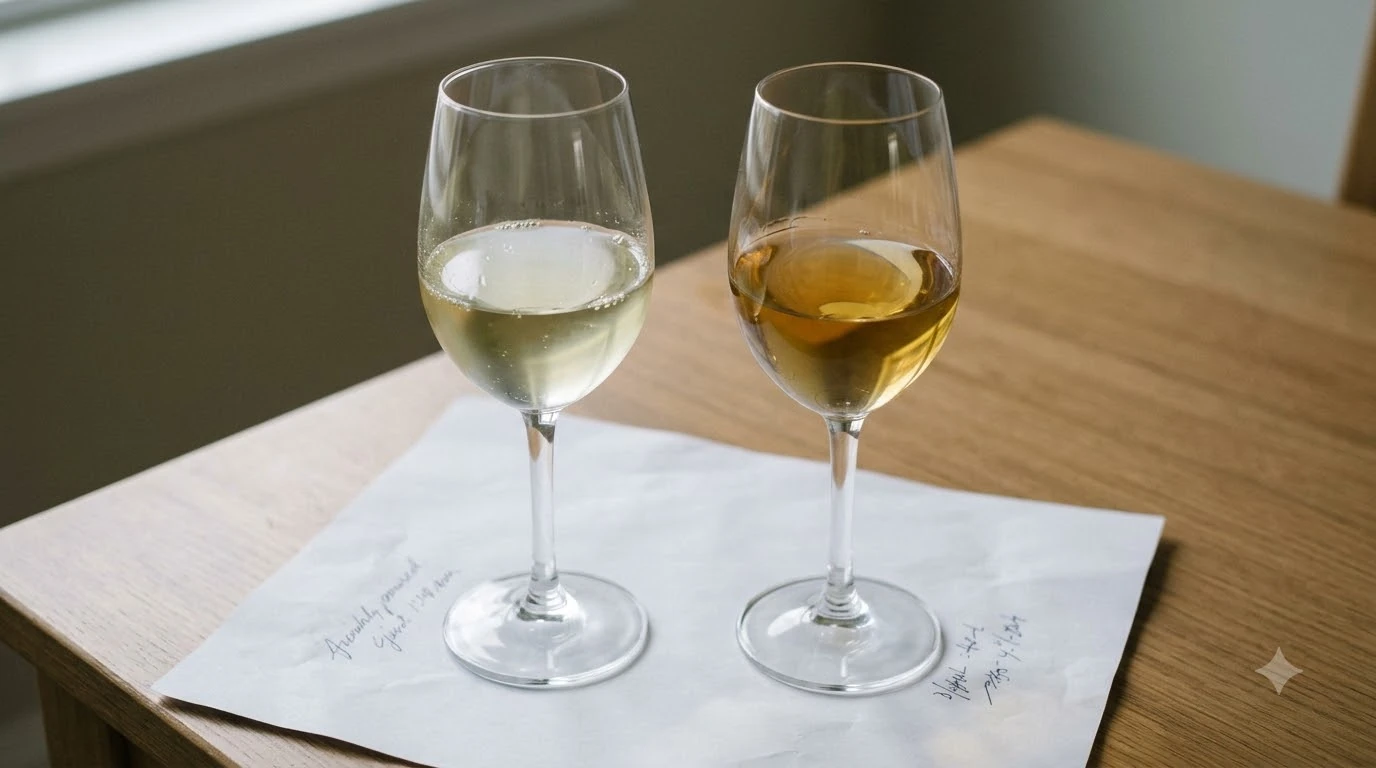
Albarino smells of citrus, stone fruit, and flowers with a salty finish, while Verdejo shows fennel, cut grass, and a bitter almond edge. Both are aromatic, but the scents and finishes are different enough to recognize once you have tasted them side by side.
Albarino is intensely aromatic because of its high levels of terpenes and thiols. Expect lime, grapefruit, peach, nectarine, honeysuckle, and beeswax on the nose. On the palate it is mouth-watering and mineral, often ending with a salty note and a faint pith-like bitterness from its thick skins. Some sommeliers say it smells a little like Viognier and tastes a little like Riesling, which is a helpful shorthand when you are choosing between styles.
| Trait | Albarino | Verdejo |
|---|---|---|
| Main home region | Rias Baixas, Galicia | Rueda, Castile and Leon |
| Vineyard elevation | 0 to 300 meters | 600 to 780 meters |
| Typical alcohol | 11.5 to 13% ABV | 12.5 to 13.5% ABV |
| Acidity | Very high | Medium-high |
| Body | Light to medium | Medium |
| Serving temperature | 45 to 50 F | 50 to 55 F |
| Opened and refrigerated | 3 to 5 days | 3 to 5 days |
| Typical aging window | 2 to 3 years for most bottles | 5 to 10 years for well-made examples |
Verdejo is subtler on the nose but just as distinctive. Its typical aromas are lime, Meyer lemon, melon, fennel, cut grass, and citrus blossom. The signature is a herbal bitterness on the finish, which many drinkers describe as bitter almond. With bottle age, the wine can pick up toasted almond and orange peel notes.
Winemaking changes both grapes. Unoaked Verdejo is fermented in cool stainless steel, which keeps the aromas fresh and primary. Barrel-fermented or oak-aged Verdejo gains honeyed richness, hazelnut, toasty brioche, and a hint of vanilla. Albarino aged on its lees for several months can develop more texture while keeping its citrus-and-salt core intact.
Acidity, Body, and Alcohol Levels
Albarino has the brighter, more piercing acidity of the two, while Verdejo feels rounder and a touch broader in the mouth. Both wines are moderate in alcohol, which keeps them lively at the table.
Albarino’s acidity is its defining structural trait. Total acidity often runs from about 7.2 to 14.3 grams per liter, and that natural tang gives the wine a crisp, tingly finish. Alcohol generally sits between 11.5 and 13 percent ABV, though warm vintages and inland subzones can push toward 14 percent. The body is light to medium, so the wine feels lean and precise rather than heavy.
Verdejo has medium-high acidity and typical alcohol around 12.5 to 13.5 percent ABV. It feels softer on the palate, and the grape naturally produces a broader, more generous texture. Lees aging and barrel fermentation push that texture further, which explains why richer Verdejo styles sit comfortably beside mushroom risotto or fish in cream sauce.
Tip: When a dish is sharp, match its acidity with the wine. Lemon, vinaigrette, and ceviche call for the very high acidity of Albarino, while creamy dishes usually suit a barrel-fermented Verdejo better.
If you want to compare Albarino’s acidity with a familiar white, our Albarino vs Chardonnay guide puts the two side by side and shows where the differences matter most at the table.
Food Pairings for Each Style
Albarino is the stronger choice for seafood, while Verdejo covers a wider range of tapas, herbs, and vegetable dishes.
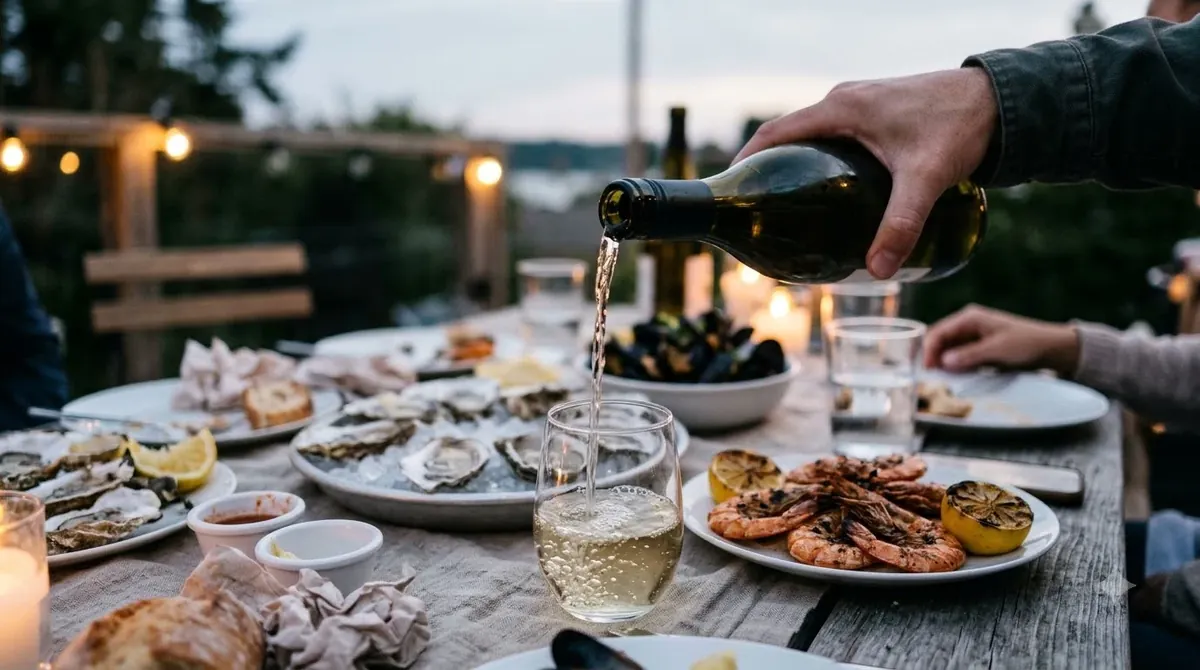
Albarino earned its reputation as a seafood wine in Galicia, where clams, mussels, and grilled fish are everyday food. Its saline finish and bright acidity cut through the richness of oysters, crab, and lobster. It also handles ceviche and soft cheeses well. For a quick summer dinner, grilled shrimp or sardines with lemon are hard to beat alongside a cold glass of Albarino.
Verdejo is the more flexible food partner. It suits the classic tapas bar lineup of shellfish, fresh cheese, and vegetable dishes. Its herbal, fennel-tinged character works with green herb sauces and vinaigrette salads, and its bitter finish refreshes roasted white meats. Garlic shrimp (gambas al ajillo) and grilled artichokes with romesco are also natural partners.
The simplest rule is to start with the main ingredient. Seafood and citrus point toward Albarino, while herbs, vegetables, and mildly rich sauces point toward Verdejo. When a dish is built around cream or mushrooms, a barrel-fermented Verdejo gives you more texture to match.
Serving Temperature and Storage
Serve Albarino between 45 and 50 F and Verdejo between 50 and 55 F. Either wine keeps for three to five days in the refrigerator once opened, so you can finish a bottle over a few evenings.
Albarino belongs in the 45 to 50 F range as a light white. Colder than that and the aromatics and salty edge get muted, while warmer and the acidity starts to feel sharp and thin. A standard 750 ml bottle holds about five pours of 5 ounces, which is handy for planning a small gathering.
Verdejo is fuller by serving standards, so it does better slightly warmer, between 50 and 55 F. At that range the herbal bitterness and the texture of the wine show clearly. Barrel-fermented bottles need the warmer end of the range, because a very cold glass hides their toasty and creamy notes.
Storage is the same for both. Keep unopened bottles on their side in a cool place near 55 F. After opening, recork and refrigerate; still whites usually last three to five days. For more side-by-side comparisons like this one, the Wine vs Wine hub collects the main matchups in one place.
Aging Potential and Choosing Your Bottle
Most Albarino is meant to be drunk within a few years of harvest, but well-made examples can age far longer. Verdejo offers a more predictable window of roughly five to ten years, and its top category is built around age-worthy wine.
Most Albarino is best within two to three years of harvest. A small group of producers has shown the grape can age for a decade or more. Decanter’s panel tasting report noted that many of the wines had spent four to 24 months on their lees, which built complexity. One judge felt that rushed releases were costing the category the extra depth a further year would have given. Sarah Ahmed, another panel member, had tasted Alvarinhos aged 10 to 20 years that had aged well.
Verdejo’s aging window is more consistent. Well-made examples typically hold for five to ten years, and the Gran Vino de Rueda category is designed to showcase that potential. Those wines come from vines at least 30 years old, yield no more than 6,500 kilograms per hectare, and must spend at least one year in the winery before release.
For a bottle to drink soon with seafood, choose a young Albarino. For a bottle that can wait a few years, look for a lees-aged Albarino or a Gran Vino de Rueda Verdejo. For a versatile dinner white that handles herbs and vegetables, Verdejo is the safer bet.
Frequently Asked Questions
Does Verdejo ever see oak?
Yes. Belondrade y Lurton, established in 1994 in La Seca, was the first Rueda winery to apply a Burgundian approach to Verdejo, according to Wine with Seth’s regional guide. Its flagship ages for roughly nine to ten months in 300 to 500 liter French oak barrels, which produces a creamier style with hazelnut notes.
Why does Verdejo taste so fresh despite the heat?
Many growers harvest Verdejo at night, so the grapes reach the winery at about 50 to 59 F instead of the daytime highs of 82 to 86 F typical in September. That cool handling reduces oxidation and browning in the juice. The result helps keep the wine’s aromas bright even in a hot growing season.
Where else is Albarino planted?
Decanter notes that the grape is also found in Uruguay, New Zealand, California, and southern France. It has also been recently licensed for planting in Bordeaux. Most of the best examples still come from its home in northwest Spain and northern Portugal.
How large is the Rueda wine industry?
The Rueda appellation has about 69 registered bodegas and around 1,500 growers, most of them small family operations. Wine with Seth’s regional profile puts annual output above 59 million bottles. Those numbers help explain why the appellation offers such a range of producers and price points.
Who oversees quality in Rias Baixas?
The Consejo Regulador, the official regulatory council, is headquartered in Pontevedra. Decanter’s figures show more than 5,000 growers working inside the Rias Baixas zone. The council oversees the rules for the appellation’s five subzones and its single-varietal Albarino wines.
Albarino and Verdejo both reward a curious drinker. If you cook seafood most weeks, start with Albarino; if your table leans toward herbs, vegetables, and tapas, start with Verdejo. Either way, chill the bottle properly, pour about five ounces, and keep any leftovers in the fridge for the next couple of nights.
More in Wine vs Wine
 Nero d’Avola vs Pinot Noir: Taste, Body, and Pairing DifferencesUpdated Nov 21, 2026
 Chenin Blanc vs Pinot Blanc: Key Differences in Taste, Acidity, and PairingsUpdated Nov 21, 2026
 Chardonnay vs Shiraz: Key Differences in Taste, Serving, and PairingUpdated Nov 21, 2026
 Chardonnay vs Verdejo: How Spain’s Crisp White Compares to the World’s ChameleonUpdated Nov 21, 2026
 Chardonnay vs Sancerre: Key Differences in Taste, Grapes, and PairingUpdated Nov 21, 2026
 Chardonnay vs Malbec: Key Differences in Taste, Body, and PairingUpdated Nov 21, 2026