

We may earn a commission when you buy through links on this page, at no extra cost to you. Learn more.
Alvarinho is the Portuguese name for the Albariño grape, and it makes dry, light-bodied white wines with lemon zest, grapefruit, and a saline finish. The variety grows mainly in Portugal’s Vinho Verde region and in Spain’s Rías Baixas, where it is the same grape under a different name. Alvarinho wines have high acidity and no tannin, which makes them fresh, food-friendly, and best enjoyed young.
This guide explains where Alvarinho comes from, how it tastes, where it is planted, and how to serve and pair it at home. It also clears up the naming question, since many shoppers see the same wine labeled two ways, and it helps you decide when an Alvarinho is a better choice than a Sauvignon Blanc or Chardonnay.
Alvarinho and Albariño: One Grape, Two Names
Alvarinho and Albariño are the same grape. Spanish winemakers credit the Val do Salnés subregion of Rías Baixas as the grape’s birthplace, and in Portugal the same variety is called Alvarinho. The grape is described as a coastal white from the Iberian Peninsula, which fits its strong association with salt air, sea breezes, and seafood.
The name you see on a label usually depends on the country of origin. Portuguese bottles often say Alvarinho, while Spanish bottles and many wines from other countries use Albariño. The wine is the same variety in both cases, so the label tells you where the bottle comes from as much as what is inside it.
Where Alvarinho Grows
The variety has a large footprint on the Iberian Peninsula. According to Wine Folly’s grape guide to Albariño, Spain has about 13,326 acres (5,393 hectares) planted in Rías Baixas and Galicia, while Portugal has about 7,067 acres (2,860 hectares) in Minho and Vinho Verde. California has a smaller planting of about 311 acres (126 hectares) on the Central Coast.
Rías Baixas has five sub-zones, and it has sandy, granitic soils that are shared across much of the region. In Vinho Verde, the Monção e Melgaço area is described as the historic heartland of single-varietal Alvarinho. That area is where many of the most serious bottlings come from, and it is worth looking for those names when you want the most concentrated expression of the grape.
The Vinho Verde region itself has been a designated wine region since 1908, according to the Vinho Verde regional site. The region is known for its wide range of styles, from light, slightly spritzy wines to fuller single-varietal bottlings made from Alvarinho.
How Alvarinho Tastes
Alvarinho is a dry, light-bodied white with no tannins and high acidity. The primary flavors often include lemon zest, grapefruit, honeydew, and nectarine, with a salty or saline finish. On the nose, many wines show nectarine, lime, grapefruit, and honeysuckle, and some carry a hint of beeswax.
On the palate, a good Alvarinho has a weightier middle than its light body suggests. The acidity is mouthwatering, and the finish often has a salinity that makes the wine feel clean. Some wines also show a subtle bitterness, which many drinkers find refreshing with food.
| Style | Typical character | Best way to enjoy |
|---|---|---|
| Vinho Verde classic | Light, fresh, slightly spritzy | Young, with simple seafood |
| Single-varietal Alvarinho | Weightier, saline, citrus-driven | With grilled fish or cheese |
| Lees-aged Alvarinho | Fuller texture, more depth | Within a few years of release |
| Oaked Alvarinho | Added complexity and spice | With richer seafood or poultry |
Tip: Look for the Monção e Melgaço name on a Portuguese label if you want a single-varietal Alvarinho with a clear sense of place.
Alcohol, Aging, and Serving Temperature
Alvarinho’s alcohol level depends on the style. Vinho Verde classics often sit between 8.5 and 11.5 percent alcohol, while premium Alvarinho is often higher. Across the broader Albariño category, typical levels fall in the 11.5 to 13.5 percent range.
Most Alvarinho is best enjoyed young and fresh, but high-acid, lees-aged styles can age for several years. Wine Folly suggests a cellar window of three to five years for those bottles. Serve Alvarinho at about 38 to 45 degrees Fahrenheit (3 to 7 degrees Celsius) in a white wine glass, and do not decant it. A chilled bottle keeps the citrus and saline notes lively.
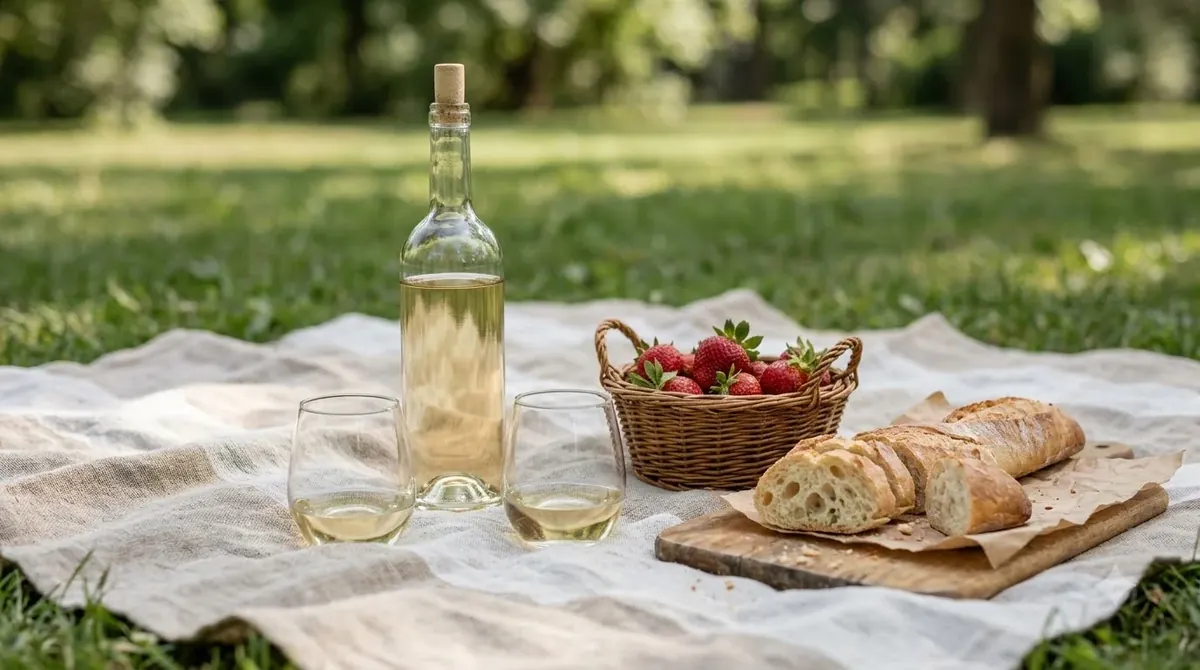
Storage matters more with Alvarinho than many drinkers expect. Keep bottles cool and out of direct sun, and close an opened bottle tightly and refrigerate it. Because the wine is light and bright, it loses its freshness faster than a richer white, so plan to finish an open bottle within a day or two.
What to Pair With Alvarinho
Seafood is the natural partner for Alvarinho. Ceviche, seafood risotto, fish tacos, oysters, mussels, and clams all match the wine’s salinity and acidity. Its acidity also helps it handle lemon, herbs, and sauces built on olive oil.
Cheese works well too. Burrata, Manchego, Gouda, and feta are all good matches, since the wine’s acidity cuts through rich, creamy textures. For vegetables, Alvarinho pairs with salsa verde, grilled padrón or shishito peppers, grilled zucchini, and asparagus. A Caprese salad or a Caesar salad is an easy warm-weather meal with the same bottle.
Tip: If you are cooking fish at home, add a squeeze of lemon and a handful of herbs just before serving. The wine and the dish reinforce each other without needing a heavy sauce.
How to Choose an Alvarinho
Start with the origin on the label. A Vinho Verde Alvarinho gives you a fresh, everyday style, while a single-varietal bottle from Monção e Melgaço usually offers more depth. Spanish Albariño from Rías Baixas tends to show the same citrus and saline character, so either origin is a good place to begin.
Price is less useful as a guide than the label details. Many good Vinho Verde bottles are simple, fresh wines made for everyday drinking, and they can match a weeknight fish dinner better than a more expensive single-varietal bottle. Save the richer, lees-aged styles for a special meal where you can taste them slowly.
Check the vintage and the producer’s notes on how the wine was made.
A young, fresh bottle is the safest choice for most drinkers, while a lees-aged bottle rewards patience for a few years. If you plan to compare Alvarinho with other whites, the Assyrtiko grape guide covers another high-acid white from southern Europe.
Frequently Asked Questions
Is Alvarinho the same as Albariño?
Yes. Alvarinho is the Portuguese name for the same grape that Spain calls Albariño. The wine style is similar, though winemaking and regional character differ by producer.
What does Alvarinho taste like?
Alvarinho is dry and light-bodied, with high acidity and no tannins. Common flavors include lemon zest, grapefruit, nectarine, and a saline finish.
Where is Alvarinho grown?
The grape grows mainly in Portugal’s Vinho Verde region, especially Monção e Melgaço, and in Spain’s Rías Baixas. Smaller plantings exist in California’s Central Coast.
What food goes best with Alvarinho?
Seafood is the best match, including oysters, mussels, clams, and fish tacos. Soft cheeses such as burrata and feta, and vegetables with salsa verde, also pair well.
Alvarinho is a good choice for anyone who wants a crisp, saline white that works with food from a sunny lunch to a simple seafood dinner. For more context on how white varieties differ, the Cabernet Franc wine guide is a useful contrast on the red side, and the Wine by Type section puts Alvarinho next to other whites for easy comparison.
More in Wine Types & Grapes
 Zinfandel Sugar Content: Dry Red vs. White Zinfandel GramsUpdated Nov 21, 2026
 Best Zinfandel Substitute Options for Sipping and CookingUpdated Nov 21, 2026
 Zweigelt Food Pairing: Best Dishes, Cheeses, and Serving TipsUpdated Nov 21, 2026
 Zinfandel Tannins Explained: How Structure Shapes Every BottleUpdated Nov 21, 2026
 Zinfandel Sweetness Level: Dry Red vs. Sweet White Zin ExplainedUpdated Nov 21, 2026
 Xinomavro Food Pairing: Best Dishes, Styles, and Serving TipsUpdated Nov 21, 2026