

We may earn a commission when you buy through links on this page, at no extra cost to you. Learn more.
albarino vs vinho verde is mainly a comparison between a grape-led white wine from Spain and a Portuguese regional wine category that can include several grapes. Albariño from Galicia is usually a dry, aromatic, high-acid white with citrus, peach and a touch of sea-spray character. Vinho Verde can be similarly crisp, but its blend of grapes, broader geography and occasional light spritz create a wider range of styles. The important exception is Alvarinho: it is the same grape as Albariño, grown across the border in Portugal.
These wines are close neighbors, shaped by the Atlantic and often poured with seafood, but their names tell you different things. One points to a variety; the other points to a protected region. Understanding that distinction makes it easier to choose the bottle that suits your palate, menu and occasion.
The Grape and the Region Are Not the Same Kind of Name
Albariño identifies a white grape, while Vinho Verde identifies a wine region in northwestern Portugal. The familiar comparison is therefore Rías Baixas Albariño from Spain against a typical white Vinho Verde from Portugal, which may blend Alvarinho, Loureiro, Arinto, Avesso or other authorized grapes.
Albariño is known as Alvarinho in Portugal; the names refer to the same variety, not two related grapes. Decanter’s Albariño profile describes it as native to coastal Galicia, with high acidity and thick skins, and notes that it is commonly made as a dry wine with peach, apricot, citrus and white-flower aromas. That profile can appear on either side of the border. What changes is the growing site, the blend and the winemaker’s choices.
In Rías Baixas, Albariño is so closely tied to regional identity that it dominates production. The local regulatory council reports that the grape accounts for 96% of grape production and 95% of wine production in the designation. Vinho Verde, by contrast, has a much broader grape roster and a strong tradition of blending. A bottle marked Vinho Verde does not promise that it contains Alvarinho at all.
This is why the name on the front label matters. A bottle labeled Rías Baixas Albariño generally gives a clear clue about its principal grape and origin. A bottle labeled Vinho Verde gives the origin, but the grape blend may require a closer look. For a wider framework for judging two styles side by side, the site’s guide to Wine vs Wine explains how to compare origin, grape and structure without assuming that similarly colored wines are interchangeable.
Where Rías Baixas and Vinho Verde Grow
Both regions sit in the Atlantic-influenced northwest of the Iberian Peninsula, but Rías Baixas is a Galician designation in Spain and Vinho Verde covers a much larger area of northern Portugal. Their coastal influence helps preserve freshness, while differences between subregions and inland sites change ripeness, body and aroma.

Rías Baixas is divided into five subzones: Val do Salnés, O Rosal, Condado do Tea, Ribeira do Ulla and Soutomaior. The regulatory council describes Albariño as especially well suited to the local climate and soils. The wines are not identical across those subzones: Val do Salnés is associated with a crisp, aromatic, sometimes melony profile; O Rosal can show peachier, softer fruit; and Condado do Tea can bring earthier notes. These are useful tendencies, not rigid tasting rules.
Vinho Verde is also varied, with nine subregions and a landscape that runs from the Atlantic coast toward warmer, more inland sites. The Atlantic-facing Lima area is associated with floral, lime-driven Loureiro, while the warmer, drier Monção e Melgaço area is known for Alvarinho. Baião has become an important place to look for Avesso. Granite soils and a cool, breezy climate are part of the region’s identity, but elevation, rainfall and exposure create meaningful differences from one district to another. Wine Enthusiast’s regional overview also emphasizes the region’s nine subappellations and the way its Atlantic and mountain boundaries shape its climate.
That geographic range explains why Vinho Verde can be both a simple, very fresh blend and a structured, more serious single-variety wine. A light coastal blend and a concentrated Alvarinho from Monção e Melgaço should not be treated as the same style. Decanter’s regional overview describes how warmer inland areas can produce wines with more flesh and concentration, while Atlantic-influenced Lima tends toward floral and zestier expressions.
How the Wines Differ in Aroma, Acidity, Alcohol and Texture
Rías Baixas Albariño usually offers a focused, dry profile with citrus, peach, apricot, melon or white flowers, supported by lively acidity. Vinho Verde more often signals a lighter, fresher style with citrus, green fruit or floral notes, but its character changes substantially with the grape blend and subregion.
| Feature | Rías Baixas Albariño | Typical Vinho Verde white |
|---|---|---|
| Main identity | Usually led by Albariño | Often a blend of local grapes |
| Typical alcohol | About 11.5–12.5% ABV | Often about 10–12% ABV for classic styles |
| Acidity | High and refreshing | Usually lively; varies by grape |
| Common aromas | Lemon, peach, apricot, melon, white flowers | Citrus, green apple, lime, flowers; sometimes tropical fruit |
| Texture | Light to medium, sometimes broader with lees aging | Often light; Alvarinho and Avesso can add weight |
| Bubbles | Usually still | Some examples have a light spritz; many are still |
| Serving temperature | 45–50°F for a fresh, light style | 45–50°F for a fresh, light style |
The alcohol figures are typical guideposts, not legal limits for every bottle. Decanter gives a common range of 11.5–12.5% ABV for Albariño, while Wine Enthusiast places many familiar Vinho Verde whites around 10–12% ABV. A single-variety Alvarinho can sit toward the more substantial end of the Vinho Verde spectrum, so the region name alone does not guarantee a particularly low-alcohol wine.
Acidity is a point of connection rather than a clean dividing line. Albariño is naturally high in acidity, and many Vinho Verde grapes are selected or blended to keep the wine fresh. Loureiro tends to contribute lifted floral aromas; Arinto is prized for its acidity; Avesso can bring more body and ripe-fruit character. This makes a Loureiro-led blend feel different from a concentrated Alvarinho, even though both carry the Vinho Verde designation.
Texture also depends on winemaking. Stainless-steel fermentation is a common way to retain a bright fruit profile, while lees contact can add a rounder, creamier feel without removing freshness. Some Albariño producers use extended lees aging or oak for more weight; Vinho Verde producers also make structured, age-worthy wines, especially from grapes such as Alvarinho and Avesso. The phrase “Vinho Verde” should not be read as a promise of a thin or simple wine.
How to Read the Bottle Label
Start by separating the regional name from the grape name. “Rías Baixas” tells you the wine comes from the Spanish designation, while “Albariño” tells you the principal grape; “Vinho Verde” names the Portuguese region, and “Alvarinho,” “Loureiro” or “Arinto” gives you a better clue to the grapes inside.
On a Vinho Verde label, the subregion can be just as revealing as the grape. Monção e Melgaço is the clearest place to look for Alvarinho with concentration and structure. Lima is a useful cue for Loureiro’s floral, citrus-driven style, while Baião is associated with Avesso. A named grape or subregion suggests a more specific expression than the broad Vinho Verde designation alone, although the producer’s approach still matters. Arinto can sharpen the finish, and Trajadura is often used to round out a blend.
For a closer Spanish comparison, Albariño vs. Verdejo separates two grape-led styles, while Verdejo vs. Vinho Verde compares a single Spanish grape with a Portuguese region. Pinot Grigio vs. Vinho Verde can help shoppers looking for a crisp, uncomplicated white, though an Alvarinho bottling may have more body and aromatic intensity than a light Pinot Grigio. In practical terms, choose Rías Baixas Albariño for a clear grape-led profile, a classic Vinho Verde blend for a brisk aperitif, or Alvarinho from Monção e Melgaço for a fuller Portuguese white.
Food Pairings for Seafood, Vegetables and Poultry
Both wines are natural partners for seafood because high acidity refreshes the palate and their citrus or mineral notes complement clean ocean flavors. Choose Albariño for shellfish and grilled fish, while a crisp Vinho Verde blend is especially useful with salads, herbs and lighter dishes.
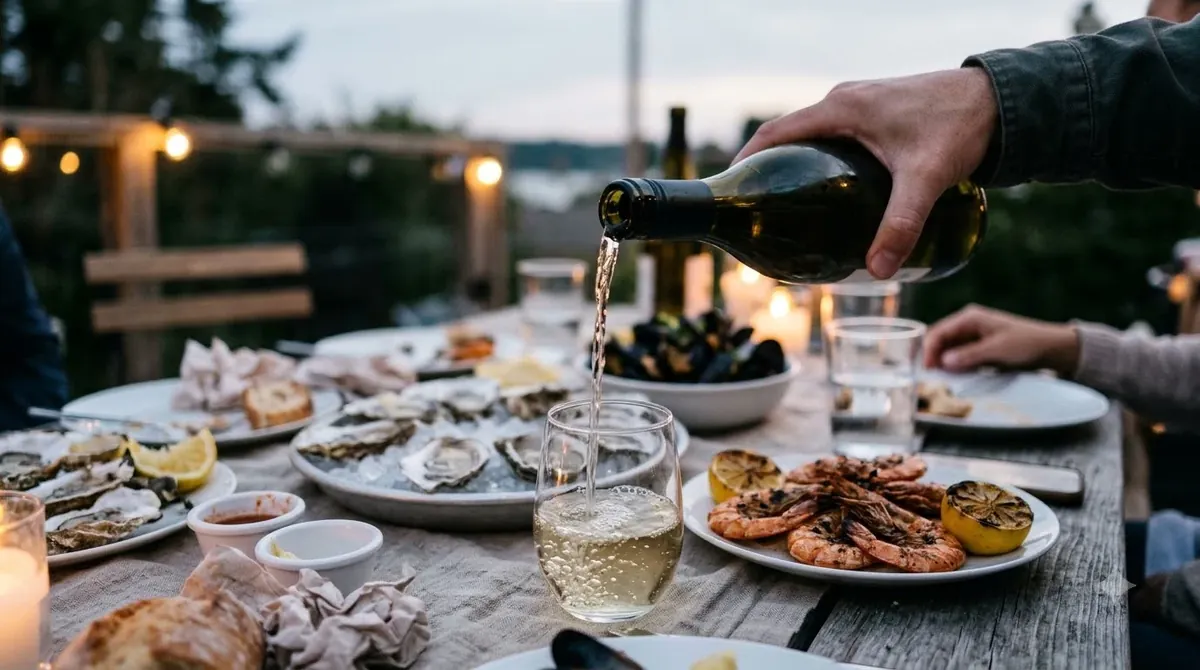
Albariño works particularly well with oysters, mussels, clams, scallops, shrimp, calamari and simply grilled white fish. Its acidity cuts through the richness of fried seafood, while its citrus and stone-fruit notes suit lemon, parsley and garlic. It is also a strong match for sushi, ceviche and cod served with a light sauce. Avoid burying a delicate bottle under heavy smoke, strong sweetness or a very hot chili sauce.
A classic Vinho Verde blend is a good choice with grilled sardines, light fish tacos, steamed shellfish, vegetable fritters, green salads and dishes with fresh herbs. Loureiro-led wines can echo parsley, cilantro and aromatic greens; a leaner Arinto blend can handle a squeeze of lemon or a sharp vinaigrette because its acidity is lively. Match the wine’s acidity to the dish: a strongly acidic dressing needs a wine with equal or higher acidity or the wine may taste flat.
More structured Alvarinho can stand up to richer seafood, roast chicken, pork tenderloin and dishes with a little cream or butter; a softer, fuller Avesso-based blend can also work with roast poultry or grilled vegetables. A very light, faintly spritzy Vinho Verde is better beside simpler preparations. Think about spice and sweetness, too: chili heat can seem stronger beside wines with higher alcohol, while wine served with dessert should be at least as sweet as the food. Dry Albariño and dry Vinho Verde are generally poor matches for very sweet desserts.
Serving Temperature and Bottle Handling
Serve both wines cool enough to feel refreshing but not so cold that their aromas disappear. A light Albariño or classic Vinho Verde is best around 45–50°F, while a richer, lees-aged or oak-influenced white can show better closer to 50–55°F.
For a practical setup, chill the bottle in the refrigerator and pour a small first taste before serving the full table. If the wine seems closed or muted, let it warm a few degrees in the glass rather than leaving the bottle on the counter for a long time. Very cold wine can hide peach, citrus and floral aromas; a glass that warms slightly often reveals more detail. Use a standard white-wine glass with enough room to swirl, rather than a narrow vessel that traps the wine’s aroma.
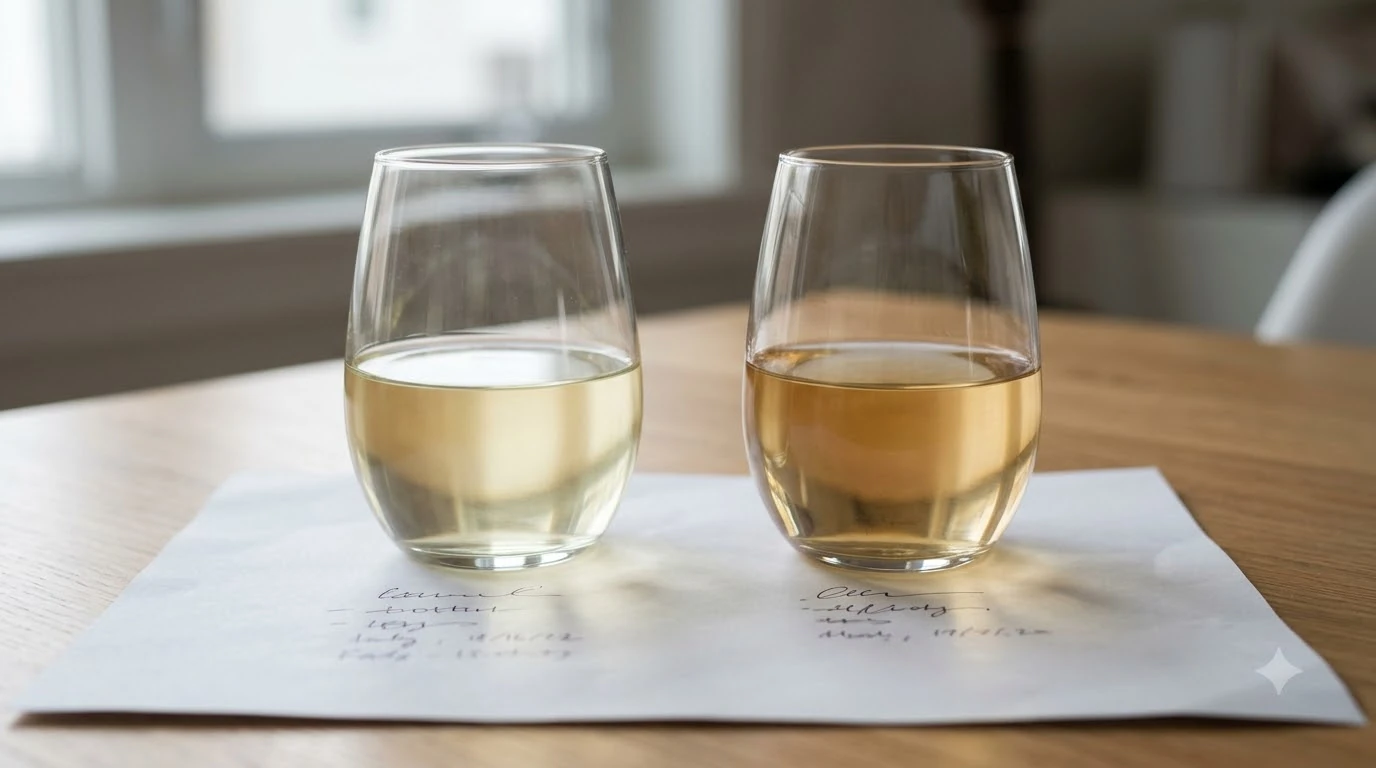
Pour about 5 ounces per glass. A standard 750 ml bottle provides roughly five servings, which makes planning easy for a seafood dinner or a casual gathering. If you are serving both styles, place them side by side at the same temperature and compare the first aromas before food arrives. Notice whether the Albariño feels more rounded or saline, and whether the Vinho Verde is more floral, lean or lightly spritzy.
Keep unopened bottles in a cool, dark place near 55°F, ideally on their side if they have a natural cork. After opening, reseal the bottle and refrigerate it; most still whites are best within 3–5 days. The wine may lose some aromatic detail after the first day, but it can remain pleasant for a few more days when kept cold and protected from air.
Tip: For a simple side-by-side tasting, chill both wines to 45–50°F, pour 5 ounces of each, and try them first with an oyster or a bite of grilled white fish. Taste again with lemon to see how the wines handle the dish’s acidity.
Frequently Asked Questions
Does “Vinho Verde” mean the wine is green?
No. The name refers to the region’s lush green landscape in northern Portugal, not to the color of the wine. Most familiar white examples are pale straw in appearance, and the designation also includes red and rosé wines.
Are red wines made in the Vinho Verde region?
Yes. The region authorizes several red grapes, including Vinhão, Espadeiro and Padeiro. Vinhão is notable for deeply colored wines with firm tannin and acidity, a very different experience from the crisp white bottles most commonly exported to the United States.
Why are pergolas used in some Vinho Verde vineyards?
Traditional pergola training raises the vines above the ground and allows air to move around the foliage. In a region with frequent rain and humidity, that airflow helps reduce the damp conditions associated with mildew and rot.
Is Trajadura the same grape as Treixadura?
The Vinho Verde regional grape list gives Trajadura as a synonym of Treixadura. The names therefore can look different on Portuguese and Spanish-facing material even though they refer to the same variety.
How can a shopper identify an officially certified Rías Baixas wine?
Rías Baixas wines carry an official label issued through the designation’s regulatory council. That seal is a useful authenticity cue because it connects the bottle to the region’s certification system rather than relying on a generic reference to Galicia or Albariño alone.
Albariño and Vinho Verde share Atlantic freshness, but they offer different ways into the white wines of Spain and Portugal. Choose Rías Baixas Albariño for a clear grape-led profile, or explore Vinho Verde by grape and subregion to find anything from a brisk everyday blend to a more structured Alvarinho.
More in Wine vs Wine
 Chenin Blanc vs Pinot Gris: Acidity, Body, and Pairing DifferencesUpdated Nov 20, 2026
 Chianti vs Lambrusco: How Tuscany and Emilia-Romagna Reds CompareUpdated Nov 20, 2026
 Chianti vs Primitivo: Key Differences in Taste, Body, and PairingUpdated Nov 20, 2026
 Chianti vs Rioja: Key Differences in Taste, Aging, and PairingUpdated Nov 20, 2026
 Chianti vs Shiraz: How Acidity, Body, and Food Pairings CompareUpdated Nov 20, 2026
 Chianti vs Syrah: Key Differences in Taste, Body, and Food PairingUpdated Nov 20, 2026