

We may earn a commission when you buy through links on this page, at no extra cost to you. Learn more.
Pairing white wine with dessert works best when the wine is slightly sweeter than the dish and carries enough bright acidity to cut through sugar and fat. Classic matches include Moscato d’Asti with fresh fruit tarts, late-harvest Riesling with apple pie, and Sauternes with crème brûlée. Serving sweet white wines cold—typically between 45°F and 50°F—keeps their natural sugars crisp and refreshing rather than syrupy.
Many diners automatically reach for coffee or a dark fortified red after dinner, overlooking how versatile white wines can be at the dessert table. Because white grapes retain high natural acidity even at late-harvest ripeness, they bridge the gap between rich pastries, warm spices, and bright fruit without weighing down your palate at the end of a meal.
The Golden Rules of Pairing White Wine with Dessert
Successful dessert pairings rely on two structural principles: matching sweetness levels and balancing richness with acidity. If your dessert is sweeter than the wine in your glass, the wine will taste unpleasantly sour, thin, or metallic by comparison.
According to food and wine pairing guides from Wine Folly, sweet white wines shine when you align their core flavor components—sweetness, tartness, and light-to-medium body—with the dominant ingredients on the plate. Rather than fighting sugar with dry tannins, a sweet or off-dry white acts like an extra squeeze of lemon or a drizzle of honey over the dish. That natural acidity scrubs the palate clean between bites of butter, cream, or caramelized sugar.
Intensity matters just as much as sugar content. A delicate, lightly sparkling Moscato d’Asti will vanish next to a dense, bourbon-soaked bread pudding, whereas a barrel-aged Sauternes has the viscosity and honeyed weight to stand up to rich custards. Conversely, pouring an intensely concentrated ice wine alongside a simple bowl of fresh berries will overwhelm the delicate fruit. You can explore how sweetness and body vary across different styles of wine before selecting a bottle for your menu.
One major caution with white dessert wines involves dark chocolate. High-cacao chocolate contains bitter polyphenols and heavy cocoa butter that clash with the bright, citrus-driven profile of most white wines, making the wine taste sharp and astringent. When dark chocolate is the centerpiece, sweet fortified reds are the safer route, while white wines stay focused on fruit, custard, caramel, nut, and white chocolate desserts.
Best White Wines for Dessert Pairings
Five major styles cover nearly every dessert scenario, ranging from low-alcohol, lightly sparkling bottles to richly concentrated late-harvest classics. Each relies on a different winemaking approach—such as arrested fermentation, late harvesting, or noble rot—to preserve natural grape sugars.

Moscato d’Asti from Italy’s Piedmont region is one of the most approachable entry points for sweet pairings. Winemakers chill the fermenting must early to halt yeast activity, leaving noticeable residual sugar alongside a gentle spritz and low alcohol, often around 5% to 7% ABV. Its fragrant aromas of peach, orange blossom, and fresh table grapes make it a natural companion for fruit salads, pavlova, and lightly sweetened sponge cakes.
Riesling spans the entire spectrum from bone-dry to nectar-sweet, making label reading essential. In German classifications, off-dry Kabinett and riper Spätlese bottles offer vibrant lime, green apple, and stone fruit notes backed by razor-sharp acidity. For richer sweets, late-harvest Auslese or botrytized Beerenauslese Rieslings bring concentrated apricot and honey flavors that cut cleanly through spiced apple tarts and lemon bars.
Sauternes and Botrytis Sémillon represent the opulent end of white dessert wines. In Bordeaux’s Sauternes appellation, morning mists from the Garonne River encourage Botrytis cinerea—known as noble rot—to shrivel Sémillon, Sauvignon Blanc, and Muscadelle grapes on the vine. The resulting wines offer dense layers of apricot jam, orange marmalade, saffron, and toasted vanilla from oak aging, yet their brisk acidity keeps them lively beside crème brûlée, almond tarts, and salty blue cheeses.
Gewürztraminer and Ice Wine round out the core lineup for specialized desserts. Late-harvest Gewürztraminer delivers an unmistakable perfume of lychee, rose petal, ginger, and cinnamon that mirrors warm baking spices in apple cobbler or carrot cake. Ice wine, produced in cool regions like Canada and Germany from grapes frozen naturally on the vine, yields pure, laser-focused sweetness with intense tropical fruit and honey notes suited to cheesecake and fruit tarts.
Dessert and White Wine Pairing Chart
Matching a specific dessert to the right white wine comes down to identifying the dominant flavor and texture on the plate. Use the reference table below to pair common dessert categories with their ideal white wine counterparts.
| Dessert Style | Recommended White Wine | Why the Pairing Works |
|---|---|---|
| Fresh Berry Tart or Pavlova | Moscato d’Asti | Low alcohol, gentle bubbles, and peach-blossom notes mirror fresh fruit without overpowering delicate pastry cream. |
| Warm Apple Pie or Peach Cobbler | Late-Harvest Riesling or Gewürztraminer | Crisp orchard acidity balances flaky butter crust while lychee and spice aromas echo cinnamon and nutmeg. |
| Crème Brûlée or Vanilla Custard | Sauternes or Botrytis Sémillon | Caramelized honey and apricot richness match the torched sugar crust while bright acidity cuts the heavy cream. |
| Lemon Bars or Key Lime Pie | Auslese Riesling | High residual sugar tames sharp citrus tartness while the wine’s natural zesty acidity prevents a syrupy finish. |
| White Chocolate Mousse | Off-Dry Sauvignon Blanc or Vouvray Demi-Sec | Sweetness matches the creamy cocoa butter while herbaceous citrus and tree-fruit notes lift the rich texture. |
| Almond Biscotti or Marzipan Cake | Oaked Chardonnay or Vin Santo | Toasted barrel nuances and nutty oxidative notes reinforce roasted almond flavors without heavy sugar overload. |
Notice how the table relies on two distinct pairing strategies: congruent pairings and complementary pairings. Congruent pairings link shared flavor compounds, such as matching the vanilla and caramel notes of oak-aged Sauternes with the caramelized sugar top of crème brûlée. Complementary pairings create contrast, such as using the zippy acidity of a German Riesling to slice through the dense butterfat of a warm cobbler crust.
Alcohol levels also play a subtle role in how these matches feel after a multi-course dinner. While a lightly sparkling Moscato sits near 5% to 7% ABV, full-bodied botrytized whites like Sauternes often reach 13% to 14% ABV, which adds warmth and mid-palate weight. Checking the typical alcohol levels in dessert wines helps you gauge whether guests will prefer a featherlight refresher or a richer, slow-sipping pour.
How to Serve White Wine with Dessert
Temperature, glassware, and portion size determine whether a sweet white wine tastes vibrant or cloying. Serving these bottles well chilled and in smaller pours preserves their aromatic lift and keeps natural sugars from dominating the finish.
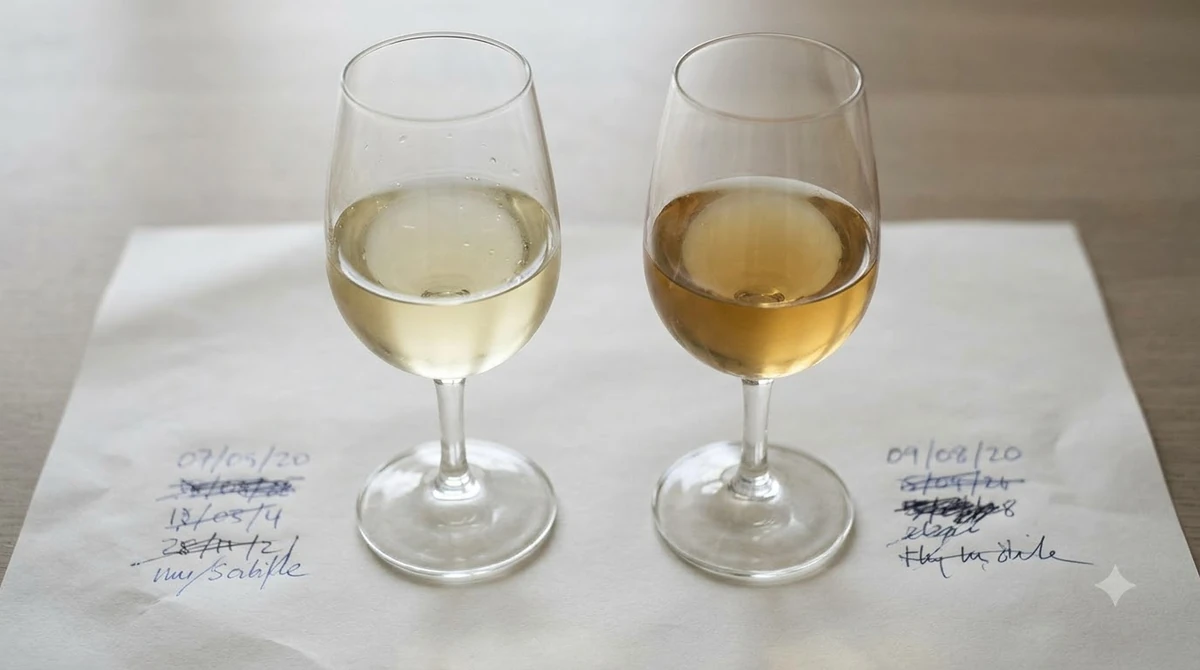
Chilling is the single most important step before uncorking. According to VinePair’s wine serving temperature guide, sweet white wines should be served cold, ideally between 45°F and 50°F. At warmer room temperatures, residual sugar feels heavy and flat on the tongue, whereas a proper chill highlights crisp acidity and floral aromatics. A standard kitchen refrigerator runs closer to 38°F, so pulling the bottle out about 15 to 20 minutes before dessert allows complex bottles like Sauternes to open up.
Because dessert wines carry concentrated flavors and higher sugar levels, standard dinner pours are too large. Aim for a 2.5-ounce to 3-ounce pour—roughly half the size of a normal table wine serving—using a smaller white wine glass or a dedicated tulip-shaped dessert glass. A narrower bowl concentrates delicate aromas of honey, apricot, and citrus blossom while keeping the wine cooler in the glass. Reviewing best practices for chilling sweet wines can help you time your prep so every bottle hits the table at peak freshness.
Tip: When buying intensely sweet dessert wines like Sauternes or ice wine, look for 375ml half-bottles—one split easily provides four generous 3-ounce dessert pours with zero waste.
Storing Opened Bottles of Sweet White Wine
Unlike dry white wines that oxidize and flatten within a day or two, high-sugar white dessert wines stay fresh significantly longer after opening. Residual sugar and high natural acidity act as natural preservatives, slowing down spoilage when the bottle is properly sealed and refrigerated.
A lightly sparkling bottle like Moscato d’Asti is the exception to the rule because its charm depends on dissolved carbon dioxide. Even with a tight sparkling wine stopper in the refrigerator, effervescent sweet whites lose their lively spritz within one to three days. Still off-dry wines, such as Kabinett or Spätlese Riesling, typically hold their fresh fruit character for three to five days under a standard cork or screw cap in the fridge.
Rich, high-sugar styles like Sauternes, Tokaji, and ice wine offer the longest window of usability. Kept tightly stoppered in the refrigerator, these concentrated wines often taste vibrant for one to three weeks after opening, sometimes developing intriguing nutty and dried-fruit nuances over several days. For specific storage timelines by bottle style, check our guide on how long opened dessert wine stays fresh before pouring a leftover glass.
Frequently Asked Questions
Can you serve dry white wine with dessert?
Dry white wine rarely works with sweet desserts because the sugar in the food strips away the wine’s fruitiness, leaving it tasting sharp, sour, and thin. The only exceptions are minimally sweet desserts, such as dark-fruit compotes with unsweetened cream, or rich oaked Chardonnay paired with lightly sweetened almond biscotti.
What is the best white wine to serve with chocolate dessert?
White wine pairs best with white chocolate desserts, such as white chocolate mousse or macadamia blondies, where off-dry Sauvignon Blanc or Vouvray Demi-Sec adds bright citrus contrast. For dark or bittersweet chocolate, avoid white wine altogether, as cocoa tannins clash with crisp acidity; opt for a sweet fortified red like Ruby Port or Banyuls instead.
Should sweet white wine be sweeter than the dessert?
Yes, the wine in your glass should always register at least slightly sweeter than the dish on your plate. Matching or exceeding the dessert’s sweetness prevents the food from dulling the wine’s flavor, while the wine’s natural acidity keeps the combination balanced and refreshing.
What glass do you use for white dessert wine?
Use a small tulip-shaped dessert wine glass or a standard narrow white wine glass filled to about 2.5 or 3 ounces. A smaller bowl concentrates aromatic notes of stone fruit, honey, and blossom while preventing the wine from warming up too quickly in your hand.
Choosing the right white wine with dessert comes down to matching sweetness levels, leaning on crisp acidity to balance richness, and serving every bottle properly chilled. Whether you pour a fizzy Moscato d’Asti over fresh summer berries or uncork a honeyed Sauternes alongside crème brûlée, the right white wine turns the final course into a memorable finish.
More in Wine Types & Grapes
 White Zinfandel Price Range: What to Expect by Style and TierUpdated Nov 21, 2026
 White Zinfandel Sweetness Level: Residual Sugar, Taste, and Serving GuideUpdated Nov 21, 2026
 White Zinfandel Substitute: 5 Best Sweet and Off-Dry SwapsUpdated Nov 21, 2026
 White Zinfandel Serving Temperature for Crisp, Balanced FlavorUpdated Nov 21, 2026
 White Zinfandel History: How a 1975 Cellar Accident Changed WineUpdated Nov 21, 2026
 White Wine History: From Ancient Clay Jars to Modern CellarsUpdated Nov 21, 2026