

We may earn a commission when you buy through links on this page, at no extra cost to you. Learn more.
The jaen grape is a red wine variety from Portugal, where it is genetically identical to Spain’s Mencía and is most closely linked to the Dão region. It produces aromatic, medium-bodied reds with red fruit, floral lift and a gentle peppery edge. Most of it goes into blends, though single-variety bottles are becoming more common. This guide covers where it grows, how it tastes, and how to serve and pair it.
Few American wine drinkers have met this grape, even though it accounts for a large share of one Portuguese region. In Portugal it is pronounced “jyne,” and once you know that, the name is easy to work with. Whether the bottle in front of you comes from the Dão or from northwest Spain, understanding this red will help you choose a wine that suits your table.
What Is the Jaen Grape and Where Did It Come From?
The jaen grape is a red variety that DNA profiling links directly to Spain’s Mencía, so the two names describe the same vine grown on either side of the border. The name on the label usually depends on which country made the wine.
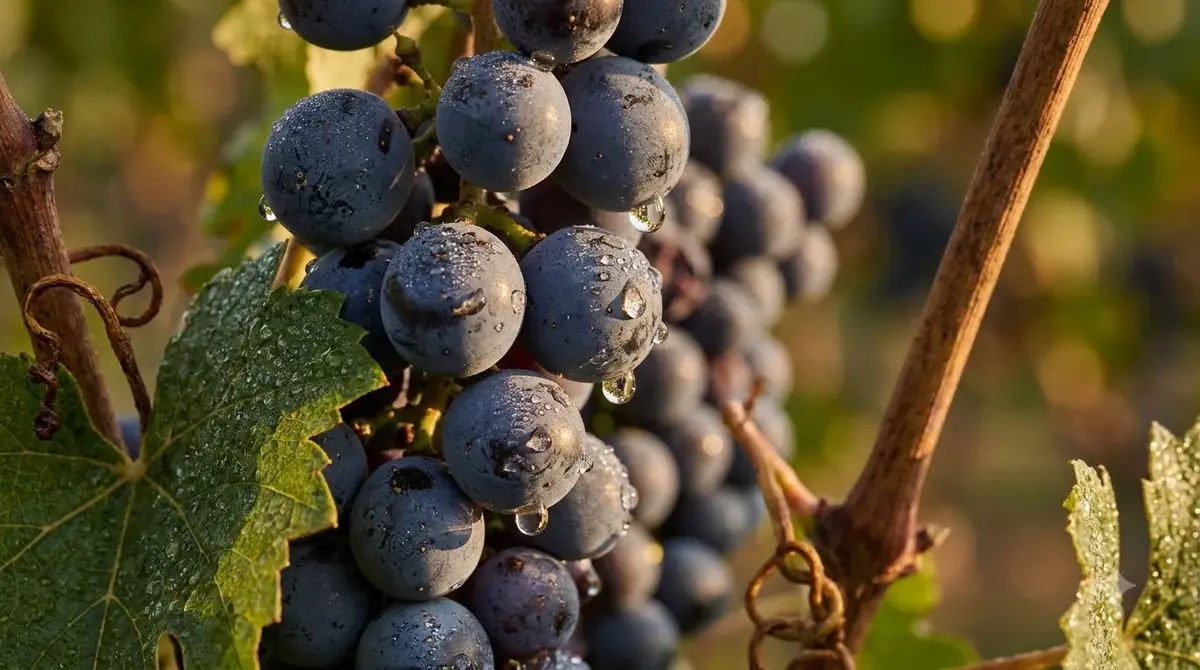
In Portugal the variety is labeled Jaen, while in Spain it is called Mencía. Decanter’s coverage of Portugal’s indigenous grapes describes Jaen as identical to Spain’s Mencía, and Wine Folly makes the same point by noting that Mencía is labeled Jaen in Portugal. For an American shopper this matters, because a bottle from Galicia and a bottle from the Dão can come from the same vine even though the labels look completely different.
Where the vine began is still debated, but recent evidence leans toward Portugal. Mencía has deep roots in northwest Spain, yet Falstaff reports that DNA analysis points to parents called Alfrocheiro and Patorra, which come from Portugal’s Dão and Douro regions respectively. Decanter also notes that Jaen grows along the pilgrim’s trail to Santiago de Compostela, a route that could have carried the vine across the border.
Where Jaen Grows and Why Dão Matters Most
Jaen is planted most heavily in Portugal’s Dão region, where the official Wines of Portugal site says the variety shows at its best. The grape also plays a role in parts of Beira Interior, and in Spain it is grown mainly in the northwest under the Mencía name.
The Dão is a mountainous region in north-central Portugal, with vineyards on mostly granite soils. The Decanter regional profile puts the vineyard area at 14,476 hectares spread across seven sub-regions, with the best vineyards sitting between 400 and 800 meters. A Douro winemaker quoted in the same profile says granite produces perceptibly fresher wines than the schist of the Douro, which helps explain the region’s reputation for elegance.
Within that vineyard area, Jaen is the largest red variety. The figures below show it ahead of Touriga Nacional, the grape most people associate with the region, and they come from Portuguese vine statistics cited by Decanter.
| Dão red variety | Hectares planted | Notes |
|---|---|---|
| Jaen | 3,417 | Largest red variety; ripens early in the south |
| Touriga Nacional | 3,116 | Core of the flagship red blend (usually 40% to 60%) |
| Aragonez | 2,672 | Also called Tinta Roriz |
| Alfrocheiro | 874 | Highly perfumed, with red cherry character |
| Baga | 719 | Among the main red varieties |
| Tinta Pinheira | 484 | Also called Rufete |
| Trincadeira | 176 | Smallest of the seven varieties listed |
Jaen alone accounts for close to a quarter of the Dão’s 14,476 hectares of vines. That makes it a central part of the region’s identity, not a minor supporting player, and it is one reason the grape deserves a closer look from anyone shopping Portuguese reds.
How Jaen Tastes: Fruit, Tannin, and Acidity
Jaen is an aromatic red with red and dark berry fruit, floral notes and a peppery finish. Its structure is usually moderate, and its acidity can range from soft to bright depending on where the grapes ripened.
Aromas and Flavors on the Palate
Wine Folly describes Mencía as a medium-bodied red with floral aromas and flavors of strawberry, raspberry, black licorice, pomegranate and cherry sauce. On the palate it tends toward peppery sour cherry and red currant, with a bitter cherry-pit note that comes from the tannin. Falstaff adds damson and blackberry fruit, which is often tempered by earthiness, spice and a cool, stony freshness.
The Wines of Portugal description is blunter but useful. At its best, Jaen is highly perfumed, reminiscent of blackberry, blueberry and cherry, while weaker examples can taste watery and acidic. When it is made well, the grape produces early-drinking, soft and silky reds that are simple yet seductive.
Where It Sits Among Red Styles
Falstaff’s grape profile lists Mencía with medium body and medium acidity, which places it between light, fruity reds and the dense, tannic wines many people expect from red. It is more perfumed and lighter-framed than a dense wine such as the dornfelder grape, and its aromatic lift puts it in the same family as other floral reds like the brachetto grape. For a drinker who wants fruit, freshness and a little spice, that middle position is the appeal.
Hot South Versus Cool North: How Site Shapes Jaen
According to Decanter’s Dão reporting, where Jaen ripens changes its acidity, tannin and aroma. The same variety can taste quite different from a hot southern vineyard and a cooler northern one.
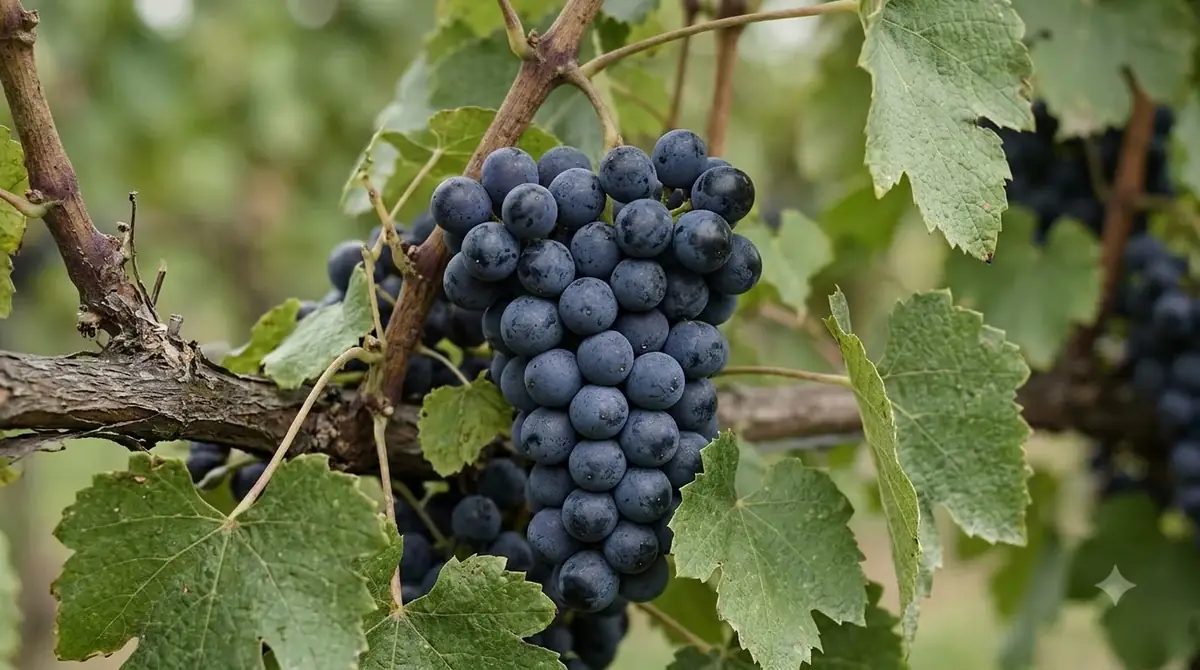
In the hotter parts of the Dão, Jaen ripens first and is low in acidity. Decanter explains that the grape traditionally enhanced floral aromas and added alcohol to blends, softening tarter grapes picked alongside it. The Wines of Portugal site makes a similar point, describing the vines as vigorous and early-ripening, with low acidity and poor colour. That is why Jaen has historically been used as a blending partner in the south more often than as a wine on its own.
In the cooler northern sub-regions, the picture changes. Decanter’s reporting says Jaen there is harvested about two weeks later, which gives firmer tannins and more pronounced floral notes, and the grape can stand on its own as a single-variety wine. Decanter describes Jaen as breaking out in its own right, with single-varietal bottlings becoming more common.
Freshness Over Weight
Some producers are aiming for freshness rather than weight. One Dão producer quoted by Decanter wants his Jaen to show concentration without density, and he believes the wine needs freshness rather than high acidity. Decanter also describes a longer ripening window in the Penalva sub-region, which delivers ripe tannins and delicate aromas at lower alcohol levels, a balance that drinkers looking for elegance will appreciate.
Mencía in Spain: Bierzo, Valdeorras, and the Northwest
In Spain, Mencía is grown mainly in the northwest, in Bierzo, Ribeira Sacra, Valdeorras and Monterrei. Its character there owes a lot to old hillside vineyards and restricted yields.
Falstaff notes that the variety was once dismissed for light, rather astringent wines. Winemakers who revive old hillside vineyards with restricted yields, however, get wines with far more body and character. Its fragrant fruit is often balanced by savory earthiness and a cool, stony freshness, which is what sets the Spanish examples apart from the simpler Portuguese bottles.
Wine Folly adds that the most highly prized Mencía wines usually come from older hillside vineyards, where grapes are more concentrated. In the mountainous Ribera Sacra, the slope’s orientation also affects ripeness, and a south-facing vineyard tends to give a more intensely flavored wine.
Blending is another Spanish habit worth knowing. Wine Folly reports that some of the most interesting Mencía wines include around 15% of other indigenous reds, namely Brancellao, Merenzao, Sousón and Caíño Tinto. These grapes are thought to smooth out some of Mencía’s bitter tannin, and because they are rare, single-variety versions of them are almost impossible to find.
Food Pairings That Work With a Jaen Red
Jaen suits peppery, meaty dishes and salty, aged cheeses, because those foods soften its tannin and echo its spice. Very hot chili dishes and oily fish are better matched with other wines.
Wine Folly’s pairing advice is simple: peppery, meaty dishes absorb the tannin in Mencía and bring the red fruit forward. Steak au poivre, charcuterie, roast pork, beef brisket and duck all fit that pattern. Vegetable dishes built on mushrooms, lentils or bell pepper also work well, which makes Jaen a practical red for a cook who does not want to serve meat every night.
Cheese is where Jaen really shines. Wine Folly lists Serra da Estrela, Azeitão, Manchego and Idiazabal among the matches, and the salt and fat in these cheeses soften the tannin in the wine. A plate of Manchego or Serra da Estrela with a glass of Dão Jaen is an easy starting point for a dinner party, and the cheeses from the Iberian Peninsula echo the wine’s regional roots.
There are a few pairings to avoid. Very hot chili dishes make a tannic red taste harsher, because alcohol and tannin both amplify heat, so a firm bottle of Jaen will feel rougher alongside them. Oily fish also clashes with tannic reds, so save this bottle for lamb, pork or mushroom-based dishes.
Serving, Decanting, and Storing Jaen Wine
Serve a medium-bodied Jaen cool, at about 55 to 60 F, and give young bottles time to open. Unopened bottles keep best lying on their side in a cool, dark place near 55 F.
Light reds are typically served between 55 and 60 F, and a medium-bodied Jaen sits comfortably in that range. Serving it within that band keeps the fruit lively and stops the tannin from feeling heavy. Pour it into a glass with room to swirl, and expect about five glasses of 5 ounces from a 750 ml bottle.
Decanting helps young bottles. Wine Folly recommends decanting Mencía for 45 minutes so the wine can open before it is poured. For a young bottle with firm tannins from a cooler site, that time gives the florals room to show, while a softer southern bottle needs less.
Tip: If a young Jaen tastes tight or sharp, decant it for about 45 minutes and serve it at 55 to 60 F. A softer bottle usually needs only about 30 minutes before pouring.
Once opened, keep the bottle sealed in the fridge, where still wines like Jaen usually hold their character for three to five days. For a broader look at how Jaen compares with other red styles, see our Wine by Type guide.
Frequently Asked Questions
These answers cover the questions that come up most often about jaen wine and the grape behind it.
Is jaen related to Cabernet Franc?
No. Mencía was long thought to be related to Cabernet Franc because the two share some similar traits. DNA research showed that the variety is not related to the Bordeaux grape and is instead identical to Jaen.
Does jaen wine age well?
Wine Folly notes that Mencía has shown it can age like other fine wines. It suggests setting a bottle down for a couple of years to see how it evolves in the glass.
Can jaen be made with softer tannins?
Yes. Wine Folly says Mencía can be made in a softer style, and it recommends looking for wines aged in oak barrels, which can show notes of nutmeg, brown sugar or vanilla. Those cues usually point to a rounder, more approachable bottle.
Is jaen grown outside the Iberian Peninsula?
No. Wine Folly says Mencía grows only in Spain and Portugal on the Iberian Peninsula. Northwest Spain and the Dão remain its core homes.
Is there a light, easy-drinking style of jaen?
Yes. Decanter notes that Jaen’s florality suits playful, gluggable wines, and one Dão producer makes Jaen-based labels in that style, including Lero Lero and Tretas. Early-picked fruit is the key to the lighter approach.
Jaen is one of the Iberian Peninsula’s most rewarding reds, and its split identity makes it a little harder to shop for than it should be. Start with a Dão bottle or a Bierzo Mencía, pair it with a salty cheese or a peppery dish, and check the sub-region on the label to find the style you enjoy.
More in Wine Types & Grapes
 What Does Ruby Port Taste Like? Flavor Notes, Styles, and Serving TipsUpdated Nov 21, 2026
 What Does Ribolla Gialla Taste Like? Crisp White and Amber Styles ExplainedUpdated Nov 21, 2026
 What Does Semillon Taste Like? Flavor Profile, Styles & PairingsUpdated Nov 21, 2026
 What Does Scuppernong Taste Like? Flavor, Styles, and Pairing GuideUpdated Nov 21, 2026
 What Does Saperavi Taste Like? Flavors, Styles, and Pairing GuideUpdated Nov 21, 2026
 What Does Natural Wine Taste Like? Flavors, Styles, and Serving TipsUpdated Nov 21, 2026