

We may earn a commission when you buy through links on this page, at no extra cost to you. Learn more.
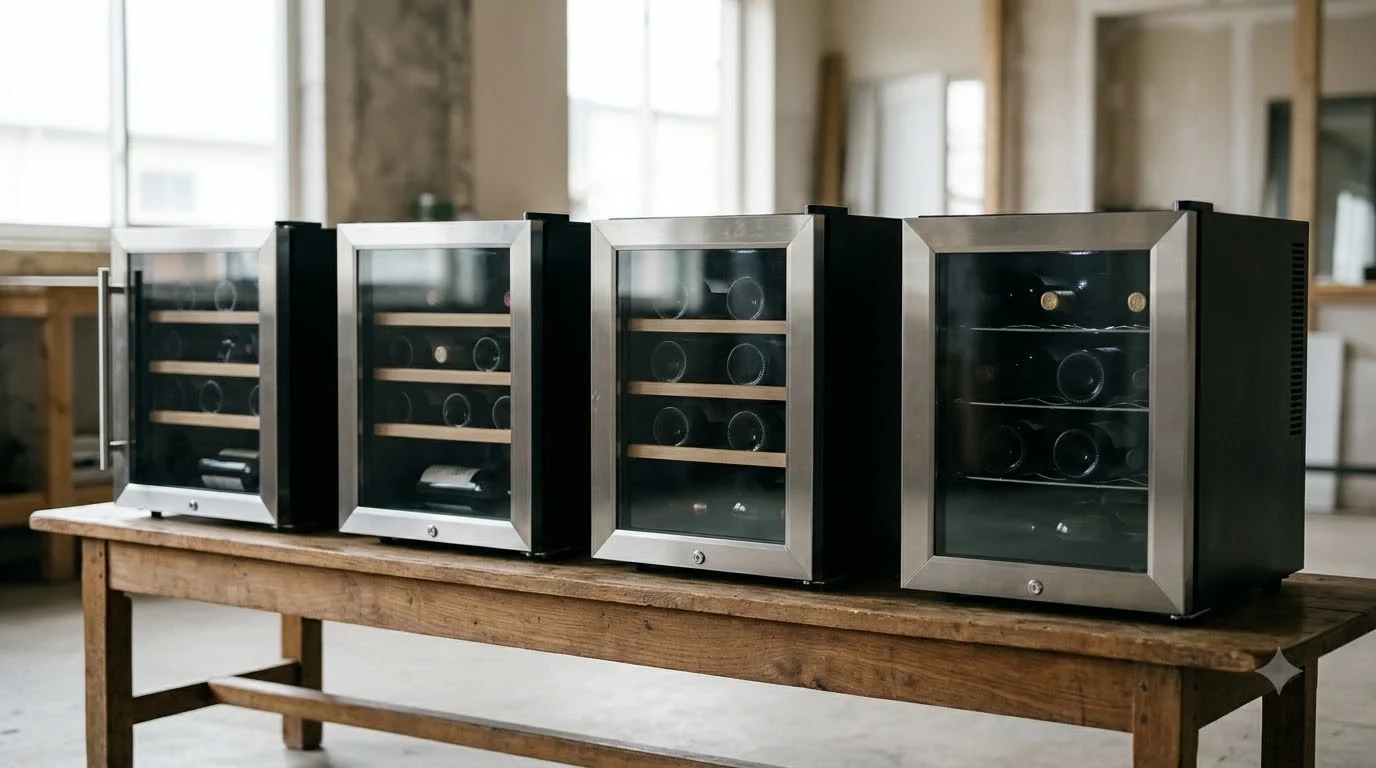
The magic chef countertop wine cooler is a practical choice for keeping a small collection of wine organized and chilled, particularly if you choose the eight-bottle MCWC8DCT3. Its adjustable 46°F to 64°F temperature range, digital controls, and compact footprint make it suitable for a small home bar or kitchen counter. However, limited capacity, required ventilation clearance, and the absence of built-in installation support mean it is not the right choice for every wine drinker.
Magic Chef has produced several compact wine cooler models, and identifying the exact model matters before making a purchase. The eight-bottle MCWC8DCT3, six-bottle MCWC6B, and 12-bottle MCWC12B have different dimensions, controls, and specifications. This review focuses primarily on the eight-bottle MCWC8DCT3, using its instruction manual to assess its practical strengths and limitations while distinguishing it from other Magic Chef countertop models.
Specs and Key Features
The Magic Chef MCWC8DCT3 is a compact, digitally controlled wine cooler designed for people who want dedicated wine storage without purchasing a full-size refrigerator. Its eight-bottle capacity and adjustable 46°F to 64°F range cover several everyday serving and short-term storage needs, although the temperature display has a documented accuracy limitation.
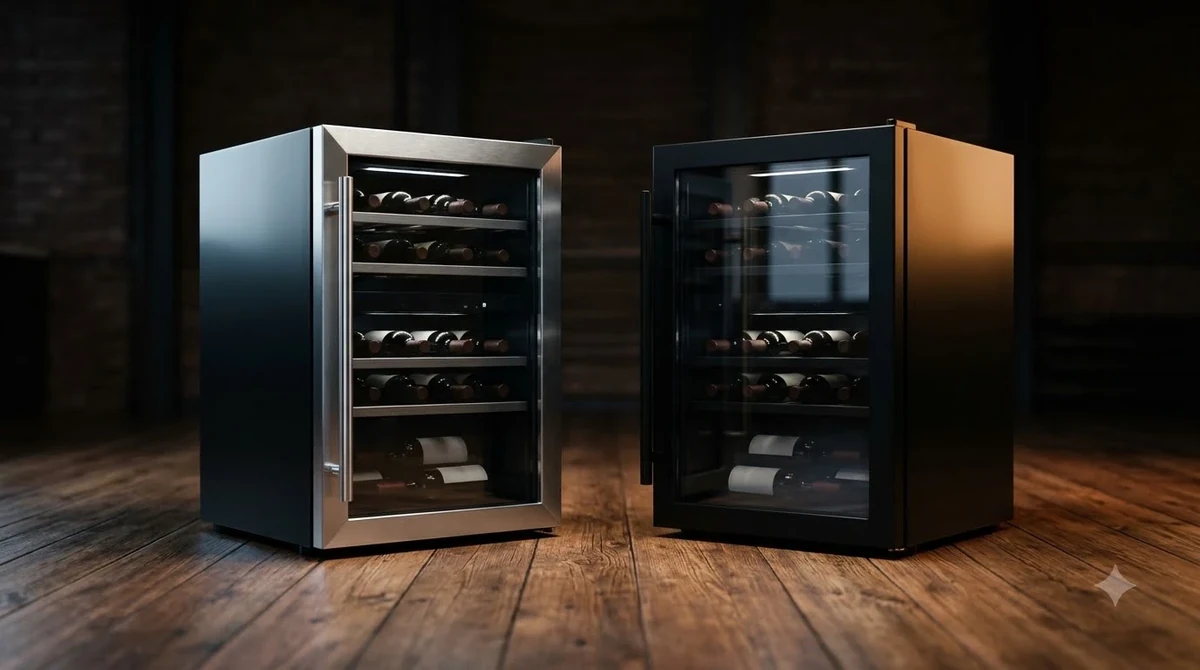
The unit measures 16.5 inches wide, 11.2 inches high, and 20.7 inches deep. At 22 pounds, it is relatively manageable to position during installation, although its required ventilation clearance means the actual counter space needed is considerably larger than its physical dimensions suggest.
Its control system is straightforward. Dedicated up and down buttons adjust the target temperature, while the LCD displays the actual temperature inside the cabinet. A separate Celsius/Fahrenheit switch makes it easier to work with familiar temperature measurements, and an interior light button helps illuminate the bottles without relying on external lighting.
| Specification | Magic Chef MCWC8DCT3 |
|---|---|
| Product type | Countertop wine cooler |
| Model number | MCWC8DCT3 |
| Rated capacity | 8 standard unopened bottles |
| Temperature range | 46°F–64°F |
| Width | 16.5 inches |
| Height | 11.2 inches |
| Depth | 20.7 inches |
| Weight | 22 pounds |
| Temperature display | LCD |
| Temperature adjustment | Up and down buttons |
| Temperature units | Fahrenheit and Celsius |
| Lighting | Interior light |
| Installation | Freestanding only |
| Electrical requirement | 100–120V AC, 60Hz, grounded outlet |
One important detail is the temperature display. Magic Chef documents a possible difference of approximately ±2°C between the LCD reading and the actual cabinet temperature. That is roughly ±3.6°F, which is meaningful if you expect precise temperature control for particular wine styles.
The eight-bottle capacity also needs some interpretation. The manufacturer specifies eight standard unopened bottles, not eight bottles of every possible shape. Wider Pinot Noir bottles, Champagne bottles, and unusual bottle profiles can reduce the number that fits comfortably. Anyone who regularly purchases several bottle formats should account for this limitation.
The specifications are best understood as those of a small household wine appliance rather than a miniature professional wine cellar. Its digital display and adjustable temperature settings are useful features, but they do not establish that it offers the temperature stability, humidity management, or storage capacity of a larger dedicated cellar.
What Owners Like
The strongest appeal of the Magic Chef countertop range is its compact format and relatively simple operation. Customer feedback for the separate six-bottle MCWC6B provides some useful context about the appeal of this product category, particularly its size and straightforward temperature controls.
On Best Buy’s MCWC6B customer review page, compact dimensions and temperature control are among the positive features mentioned by owners. The review page provides feedback about the six-bottle model, not the eight-bottle MCWC8DCT3, so it should be treated as related product-family information rather than direct confirmation of the eight-bottle model’s performance.
A countertop-friendly format
A compact wine refrigerator can make sense in a home where a full-size appliance would occupy too much floor or cabinet space. The MCWC8DCT3’s height of 11.2 inches makes it particularly different from conventional upright wine refrigerators, while its 16.5-inch width gives it a relatively small basic footprint.
This format can be useful in a home bar, dining area, or kitchen where a small selection of bottles needs to remain accessible. It also separates wine storage from ordinary food refrigeration, making it easier to organize bottles according to their intended serving temperatures.
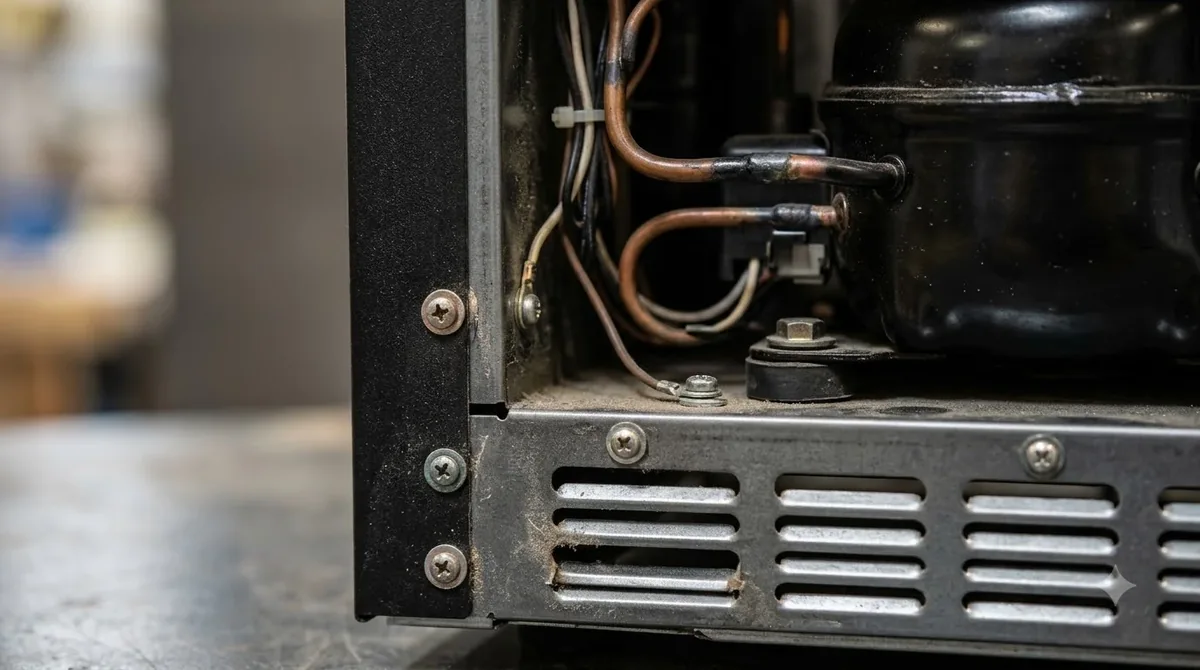
However, the actual installation space must include ventilation clearance. The manual requires five inches between the back and sides of the appliance and surrounding surfaces. A counter that appears large enough for the cabinet alone may therefore be unsuitable.
Simple temperature adjustments
The MCWC8DCT3 uses dedicated temperature buttons rather than a complicated menu system. The LCD display provides an actual cabinet-temperature reading, and the Fahrenheit/Celsius switch accommodates different preferences.
This arrangement is helpful for households that regularly switch between red and white wines. For example, someone storing lighter reds around 55°F to 60°F and fuller-bodied reds around 60°F to 65°F can use the adjustable range to establish a practical storage and serving arrangement.
White wines can also benefit from dedicated chilled storage. Light whites and rosé are generally served around 45°F to 50°F, while fuller-bodied whites are commonly served around 50°F to 55°F. The Magic Chef’s lower setting provides a useful starting point for these styles.
A useful small-collection appliance
Eight bottles can be sufficient for someone who buys wine occasionally rather than maintaining a large collection. A household might keep two bottles of Sauvignon Blanc, two bottles of Chardonnay, two bottles of Pinot Noir, and two additional bottles for guests or weekend meals.
This type of rotation makes more sense than purchasing a compact cooler and expecting it to hold a growing collection indefinitely. A small wine refrigerator is most useful when the number of bottles stored remains reasonably consistent.
For readers comparing several storage formats, the broader best rated wine cooler options provide a useful starting point for understanding the differences between countertop, freestanding, and larger-capacity refrigerators.
Common Complaints
The MCWC8DCT3 has several limitations that buyers should understand before committing to a countertop installation. Its eight-bottle rating, temperature-display tolerance, and ventilation requirements are the most important considerations.
Actual bottle capacity can be lower
The manufacturer’s eight-bottle capacity is based on standard unopened bottles. That does not guarantee the same result with every wine collection.
Traditional Bordeaux bottles generally have a relatively narrow profile, while Burgundy and some Syrah bottles can be wider. Sparkling wine bottles can also create fitting difficulties because their bodies are often broader than standard still-wine bottles.
For example, a collection containing six Bordeaux bottles and two larger Champagne bottles may not fit in the same arrangement as eight standard Bordeaux bottles. Bottle placement can also become more complicated when opened bottles are introduced.
This is not necessarily a manufacturing defect. It is a practical limitation of small wine refrigerators with fixed interior dimensions. Buyers who frequently purchase different bottle shapes should be cautious about treating the advertised capacity as a guaranteed everyday figure.
Temperature accuracy requires attention
The documented ±2°C temperature difference is another limitation. A displayed reading of 55°F does not necessarily mean that every part of the interior is exactly 55°F.
That difference matters because wine serving temperatures are relatively specific. A light white served at 55°F may taste less refreshing than one served at 48°F, while a light red served directly from an excessively cold refrigerator may appear muted.
The practical solution is to use a separate suitable refrigerator thermometer to check the actual cabinet conditions. Allow the cooler time to stabilize before making adjustments, rather than repeatedly changing the settings whenever the display fluctuates.
It cannot be built into cabinetry
The MCWC8DCT3 is designed for freestanding installation only. Magic Chef explicitly warns against recessing or building the appliance into cabinets.
The five-inch clearance requirement around the back and sides also makes it less convenient for tightly arranged kitchen counters. The cooler needs sufficient space for ventilation, and positioning it directly against a wall can interfere with cooling performance.
It is also unsuitable for a garage or outdoor installation. The manual recommends an ambient operating temperature between 60°F and 83°F and warns that temperatures outside the broader 46°F to 86°F range can hinder performance.
Limited information about specialized storage
The manual documents temperature adjustment and basic maintenance, but the listed specifications do not establish a dedicated humidity-control system, separate temperature zones, or specialized long-term cellar management.
That distinction matters for collectors. A small cooler can be convenient for keeping a handful of bottles at a practical temperature, but it should not automatically be treated as a substitute for a wine cellar designed for long-term aging.
Tip: Before buying, measure the full installation area rather than just the cooler’s 16.5-by-20.7-inch footprint. Allow the required five inches of clearance at the back and sides, and confirm that the electrical outlet is accessible.
Who Should Buy and Who Should Skip
The Magic Chef MCWC8DCT3 makes the most sense for casual wine drinkers who need a compact appliance for a modest collection. Its eight-bottle capacity and 46°F to 64°F adjustment range offer practical flexibility, provided the buyer has enough ventilation space.
Who should consider buying it
People who usually keep between four and eight standard bottles at home are the clearest potential buyers. They can use the cooler to organize a small selection without dedicating an entire cabinet or floor-standing appliance to wine.
It may also suit households that entertain occasionally. Having a few bottles ready for dinner guests can be more convenient than moving wine between a regular refrigerator and a kitchen counter before serving.
Someone who enjoys both red and white wines may appreciate the adjustable temperature settings. The range allows the user to select a practical temperature for a mixed collection, although one cabinet cannot independently maintain different temperatures for different wine styles.
Apartment residents and homeowners with limited storage space may also appreciate its small physical size. The important qualification is that the unit still needs five inches of clearance around the specified sides and back, so a compact footprint does not mean it can be squeezed into any available opening.
Who should skip it
Collectors with more than eight bottles should consider a larger model. Regular wine buyers can quickly outgrow this capacity, especially if they purchase several bottles at a time or keep different wines for separate occasions.
People who regularly store Champagne, large-format bottles, or unusually shaped bottles should also be cautious. The rated capacity assumes standard unopened bottles, and the interior may not accommodate a mixed collection as efficiently as expected.
It is not a good choice for anyone seeking a built-in kitchen appliance. The manufacturer’s freestanding-only installation requirement rules out treating the MCWC8DCT3 as an under-counter refrigerator.
Finally, serious collectors planning to age valuable bottles over several years may prefer a purpose-built wine cabinet with more comprehensive environmental controls. The Magic Chef’s temperature range and compact design are oriented toward everyday household convenience rather than specialist cellar storage.
Matching the cooler to wine styles
Temperature selection should reflect the wines being stored and the way they will be served. For a mixed collection, a setting around 55°F can be a practical compromise, although it is not the ideal serving temperature for every bottle.
For example, Sauvignon Blanc generally benefits from serving temperatures around 45°F to 50°F. Pinot Noir is commonly served around 55°F to 60°F, while Cabernet Sauvignon is generally more enjoyable around 60°F to 65°F.
Someone who mostly drinks Sauvignon Blanc might prefer a cooler setting, while a household that favors Cabernet Sauvignon may want a warmer setting. The MCWC8DCT3 accommodates this type of adjustment, but its single temperature compartment requires a compromise when several styles are stored together.
Food pairing also provides a useful reason to keep different wines available. Pinot Noir works well with many mushroom and poultry dishes, while fuller-bodied reds such as Cabernet Sauvignon can complement richer meals. A bottle of Chardonnay can be useful alongside roast chicken or creamy dishes.
For a dinner pairing, the chicken marsala recipe offers an example of a meal where a medium-bodied red or a fuller white can be considered depending on the sauce and preparation.
How It Compares to Alternatives
Magic Chef has offered several countertop wine coolers, and the differences between its six-, eight-, and 12-bottle models are important. The MCWC8DCT3 provides a middle-ground capacity, while the MCWC6B prioritizes a smaller physical footprint and the MCWC12B accommodates a larger collection.
These models should not be treated as identical appliances with different shelf counts. Their dimensions, temperature controls, and specified temperature ranges differ, which can influence how well each one suits a particular counter and collection.
| Model | Capacity | Temperature range | Dimensions (W × H × D) |
|---|---|---|---|
| MCWC6B | 6 bottles | 46°F–64°F | 10.9 × 15 × 20.1 inches |
| MCWC8DCT3 | 8 bottles | 46°F–64°F | 16.5 × 11.2 × 20.7 inches |
| MCWC12B | 12 bottles | 54°F–66°F | 14.2 × 19 × 20.1 inches |
Magic Chef MCWC6B
The MCWC6B is a separate six-bottle countertop wine cooler with a traditional upright design. Its dimensions are 10.9 inches wide, 15 inches high, and 20.1 inches deep, giving it a different footprint from the lower-profile MCWC8DCT3.
It uses an adjustable thermostat knob instead of the eight-bottle model’s described digital up and down controls. The MCWC6B also includes two removable sculpted chrome racks, a see-through glass door, and LED interior illumination.
Its six-bottle capacity is a disadvantage for anyone who regularly purchases several wines at once. However, someone with a very small collection may prefer the narrower width, particularly if counter width is the main installation constraint.
Best Buy’s customer feedback for the MCWC6B identifies compact size and temperature control as positive themes. That feedback should not be interpreted as a performance guarantee for the MCWC8DCT3, but it does offer additional context about the six-bottle alternative.
Magic Chef MCWC12B
The MCWC12B provides more capacity, accommodating up to 12 bottles. Its dimensions are 14.2 inches wide, 19 inches high, and 20.1 inches deep, and it uses an electronic control panel with a blue LED display.
It also includes three removable sculpted chrome racks and soft white interior lighting. Its specified temperature range is 54°F to 66°F, which is narrower and warmer than the eight-bottle MCWC8DCT3’s 46°F to 64°F range.
That temperature difference is particularly important for buyers who frequently drink light white wines or rosé. The 12-bottle model offers greater storage capacity, but its documented minimum temperature is higher than the typical 45°F to 50°F serving range for those wines.
Choosing between the three
The six-bottle model is the more compact option by width, the eight-bottle model provides a lower-profile cabinet with a digital display, and the 12-bottle model offers additional storage volume.
For many households, the decision will depend on the physical space available rather than bottle count alone. A narrow counter may favor the MCWC6B, while a collection of eight standard bottles may make the MCWC8DCT3 more appealing.
The MCWC12B deserves consideration if capacity is the priority and its warmer temperature range suits the wines being stored. It is less suitable for someone who wants to chill delicate whites to a particularly low temperature.
Magic Chef also sells larger wine and beverage refrigerators. Its broader collection includes products intended for more substantial home-bar and under-counter arrangements. Those options are worth investigating if a small countertop cooler would quickly become inadequate.
For buyers who want to verify the eight-bottle model’s installation, operating, and maintenance requirements, the Magic Chef MCWC8DCT3 instruction manual provides the manufacturer’s detailed guidance, including temperature controls, ventilation clearance, electrical requirements, and warranty information.
Frequently Asked Questions
Does the Magic Chef countertop wine cooler have a compressor?
The MCWC8DCT3 instruction manual describes its controls and operating requirements but does not establish a compressor specification. Buyers should not assume that its cooling technology is identical to another Magic Chef wine cooler simply because the products share a brand name. Confirm the cooling-system specification for the exact model before comparing noise, vibration, or energy use.
Can the Magic Chef countertop wine cooler be used in a dorm room?
The MCWC8DCT3 requires a properly grounded three-prong outlet and must be used as a freestanding appliance. Its manual also specifies that it is not designed for RV installation or inverter operation. Dormitory rules, outlet access, ventilation, and appliance restrictions should therefore be checked before bringing one into a residence.
How long should the Magic Chef cooler stand before being switched on after transportation?
The MCWC8DCT3 manual does not provide a specific universal waiting period for an appliance transported on its side. The separate three-to-five-minute instruction concerns restarting after a power interruption, not necessarily the first startup following transportation. Contact Magic Chef support for model-specific guidance if the unit has been transported horizontally.
Does the Magic Chef MCWC8DCT3 have an automatic defrost function?
The MCWC8DCT3 instruction manual does not establish an automatic defrost feature. Its maintenance instructions instead emphasize keeping the cabinet clean, maintaining the door seal, and ensuring that ventilation openings remain unobstructed. Buyers who specifically require automatic defrost should verify that feature with the manufacturer before purchasing.
What should you do if the Magic Chef cooler vibrates?
The manufacturer’s troubleshooting guidance identifies an uneven surface and contact with a surrounding wall as possible causes of vibration. Repositioning the cooler, leveling its feet, and restoring adequate clearance are sensible first checks. If vibration continues after those adjustments, the manual recommends switching off and unplugging the appliance before contacting customer service.
The Magic Chef MCWC8DCT3 is best viewed as a compact wine refrigerator for a small household collection rather than a full wine cellar. Its adjustable temperature range, digital controls, and eight-bottle rating make it useful for everyday convenience, but its ventilation requirements and temperature-display tolerance deserve careful consideration. Buyers who confirm the exact model, measure their available space, and understand the capacity limitations will be in a much better position to decide whether this countertop cooler suits their wine-storage needs.
More in Model Reviews
 Magic Chef 44 Bottle Wine Cooler Review for Flexible StorageUpdated Nov 21, 2026
 Whynter 164 Bottle Wine Cooler Review: Capacity, Features, and FitUpdated Nov 21, 2026
 Insignia NS WC16BK6 Review: Compact 16-Bottle Wine StorageUpdated Nov 21, 2026
 Wine Enthusiast Electric Blue Omega Review: Opening, Pouring, and Preserving Made EasierUpdated Nov 21, 2026
 Koolatron 20 Bottle Wine Cooler Review: Features, Fit, and PerformanceUpdated Nov 21, 2026
 NewAir AWC 330E Review for Home Wine StorageUpdated Nov 21, 2026