

We may earn a commission when you buy through links on this page, at no extra cost to you. Learn more.
How to store champagne? Keep unopened bottles lying still in a cool, dark, steady place, away from heat and light. Once a bottle is opened, the bubbles fade quickly, so it should be closed with a proper stopper and chilled. Serve it cold, in a flute, and do not decant it.
This guide covers storage at home, the right serving temperature, whether champagne needs to breathe, and which glass shows it off best.
Champagne is one of the few wines that people buy for a celebration and then wonder how to keep. The answer depends on whether the bottle is sealed or open. A closed bottle can wait for years if it is stored well, while an opened one needs attention on the same day. The sections below walk through each stage so you can store and serve champagne with less guesswork.
How to Store Unopened Champagne
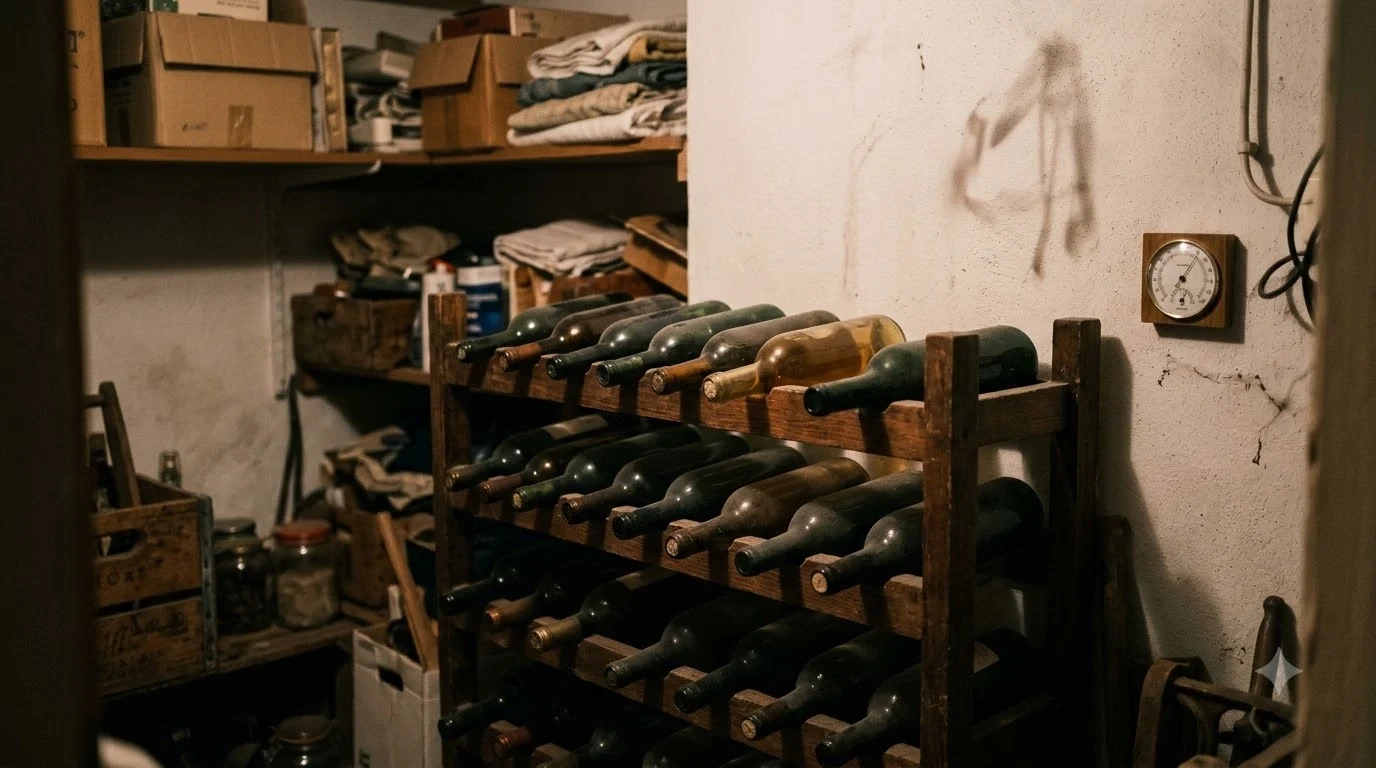
Unopened champagne is most at home in a cool, dark and fairly steady environment. Heat is the main enemy, because it speeds up aging and can make the wine taste flat or stewed. Bright light and large swings in temperature are also a problem, so a closet, a cellar or a corner of a basement tends to work better than a kitchen shelf near the stove.
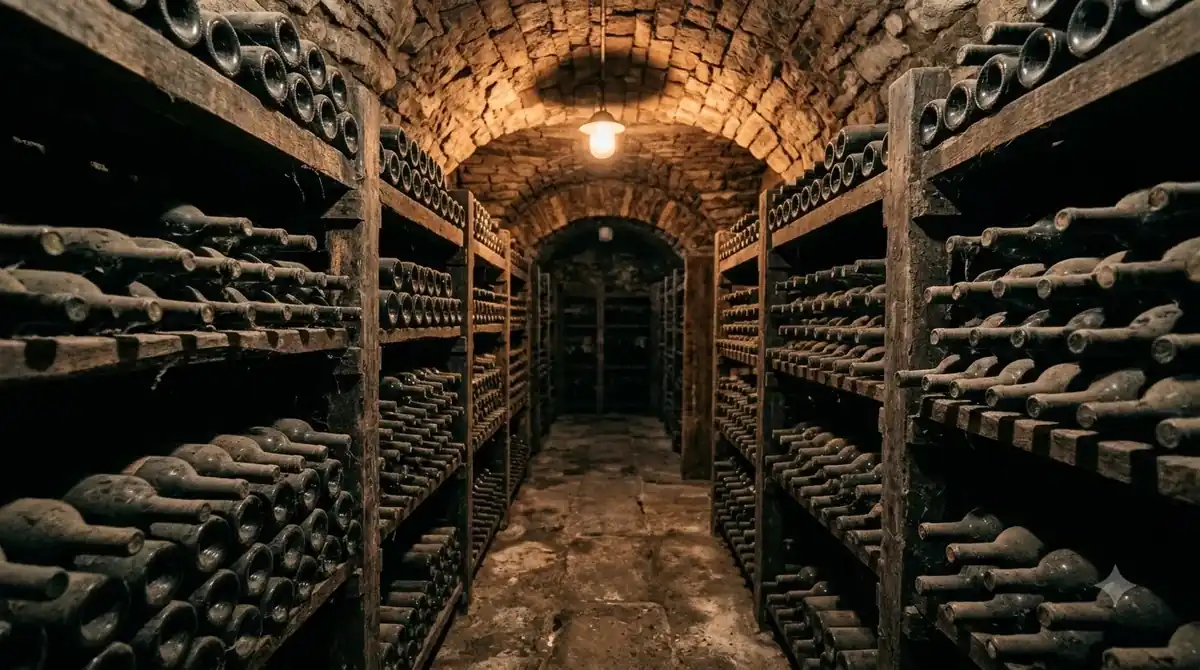
Lay bottles on their side so the cork stays moist and the seal stays tight. A cool room is a practical choice for most households, and a dedicated wine fridge is useful if you plan to keep bottles for a long stretch. Keep the bottles away from strong odors and vibrations too, since constant movement is not kind to a wine that is meant to rest.
Champagne is a wine that many people keep for a while before drinking. Wine Folly’s champagne guide notes that the most treasured bottles are aged for at least three years and that many can be cellared for ten years or more. Not every bottle is built for long aging, though, so check the producer’s notes before you plan a long hold.
Should Champagne Be Chilled Before Serving?
Yes. Champagne is usually served cold, and chilling does more than make it refreshing. A colder wine feels crisper, and the bubbles seem finer on the tongue. Chilling also keeps the wine lively for longer once it is poured, which is useful at a party where the bottle sits out for an hour or two.
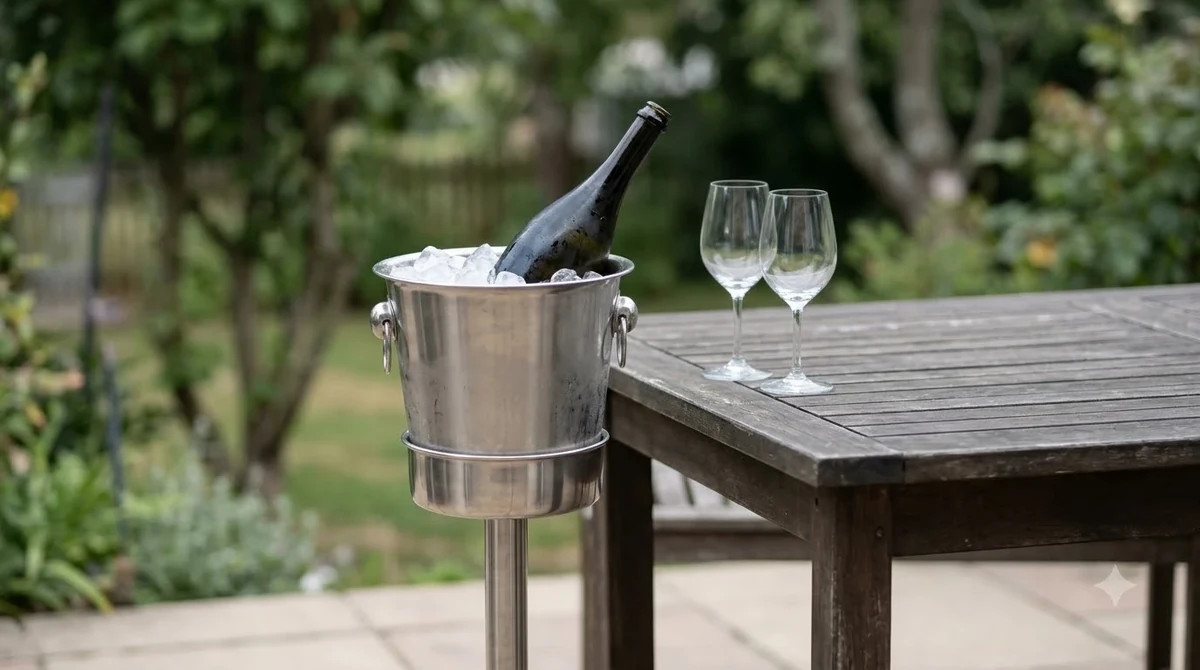
Wine Folly gives a serving temperature of 38 to 45 degrees Fahrenheit, or roughly 3 to 7 degrees Celsius. In practice, that means placing the bottle in the refrigerator for several hours before the event, or setting it in an ice bucket filled with ice and water for about 30 minutes. Avoid the freezer, since a bottle left there too long can burst. If the bottle is chilled and the party runs late, return it to the ice bucket rather than leaving it at room temperature.
Champagne Serving Temperature and Why It Matters
Serving temperature changes how champagne tastes. A bottle that is too warm can seem heavy and flat, with the fruit and bread notes becoming muddy. A bottle that is too cold can mute the aromas altogether, so the best range sits in the cool, not icy, zone.
| Stage | What to do | Why it matters |
|---|---|---|
| Storing unopened | Cool, dark, steady, lying down | Protects the cork and limits aging from heat |
| Chilling before service | Fridge for hours or ice bath for about 30 minutes | Brings the wine into the 38 to 45 F range |
| Serving | Pour in a flute, keep the bottle in an ice bucket | Keeps the wine cool and lively |
| After opening | Reseal with a stopper and refrigerate | Slows the loss of bubbles |
Tip: Open the bottle slowly and keep it angled away from people. A gentle release of pressure keeps the foam under control and preserves more of the wine.
Does Champagne Need to Breathe?
Most champagne does not need to breathe, and you should not let it sit open to air. Wine Folly’s champagne guide says not to decant it. Exposure to air dulls the bubbles and can flatten the flavor, which is the opposite of what you want from a sparkling wine.
The better move is to open the bottle when you are ready to pour and to pour the wine promptly. Once a bottle is open, put the stopper back in and refrigerate the remainder. A good stopper slows the loss of carbonation, though it will not keep the wine fizzy forever. Leftover champagne is usually best within a day or two, and the taste gradually moves toward something closer to a flat, dry white wine.
If you want to know how long an unopened bottle can rest, the guide to how long champagne lasts unopened gives more detail on timing. The storage rules above apply to both cases.
What Glass Is Best for Champagne?
The flute is the classic glass for champagne, and Wine Folly identifies it as the standard choice for serving. Its tall, narrow bowl keeps the bubbles rising in a steady stream and concentrates the aromas near the top of the glass. A flute also keeps the wine cool for longer than a wide bowl.
A wide white wine glass shows more aroma, but it lets the bubbles escape faster, so it is better for mature, complex champagnes that you want to smell as well as taste. Many people now serve champagne in a tulip-shaped glass, which balances bubbles and aroma. For a party, flutes are practical and easy to refill, and they look good on any table.
Whatever glass you choose, wash it without soap residue and dry it with a lint-free cloth. Traces of soap or oil can kill the bubbles quickly, and that is one of the most common reasons a good bottle goes flat at the table.
When you pour, tilt the glass slightly and pour down the side, then let the foam settle before filling it to the usual level. This gives you a steadier pour, less spillage and a glass that keeps its fizz longer, especially when the bottle is cold and the room is warm.
Frequently Asked Questions
Can I store champagne in the refrigerator for a long time?
A refrigerator is a good place to chill a bottle before serving, but it is not ideal for long storage because the air is dry and the temperature can swing. For long-term keeping, a cool, dark and steady spot works better.
Should champagne be chilled before it is opened?
Yes, most people chill champagne before opening it. Aim for a cool temperature around 38 to 45 degrees Fahrenheit, which allows the wine to pour smoothly and keeps the bubbles fine.
Why does my champagne go flat so fast?
Warm temperatures, a loose stopper, residue in the glass and vigorous pouring can all reduce the bubbles. Chilling the bottle, sealing leftovers and using a clean flute help preserve the fizz.
Is it fine to serve champagne in a wine glass instead of a flute?
Yes. A wine glass works well, especially for older or more complex bottles, because it lets you smell the aromas more easily. A flute is still the classic choice when the goal is to keep the bubbles lively.
Good champagne storage and service are mostly about keeping things simple: store bottles cool and still, chill them to the right temperature, avoid decanting, and pour from a clean flute. For more ideas on how champagne fits into a meal, the Wine by Type guide places it alongside other styles.
More in Wine Types & Grapes
 Zinfandel Sugar Content: Dry Red vs. White Zinfandel GramsUpdated Nov 21, 2026
 Best Zinfandel Substitute Options for Sipping and CookingUpdated Nov 21, 2026
 Zweigelt Food Pairing: Best Dishes, Cheeses, and Serving TipsUpdated Nov 21, 2026
 Zinfandel Tannins Explained: How Structure Shapes Every BottleUpdated Nov 21, 2026
 Zinfandel Sweetness Level: Dry Red vs. Sweet White Zin ExplainedUpdated Nov 21, 2026
 Xinomavro Food Pairing: Best Dishes, Styles, and Serving TipsUpdated Nov 21, 2026