

We may earn a commission when you buy through links on this page, at no extra cost to you. Learn more.
The newair awc 330e is a freestanding compressor wine cooler designed for home wine storage, with digital temperature controls, blue interior lighting, and an advertised capacity of 33 bottles. Its adjustable 39°F to 64°F temperature range makes it suitable for chilling different wine styles, while its stainless-steel-trimmed glass door gives it a polished appearance. However, the owner’s manual lists a 27-bottle capacity, and customer feedback identifies operating noise and tight shelf spacing as important considerations before buying.
The NewAir AWC-330E appeals to wine drinkers who want more storage than a small countertop refrigerator provides without committing to a large wine cellar. Its compressor cooling system, straightforward controls, and horizontal bottle racks cover the basic requirements of a household wine refrigerator. The most important question is whether its actual storage capacity, operating characteristics, and physical condition meet your expectations, particularly if you are considering a used or remaining-stock unit. This review examines the documented specifications, owner experiences, practical limitations, and alternatives to consider before making a decision.
Specs and Key Features
The AWC-330E combines compressor cooling with a single temperature-control system and a freestanding cabinet design. Its advertised 33-bottle capacity is attractive, but the published owner’s manual specifies 27 bottles, making realistic storage expectations especially important.
The most useful feature is the adjustable temperature range of 39°F to 64°F. This gives owners considerable flexibility for chilling sparkling wines, storing everyday whites, and keeping reds at controlled temperatures before serving. The digital display provides a convenient way to select and monitor the cabinet temperature without relying on a separate mechanical dial.
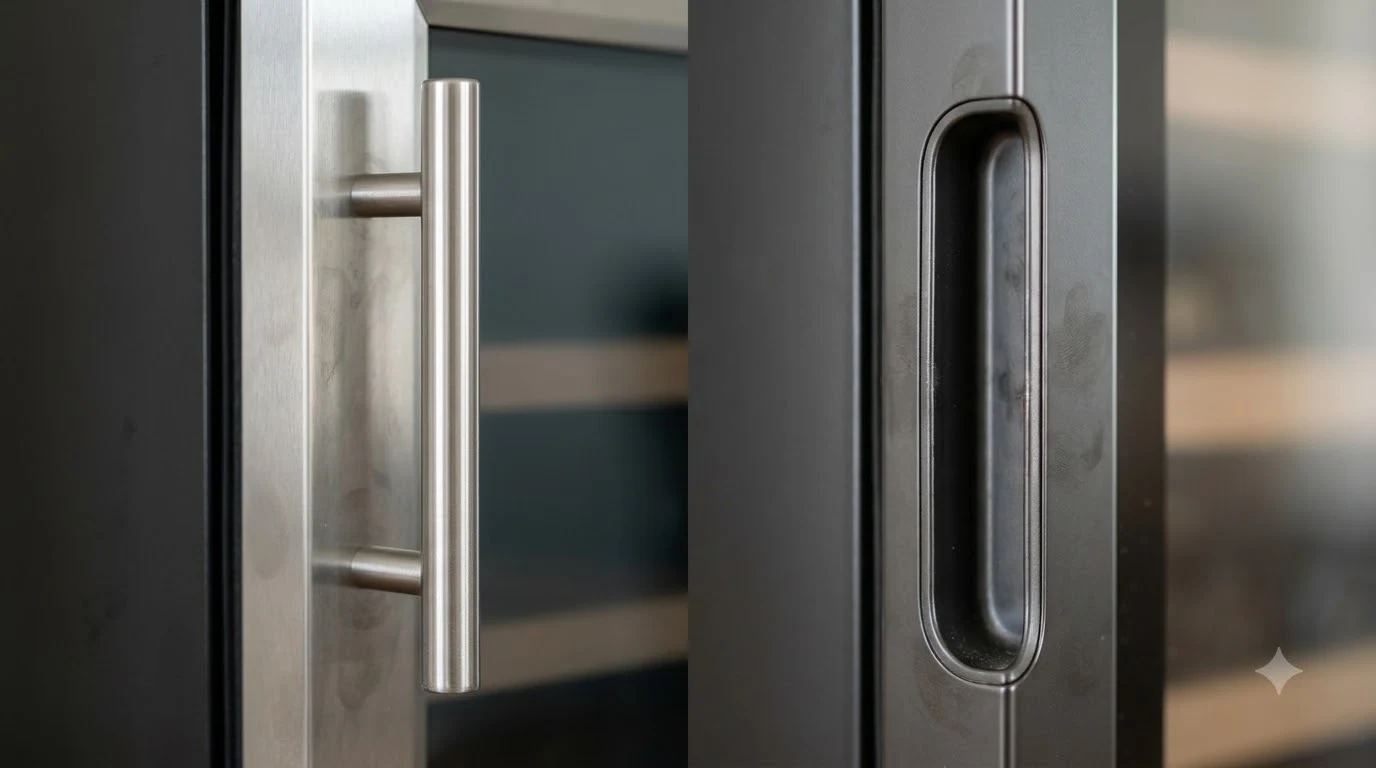
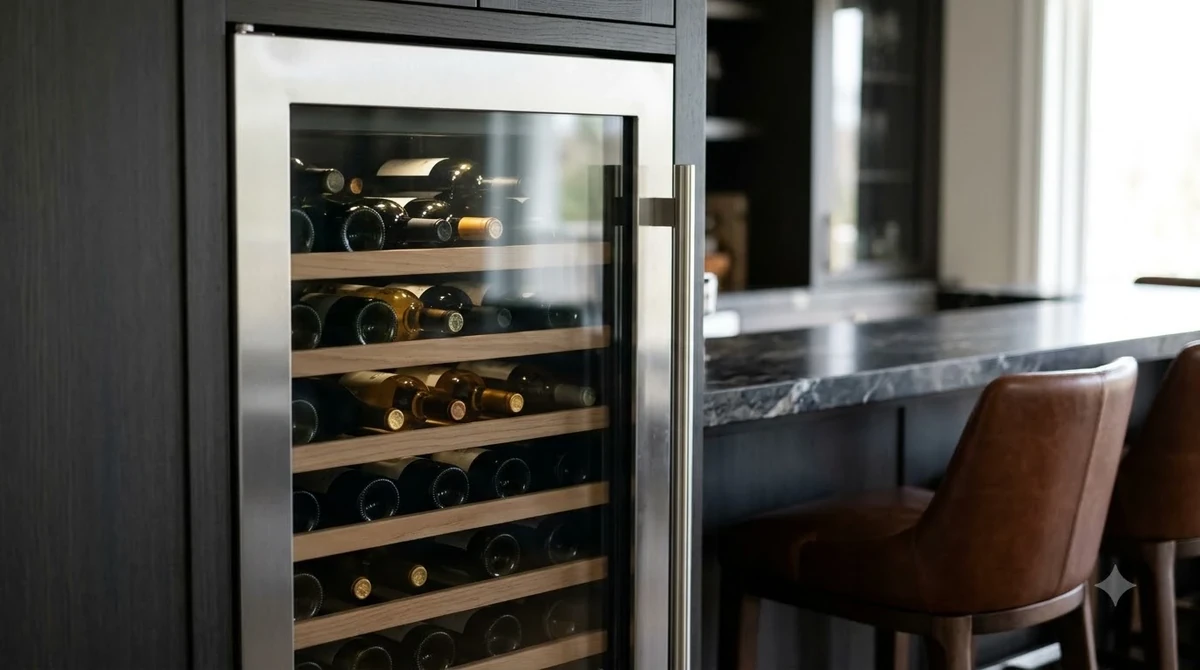
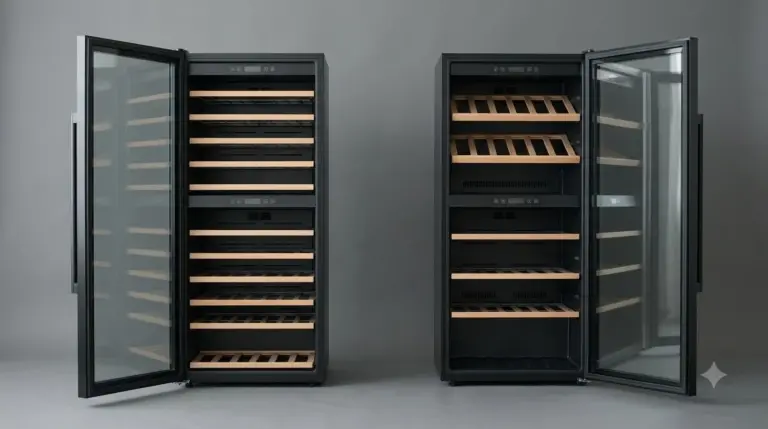
The exterior combines a black cabinet with stainless-steel door trim and a full-length glass door. Inside, horizontal wire shelves organize bottles in a conventional wine-rack arrangement. Blue LED lighting illuminates the interior and can be switched on or off using the control panel. The manual also identifies six shelves in its included-parts list.
One important distinction concerns the advertised capacity. Product listings describe the AWC-330E as a 33-bottle cooler, but the owner’s manual specifications list 27 bottles. These figures should not be treated as interchangeable guarantees. Bottle shape, shelf arrangement, and the amount of space needed to retrieve individual bottles can all affect practical capacity.
| Specification | NewAir AWC-330E |
|---|---|
| Product type | Freestanding wine cooler |
| Cooling system | Compressor |
| Advertised capacity | 33 bottles |
| Manual-listed capacity | 27 bottles |
| Temperature range | 39°F–64°F |
| Temperature adjustment | 1-degree increments |
| Electrical supply | 120V, 60Hz |
| Rated current | 1.3A |
| Power consumption | 85W |
| Refrigerant | R600a |
| Interior lighting | Blue LED |
| Storage arrangement | Horizontal wire shelves |
| Exterior | Black cabinet with stainless-steel trim |
The electrical specifications come from the owner’s manual, while the 33-bottle figure comes from the product’s retail description. The discrepancy between the two capacity claims deserves attention when comparing this model with other wine refrigerators. A buyer who needs room for exactly 30 bottles should not assume that the manual’s 27-bottle specification will satisfy that requirement.
The temperature controls are relatively simple. The UP and DOWN buttons adjust the selected setting, while the light button controls interior illumination. The display initially shows the surrounding ambient temperature after startup and then switches to the cabinet temperature. The manual also explains that holding the UP and DOWN buttons together for at least three seconds changes the display between Fahrenheit and Celsius.
There is no documented independent upper and lower temperature control for two separate wine compartments. Buyers looking to maintain sparkling wine at one temperature and Cabernet Sauvignon at another should therefore consider a dual-zone refrigerator rather than assuming the AWC-330E provides that functionality.
For a closer look at the published specifications and original operating instructions, consult the NewAir AWC-330E owner’s manual.
What Owners Like
Owner feedback generally highlights temperature control, appearance, and useful household storage capacity. These strengths make the AWC-330E appealing to people who want a dedicated wine refrigerator rather than using a regular kitchen refrigerator for every bottle.
The compressor system is an important part of its appeal. Compressor wine coolers actively refrigerate their interiors and are generally more suitable than basic thermoelectric units for maintaining lower temperatures in changing room conditions. This is particularly relevant for households that keep wine in a kitchen, dining room, or other indoor area where temperatures can fluctuate.
Owners commenting on Lowe’s frequently mention that the unit maintains wine at their preferred temperatures. Some describe using it for both red and white bottles, while others appreciate having a dedicated place to organize their collections. The digital control panel makes temperature adjustments straightforward, and the illuminated interior makes it easier to see bottles without turning on additional room lighting.
The exterior design receives positive attention as well. Stainless-steel trim provides a more finished appearance than a plain black refrigerator cabinet, while the glass door allows bottles to remain visible. The blue lighting adds visual interest, particularly when the cooler is positioned in a dining room or entertaining area.
Another positive theme is the amount of storage available relative to the appliance’s household-oriented format. Several owners describe using the refrigerator for collections approaching 28 to 30 bottles. That experience suggests useful practical storage, although it does not eliminate the need to account for the manual’s lower rated capacity and differences in bottle dimensions.
Longer-term feedback is also worth considering. One Lowe’s reviewer reported using the refrigerator for approximately four years, with the main issue being a fan that eventually became noisy. The owner contacted NewAir and received a replacement fan. Another reviewer described a successful warranty interaction after the unit stopped cooling.
These experiences indicate that some owners have found the appliance serviceable over an extended period. They do not establish a universal reliability record, however. A refrigerator’s lifespan depends on installation conditions, operating environment, maintenance, component condition, and the individual unit.
The Lowe’s AWC-330E owner reviews provide a useful cross-section of positive experiences and complaints. The comments are particularly helpful because they discuss practical issues such as noise, bottle fit, and fan replacement rather than concentrating only on the product’s appearance.
For households that regularly entertain, a dedicated wine refrigerator also makes everyday organization easier. Bottles can remain grouped by style, intended serving temperature, or drinking occasion. A Sauvignon Blanc intended for a summer lunch can occupy the same appliance as a bottle of Pinot Noir reserved for dinner, without competing for space in the main refrigerator.
The 39°F to 64°F range supports this kind of flexible household use. For example, sparkling wine can be chilled around 40°F to 50°F, light-bodied white wines around 45°F to 50°F, and lighter reds around 55°F to 60°F. Full-bodied reds generally benefit from serving temperatures closer to 60°F to 65°F.
The cooler is therefore more useful as an organized storage and serving-temperature appliance than as a simple beverage refrigerator. Its adjustable controls and conventional bottle shelves support a range of wine preferences, provided the collection fits the available space.
Common Complaints
The most significant drawbacks reported by owners involve compressor and fan noise, restricted bottle fit, and questions about long-term consistency. These concerns are important because a wine cooler may operate continuously in a living space where background noise and easy access matter.
Noise is the most frequently repeated concern in the available customer feedback. Some Best Buy reviewers describe a steady hum or noticeable compressor operation, while others report that the appliance is relatively quiet for much of its operating cycle. The difference in experience suggests that noise tolerance and the installation environment matter.
A compressor refrigerator naturally produces operating sounds. The compressor cycles to maintain the selected temperature, and internal circulation components help distribute cooled air. These sounds can become more noticeable in a quiet apartment, an open-plan kitchen, or a dining area where people sit close to the appliance.
One Best Buy owner described a loud, steady hum and noted that the sound changed when the compressor started operating. Another reviewer liked the appliance’s appearance and temperature control but identified noise as the principal drawback. Lowe’s feedback similarly includes complaints about fan and compressor sounds.
Installation can influence how noticeable these sounds become. The owner’s manual identifies insufficient clearance, poor ventilation, and an unlevel cabinet as possible contributors to excessive noise. Before concluding that an operating sound indicates a component failure, it makes sense to check the appliance’s positioning and leveling feet.
Bottle compatibility is another limitation. The shelves are designed around conventional wine-bottle proportions, and Bordeaux-style bottles are generally easier to accommodate than wider Burgundy, Champagne, or sparkling-wine bottles. Some owners report needing to remove or rearrange shelves to make room for larger formats.
This is a practical concern for people who collect different wine styles. A standard 750 ml bottle of Cabernet Sauvignon may fit comfortably, while a wider sparkling bottle may reduce the usable space on an adjacent shelf. Larger bottles can also make it more difficult to reach bottles stored behind them.
The advertised 33-bottle capacity should therefore be understood as a nominal storage claim rather than a promise that every combination of 750 ml bottles will fit in the same arrangement. The manual’s 27-bottle figure offers a more conservative planning reference.
Exterior durability deserves attention too. Best Buy owner comments include a report of a dented exterior and another describing a cabinet surface that could be damaged by pressure from hard objects. These are individual experiences, not evidence that every unit has a weak cabinet, but they support checking the exterior carefully when buying used equipment.
There are also reports of fan problems and occasional cooling failures. One owner described a fan becoming noisy after several years, while another reported a refrigerator that stopped cooling shortly after purchase. Customer-service experiences differ, so it is sensible to establish whether replacement parts and service support are available before purchasing an older unit.
Retail availability is another consideration. Best Buy’s listing identifies the model as no longer available new through that retailer. Consequently, buyers may encounter used appliances, remaining inventory, or listings from independent sellers rather than a consistently available new product.
A used wine cooler deserves a closer inspection than a new appliance. Look for corrosion, damaged seals, loose shelving, excessive vibration, and signs of previous repairs. Allow enough time to determine whether the unit can reach and maintain a stable temperature instead of relying on a brief demonstration immediately after plugging it in.
None of these limitations automatically makes the AWC-330E a poor refrigerator. They do mean that buyers should weigh the practical condition of the specific appliance more heavily than its advertised bottle count or attractive exterior.
Who Should Buy and Who Should Skip
The AWC-330E makes the most sense for households that want a straightforward, single-temperature wine refrigerator with compressor cooling and room for a modest collection. It is less suitable for wine enthusiasts who need two independent temperature zones, unusually generous bottle spacing, or particularly quiet operation.
Who may appreciate this model
Everyday wine drinkers are a natural audience. Someone who keeps a rotating selection of Chardonnay, Sauvignon Blanc, Pinot Noir, Merlot, and sparkling wine may appreciate having a dedicated appliance instead of filling the kitchen refrigerator with bottles.
The adjustable range is useful for people who prefer to store different wine styles at different serving temperatures. A white wine can be kept cooler before dinner, while a lighter red can be allowed to warm slightly before serving. The refrigerator does not need separate zones to support occasional changes in the selected temperature.
Households that entertain regularly may also benefit from the glass door and interior lighting. Guests can see the available bottles, and the owner can organize the collection before a dinner party. A bottle of Pinot Noir for roast chicken or a chilled sparkling wine for an aperitif can be kept in a designated place rather than competing with everyday food storage.
People replacing an older single-zone wine refrigerator may also find the general layout familiar. The horizontal shelves, digital controls, and freestanding format do not require a complicated operating routine. The main installation requirements are adequate clearance, a level floor, and a suitable grounded electrical connection.
Who should consider another refrigerator
Collectors who own substantial numbers of Burgundy, Champagne, or other wide-bodied bottles should be cautious. Standard bottle arrangements may not accommodate these formats efficiently, and removing shelves reduces the number of bottles that can be stored.
Buyers who want to store reds and whites at different temperatures simultaneously should look for a dual-zone appliance. The AWC-330E’s documented controls provide a single adjustable temperature range rather than independently controlled compartments.
People who plan to install a cooler inside a tight cabinet opening should also skip this model unless they can meet the manufacturer’s ventilation requirements. The manual explicitly identifies the AWC-330E as a freestanding unit rather than an appliance intended for enclosed cabinetry.
Noise-sensitive buyers should be especially careful. A refrigerator that operates in a separate utility room may be perfectly acceptable, but the same compressor and fan sounds may become distracting beside a sofa or dining table. If quiet operation is a priority, investigate current alternatives with clearly documented noise specifications.
Finally, anyone purchasing a used AWC-330E should evaluate the individual appliance rather than relying on historical retail descriptions. A well-maintained unit with stable cooling may still be useful, but an appliance with a noisy fan, damaged door seal, or uncertain cooling performance can become an expensive repair project.
How It Compares to Alternatives
The AWC-330E occupies the conventional freestanding compressor wine-cooler category. Its main distinction is the combination of a nominal 33-bottle retail capacity, a 39°F to 64°F adjustment range, and relatively simple single-zone operation.
The available product information does not establish that it is superior to every competing wine refrigerator. Instead, the comparison should focus on the features that determine whether a particular refrigerator fits your collection and living space.
One useful alternative category is the smaller single-zone wine cooler. These appliances are appropriate for people with limited floor space or collections that rarely exceed a dozen or two bottles. A smaller unit may be easier to position in an apartment, although it will not provide the same nominal storage capacity as the AWC-330E.
A second category is the dual-zone wine refrigerator. These appliances separate the interior into independently adjustable temperature sections. They are particularly useful for households that routinely keep sparkling wines and white wines cooler than reds. The trade-off is that divided compartments can reduce the amount of space available for each wine style.
Another option is a larger freestanding compressor refrigerator. This category makes more sense for collectors who regularly purchase wine by the case or want to keep additional bottles available for entertaining. Before choosing one, compare the physical dimensions, shelf layout, ventilation requirements, and actual bottle capacity rather than relying on the headline capacity alone.
The distinction between advertised and usable capacity is important across all wine refrigerator categories. A product claiming to hold 33 standard bottles may not accommodate 33 wide-format bottles, and a refrigerator with fewer shelves may offer more flexibility for unusual bottle shapes.
The following table summarizes the main differences between the AWC-330E and alternative appliance categories without assigning unverified specifications to competing models.
| Feature | AWC-330E | Smaller Single-Zone Cooler | Dual-Zone Cooler | Large Compressor Cooler |
|---|---|---|---|---|
| Temperature zones | 1 | Usually 1 | 2 | Depends on model |
| Temperature adjustment | 39°F–64°F | Model dependent | Separate zone settings | Model dependent |
| Cooling system | Compressor | Compressor or thermoelectric | Usually compressor | Usually compressor |
| Storage scale | 27 manual-listed bottles; 33 advertised | Smaller collection | Varies | Larger collection |
| Best use | Everyday mixed collection | Limited space | Separate serving temperatures | Expanded storage |
| Main consideration | Noise and bottle fit | Limited capacity | Compartment layout | Space and installation |
When comparing refrigerators, temperature performance should come before decorative features. A blue LED light can improve presentation, but it does not compensate for inadequate cooling, poor ventilation, or shelves that cannot accommodate your bottles.
Buyers interested in additional appliance evaluations can browse our Model reviews for more product-specific comparisons. The most useful approach is to compare products using the same criteria: cooling technology, temperature range, number of zones, practical bottle capacity, noise, and installation requirements.
For a mixed collection of everyday wines, the AWC-330E’s general design remains sensible. For collectors who need greater flexibility, a modern dual-zone or larger-capacity refrigerator may be a better long-term choice.
Installation, Maintenance, and Everyday Use
Correct installation is important for both cooling performance and noise control. The AWC-330E manual recommends allowing the appliance to stand upright for approximately two hours before connecting it to power and providing ventilation space around the cabinet.
The stated minimum clearances are ¾ inch on each side, 4 inches above the unit, and 2 inches behind it. These requirements make it clear that the refrigerator should not be treated like a built-in appliance that can be pushed into a tightly enclosed cabinet.
The appliance should sit on a level surface capable of supporting it when fully loaded. Its adjustable front feet help with leveling. An uneven installation can contribute to vibration and operating noise, while restricted ventilation can interfere with heat removal from the refrigeration system.
Positioning also matters. Avoid placing the cooler directly beside a stove, radiator, or other heat source. Direct sunlight is another poor choice because it can increase the cooling workload and expose the wine to unwanted light.
The manual advises cleaning the interior with lukewarm water and a soft cloth before initial use. It also recommends allowing the appliance to stabilize for 24 hours before use. This is a more useful preparation period than immediately loading a full collection after switching it on.
Tip: Leave the AWC-330E upright for approximately two hours after transportation, provide the specified ventilation clearances, and allow 24 hours for temperature stabilization before loading your wine collection.
The temperature display deserves a little attention during initial setup. After startup, it first displays the surrounding ambient temperature and then changes to the internal cabinet temperature. Owners should avoid assuming that the first displayed reading represents the wine cooler’s stabilized interior temperature.
For general wine storage, approximately 55°F is a useful target. The manual recommends this temperature for red and white wines and suggests storing corked bottles horizontally. This arrangement keeps the wine in contact with the cork, helping prevent the cork from drying out.
Not every wine needs to remain at 55°F immediately before serving. Sparkling wines generally benefit from temperatures around 40°F to 50°F, while light whites and rosé are commonly served around 45°F to 50°F. Full-bodied whites are often better around 50°F to 55°F, and light reds can be served around 55°F to 60°F.
For example, a bottle of Sauvignon Blanc intended for a seafood dinner can be chilled toward the lower end of its serving range. A bottle of Merlot for a chicken Marsala recipe may be more enjoyable closer to 60°F. These serving temperatures are different from the temperature used for general storage, so owners should plan their adjustments accordingly.
The refrigerator’s temperature can be changed using the UP and DOWN controls. Adjustments are made in one-degree increments, and the manual explains that the selected temperature flashes for five seconds before the display returns to the cabinet reading.
Maintenance is relatively straightforward but should not be neglected. The manufacturer advises cleaning the condenser every six months because accumulated dirt can interfere with normal operation. The rear and bottom of the appliance also deserve attention during cleaning.
To clean the interior, disconnect the appliance from power, remove the bottles, and use warm water with a neutral detergent. Avoid abrasive cleaners that could damage surfaces. The door seal can be cleaned with mild soapy water to remove dirt that might prevent a proper closure.
The AWC-330E also includes an automatic defrost function. Under normal conditions, this reduces the need for manual defrosting. If excessive frost develops, the manual recommends disconnecting the cooler, allowing the frost to melt, and drying the interior thoroughly before reconnecting it.
Do not block the internal fans or overfill the shelves. Restricted circulation can make temperature distribution less consistent. Leaving enough space around the bottles also makes it easier to retrieve individual wines without repeatedly disturbing the rest of the collection.
Wine should be stored away from strong odors and unnecessary vibration. A stable location away from direct sunlight is preferable to a position beside a frequently operated appliance or a source of heat. These precautions help create a more suitable storage environment regardless of the wine refrigerator model.
For owners who move the appliance, the manual recommends removing the contents, securing loose interior parts, taping the door shut, and keeping the unit upright during transportation. These steps reduce the risk of damage to the shelves, cabinet, and cooling system.
Frequently Asked Questions
Does the NewAir AWC-330E have a reversible door?
The available Best Buy owner feedback describes the front-mounted control-panel wiring as a limitation when attempting to reverse the door hinge. One reviewer specifically reported that the wiring arrangement prevented changing the hinge location. Buyers who need a particular opening direction should inspect the actual hinge configuration before purchasing.
Can the AWC-330E store wine and beer together?
Its adjustable temperature range allows the cabinet to cool different beverages, but the appliance is designed as a wine cooler rather than a general-purpose food refrigerator. Beer storage depends on the preferred serving temperature and available bottle or can dimensions. The owner’s manual specifically advises against placing heated beverages or perishable food inside the unit.
What refrigerant does the NewAir AWC-330E use?
The owner’s manual identifies R600a as its refrigerant. This information is useful when arranging qualified appliance servicing because refrigerant handling requires appropriate equipment and procedures. Owners should not attempt to open or repair the sealed refrigeration system themselves.
Does the AWC-330E automatically defrost?
Yes. The owner’s manual describes an automatic defrost function intended to eliminate manual defrosting under most normal operating conditions. If excessive frost accumulates, the manufacturer provides a separate procedure involving unplugging the refrigerator, allowing the ice to melt, and drying the interior before restarting it.
Can the NewAir AWC-330E operate in a garage?
The manual warns that extreme surrounding temperatures can prevent proper operation and does not establish the AWC-330E as a garage-rated refrigerator. A garage exposed to unusually hot summers or cold winters may create conditions outside its intended operating environment. A location with a more stable indoor temperature is the more appropriate choice.
The NewAir AWC-330E offers a useful combination of compressor cooling, adjustable temperature settings, digital controls, and conventional wine-bottle storage. Its main compromises are the difference between advertised and manual-listed capacity, potentially noticeable operating noise, and limited flexibility for larger bottles. For buyers considering an existing unit, condition, ventilation, cooling performance, and available service support should determine whether it remains a worthwhile addition to the home.
If you are comparing this model with another wine refrigerator, start by matching its usable capacity and temperature-zone configuration to your collection rather than choosing by advertised bottle count alone. For serving inspiration after organizing your collection, explore an Aperol Spritz recipe or a refreshing Hugo Spritz recipe.
More in Model Reviews
 Whynter 164 Bottle Wine Cooler Review: Capacity, Features, and FitUpdated Nov 21, 2026
 Insignia NS WC16BK6 Review: Compact 16-Bottle Wine StorageUpdated Nov 21, 2026
 Wine Enthusiast Electric Blue Omega Review: Opening, Pouring, and Preserving Made EasierUpdated Nov 21, 2026
 Koolatron 20 Bottle Wine Cooler Review: Features, Fit, and PerformanceUpdated Nov 21, 2026
 Ivation 18 Bottle Wine Cooler Review for Compact Home StorageUpdated Nov 21, 2026
 Kalamera 24 Inch Dual Zone Review for Flexible Wine StorageUpdated Nov 21, 2026