

We may earn a commission when you buy through links on this page, at no extra cost to you. Learn more.
Kim Crawford Sauvignon Blanc is a crisp, dry white wine from New Zealand, most often made from grapes grown in Marlborough, and it is known for bright citrus, green herb, and tropical fruit flavors. The brand was started in 1996 by Kim and Erica Crawford, and its Sauvignon Blanc became one of the best-known New Zealand wines in export markets. If you want a reliable, easy-drinking white with a clear regional style, this bottle is a common starting point.
Sauvignon Blanc is one of the most recognizable white grapes in the world, and the New Zealand style has shaped how many drinkers think the variety should taste. This guide explains who makes Kim Crawford Sauvignon Blanc, what the wine typically tastes like, how to serve it, and which dishes it works with. It also covers how it compares with other New Zealand Sauvignon Blanc brands you may see on the same shelf.
Who makes Kim Crawford Sauvignon Blanc
Kim Crawford Wines dates to 1996, when Kim and Erica Crawford began the label in New Zealand. Accounts of the early years differ in some details. Some describe a small Auckland start that relied on contract growers, while others focus on the first wines, which were made from Marlborough fruit. Those early vintages built the brand’s reputation quickly, and the Sauvignon Blanc became the flagship that most people associate with the name.
The brand is now part of a larger company, and the winery’s own website is the best place to confirm current ownership details. For a buyer, the practical point is that the wine is made in a consistent house style, so the flavor you expect from one vintage is usually close to the next. Vintages still vary with the weather, which is true for every wine, but the overall profile is designed to stay recognizable.
Flavor profile of Kim Crawford Sauvignon Blanc
Sauvignon Blanc is usually described as crisp and dry, and its character depends heavily on climate. In cooler regions the wine tends to show high acidity along with green notes such as grass, bell pepper, and nettle, plus some passion fruit and elderflower. Warmer regions tend to bring more tropical fruit. The Kim Crawford style sits in the bright, aromatic range that New Zealand is known for, with fresh citrus and a herbal lift.
The table below summarizes the aromas and tastes that drinkers commonly associate with this style. It is a general guide, since the exact balance shifts from one vintage to another.
| Aspect | What to expect | Why it matters |
|---|---|---|
| Acidity | High and refreshing | Makes the wine taste clean and lively |
| Aroma | Grass, herb, citrus, and green notes | Signals the New Zealand style |
| Fruit | Grapefruit, lime, passion fruit, and some tropical notes | Adds sweetness of fruit without residual sugar feeling heavy |
| Body | Light to medium | Suits warm weather and lighter meals |
Because the wine is dry, it can feel sharper than a fruit-forward Chardonnay. That sharpness is part of the appeal for many people, especially those who want a white wine that cuts through rich or salty foods.
Where the grapes come from
New Zealand Sauvignon Blanc gained wide recognition from the 1990s onward, and much of its reputation comes from Marlborough, on the South Island. The region’s maritime climate, with cool nights and long, mild growing seasons, helps the grapes keep their acidity while still ripening fully. The soils also matter. Free-draining soils with low fertility tend to concentrate flavor at lower yields, which many producers consider ideal for this variety. Wine Folly’s Sauvignon Blanc guide describes the Marlborough climate as maritime, with cooling ocean breezes that offset the warm days, and it gives a serving range of 45–55°F (7–12°C) for the style.
Within Marlborough, differences in soil and ripening time create variety. Some sites give more herbaceous wines from later-ripening grapes, while stonier sites can produce wines with a fuller, more tropical fruit character. For a more technical explanation of the variety and its growing conditions, the Sauvignon blanc entry on Wikipedia gives a clear overview of how climate shapes the style.
How to serve Kim Crawford Sauvignon Blanc
Serve this wine slightly chilled rather than ice cold. Very cold temperatures mute the aromas and make the acidity feel harsher, while a slightly cool glass lets the citrus and herb notes come through. A standard white wine glass works well because it concentrates the aromas near the rim. Open the bottle a few minutes before pouring if the wine has been stored very cold.
Sauvignon Blanc is also a useful wine for casual gatherings. Its acidity keeps the glass fresh over a long afternoon, and it does not need decanting or special handling. Because the style is so consistent, it is a dependable choice when you are hosting guests with different preferences and want one bottle that pleases most of the table.

Food pairings that work well
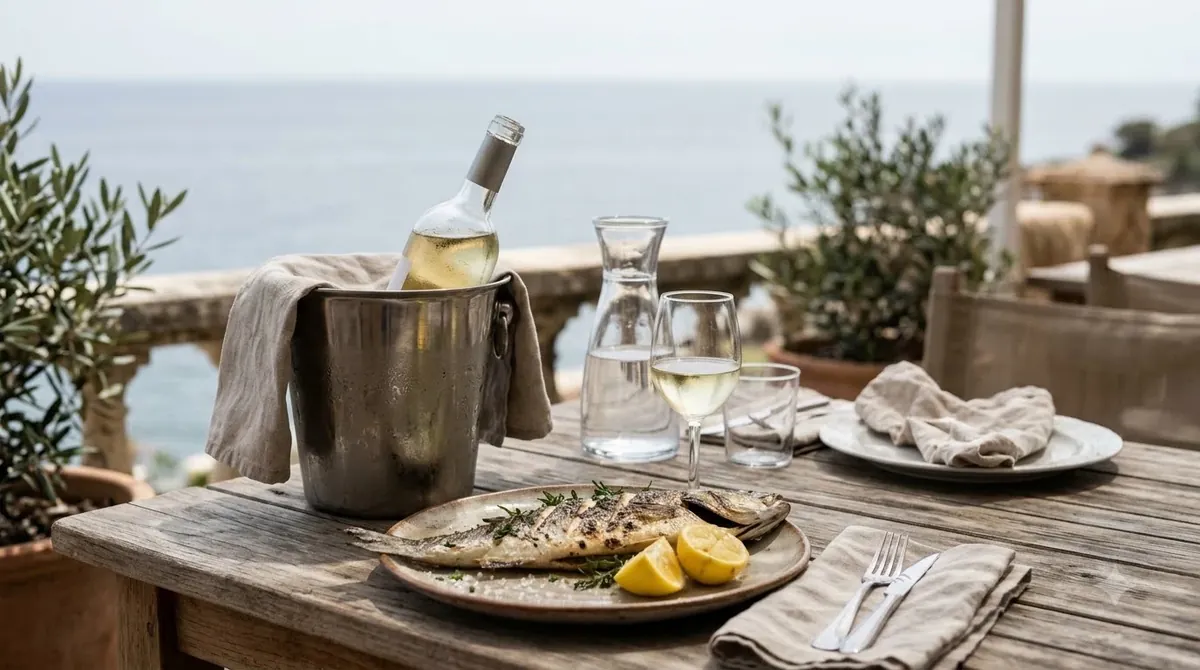
The bright acidity of Sauvignon Blanc makes it a strong partner for food. It works with fish and shellfish, especially grilled or lightly sauced dishes, and it pairs naturally with goat cheese, feta, and other fresh cheeses. Sushi and light Asian dishes with citrus or herbs are classic matches because the wine echoes the acidity in the food.
It also works with vegetable dishes such as zucchini, eggplant, and herb-roasted vegetables. For poultry, choose a lighter preparation such as roast chicken or turkey breast rather than a heavy, creamy sauce. Avoid pairing the wine with very rich, heavily spiced foods, because the acidity can make the wine taste thinner than it is.
Tip: Match the wine to the herbs in the dish. Thyme, basil, and parsley usually complement Sauvignon Blanc, while heavy cream sauces tend to overwhelm it.
How it compares with other New Zealand brands
Many New Zealand producers make Sauvignon Blanc, so the brand you choose will shape the flavor you get. Some lean more toward the grassy, herbal end of the style, while others present more tropical fruit. Shopping by region can help: a Marlborough label usually points to the classic New Zealand profile, while wines from other areas such as Gisborne or Hawke’s Bay can show subtle differences in fruit and texture.
If you already know a brand you like, use it as a reference point. Kim Crawford is a good choice when you want a familiar, widely available style. For more options in the category, see our wine brands guide, and browse other New Zealand producers such as Oyster Bay Sauvignon Blanc, Cloudy Bay Sauvignon Blanc, and Whitehaven Sauvignon Blanc to compare styles side by side.
Who should buy it and who might skip it
This wine suits people who want a dry, crisp white that is easy to pair with a range of meals. It is a sensible choice for a warm-weather lunch, a casual dinner, or a party where guests are not sure what they like. Drinkers who prefer a rounder, oak-aged white may find the style too sharp, and those looking for a sweet wine should choose a different bottle. Reading the label for the vintage and region is a good habit, because it tells you whether the wine comes from a single area or a blend.
Another way to decide is to think about the foods you cook most often. If your weekly meals include fish, salads, or fresh cheese, Sauvignon Blanc will feel like a natural fit. If your cooking leans toward slow braises and heavy cream sauces, a red or a fuller white may serve you better. The wine is flexible, but it works best when the food has some brightness or freshness to match its acidity.
Frequently Asked Questions
Is Kim Crawford Sauvignon Blanc dry or sweet?
It is a dry white wine. The fruit flavors come across as ripe and bright rather than sugary, and the acidity keeps the finish clean.
What does Kim Crawford Sauvignon Blanc taste like?
Most drinkers describe citrus, green herb, and tropical fruit notes with a crisp, refreshing finish. The exact balance can shift from one vintage to another.
Should Sauvignon Blanc be served chilled?
Yes, serve it slightly chilled. Very cold temperatures can hide the aromas, so let the bottle warm for a few minutes if it has been stored in a cold fridge.
What foods go well with Kim Crawford Sauvignon Blanc?
Fish, shellfish, goat cheese, sushi, and herb-based vegetable dishes are strong matches. Lighter poultry dishes also work well, while heavy cream sauces and very spicy foods are less ideal.
Kim Crawford Sauvignon Blanc is a practical choice for anyone who wants a crisp, dry white with a clear New Zealand character. Pair it with fresh food, serve it lightly chilled, and compare it with other Marlborough labels to find the style you enjoy most.
More in Wine Brands
 Underwood Wine Price: Compare Bottles, Cans, and Pack SizesUpdated Nov 21, 2026
 Zenato Wine Price: Compare Styles and Choose the Right BottleUpdated Nov 21, 2026
 Zuccardi Wine Price: Compare Bottles and Find the Right RangeUpdated Nov 21, 2026
 Yellow Tail Moscato Review: Taste, Sweetness and Serving TipsUpdated Nov 21, 2026
 Wolf Blass Yellow Label Review: Choose Your Best StyleUpdated Nov 21, 2026
 Wolffer Estate Rose Review: Choose the Right Bottle for Your TableUpdated Nov 21, 2026