

We may earn a commission when you buy through links on this page, at no extra cost to you. Learn more.
Oyster Bay Sauvignon Blanc is a Marlborough, New Zealand white known for bright citrus, passionfruit, and fresh herb notes, with the crisp acidity that the region’s cool nights help create. It suits seafood, salads, and warm-weather meals. If you are choosing between Oyster Bay and other Marlborough labels, the main thing to know is that the style follows the region, so most bottles from this area will taste recognizably similar.
Oyster Bay Sauvignon Blanc sits in the middle of a crowded shelf, next to bottles from Cloudy Bay, Kim Crawford, and Whitehaven, all of which make Sauvignon Blanc from the same Marlborough valleys. This guide explains what shapes the taste, how to serve the wine, what to pair it with, and how to choose between it and similar labels. It also notes where the claims come from, since some brand details could not be checked against the producer’s own site during research.
Why Marlborough Sauvignon Blanc tastes the way it does
Marlborough sits at the top of New Zealand’s South Island, and its climate is the main reason its Sauvignon Blanc became famous. The region has a maritime climate, with mountains that shelter the vineyards and an ocean that keeps summer temperatures moderate. The large gap between warm days and cool nights slows sugar development on the vine and keeps natural acidity high. In practice, that means the grapes ripen with sharp, clear flavors rather than soft, heavy ones.
The regional wine body describes Marlborough Sauvignon Blanc as pure, fresh, and clearly defined, and it traces the commercial story back to 1973, when planting began at Montana’s Brancott Estate in the Fairhall area. The region’s soils were shaped by ancient glacial deposits, and the wines come from three named subregions: the Wairau Valley, the Southern Valleys, and Awatere and South Marlborough. You can read the regional body’s overview in its Marlborough region guide.

What the Oyster Bay style tastes like
Most Marlborough Sauvignon Blancs share a few signature notes, and Oyster Bay follows that pattern. Expect a nose of lime, grapefruit, and green herbs, often with some tropical passionfruit or gooseberry. The palate is dry and lively, with a clean finish that leaves the mouth fresh rather than heavy. Because the wine is usually bottled young, its aromatic character is at its strongest in the first year or two after the vintage.
Sauvignon Blanc from this region is rarely oaked, so the flavors come from fruit and fermentation rather than barrel influence. That is one reason the wine is easy to drink with food and easy to enjoy on its own, and it is one reason the style is so easy to recognize in a blind tasting. Vintage differences still matter, because a warmer or cooler season changes how strongly the tropical and herbal notes come through.
| Aroma or flavor | Where it shows up | What it means for pairing |
|---|---|---|
| Lime and grapefruit | Front of the palate and the finish | Pairs with citrus-dressed seafood and salads |
| Passionfruit and gooseberry | Nose and mid-palate | Works with fresh fruit and mild spice |
| Green herb and grass | Nose, sometimes a touch on the finish | Matches herbs, goat cheese, and vegetables |
| Crisp acidity | Throughout | Cuts through fried food and rich sauces |
The table reflects the general character of Marlborough Sauvignon Blanc rather than a fixed description of every vintage. Read the back label and the vintage year before you buy, and expect a fresh, zesty style rather than a rounded or creamy one.
How to serve Oyster Bay Sauvignon Blanc
Serve this wine well chilled, roughly 45 to 50 degrees Fahrenheit. At that temperature the acidity feels bright and the aromas stay focused. If the wine is served too cold, the fruit can seem muted, so take the bottle out of the refrigerator for a few minutes before pouring if it has been very cold.
A standard white wine glass is a good choice, since it concentrates the aroma without trapping too much of it. There is no need to decant a young white like this. Once opened, a bottle keeps its freshness for a few days in the refrigerator with a stopper in place, though the brightest aromas fade faster than the structure does.
Food pairings that suit the wine
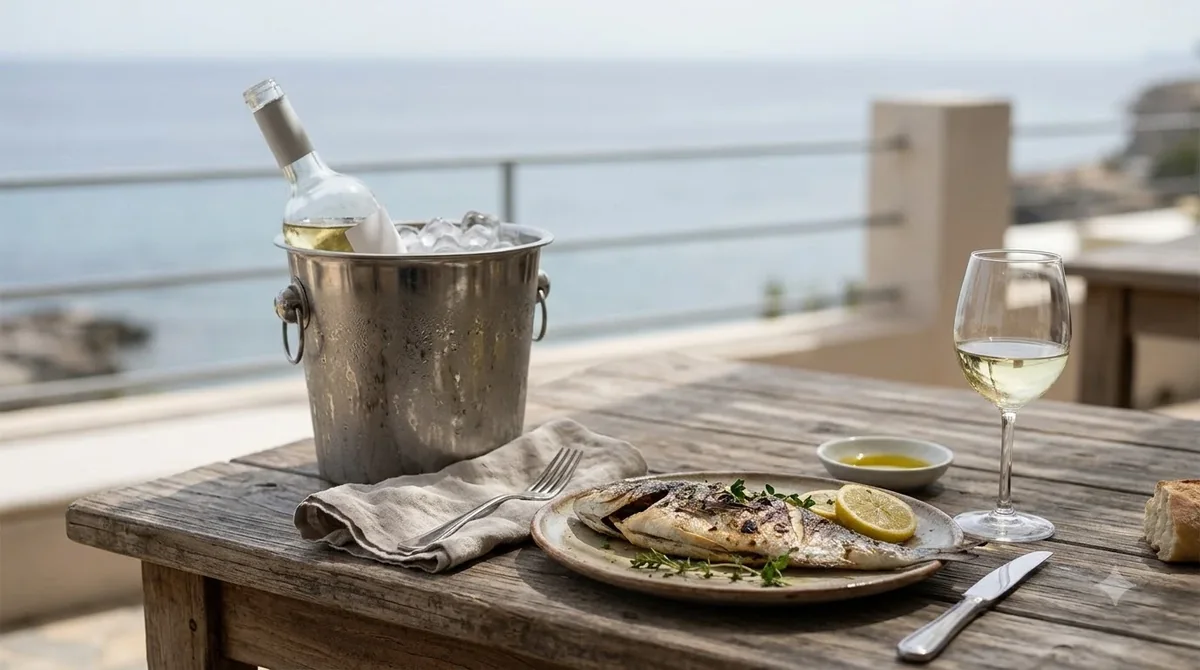
Sauvignon Blanc is one of the easiest white wines to pair, and Oyster Bay works especially well with food that has acid, herbs, or light richness. Grilled or steamed fish with lemon, shrimp tacos with lime, oysters, and goat cheese salads are classic matches. The wine’s herbal notes also complement dishes with basil, cilantro, mint, or dill.
It is less suited to heavy cream sauces or very rich, buttery dishes, because the sharp acidity can make those meals taste thin. For spicy Asian food, it is a better fit with mild chili than with very hot dishes, where the wine’s fruit can fade. A simple roast chicken with herbs is a reliable middle ground.
Tip: Match the herbs in the dish with the herbs in the glass. A lemon and herb pasta, a green salad with fresh dill, or a cilantro-lime marinade all bring out the wine’s aromatic side.
How to choose between similar Marlborough labels
Because many Marlborough Sauvignon Blancs share the same general profile, the differences between brands often come down to the balance of fruit, the level of acidity, and the intensity of the herbal notes. Cloudy Bay is widely regarded as one of the region’s defining names, and its 1985 debut is often credited with establishing the Marlborough style on the international stage. Other producers, including Kim Crawford and Whitehaven, make wines from the same valleys, so the differences are often a matter of balance and emphasis rather than a completely different style.
If you want a clean, dry white for an everyday dinner, Oyster Bay is a practical choice. If you are looking for a more distinctive or more intense expression, it is worth comparing two or three bottles side by side and noting which one you prefer. The Wine Brands guide explains how to compare producers across the same grape and region, which is useful when you are narrowing the choice.
Frequently Asked Questions
What does Oyster Bay Sauvignon Blanc taste like?
It is typically dry and fresh, with notes of lime, grapefruit, passionfruit, and green herbs. The finish is clean and crisp, which is the classic Marlborough style.
Is Oyster Bay Sauvignon Blanc sweet?
No. It is a dry white wine. Its fruitiness comes from ripe tropical and citrus flavors, not from residual sugar, so it tastes bright rather than sweet.
What food goes best with Oyster Bay Sauvignon Blanc?
Seafood with lemon, shrimp tacos with lime, oysters, goat cheese salads, and herb-based pasta are all strong matches. It is a less natural fit for heavy cream sauces or very spicy dishes.
Where does Sauvignon Blanc from Marlborough come from?
It comes from Marlborough, at the top of New Zealand’s South Island. The region’s maritime climate, with cool nights and moderate days, helps the grapes keep their natural acidity and clear aromatic character.
Oyster Bay Sauvignon Blanc is a dependable choice when you want a fresh, dry white that works with a wide range of meals. Serve it well chilled with seafood or a herb-heavy salad to see the style at its best. For a point of comparison, the Cloudy Bay Sauvignon Blanc and Kim Crawford Sauvignon Blanc guides cover two other well-known Marlborough labels, and the Whitehaven Sauvignon Blanc guide shows how another producer approaches the same grape.
More in Wine Brands
 Underwood Wine Price: Compare Bottles, Cans, and Pack SizesUpdated Nov 21, 2026
 Zenato Wine Price: Compare Styles and Choose the Right BottleUpdated Nov 21, 2026
 Zuccardi Wine Price: Compare Bottles and Find the Right RangeUpdated Nov 21, 2026
 Yellow Tail Moscato Review: Taste, Sweetness and Serving TipsUpdated Nov 21, 2026
 Wolf Blass Yellow Label Review: Choose Your Best StyleUpdated Nov 21, 2026
 Wolffer Estate Rose Review: Choose the Right Bottle for Your TableUpdated Nov 21, 2026