

We may earn a commission when you buy through links on this page, at no extra cost to you. Learn more.
How to pronounce verdicchio is simple: say “ver-DEE-kyoh,” placing the emphasis on the second syllable. The name belongs to an Italian white grape variety from the Marche region, and its pronunciation becomes easier once you understand the Italian double-C spelling. Think of it as four written syllables with a strong middle beat and a smoothly connected ending.
Italian wine names can look intimidating on a restaurant wine list, particularly when their spelling differs from familiar English pronunciation patterns. Verdicchio is a useful example: the combination of letters near the end makes the word look more complicated than it sounds. Learning the correct pronunciation also introduces you to one of central Italy’s most distinctive white wines, known for refreshing acidity and a characteristic almond finish.
How to Pronounce Verdicchio in Everyday Conversation
The easiest English-friendly pronunciation is ver-DEE-kyoh. Give the second syllable the strongest emphasis, keep the first syllable relatively light, and finish with a connected kyoh sound rather than separating every letter into an individual sound.
Break the name into its spoken parts: ver, DEE and kyoh. Although the spelling contains several letters, the final combination does not require a hard English-style ch sound. The Italian pronunciation is commonly represented as /verˈdikkjo/, with the accent mark indicating that the stress falls on the second syllable. This is why DEE should be noticeably stronger than the opening ver.
There are small differences between English-language phonetic spellings. Some wine references write the name as ver-DEE-kyoh, while others use ver-DEE-key-oh. Both are attempts to help English speakers reproduce the Italian sounds. The shorter kyoh spelling is closer to the way the final letters flow together in Italian, while the longer version can be useful for beginners who need a clearer visual reminder.
For a practical test, say the name slowly three times: ver-DEE-kyoh, ver-DEE-kyoh, ver-DEE-kyoh. Then bring the syllables together at a natural speaking speed. Avoid putting equal emphasis on every part. A pronunciation such as VER-dee-CHIOH sounds less natural because it changes both the stress and the ending.
You do not need to imitate an Italian regional accent to pronounce the wine correctly. A clear second-syllable emphasis and a connected final sound are enough to make the name recognizable in an American restaurant, wine shop or tasting room.
Understanding the Italian Sounds and Double C
The spelling of Verdicchio explains why English speakers sometimes hesitate. Italian uses combinations of consonants differently from English, and the letters c and h work together to preserve a hard K sound before the vowel i.
In Italian spelling, a single c followed by i normally has a soft sound similar to the English ch in cheese. Adding h between the c and i changes the pronunciation. The combination chi produces a hard K sound, as in the beginning of the English word key. This is the central spelling rule that makes the ending of Verdicchio easier to understand.
The double C strengthens that consonant sound. It does not create an English-style ch sound. Instead, the consonant is held slightly longer before moving into the following vowel sound. This distinction matters because pronouncing the name as ver-DEE-chee-oh changes the sound of the grape’s name.
The final letters also deserve attention. Italian often connects an i before another vowel into a smooth glide rather than pronouncing both vowels as separate, fully independent syllables. In Verdicchio, the ending is therefore closer to kyoh than to a sharply separated key-oh.
The Treccani dictionary gives the phonetic transcription /verˈdikkjo/. Its transcription provides a useful reference for understanding the Italian pronunciation rather than relying entirely on an English approximation. You can consult the Treccani Italian dictionary entry for Verdicchio to see the pronunciation and the word’s historical linguistic background.
Tip: Remember the combination chi as a hard K sound. If you can pronounce the beginning of the English word key, you already know the most important part of the Verdicchio spelling rule.
It also helps to compare Verdicchio with other Italian wine names. Chianti contains the same chi combination, which produces a K sound rather than the ch sound English readers might expect. Once you recognize this spelling pattern, words such as Chianti, Brunello and Verdicchio become easier to approach.
Breaking the Name Into Syllables and Stress
Practicing the name in smaller pieces makes pronunciation more reliable. Concentrate on the second syllable first, then add the opening and ending without changing the emphasis.
For an English-speaking beginner, the following breakdown provides a convenient practice reference. The phonetic spellings are approximations rather than a replacement for the more precise Italian pronunciation.
| Part | Pronunciation | How to say it | Emphasis |
|---|---|---|---|
| First | ver | Like the beginning of very | Light |
| Second | DEE | Like the English word dee | Strongest |
| Ending | kyoh | A hard K followed by a connected yoh sound | Light |
| Complete name | ver-DEE-kyoh | Connect all three spoken parts | Second syllable |
The most important detail is the position of the accent. The written Italian stress falls on the second syllable, so the word should not sound like VER-dicchio or ver-dee-CHIO. Keep the opening short and avoid stretching the final sound beyond what feels natural.
A useful practice method is to begin with the emphasized syllable alone. Say DEE several times, then add the ending: DEE-kyoh. Once that sounds comfortable, place the opening in front: ver-DEE-kyoh. This approach helps prevent the common mistake of emphasizing the final vowel simply because it appears at the end of a long-looking word.
Another technique is to use the name in a complete sentence. Try saying, “I’d like a glass of Verdicchio, please.” Speaking the word as part of an ordinary request is more useful than repeatedly reciting it without context. It also helps you maintain a natural rhythm when speaking with a server or wine professional.
For additional Italian wine pronunciation practice, compare the sound with how to pronounce chardonnay and how to pronounce cuvee. These names come from different linguistic traditions, so their pronunciation rules are not identical, but practicing them helps build confidence with unfamiliar wine terminology.
What Verdicchio Means and Where the Name Comes From
Verdicchio takes its name from the Italian word verde, meaning green. The name refers to the greenish color of the grapes, which can retain green tones even when they are fully ripe.
This connection between the grape’s appearance and its name helps explain why Verdicchio is associated so strongly with its Italian growing region. It is an indigenous white grape particularly identified with Marche, an area on Italy’s Adriatic coast. The grape has a long history in the region and is an important part of its wine identity.
The modern spelling is Verdicchio, although the Treccani dictionary also records the older form verdécchio. The historical form reflects an earlier development of the name and its relationship with the words used for green grapes. For a wine enthusiast, this is a useful reminder that Italian wine vocabulary often reflects local agricultural history rather than simply describing the finished wine.
The word refers to both the grape variety and the wine produced from it. Therefore, if someone says they are drinking Verdicchio, they generally mean a white wine made primarily from the Verdicchio grape. If they mention planting Verdicchio, they are referring to the grapevine itself.
That distinction is useful when reading wine lists and bottle labels. A wine named Verdicchio dei Castelli di Jesi identifies a wine associated with a specific production area, while Verdicchio by itself identifies the grape or a wine made from it. Understanding the name makes it easier to recognize the connection between the variety, its geography and its traditional wine styles.
For a closer look at the grape’s history and growing area, the Verdicchio information published by the Marche wine protection organization explains the variety’s regional importance and the geographical characteristics of its production areas.
Recognizing Verdicchio Wine From Marche
Verdicchio is best known for producing dry, refreshing white wines with lively acidity, citrus flavors and a distinctive bitter-almond finish. The two principal names to recognize are Verdicchio dei Castelli di Jesi and Verdicchio di Matelica, both associated with the Marche region of central Italy.
Castelli di Jesi is the better-known of the two appellations. Its growing area includes parts of the provinces of Ancona and Macerata, with vineyards influenced by the Adriatic Sea and surrounding hills. The resulting wines can combine fresh citrus, orchard fruit, floral aromas and a savory mineral character. Some examples have a broader texture and riper fruit profile than their inland counterparts.
Verdicchio di Matelica comes from a more inland growing area. Its conditions can produce wines with a particularly crisp, focused character, often showing citrus, green apple and mineral notes. Differences in altitude, local climate and vineyard conditions help explain why two wines made from the same grape can have noticeably different personalities.
The Castelli di Jesi designation received DOC recognition on September 26, 1968. According to the regional wine protection organization, the production area includes 23 municipalities in the province of Ancona and two in the province of Macerata. Its regulations also require at least 85% Verdicchio in the blend.
Several additional terms may appear on a bottle. Classico identifies wines from the oldest production area, while Classico Superiore is associated with lower vineyard yields per hectare. Riserva identifies a more specific category intended to demonstrate additional development and complexity.
The Riserva category is particularly interesting because Verdicchio has better aging potential than many casual drinkers expect from an Italian white wine. According to the regional wine organization, Castelli di Jesi Verdicchio Riserva received DOCG recognition in 2010. Well-made examples can develop greater depth and complexity over time.
Verdicchio also appears in sparkling and Passito styles. The sparkling version offers a different expression of the grape’s acidity, while Passito is a sweeter style made using dried grapes. These variations show why recognizing the grape name is more useful than assuming every bottle will taste exactly the same.
What Verdicchio Tastes Like and How to Serve It
A typical Verdicchio is dry, fresh and relatively high in acidity, with citrus, green apple and a savory almond note. Serving it slightly chilled helps preserve its freshness while allowing its aromatic character to remain noticeable.
Lemon, green apple, white peach and floral notes are common descriptions. Some wines also show fennel, anise and mineral characteristics. The signature bitter-almond finish is particularly useful for recognizing the variety, especially when comparing it with other Italian white grapes.
The wine is generally more savory than sweet. Although ripe fruit aromas can give the impression of sweetness, most traditional still Verdicchio wines are dry. Sweet Passito examples are a separate style and should not be treated as representative of the everyday wine.
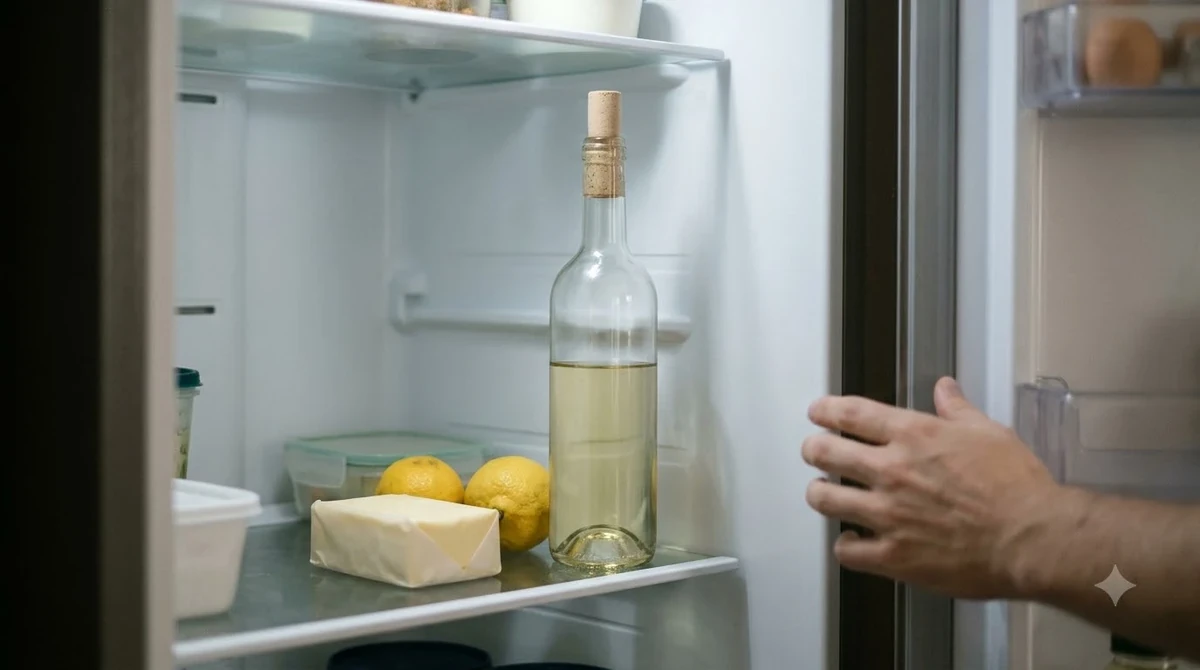
For serving, a temperature of approximately 45 to 50 degrees Fahrenheit works well for many lighter white wines. This keeps Verdicchio refreshing without making its aromas difficult to appreciate. Very cold wine can seem less expressive, while warmer temperatures can make the acidity feel more prominent.
Use a standard white wine glass with enough room to appreciate the aromas. A moderate pour of approximately 5 ounces allows the wine to warm gradually in the glass. If the bottle is a more structured Riserva, allowing it a little time in the glass can help reveal additional layers.
Food pairing is another reason Verdicchio deserves attention. Its acidity works particularly well with seafood, grilled fish, shellfish and dishes containing lemon or fresh herbs. It can also accompany white meats, fresh cheeses and vegetable-based pasta dishes.
For a simple meal, try it with grilled sea bass, steamed mussels or shrimp with garlic and parsley. Its freshness cuts through the richness of many seafood preparations, while its subtle almond character complements lightly toasted ingredients. Avoid pairing a delicate example with heavily spiced dishes that would overwhelm its more restrained aromas.
Verdicchio can also work with fried seafood because its acidity provides contrast to the richness of the food. The same principle applies to lightly battered vegetables and other savory appetizers. These pairings make the wine suitable for both casual meals and more elaborate Italian menus.
Ordering Verdicchio and Using the Name Naturally
Once you understand the pronunciation, the next step is using it comfortably in conversation. A simple, clear request is usually all that is needed when ordering at a restaurant or asking for a recommendation at a wine shop.
You can say, “Could I have a glass of Verdicchio?” with the emphasis on DEE. If you want to be more specific, ask for a Verdicchio dei Castelli di Jesi or a Verdicchio di Matelica. These longer names provide useful information about the wine’s origin and can help a server identify the style you are looking for.
At a wine shop, try asking, “Do you have a dry Verdicchio from Marche?” This question communicates both the grape and the style. If you prefer a crisp white wine with citrus and mineral character, you can mention those preferences as well.
It is also helpful to recognize that the word appears in different contexts. On a wine list, it might be listed as the grape, as part of an appellation name, or as a producer’s wine designation. The pronunciation remains essentially the same in each case.
When discussing Italian wine with friends, you can use the grape name alongside familiar varieties such as Pinot Grigio, Vermentino and Sauvignon Blanc. This makes comparisons easier and provides an opportunity to introduce people to a white wine that may be less familiar than the more widely recognized Italian options.
For readers exploring additional wine vocabulary, learning how to pronounce claret is another useful exercise. Claret comes from a different wine tradition, but understanding regional wine terminology makes it easier to read wine lists and discuss different styles.
There is no need to make the pronunciation sound theatrical or exaggerated. Keep the word smooth, emphasize the second syllable, and let the Italian sounds flow together. Clear communication matters more than trying to reproduce a particular regional accent.
Frequently Asked Questions
Is Verdicchio pronounced differently in northern and southern Italy?
The basic pronunciation remains consistent across Italy, although regional accents can influence vowel quality and consonant length. Local speakers may have slightly different speech rhythms, but the stress remains on the second syllable. The standard dictionary transcription is /verˈdikkjo/.
Is Verdicchio related to the Italian word verdura?
Both words are connected linguistically with the Italian vocabulary associated with green. Verdicchio specifically derives from verde, referring to the greenish appearance of the grapes. Verdura, meanwhile, is the Italian word for vegetables.
Is Verdicchio a protected Italian wine name?
Verdicchio dei Castelli di Jesi and Verdicchio di Matelica are protected geographical wine designations. Their production rules establish the geographical areas and grape requirements associated with the names. This helps distinguish wines from those specific areas from other wines made with the same variety.
Can Verdicchio be made into a sparkling wine?
Yes. Verdicchio is used to produce sparkling wine, known in Italian as Spumante. The variety’s naturally fresh character makes it suitable for sparkling expressions, which can range from very dry to other sweetness levels depending on the production style.
Does Verdicchio have any connection with Lugana’s Turbiana grape?
Yes. DNA research identifies Verdicchio as genetically identical to Turbiana, the grape associated with Lugana in the Veneto and Lombardy area. The same variety is also known as Trebbiano di Soave. Different growing locations and winemaking choices give these wines their own regional identities.
Remember the pronunciation ver-DEE-kyoh, with the strongest emphasis on the second syllable and a hard K sound in the ending. Once you recognize the name, you can order Verdicchio confidently and explore the fresh, almond-edged white wines that have made this Marche grape an important part of Italian wine culture.
More in Wine Types & Grapes
 What Does Mourvèdre Taste Like? Flavor Profile, Regions, and PairingsUpdated Nov 20, 2026
 What Does Marsanne Taste Like? Flavors, Styles, and Food PairingsUpdated Nov 20, 2026
 What Does Malvasia Taste Like? Styles, Flavors, and Food PairingsUpdated Nov 20, 2026
 What Does Grenache Blanc Taste Like? Flavor Profile, Styles, and PairingsUpdated Nov 20, 2026
 What Does Garnacha Taste Like? Key Flavors, Styles, and Pairing TipsUpdated Nov 20, 2026
 What Does Fruit Wine Taste Like? A Complete Flavor and Style BreakdownUpdated Nov 20, 2026