

We may earn a commission when you buy through links on this page, at no extra cost to you. Learn more.
how to pronounce chardonnay? Say “shar-duh-NAY” in three syllables, with the strongest stress on “NAY.” The opening sounds like “shar,” the middle is quick and unstressed, and the final syllable rhymes with “day.” In ordinary American conversation, this clear English rendering is more useful than trying to imitate every detail of French speech.
Chardonnay is both a white-wine grape and the wine made from it, so the word comes up on restaurant lists, bottle labels, tasting menus, and conversations about regions such as Burgundy and California. Once the sound is familiar, it becomes easier to ask for a style you like, distinguish unoaked from oak-aged examples, and recognize the grape in sparkling wine too.
How to Pronounce Chardonnay in American English
For most American wine conversations, say “shar-duh-NAY”: three syllables, a soft “sh” at the start, and the clearest emphasis on the final syllable. Oxford’s American English dictionary represents the word as /ˌʃɑrdnˈeɪ/, marking a secondary beat near the beginning and the main stress at the end.
Think of the pronunciation as a short rhythm rather than as a string of difficult French letters. Begin with “shar,” let the middle sound pass quickly, and give “NAY” the strongest beat. The first sound is like the opening of “shark” without the final k; the last sound is the long A in “day.” This keeps the name recognizable without making the delivery sound theatrical.
The spelling can distract English speakers because the opening letters “ch” often represent the sound in “chair,” as in “cheese” or “cherry.” In Chardonnay, however, the beginning is the “sh” sound, as in “ship.” The final letters “nay” are not pronounced like the word “nay” in every French accent, but “NAY” is a practical American guide to the standard wine name. A listener is much more likely to recognize “shar-duh-NAY” than a pronunciation that gives the letters “ch” a hard or “chair”-like sound.
There is no need to overwork the word in a restaurant. Say it in one smooth motion, then put the emphasis back on the wine you want: “Could I have a glass of Chardonnay?” A calm, clear pronunciation is sufficient; wine knowledge is shown more usefully through a question about style, region, or food pairing than through an exaggerated accent.
Why the Name Has a French Connection
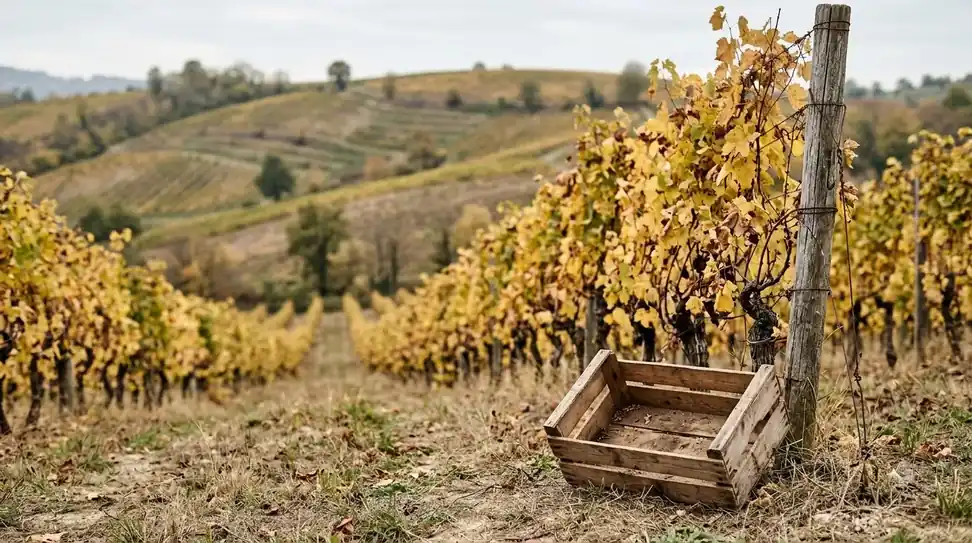
Chardonnay is a French place name as well as the name of a grape, and the village that gave the variety its name is in the Haut-Mâconnais area of Burgundy. That origin explains the French spelling, while the American pronunciation reflects how the grape’s name has become part of everyday English wine vocabulary.
The Bourgogne wine authority identifies the village of Chardonnay as the source of the varietal name and notes that it is still a wine-producing village. The same account says that the village and 26 other communes may use “Mâcon-Chardonnay” on labels. This is a useful distinction: the grape is grown far beyond France, but its name is tied to a specific place in Burgundy.
The French ending “-ay” does not map neatly onto the English spelling. The Office québécois de la langue française explains that the ending in French place names and words derived from them is generally pronounced like the vowel in “donnais” in France and like the vowel in “donner” in Quebec. Those French-language pronunciations help explain why the final letters can sound different across languages. American English usually settles on a familiar long-A ending, which is why “NAY” works as a quick pronunciation cue.
That background also helps separate two different questions. A speaker can use the accepted American wine pronunciation without claiming to speak French, and a French speaker may use a local pronunciation shaped by French sound patterns. Neither situation changes the identity of the grape. It remains Chardonnay whether the bottle comes from Chablis, the Mâconnais, Sonoma County, or Australia.
Break the Word Into Three Syllables
The easiest practice method is to divide the word into three speaking positions and make only the final one fully prominent. Oxford’s American transcription shows secondary stress near the start and primary stress on the ending, so the middle should stay light rather than becoming a separate accented beat.
| Position | Say it like | Speaking cue |
|---|---|---|
| 1 | SHAR | Light secondary stress; start with “sh.” |
| 2 | duh | Quick, relaxed middle syllable. |
| 3 | NAY | Main stress; rhyme with “day.” |
Practice slowly once, then bring the syllables together: “SHAR … duh … NAY,” followed by “shar-duh-NAY.” The middle vowel is a relaxed schwa, the short neutral sound heard in the first syllable of “about.” It should not sound like a fully stressed “doh” or a long, separate “don.” The written spelling is not a reliable map of each spoken sound, so listening for the rhythm is more effective than trying to pronounce each letter.
Try the word in a few short phrases: “Chardonnay from Burgundy,” “a glass of Chardonnay,” and “unoaked Chardonnay.” The sentence gives the word a natural pace, and the final syllable remains clear without being shouted. A useful test is to say it while reading a wine list: if the name feels like one three-part word and the last part carries the strongest beat, the result will sound natural to most American listeners.
Tip: Say “shar-duh-NAY” three times at a comfortable speaking speed, then use it in the sentence “I usually enjoy Chardonnay with dinner.” Keep the middle syllable short and do not turn the final sound into “night.”
If phonetic symbols are useful, the American English entry in the Oxford Advanced American Dictionary uses /ˌʃɑrdnˈeɪ/. The small mark /ˌ/ signals secondary stress; /ˈ/ marks the strongest stress. You do not need to memorize those symbols, but they explain why the opening can have a little weight while the final syllable still takes the lead.
Understand Accent Differences and Common Mispronunciations
Pronunciation can vary with language and accent, but the recognizable American form has a clear “sh” opening and a long-A ending. The most useful correction is not to chase one supposedly perfect accent; it is to avoid the two sounds that most often obscure the name: a hard “ch” at the beginning and a fully stressed middle syllable.
In English, “ch” often sounds like /tʃ/, the first sound in “chair.” The French-derived name begins with /ʃ/, the sound in “shoe.” That difference is more important than whether the first vowel sounds slightly more like “shar” or “shahr” from one speaker to another. American English also tends to pronounce the r in the opening syllable, while French does not use the same English r sound.
The ending can be another source of uncertainty. English readers may want to pronounce “-ay” as two separate sounds or make it sound like “eye,” but the common American form ends in the long-A sound of “say.” The word is not “char-dan,” “char-don,” or “char-dan-eye.” Aim for three compact syllables and a final sound that rhymes with “day.”
French-language references make clear that the ending changes according to the language being spoken. That does not make an American pronunciation incorrect in an American restaurant or wine shop. In the same way, a speaker may use local forms for Burgundy place names while still making the grape name understandable. Readers who are building confidence with other wine terms can compare the sounds in how to pronounce claret and how to pronounce cuvee; those names also become easier with a short sound cue and a little practice.
Recognize the Wine Behind the Word
Chardonnay is a flexible white grape, not a single fixed flavor profile, and pronunciation is only the first step toward understanding what is in the glass. In Burgundy, cool-climate Chablis can be lean, citrus-led, and unoaked, while wines from Meursault and other parts of the Côte de Beaune are often broader, richer, and more influenced by oak.
Wine Enthusiast describes cool-climate Chardonnay with notes such as apple, citrus, and flint, while warmer regions can bring peach, melon, and tropical fruit. Oak aging may add vanilla and toast; malolactic fermentation can create a creamier, buttery impression. These are tendencies rather than a checklist: growing conditions, harvest decisions, fermentation, and aging all shape the finished wine.
The grape is important well beyond Burgundy. California examples are associated with areas including Napa Valley and Sonoma County, while Australia, New Zealand, Chile, South Africa, and other regions also produce Chardonnay. A bottle from a cool coastal site may taste quite different from one made in a warmer inland area. The grape adapts to a wide range of climates, which is one reason the name appears so frequently on wine lists and labels across the world. Chardonnay also appears in sparkling wine: in Champagne, it is one of the principal varieties alongside Pinot Noir and Pinot Meunier, and a Champagne labeled blanc de blancs is made entirely from Chardonnay, according to Wine Enthusiast’s overview. The same word can therefore describe a still white wine, the grape used in a blend, or the sole grape in a particular sparkling bottling. For a broader introduction to styles beyond this variety, browse Wine by Type.
When choosing a bottle, use the region and the winemaking details as clues. “Chablis” often points toward a cooler, leaner expression; “Meursault” often suggests a richer Burgundy style; and “Sonoma Coast” can indicate a coastal California setting. “Unoaked” tells you that oak flavor is not a major feature, while “barrel-fermented” or “barrel-aged” signals a more direct role for barrels. None of these terms guarantees a particular flavor, but each narrows the range of likely styles.
Use Chardonnay Naturally in Wine Conversations
The word is easiest to say confidently when it is attached to a practical question. Rather than announcing the grape name on its own, ask about a region, the use of oak, or the texture you prefer; a server or wine-shop employee can then point you toward a suitable bottle.
For example, “Do you have an unoaked Chardonnay?” asks for a style with little obvious oak influence. “Is this Chardonnay from Chablis or the Côte de Beaune?” asks about a specific Burgundy origin. “Would this Chardonnay work with roast chicken?” makes the discussion about the meal rather than the pronunciation. These questions sound natural because they use the name in an ordinary sentence and show what information matters to the choice. Chardonnay is a grape name, but it is also commonly used as the wine name. You can say “a glass of Chardonnay,” “a bottle of Chardonnay,” or “Chardonnay grapes.” When comparing several examples, wine writers may use the plural “Chardonnays” to mean different bottlings or styles. The surrounding words make the intended meaning clear, so there is no need to pause and explain whether you mean the fruit or the finished wine.
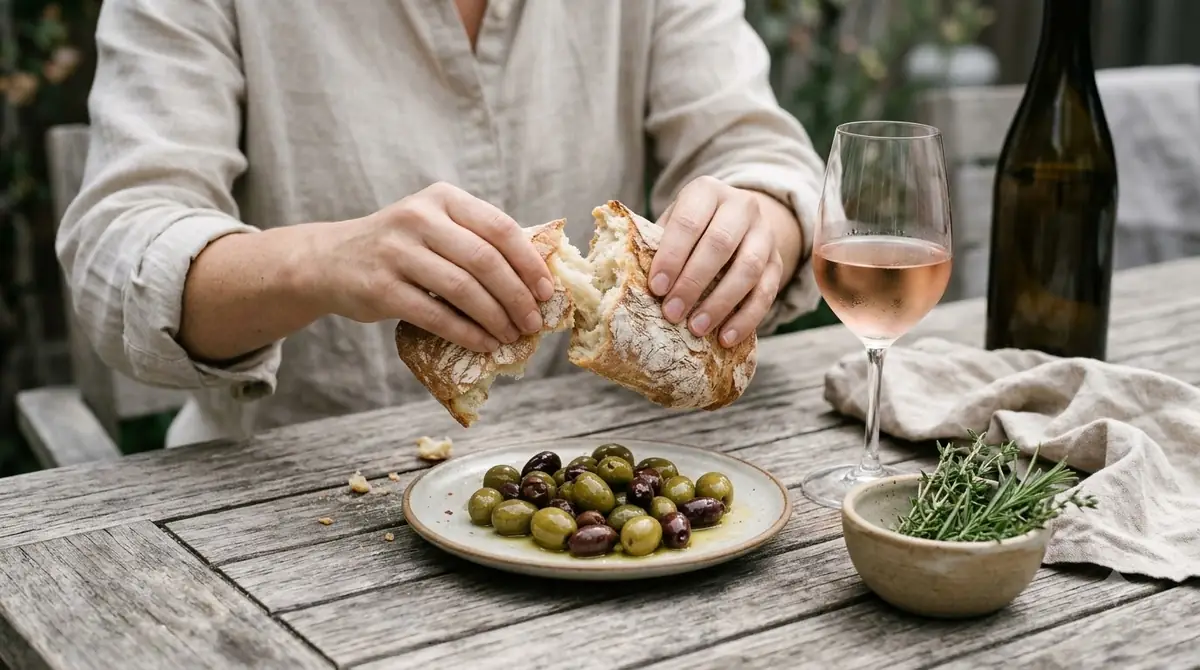
Serving temperature can change how the wine comes across. Wine Enthusiast lists a general range of 45–55°F for Chardonnay, while lighter, unoaked examples are often best toward the cooler end and fuller, oak-influenced bottlings can show more aroma closer to the warmer end. A standard 5-ounce pour is enough for a tasting comparison, and a 750-milliliter bottle provides about five such glasses. Food gives you another useful vocabulary bridge: Chardonnay’s medium acidity can suit roast chicken, creamy pasta, lobster, or scallops, while a crisp, unoaked version can work especially well with simply prepared seafood. Richer oak-aged examples may have enough body for a dish with browned butter or a creamy sauce. The wine should still have enough freshness for the meal: a lemon-heavy dish can make a soft, low-acid wine seem flat, while a very delicate fish preparation may be overwhelmed by a heavily oaked bottle.
| Serving detail | Typical figure | Practical use |
|---|---|---|
| Chardonnay serving range | 45–55°F (7–13°C) | A general range; lighter and fuller styles can sit at different ends. |
| Standard pour | 5 oz | A useful amount for comparing wines side by side. |
| Standard bottle | 750 mL | About five standard 5-ounce pours. |
To practice with other grape and style names, work through a short list such as Chardonnay, Sauvignon Blanc, Pinot Noir, and Grüner Veltliner. The pronunciation guide for how to pronounce gruner veltliner is a useful next exercise because it introduces a different spelling pattern and a different rhythm. With each name, focus on the sound first and only then add details about the region or style.
Frequently Asked Questions
These five quick answers cover less obvious uses of the name, from grammar to regional aliases and sparkling-wine terminology. They add a few details that are useful once the basic American pronunciation feels familiar.
Can Chardonnay refer to a grape or to a finished wine?
Both uses are standard. Oxford lists Chardonnay as a noun that can be countable or uncountable, reflecting its use for the grape variety and for wine made from that grape. Context usually makes the intended meaning clear.
Why can Chardonnay sometimes taste buttery?
Some winemakers use malolactic fermentation, a process that changes sharper malic acid into softer lactic acid. That conversion can contribute to a rounder texture and a buttery impression, even though the grapes themselves are not buttery.
Is Chardonnay known by another name in Austria?
Yes. In Styria, Austria, the grape is known as Morillon. The name is a regional synonym, so a wine labeled Morillon is made from the same grape variety.
What does blanc de blancs mean on a Champagne label?
The French phrase means “white from whites,” describing a white sparkling wine made from white grapes. In Champagne, Chardonnay is the best-known grape for this style, and a blanc de blancs bottling can showcase the variety without blending in the region’s red grapes.
Can you say “Chardonnays” when talking about more than one wine?
Yes. The plural is useful when comparing separate bottles, producers, or regional styles, such as two Chardonnays from different parts of California. In everyday speech, “two bottles of Chardonnay” is also natural and often sounds less technical.
Remember the simple sound cue: “shar-duh-NAY,” with the strongest beat at the end. Say it naturally, then let the region, style, and food pairing guide the rest of the conversation.
More in Wine Types & Grapes
 Zinfandel Sugar Content: Dry Red vs. White Zinfandel GramsUpdated Nov 21, 2026
 Best Zinfandel Substitute Options for Sipping and CookingUpdated Nov 21, 2026
 Zweigelt Food Pairing: Best Dishes, Cheeses, and Serving TipsUpdated Nov 21, 2026
 Zinfandel Tannins Explained: How Structure Shapes Every BottleUpdated Nov 21, 2026
 Zinfandel Sweetness Level: Dry Red vs. Sweet White Zin ExplainedUpdated Nov 21, 2026
 Xinomavro Food Pairing: Best Dishes, Styles, and Serving TipsUpdated Nov 21, 2026