


We may earn a commission when you buy through links on this page, at no extra cost to you. Learn more.
How to pronounce claret: say “KLAIR-uht” in American English, with the stress on the first syllable. The British pronunciation is commonly “KLARR-uht,” with the vowel in the first syllable sounding closer to the vowel in “cat.” In both versions, keep the ending short and unstressed: two syllables, not three.
Claret is a traditional wine word that appears in restaurant lists, tasting notes, wine books, and conversations about Bordeaux. Its spelling can make English speakers hesitate, especially because it comes through French and has a history that is older than its modern meaning. Once you know the vowel difference, the stress pattern, and what the word usually refers to, it is easy to say naturally and use accurately.
How to Pronounce Claret in American English
In most American English contexts, pronounce claret as KLAIR-uht: the first syllable rhymes approximately with “air,” and the second sounds like the relaxed “uh” in “about.” Cambridge gives the US pronunciation as /ˈkler.ət/, while Oxford lists /ˈklærət/ as its dictionary pronunciation. Accent and individual speech can shift the vowel slightly, but the first-syllable stress and two-beat shape remain the reliable guide.
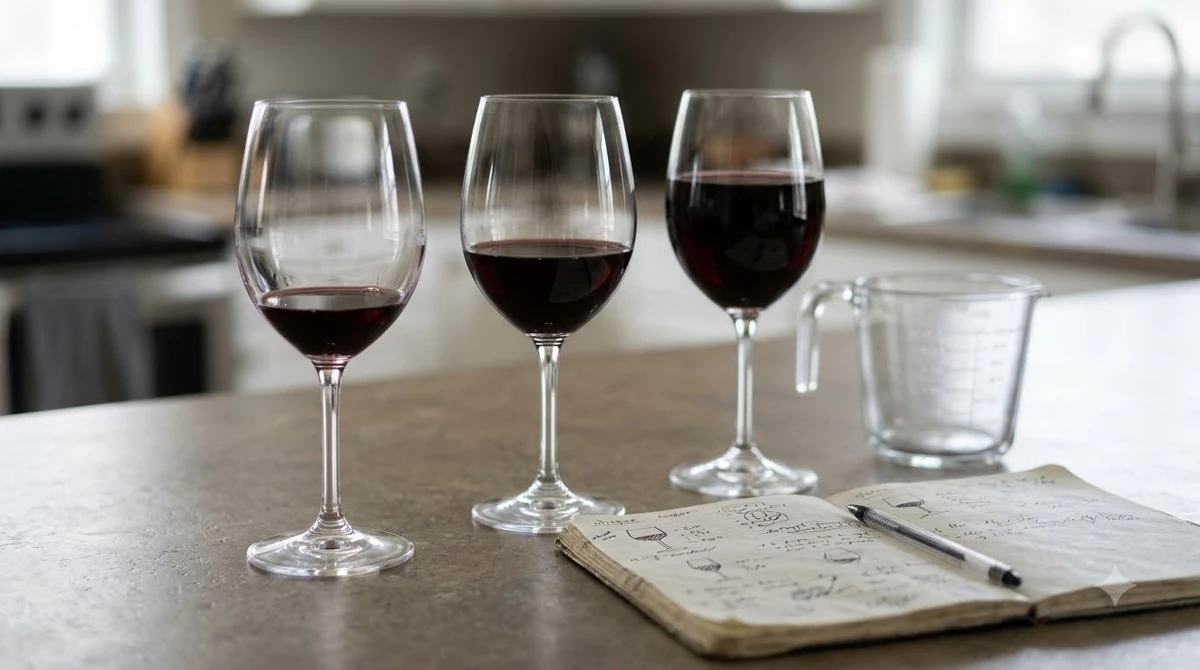
Start with the consonants. The opening cl is the same cluster you hear in “clap,” “clean,” and “classic.” Move directly from the /k/ sound into /l/ without inserting a vowel between them. The middle vowel is the part that changes most by accent: many American speakers use a sound close to the vowel in “air,” while other English speakers may use a flatter vowel closer to “cat.” Finish with a light /ət/ sound, not a strongly pronounced “ret.”
Think of the rhythm as KLAIR followed by uht. The first part should be clear and slightly stronger; the second should be quick. Avoid giving both syllables equal weight, and do not pronounce the final letters as a separate, emphatic “et.” If you can say “clarity” and “claret” distinctly, you are already close: claret has the opening consonant cluster of “clarity,” but a different ending and a two-syllable rhythm.
| Reference accent | IPA | Syllables | Stress |
|---|---|---|---|
| American English | /ˈkler.ət/ | 2 | First |
| British English | /ˈklær.ət/ | 2 | First |
| Oxford dictionary form | /ˈklærət/ | 2 | First |
For a practical check, say the word in a short phrase rather than repeating it in isolation: “a bottle of claret,” “classic claret,” or “Bordeaux claret.” The surrounding words help you keep the final syllable light. In American conversation, a clear “KLAIR-uht” will be understood even if your vowel is not identical to a British speaker’s.
Break the Word Into Two Syllables
Claret has two syllables, and the stress falls on the first: CLAR-et. That pattern is more important for sounding natural than trying to imitate a particular regional accent. Keep the second syllable compact so the word does not drift toward a three-syllable pronunciation.
Use this simple sequence as a pronunciation drill. First, say “cl—” with the crisp /kl/ blend. Next, add the stressed vowel: “clair.” Finally, attach a short, relaxed ending: “uht.” Put the parts together without a pause: “KLAIR-uht.” Repeat it three times at a conversational pace, then once inside a sentence such as “The restaurant has claret by the glass.”
Where the stress belongs
The stress mark in the IPA form /ˈkler.ət/ appears before the first syllable. That small mark signals that the opening sound carries the emphasis. You should hear one strong beat followed by one weak beat, much like “carrot” or “parrot” in ordinary American speech, although the vowel in claret is different. If the second syllable sounds louder than the first, shift the emphasis forward.
The word is not “cluh-RET,” “CLAR-ay,” or “CLAR-it” with a hard, fully articulated final vowel. Those versions either move the stress, add an extra vowel, or make the ending too strong. A quick schwa—the neutral vowel heard in the second syllable of “sofa”—is enough. The final /t/ should be audible, but it does not need a dramatic release.
A useful self-check is to slow the word down once, then return to normal speed. At slow speed, make sure you have exactly two vowel centers; at normal speed, allow the unstressed syllable to shorten. A phone recording can help you hear whether the first syllable is prominent and whether you have added an extra beat. The goal is not a theatrical accent. It is a clean, recognizable two-syllable word.
American and British Pronunciation Differences
The main difference between common American and British dictionary pronunciations is the vowel in the first syllable. Cambridge records US /ˈkler.ət/ and UK /ˈklær.ət/: the American vowel is closer to the one in “care,” while the British vowel is closer to the one in “cat.”
For an American speaker, “KLAIR-uht” is a useful approximation. A British speaker may sound more like “KLARR-uht,” depending on regional accent and how broadly the vowel is pronounced. English accents vary within both countries, so you may hear intermediate versions. Do not treat one speaker’s vowel as the only correct form; dictionaries record standard reference pronunciations, not every local variation.
The ending is comparatively stable. Both pronunciations use a reduced second syllable, represented by /ət/ in Cambridge’s transcriptions. This is why the final letters should not be read as a strong “it” or “ate.” The difference is concentrated in the stressed vowel at the beginning, not in the number of syllables or the final consonant.
Which version should you use? In the United States, use the American vowel when speaking naturally to an American audience. When discussing Bordeaux with British wine writers, merchants, or guests, recognizing the British version will help you understand them; you do not need to switch accents yourself. Consistency and a clear stress pattern matter more than copying a voice from another region.
What “Claret” Means in Wine
In modern wine conversation, claret most often means red Bordeaux, particularly in British usage. Bordeaux is a large wine region in southwestern France, and its red wines commonly use blends built around Cabernet Sauvignon and Merlot. The word is a traditional description rather than the name of one grape variety, so it does not identify a single recipe or a fixed flavor profile.
That distinction matters when you see claret in a book, wine list, or tasting note. A claret may be structured and savory, fruit-forward and approachable, or made for extended aging; the word alone does not tell you the vintage, appellation, blend percentages, or quality level. Bordeaux includes different appellations, soils, producers, and styles. Treat “claret” as a broad historical pointer toward red Bordeaux, then use the specific producer and appellation to understand the bottle.
The term also appears outside France, especially in older or informal descriptions of red wines made in a Bordeaux style. Wine Enthusiast’s overview of claret notes that some American wineries have used claret for Bordeaux-style reds, although the term is unofficial in that context and does not establish a legally defined blend. In practical terms, an American bottle labeled claret may suggest a Cabernet Sauvignon- or Merlot-led red, but the producer’s technical details are needed to know exactly what is inside.
Claret is not a grape, a synonym for all red wine, or a direct translation of “Cabernet.” It is also not the same word as clairet, the name of a separate, rosé-like Bordeaux style. Knowing that difference prevents a common mix-up: claret generally points to red Bordeaux, while Bordeaux clairet is a darker-pink wine made with limited skin contact.
Why the Word Has a French History
Claret entered English through the history of the Bordeaux wine trade. Wine Enthusiast traces the English use of the term to the 16th century and explains that it developed from the French word clairet, which described a lighter, dark-pink style of Bordeaux wine. The English name stayed in use even as the wines associated with it shifted toward deeper-colored reds.
The older meaning explains why modern readers sometimes find the word confusing. The early wine known as clairet was not the same style as the full-bodied red Bordeaux many drinkers picture today. According to Wine Enthusiast, the lighter wine was popular as an export to England; later, richer reds became more prominent in the market, but the established English term continued to be used for Bordeaux red wine.
The word’s deeper linguistic history reaches further back. Oxford’s dictionary entry for claret traces the word through Old French and medieval Latin, connecting it with claratum vinum, or clarified wine, and the Latin clarus, meaning clear. That etymology helps explain the older association with a pale or light-colored wine. It is useful background, but you do not need to reproduce the Latin roots to pronounce the modern English word correctly.
Modern official usage is nuanced. The UK government registers “Claret” as a traditional wine term connected with the Bordeaux protected designation of origin and describes it as an expression for a pale red wine. Decanter likewise explains that the term has a long association with Bordeaux in Britain, while its everyday use has become less common. This legal and historical context does not change the pronunciation, but it explains why claret appears in both old wine writing and current discussions of Bordeaux terminology.
Use the Word Naturally in Wine Conversation
The easiest way to use claret well is to connect it to a specific wine, region, or style rather than treating it as a technical classification. You might say, “This is a classic claret from Bordeaux,” or ask, “Is the house claret from the Left Bank or the Right Bank?” Those questions make sense because the term commonly points toward red Bordeaux, while the more precise details come from the appellation and producer.
When discussing the blend, name the grapes rather than assuming the word tells you everything. Cabernet Sauvignon and Merlot are central to many red Bordeaux blends, according to Wine Enthusiast. The article also names Château Haut-Brion and Lafite as examples of deep-colored Bordeaux reds that became associated with the English use of claret. A particular bottle still needs its appellation, producer, and vintage for a more precise description.
Claret can sound traditional or British in an American setting. That is not a pronunciation problem; it is a matter of register. On a contemporary U.S. wine list, “Bordeaux” or the appellation name may be more immediately clear to guests. In a conversation about wine history, classic British terminology, or an older cellar note, “claret” is entirely understandable. Use the word when it adds context, not just to make an ordinary red wine sound more formal. If you are learning wine vocabulary alongside claret, compare the sound patterns in how to pronounce chardonnay and how to pronounce cuvee. Both words have French-language histories but have become established in English wine vocabulary. The same principle applies: learn the accepted English pronunciation, then focus on what the term means in a wine context.
For a guest who is unsure what claret means, a short explanation is enough: “It is a traditional British term for red Bordeaux.” You can then offer the more specific appellation, producer, or grape blend. If you want to place the term among other wine categories, the Wine by Type overview gives a useful starting point; the pronunciation of another wine name, how to pronounce gruner veltliner, is another example of how wine language can look less obvious than it sounds.
Tip: Practice the word as “KLAIR-uht” in the phrase “a glass of claret.” Keep the first syllable strong and the last one short; then remember that the wine term usually refers to red Bordeaux, not to a grape variety.
Frequently Asked Questions
Can claret be a countable noun?
Yes. Oxford lists claret as both countable and uncountable, so English speakers may refer to claret generally or to individual wines as “a claret” and “clarets.” The plural form is useful when comparing several bottles or styles rather than talking about the wine as a liquid.
Can claret describe a color?
Yes. English also uses claret as a color name for a dark red shade that can carry a purple cast. In clothing, upholstery, or paint descriptions, the word may identify a color rather than a drink, and the pronunciation does not change.
What language does the UK wine register list for claret?
The UK record lists French as the language of the traditional term and France as its country of origin. This reflects the word’s route into English wine vocabulary, even though the familiar English spelling and pronunciation developed through British use.
Is claret always dry?
Claret is commonly defined in English dictionaries as a dry red wine, especially one from Bordeaux. The term is therefore associated with dry red wine rather than sweet or sparkling styles, although the exact body, fruit character, and tannin level vary among bottles.
Can claret refer to white Bordeaux?
No. In wine usage, claret refers to red Bordeaux, not the region’s white wines. This is a useful distinction on a wine list because Bordeaux produces both red and white wines, but the traditional English term points to the red category.
For everyday American speech, “KLAIR-uht” is a clear, natural choice; a British speaker may use “KLARR-uht,” with the same first-syllable stress. Remember the two-syllable rhythm and the link to red Bordeaux, and you will be able to say the word confidently and understand it when it appears on a wine list or in a tasting conversation.
More in Wine Types & Grapes
 Zinfandel Sugar Content: Dry Red vs. White Zinfandel GramsUpdated Nov 21, 2026
 Best Zinfandel Substitute Options for Sipping and CookingUpdated Nov 21, 2026
 Zweigelt Food Pairing: Best Dishes, Cheeses, and Serving TipsUpdated Nov 21, 2026
 Zinfandel Tannins Explained: How Structure Shapes Every BottleUpdated Nov 21, 2026
 Zinfandel Sweetness Level: Dry Red vs. Sweet White Zin ExplainedUpdated Nov 21, 2026
 Xinomavro Food Pairing: Best Dishes, Styles, and Serving TipsUpdated Nov 21, 2026