

We may earn a commission when you buy through links on this page, at no extra cost to you. Learn more.
Champagne vs chardonnay is less a rivalry than a question of region versus grape. Champagne is a sparkling wine from the Champagne region of France, usually a blend of Chardonnay, Pinot Noir, and Pinot Meunier. Chardonnay is a white grape that makes still wines of many styles, and it is one of the grapes in Champagne. Choose Champagne for bubbles and a dry, toasty finish, and choose chardonnay when you want a still white with a range from crisp to rich.
This guide breaks down how champagne and chardonnay differ in grape, style, flavor, serving, and food pairing. It is for shoppers who see both on a wine list and want to know which one to order, or who want to understand why a bottle labeled “Blanc de Blancs” can be both at once.
What Champagne and Chardonnay Actually Are
The first thing to clear up is the category. Champagne is a protected name for sparkling wine made in a defined region of northern France. The rules allow only a small number of grapes, and most bottles are blends. Chardonnay is a grape variety, which means it can appear in many wines from many countries. A bottle of chardonnay can be still or sparkling, oaked or unoaked, and it is often labeled by the grape rather than by a region.
That difference explains the confusion. Chardonnay is one of the main grapes in Champagne, so a Champagne can be made from chardonnay alone. Those bottles are called Blanc de Blancs, which means white from whites. A non-sparkling chardonnay from California or Burgundy is a different product, even though the grape is the same.
Flavor and Style Side by Side
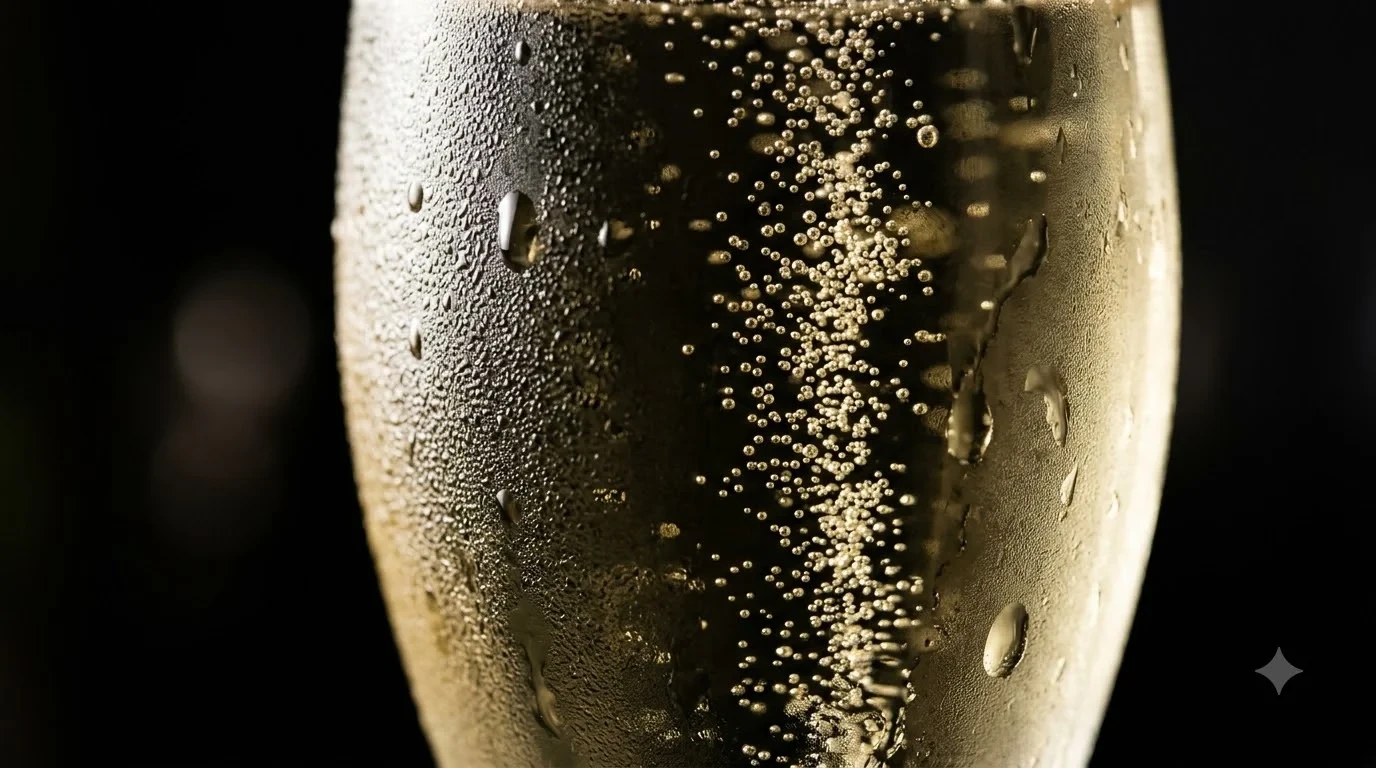
Champagne is usually dry and light-bodied, with high acidity and flavors of citrus, yellow apple, cream, almond, and toast. Wine Folly’s Champagne guide describes it as having a dry, bright profile at about 10 to 11.5 percent alcohol. The bubbles and the time spent aging on the yeast give Champagne its toasty, bready character.
Chardonnay has a much wider range. Wine Folly’s Chardonnay profile notes that cool-climate chardonnay, such as wines from Chablis or the Sonoma Coast, tends to taste of green apple, pear, citrus, and chalky minerals. Warmer areas like Napa Valley produce richer stone fruit such as peach and apricot, with tropical notes. Oak aging adds vanilla, cream, and spice, and malolactic fermentation makes the wine feel rounder and softer.
Bubbles, Acidity, and Body
Bubbles are the clearest dividing line. Champagne is sparkling, and the carbonation is part of its structure. The bubbles lift the aromas, make the wine feel crisp, and cleanse the palate between bites. A still chardonnay has no bubbles, so its texture comes from the grape, the climate, and the winemaking. Unoaked chardonnay can feel lean and sharp, while oaked chardonnay can feel full and creamy.
Acidity is high in both, but it feels different. In Champagne, acidity works alongside the bubbles to create a fresh, lively sensation. In still chardonnay, the acidity depends on the style. Wine Folly puts unoaked, lean chardonnay at about 12 to 13.5 percent alcohol with high acidity, and oaked styles at around 14.5 to 15 percent with more body and moderate acidity.
| Feature | Champagne | Chardonnay (still) |
|---|---|---|
| What it is | Sparkling wine from a French region | White grape variety used in many styles |
| Typical grapes | Chardonnay, Pinot Noir, Pinot Meunier | Chardonnay only |
| Bubbles | Yes | No |
| Typical alcohol | About 10 to 11.5 percent ABV | About 12 to 15 percent ABV |
| Main flavors | Citrus, yellow apple, cream, toast | Green apple, peach, tropical fruit, oak spice |
| Serving temperature | 38 to 45 F (3 to 7 C) | About 45 to 55 F (7 to 12 C), depending on style |
How to Serve Each One
Serve Champagne cold, at 38 to 45 degrees Fahrenheit (3 to 7 degrees Celsius), in a flute or a tulip-shaped glass. The cold temperature keeps the bubbles fine and the acidity crisp. Champagne does not need decanting, and it can be kept for a long time when the bottle is stored well. Prized examples are often aged for at least three years before release.
Still chardonnay depends on its style. Sparkling chardonnay, which is often served as a Blanc de Blancs or a crémant-style wine, follows the same cold service. Lean, unoaked chardonnay tastes best at about 45 degrees Fahrenheit, similar to a Chablis. Oaked chardonnay is more forgiving and often served around 55 degrees, which lets the oak and fruit show more clearly.
Tip: If you want to test the difference, pour a Champagne and a sparkling-style chardonnay of similar price side by side. The bubbles are the easiest thing to notice first, but the citrus and cream notes are the next layer to look for.
Food Pairing: Which Works Better Where
Champagne is the more flexible pairing. Its acidity and bubbles cut through fried foods, salty snacks, and fish. Wine Folly notes that Champagne works with salty, fried, or fishy foods, and that it can serve as an aperitif or stand up to a main course. It is a good choice for a buffet, a holiday table, or a dinner with mixed dishes.
Chardonnay pairs according to style. Lean, sparkling, and unoaked versions suit oysters, sushi, sauteed fish, and light chicken dishes. Oaked versions with more body can handle crab cakes, halibut, or pork tenderloin with fruit. Wine Folly also suggests richer vegetables such as corn, squash, and mushrooms for oaked styles. If the dish is rich and buttery, an oaked chardonnay may match it better than Champagne.
Which Should You Choose?
Choose Champagne for celebrations, aperitifs, and any meal where bubbles add to the experience. It is dry, bright, and usually lighter in alcohol than a full still chardonnay. Choose still chardonnay when you want a quiet, food-friendly white and you know the style you like. Oaked chardonnay gives a creamy, rounded glass, while lean chardonnay gives a sharper, mineral one.
Both wines also reward patience in different ways. A good Champagne can develop nutty, honeyed notes after several years in the bottle, while a richer oaked chardonnay can soften and gain depth over a similar stretch. Lean, unoaked chardonnay is usually best within a few years of the vintage, so check the date and the producer’s advice before you cellar a bottle.
If you are unsure, a Blanc de Blancs Champagne is a good bridge. It is made from chardonnay, so the grape’s character is present, but the bubbles and aging add complexity. That makes it a useful way to learn how the same grape changes with winemaking.
Frequently Asked Questions
Is Champagne made from chardonnay?
Sometimes. Champagne is usually a blend of Chardonnay, Pinot Noir, and Pinot Meunier. A bottle labeled Blanc de Blancs is made only from white grapes, which in Champagne means Chardonnay.
Is Champagne sweeter than chardonnay?
Most Champagne is dry, while still chardonnay can be dry or fairly rich depending on the style. Sweetness is set by the producer, so the bottle’s label and the tasting notes are the best guide.
Which has more alcohol, Champagne or chardonnay?
Champagne is often around 10 to 11.5 percent alcohol. Still chardonnay ranges widely, from about 12 percent for lean styles to around 15 percent for big oaked wines.
Can you use chardonnay instead of Champagne in cooking?
A dry still chardonnay can stand in for Champagne in a sauce or a braise, but the result will be less bright and less bubbly. For cooking, a lean chardonnay is closer to Champagne’s acidity than a heavy oaked one.
Champagne and chardonnay overlap more than most people expect. Learning the difference between region and grape is the fastest way to choose well. For more comparisons between white styles, see chardonnay vs moscato, or browse the full set of Wine vs Wine guides to compare other pairs.
More in Wine vs Wine
 Nero d’Avola vs Pinot Noir: Taste, Body, and Pairing DifferencesUpdated Nov 21, 2026
 Chenin Blanc vs Pinot Blanc: Key Differences in Taste, Acidity, and PairingsUpdated Nov 21, 2026
 Chardonnay vs Shiraz: Key Differences in Taste, Serving, and PairingUpdated Nov 21, 2026
 Chardonnay vs Verdejo: How Spain’s Crisp White Compares to the World’s ChameleonUpdated Nov 21, 2026
 Chardonnay vs Sancerre: Key Differences in Taste, Grapes, and PairingUpdated Nov 21, 2026
 Chardonnay vs Malbec: Key Differences in Taste, Body, and PairingUpdated Nov 21, 2026