


We may earn a commission when you buy through links on this page, at no extra cost to you. Learn more.
Corvina history begins in the Veneto region of northeastern Italy, where this traditional black grape became the defining variety of Valpolicella wines and an essential ingredient in Amarone. Historical descriptions of the grape date to the sixteenth century, although its precise biological origins remain uncertain. Over generations, growers around Verona developed viticultural and winemaking traditions that established Corvina as one of Italy’s most recognizable indigenous grapes.
Few Italian grapes are as closely connected to a particular wine landscape as Corvina is to the hills surrounding Verona. Its development reflects centuries of local vineyard selection, changing wine regulations, and traditional techniques for concentrating grape flavors. Understanding its history also means understanding how Valpolicella developed several distinct wine styles, from fresh, approachable reds to powerful, concentrated Amarone and sweet Recioto.
Origins of Corvina in the Verona Wine Region
Corvina is an indigenous grape associated with the Veneto region, particularly the province of Verona. Although researchers have not established its exact origin, its long-standing presence in the area’s vineyards makes it central to the historical identity of Valpolicella, Valpantena, and Bardolino.
The name Corvina is commonly connected to the Italian word corvo, meaning crow. This explanation refers to the grape’s exceptionally dark blue-black skin, which resembles the dark plumage of the bird. The variety is also known as Corvina Veronese, while Cruina is an officially recognized synonym in Italy’s National Catalogue of grape varieties.
Its precise ancestry remains an open question. The Italian Vitis Database classifies Corvina as a spontaneous variety of Vitis vinifera and confirms its identity through traditional ampelographic examination and SSR genetic markers. This distinction matters because historical grape names were not always used consistently. Several local varieties had similar names, and growers sometimes used regional terminology that makes it difficult to connect old written references with modern grape varieties.
One proposed historical connection involves the ancient Corbe grapes mentioned in discussions of northern Italian viticulture. Research into the roots of Corvina has suggested a possible relationship between these historical grapes and the modern variety. However, this remains a hypothesis rather than a conclusively established genealogy.
The broader Verona wine landscape has much older viticultural roots than the surviving written descriptions of Corvina. The Valpolicella area was already associated with grape cultivation in antiquity, and Roman writers discussed wines from the Verona region. These early references provide historical context for the development of local wine culture, but they should not be interpreted as proof that every ancient wine was made from the modern Corvina variety.
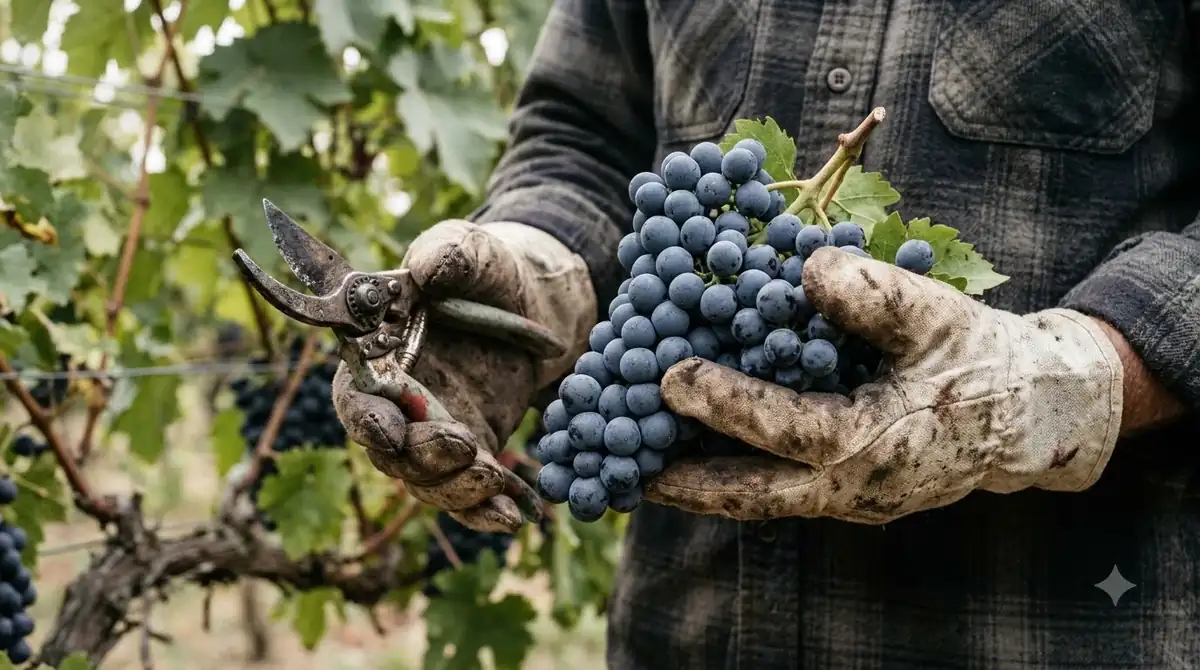
Modern Corvina production remains concentrated in its traditional northeastern Italian home. According to the grape documentation published by Tenuta Santa Maria, the variety is cultivated in the hills of Valpolicella, Valpantena, and Bardolino. Its continued importance in these areas demonstrates how local grape varieties can become lasting symbols of regional identity.
Sixteenth-Century Records and Early Historical Descriptions
The earliest documented descriptions of Corvina date to the sixteenth century, providing an important starting point for its written history. Girolamo Fracastoro was among the first writers to describe the variety, discussing both its physical characteristics and its use in winemaking.
Fracastoro’s descriptions are significant because they help distinguish the grape’s documented identity from broader assumptions about ancient Veronese viticulture. Although grapes were cultivated in the area long before his writings, surviving evidence does not establish that the modern Corvina variety existed under precisely the same name throughout antiquity.
Another important historical reference came from Andrea Bacci, a physician and wine writer who discussed the region’s grapes toward the end of the sixteenth century. In his work De Naturali Vinorum Historia, Bacci connected Corvina with Acinaticum, a prestigious sweet wine associated with the traditional practice of drying grapes before fermentation.
Acinaticum occupies an important place in discussions of Verona’s wine heritage. Historical accounts describe a wine made through the concentration of grapes, a practice that resembles the principles behind the later appassimento method. The connection between ancient Acinaticum and modern Recioto is an important part of regional wine history, although the precise recipes and grape compositions were not necessarily identical.
The tradition of drying grapes helped establish a distinctive production approach in the Verona hills. Rather than fermenting every harvested grape immediately, winemakers could select healthy bunches and leave them to lose moisture under controlled conditions. This increased the concentration of sugars and other grape components, producing wines with greater richness and distinctive aromas.
Corvina’s thick-skinned berries and suitability for drying helped make it valuable within this tradition. Over time, the grape became particularly important to wines that expressed both the natural freshness of the variety and the concentrated character produced through appassimento.
The sixteenth-century descriptions therefore provide more than a historical mention of a grape name. They connect Corvina with the emerging identity of a regional wine culture built around native varieties, grape selection, and the careful preservation of traditional production methods.
Corvina’s Development During the Nineteenth Century
The nineteenth century brought more systematic descriptions of Corvina and greater recognition of its importance in Verona’s vineyards. Giuseppe Acerbi’s account from 1825 and later observations by local agricultural writers helped establish the grape’s identity and reputation.
In 1825, naturalist Giuseppe Acerbi described Corvina as a variety particularly appreciated for producing excellent and generous wines. His description provides a useful indication of how local growers and observers valued the grape during this period. It also shows that Corvina was already regarded as an important contributor to regional wine quality.
Another important reference came from the agricultural writer Bertani, who described Corvina in 1886 as the most widespread variety in the province of Verona. This observation supports the view that the grape had become deeply established in local viticulture by the late nineteenth century.
During this period, vineyard descriptions and regional agricultural classifications became increasingly important. More detailed attention to grape characteristics helped growers distinguish varieties that might previously have been grouped under similar local names.
Corvina’s development was also linked to its adaptability to the surrounding hills. Its vines perform well in exposed locations and can grow in different soil types, provided conditions are not excessively fertile or humid. These characteristics helped maintain its importance across several neighboring wine districts.
Vineyard management nevertheless requires attention to the variety’s particular needs. Corvina has relatively delicate growing characteristics, and excessive moisture can increase the risk of botrytis, especially in tightly packed grape clusters. Proper canopy management, suitable vineyard exposure, and careful harvesting are therefore important considerations.
The nineteenth century also strengthened the connection between Corvina and the wines of Valpolicella. As local winemaking developed, the grape became increasingly important as the structural and aromatic foundation of blends made with other indigenous varieties.
This period was essential in transforming Corvina from a locally established grape into a defining symbol of Verona’s wine production. Its documented reputation, extensive cultivation, and role in regional blends laid the groundwork for its later recognition within Italy’s formal wine classification system.
National Registration and the Rise of Modern Valpolicella
Modern recognition of Corvina developed through official grape registration and the establishment of protected wine denominations. Its inclusion in Italy’s National Register of Grape Varieties in 1968, under registration number 70, marked an important stage in the formal documentation of the variety.
Registration helped establish Corvina’s recognized identity and distinguish it from similarly named grapes. The official synonym Cruina also reflects the importance of preserving historical regional terminology within a standardized classification system.
Another important development was the recognition of Valpolicella DOC in 1968. This classification provided a formal production framework for wines associated with the traditional hills around Verona. It established rules covering grape composition and the geographical area where qualifying wines could be produced.
Modern Valpolicella production relies primarily on a small group of indigenous varieties. Corvina and Corvinone provide much of the foundation, while Rondinella and other permitted grapes contribute additional characteristics. According to the Valpolicella Wine Consortium’s grape variety information, Corvina and Corvinone can account for 45% to 95% of the blend.
Corvina commonly represents approximately 70% of traditional Valpolicella blends. This high proportion helps explain why the variety has such a strong influence on the region’s recognizable cherry-driven character, acidity, and overall structure.
The importance of Corvina also appears in the historical expansion of its vineyard area. Statistics published by Vivai Cooperativi Rauscedo show that Italian plantings, including Corvinone, increased from 4,503 hectares in 1970 to 5,942 hectares in 2010.
| Historical milestone | Year | Significance |
|---|---|---|
| First documented descriptions | 1500s | Early written recognition of Corvina |
| Acerbi’s description | 1825 | Recognition of its winemaking qualities |
| Bertani’s observation | 1886 | Identified as the most widespread variety in Verona |
| National registration | 1968 | Official registration under number 70 |
| Valpolicella DOC recognition | 1968 | Formal recognition of the wine denomination |
| Corvinone recognition | 1993 | Separate identification of Corvinone |
| Italian vineyard area | 2010 | 5,942 hectares, including Corvinone |
These developments established a clearer identity for Valpolicella wines and strengthened the connection between their quality and indigenous grape varieties. They also helped preserve traditional production practices while giving winemakers a more standardized framework for producing different styles.
For readers interested in the wider development of Italian grape varieties, Pinot Noir history provides an interesting comparison. Although the two varieties have very different regional identities, both demonstrate how grape selection, local growing conditions, and historical winemaking traditions shape the character of a wine.
How Corvina Shaped Amarone, Recioto, and Ripasso
Corvina’s historical importance is closely connected to three distinctive wines from Valpolicella: Amarone, Recioto, and Ripasso. Each style uses the region’s traditional grapes and production knowledge in a different way, creating a range of flavors and structures from a shared viticultural heritage.
Recioto della Valpolicella
Recioto represents one of the oldest surviving expressions of the region’s grape-drying tradition. It is a sweet red wine made from selected grapes that undergo appassimento before fermentation. Drying removes water from the berries and concentrates their natural sugars, aromas, and flavor components.
Corvina plays a major role in this process because it provides acidity, fruit character, and structure. Its flavors of cherry and darker fruit can become more concentrated through drying, producing a wine with a rich texture and distinctive sweetness.
Historically, Recioto is particularly important because it preserves the connection between modern Valpolicella production and the ancient sweet wines described in regional historical accounts. It is also regarded as an important predecessor to Amarone, which developed as a dry expression of the same grape-drying tradition.
Amarone della Valpolicella
Amarone became internationally recognized for its concentrated fruit, substantial body, and distinctive production method. Like Recioto, it begins with selected grapes that are dried before fermentation. However, fermentation continues further, allowing much more of the grape sugar to convert into alcohol.
Corvina is central to Amarone’s identity. Its cherry-driven character, acidity, and structure help balance the concentration that develops during appassimento. Other permitted varieties, including Corvinone and Rondinella, contribute complementary characteristics to the final blend.
Modern Amarone production regulations permit substantial proportions of Corvina and Corvinone. The specific combination depends on the producer and the applicable denomination rules, but Corvina remains a defining variety in the wine’s traditional composition.
Unlike a straightforward red wine made from freshly harvested grapes, Amarone develops additional complexity during the drying period. Depending on the producer’s methods and the length of aging, its aromas may include dried cherry, plum, chocolate, spice, and balsamic notes.
Valpolicella Ripasso
Ripasso provides another expression of Corvina’s versatility. The technique involves refermenting a young Valpolicella wine in contact with the grape skins and remaining solids from Amarone or Recioto production.
This process can increase the wine’s concentration, body, and aromatic complexity. The resulting style often combines the fresh cherry character of standard Valpolicella with darker fruit, spice, and a more substantial palate.
Ripasso occupies an interesting position between lighter Valpolicella and the richer Amarone style. It demonstrates how the same regional grapes can produce very different wines depending on fermentation and maturation decisions.
These three styles illustrate the historical importance of Corvina beyond its role as a simple blending grape. Its ability to retain acidity while developing concentrated fruit characteristics has made it particularly valuable for the region’s traditional wine production methods.
Corvina’s Vineyard Characteristics and Its Role in Modern Wines
Corvina’s place in Italian wine history is supported by its distinctive growing characteristics and its ability to contribute recognizable flavors to several regional wine styles. Its medium-sized, blue-black berries, compact clusters, and relatively late ripening make it particularly suited to the traditional vineyards around Verona.
The grape has a medium-sized, pentagonal leaf with five lobes. Its clusters are generally cylindrical-pyramidal, with a noticeable wing, while the berries are ellipsoidal and covered by dark skins. These physical characteristics help viticulturists distinguish Corvina from related varieties such as Corvinone.
According to the viticultural documentation published by Tenuta Santa Maria, Corvina has good vine vigor, average and relatively consistent yields, and a preference for well-exposed sites. It adapts to different soil types, including calcareous soils, as long as the ground is not excessively fertile or humid.
Corvina’s late budburst and medium-late ripening influence vineyard management. Growers must pay attention to seasonal conditions, canopy development, and the timing of harvest. The variety is also susceptible to botrytis, particularly where tightly packed clusters retain moisture.
Its natural wine characteristics are equally important. Corvina generally produces ruby-red wines with violet reflections, good acidity, and moderate tannins. Cherry, raspberry, plum, and wild berries are common fruit associations, while chocolate and balsamic characteristics may appear in wines made through drying and extended aging.
These characteristics explain why Corvina is frequently blended rather than used exclusively as a single-variety wine. Its fruit and acidity provide a foundation, while other local grapes contribute complementary elements.
Corvina, Corvinone, and Rondinella
Although their names sound similar, Corvina and Corvinone are distinct grape varieties. Corvinone was once treated as a form of Corvina, but its separate identity was recognized in 1993 and subsequently documented in Italy’s National Register.
Corvinone generally has larger berries and clusters than Corvina. It can contribute greater tannic structure and additional body, making it useful in blends where winemakers want more depth and complexity.
Rondinella serves a different purpose. It is a traditional complementary variety that contributes fruit character and can accumulate sugars effectively during grape drying. Its contribution is especially relevant to the balance and consistency of traditional Valpolicella wines.
According to Tenuta Santa Maria’s description of the regional varieties, Rondinella is permitted at proportions between 5% and 30% in the relevant production regulations. These varieties together demonstrate the importance of maintaining a diverse local grape heritage rather than relying on a single variety for every characteristic.
For a closer look at the sensory characteristics of the principal grape, read what does Corvina taste like. Understanding its fruit profile, acidity, and tannin structure makes it easier to recognize how the grape contributes to Valpolicella’s different wine styles.
Tip: When exploring Corvina, compare a standard Valpolicella DOC with a Valpolicella Ripasso and an Amarone. All three express the region’s traditional grape varieties, but their different production methods reveal how grape drying and secondary fermentation change concentration, body, and aromatic complexity.
Corvina’s Historical Legacy and Place in Italian Wine Culture
Corvina remains one of the most recognizable symbols of the Veneto wine region because its history is closely tied to the development of Valpolicella. Its importance extends beyond vineyard acreage or blending percentages: it represents centuries of local selection, traditional production knowledge, and the preservation of indigenous grape varieties.
The grape’s historical record also illustrates how wine varieties acquire their identities over time. Early descriptions from the sixteenth century established a written record, nineteenth-century observers documented its regional importance, and twentieth-century registration formalized its status as a recognized Italian variety.
These developments took place alongside changes in the wine industry. Improved vineyard management, more precise grape identification, and clearer production regulations helped distinguish Valpolicella wines from other Italian reds.
Corvina also remains relevant because it can produce several distinct wine styles without losing its recognizable regional character. Fresh Valpolicella highlights its red-fruit flavors and acidity, Ripasso adds concentration and depth, and Amarone demonstrates how appassimento can transform its fruit profile into something considerably richer.
Recioto preserves another part of the region’s identity by maintaining the tradition of sweet wines made from dried grapes. Together, these styles show why the history of Corvina cannot be separated from the history of Valpolicella’s winemaking techniques.
The variety’s development also offers a useful comparison with other historically important wine grapes. For example, Port history demonstrates how regional identity and distinctive production methods can become inseparable from a wine’s reputation. In both cases, traditional techniques helped create styles that remain recognizable across generations.
Today, Corvina continues to provide the foundation for an important part of Italian red wine production. Its historical significance is supported by documented references, formal registration, and its continuing presence in the region’s most celebrated denominations. The grape’s story is therefore not simply about an old variety surviving into modern vineyards; it is about the relationship between a native grape, its landscape, and the winemaking traditions that developed around it.
Frequently Asked Questions
Is Corvina genetically related to Rondinella?
Genetic research has identified a parent-offspring relationship between Corvina and Rondinella, with studies supporting the connection through molecular analysis. The varieties nevertheless remain distinct and have different characteristics in the vineyard and winery. Their complementary qualities help explain why both are important in traditional Veronese blends.
What is the official Italian registration number for Corvina?
Corvina is listed under number 070 in Italy’s National Catalogue of Grape Varieties. Its official name is CORVINA N., and Cruina is recorded as an official synonym. This registration helps distinguish the variety from other grapes with similar historical names.
Does Corvina grow outside the Veneto region?
Yes. Although the province of Verona is its historical center, Corvina is also cultivated in parts of Lombardy, including areas around Lake Garda. Its wider distribution remains much smaller than its concentration in the traditional Veronese wine districts.
Why was Corvinone confused with Corvina for so long?
The two varieties have similar names and share several physical and genetic characteristics. Corvinone was historically treated as a Corvina biotype rather than a separate grape. Research published in 1993 helped establish its distinct identity, and it was admitted to the National Register on July 15 of that year under number 328.
Which historical writer connected Corvina with Acinaticum?
Andrea Bacci discussed the connection toward the end of the sixteenth century in his work De Naturali Vinorum Historia. His account is important because it links the grape with the ancient tradition of producing sweet wines from dried grapes. The historical description provides valuable context for the development of Recioto della Valpolicella.
Corvina’s history reflects the long relationship between Verona’s vineyards, indigenous grape varieties, and traditional winemaking techniques. From its sixteenth-century written descriptions to its central role in modern Valpolicella, the variety remains essential to understanding Amarone, Recioto, and Ripasso. Exploring these wines side by side offers a particularly rewarding way to appreciate the heritage of this distinctive Italian grape.
More in Wine Types & Grapes
 What Does Ruby Port Taste Like? Flavor Notes, Styles, and Serving TipsUpdated Nov 21, 2026
 What Does Ribolla Gialla Taste Like? Crisp White and Amber Styles ExplainedUpdated Nov 21, 2026
 What Does Semillon Taste Like? Flavor Profile, Styles & PairingsUpdated Nov 21, 2026
 What Does Scuppernong Taste Like? Flavor, Styles, and Pairing GuideUpdated Nov 21, 2026
 What Does Saperavi Taste Like? Flavors, Styles, and Pairing GuideUpdated Nov 21, 2026
 What Does Natural Wine Taste Like? Flavors, Styles, and Serving TipsUpdated Nov 21, 2026