

We may earn a commission when you buy through links on this page, at no extra cost to you. Learn more.
Pinot Noir history begins in Burgundy, where centuries of careful vineyard work turned an ancient, genetically changeable grape into one of the world’s most recognizable wine varieties. Its exact origin is unknown, but Roman-era references, medieval records, and the vineyards of the Côte d’Or show how deeply it became tied to northeastern France. From Burgundy, Pinot Noir spread to Oregon, California, and other cool-climate regions, while its natural variation helped create a wide range of styles.
The story of Pinot Noir is not a simple tale of one grape moving from one country to another. It is a history of place, agricultural decisions, and adaptation: monks mapped vineyard differences, dukes favored the grape over higher-yielding alternatives, and modern growers selected vines suited to changing conditions. Understanding those milestones makes today’s labels and regional styles easier to read.
Where Pinot Noir Began: Ancient Roots and Uncertain Origins
Pinot Noir is an ancient grape, but no surviving record establishes a precise birthplace or date of origin. The strongest historical connection is Burgundy in northeastern France: regional records identify the variety with the area, while university researchers describe its origin as unknown and treat early Roman references as possible, not definitive, evidence.
Roman writers in the first century described a vine that may have been Pinot growing in Burgundy around the time of the Roman conquest. That clue matters, but it does not prove that the modern variety existed in exactly the same form. Vines were identified by local names long before modern ampelography, the scientific study of grape varieties, developed. Names could refer to a place, a color, a shape, or a group of related vines, so historians have to distinguish a plausible ancestor from a confirmed modern variety.
The first written record of the grape under the name Pinot Noir or “Plant Fin” dates to 1375, according to the Bourgogne wine trade body. A separate account from the University of California, Davis, notes that a 14th-century Burgundian document used the names Pinot fin, Franc Pinot, and Noirien. Those overlapping names show that the grape was established in the region even while its terminology was still shifting. Earlier Burgundy winegrowing is documented, but the history of the vineyard is not the same as a proven record of this particular grape.
It is also important not to mistake the history of the variety for the history of the wine style. Pinot Noir may be used for still red wine, rosé, or sparkling wine; the destination depends on the grower’s choices and the winemaker’s method. The grape’s long association with Burgundy came largely through red wines, but its later success in Champagne and other sparkling-wine regions broadened its role.
Medieval Burgundy: Monks, Dukes, and Pinot’s Rise
Pinot Noir’s status in Burgundy grew through decisions made over many generations: religious communities developed vineyards from the early Middle Ages, and Duke Philip the Bold’s 1395 ordinance favored Pinot Noir over Gamay on his lands. These events helped connect the grape with a regional idea of quality rather than simply with high yields.
Cluny and Cîteaux became influential centers of vineyard culture. Cluny’s abbey was founded in 910, and the Cistercian abbey at Cîteaux followed in 1098. Monastic communities cultivated vines, improved routines, and learned to distinguish parcels by exposure and soil. The Cistercians’ Clos de Vougeot became an important enclosed-vineyard model in the 12th century, helping define holdings and organize work while reinforcing Burgundy’s focus on individual sites.
In 1395, Philip the Bold banned Gamay from his ducal lands in favor of Pinot Noir. Gamay generally yielded more and ripened earlier, but the ordinance gave Pinot an influential political endorsement; it did not instantly remove Gamay from every Burgundy vineyard. The first Hospices de Beaune auction followed in 1859, phylloxera forced widespread replanting in the late 19th century, and the AOC system began in 1936 to link wine names with defined places and standards. The word climat appears in a 1584 document about a vineyard parcel at Gevrey-Chambertin; by the 18th century, merchants were selling wines under the names of individual sites.
| Milestone | Historical significance |
|---|---|
| 910 | Cluny Abbey founded in Burgundy |
| 1098 | Cîteaux Abbey founded, strengthening Cistercian influence |
| 12th century | Clos de Vougeot becomes a model of an enclosed vineyard |
| 1375 | First written record of Pinot Noir or Plant Fin in Burgundy |
| 1395 | Philip the Bold bans Gamay on his lands in favor of Pinot Noir |
| 1859 | First Hospices de Beaune wine auction |
| 1936 | Burgundy’s AOC system begins |
The Climats of Burgundy: How Place Became Part of the Story
Burgundy’s influence rests on more than a famous grape: the region developed a detailed way of describing individual vineyard sites. Along the roughly 37-mile Côte d’Or escarpment, variations in limestone, marl, clay, exposure, altitude, and drainage helped produce a mosaic of named plots known as climats.
The Côte d’Or’s Jurassic limestone formed roughly 145 million to 200 million years ago, when an inland sea receded. Weathering, topsoil depth, and mixtures of marl, clay, and sand create differences between neighboring parcels. Over time, monks, landowners, and growers marked out more than a thousand named climats: delimited vineyard sites whose boundaries record accumulated observation about land, rather than a promise that every vintage tastes identical.
This approach is especially visible in the Côte de Nuits and Côte de Beaune. The Bourgogne wine trade body notes that all red Burgundy Grand Crus are in the Côte de Nuits except Corton Grand Cru, which lies in the Côte de Beaune. Chambertin, Pommard, and Romanée-Conti therefore identify place as well as grape.
The climats became central to the region’s heritage and were recognized as a UNESCO World Heritage Site. The recognition honors the historic division of vineyard land, villages, and architecture. It helps explain why Burgundy is discussed by village and vineyard as well as by grape variety.
From Burgundy to Oregon, California, and the Wider Wine World
Pinot Noir’s modern expansion depended on growers finding sites with a sufficiently cool growing season. In the United States, the Willamette Valley became a defining region: Charles Coury and David Lett made separate plantings there in the mid-1960s, and Dick Erath joined the early group of Oregon pioneers.
The early American history was not straightforward. University of California, Davis, records that California viticulturists initially viewed Pinot Noir as an impractical choice because the state was considered too warm and the grape’s yields were relatively low. The grape still appeared in university experiment vineyards during the 19th century, but commercial confidence took longer to develop. By the 1970s, interest had grown in cooler Winkler regions of California as well as in Oregon.
The Willamette Valley’s climate made Pinot Noir a natural candidate for serious red-wine production. Growers sought vines that could ripen in a short season, and Oregon State University and local growers imported selections from California and France during the 1970s and 1980s. California developed its own centers in cooler areas such as the Russian River Valley.
Pinot Noir is also grown in Champagne, Germany, Italy, New Zealand, Chile, Australia, South Africa, and South America. In Champagne, it is a principal sparkling-wine grape, used alone or blended with Chardonnay and Pinot Meunier. It also contributes to rosé and sparkling rosé, giving the variety a role beyond still red wine.
Clones, Mutations, and the Challenges of Growing Pinot Noir
Pinot Noir is famous partly because it is difficult to grow consistently. Its compact clusters and delicate, relatively thin skins make disease pressure a concern, while early spring growth can expose vines to frost; cool sites help preserve freshness but can make ripening a challenge in marginal seasons.
Pinot is genetically variable. University of California, Davis, describes related forms including Pinot Gris, Pinot Blanc, and Pinot Meunier; researchers differ over whether these are separate varieties or mutations of an original Pinot vine. Growers manage this diversity through massal selection, which propagates a mix of chosen vines, and clonal selection, which repeatedly propagates a particular vine or selection. Clonal selection can produce more uniform ripening, while massal selection preserves a broader mix of traits.
Selection affects bunch size, ripening time, yield, and vigor. A cool site may need earlier-ripening vines, while a damp location may favor looser clusters that are less vulnerable to rot. No single clone is best everywhere: soil, rainfall, slope, exposure, and intended wine style all matter. Burgundy, Oregon, and California can therefore produce different expressions of the same grape.
Tip: When comparing two Pinot Noirs, start with the region and vineyard site, then look at the producer’s approach to oak and extraction. These details often explain more about style than the grape name alone.
What Pinot Noir’s History Explains About the Wine Today
The history of Pinot Noir helps explain why the variety is associated with both delicacy and complexity. Burgundy established a benchmark for site expression, Oregon built a modern identity around the grape, and California showed how carefully chosen cool-climate sites could support distinctive versions.
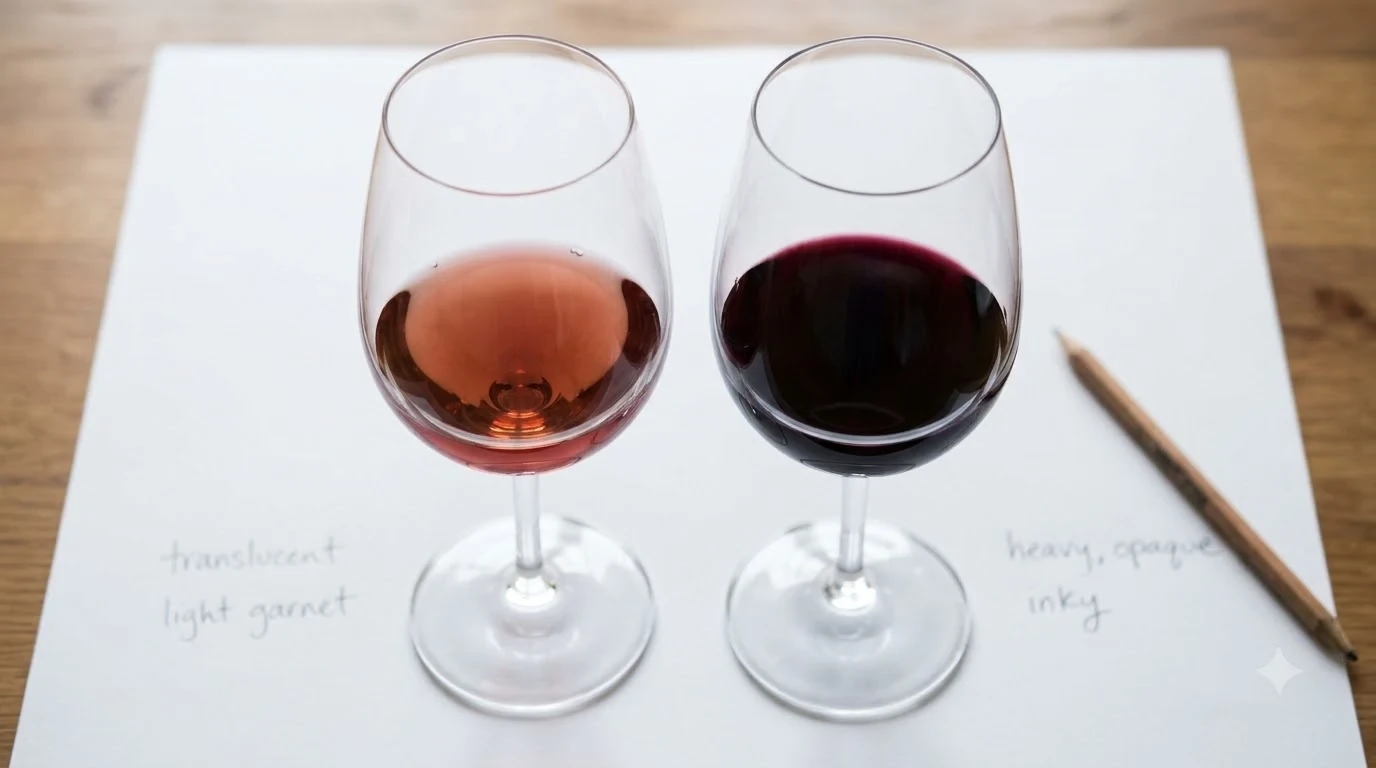
Pinot Noir is generally medium-bodied, with low-to-medium tannin and lively acidity. Typical aromas include strawberry, raspberry, red cherry, and sometimes tea, mint, earth, or forest floor. Climate and ripeness shape the style: warmer sites can give riper fruit and broader texture, while cooler sites may emphasize tart red fruit. A light red is usually served around 55–60°F; a richer example can be served nearer 60–65°F. A standard 5-ounce pour gives the aromas room to develop.
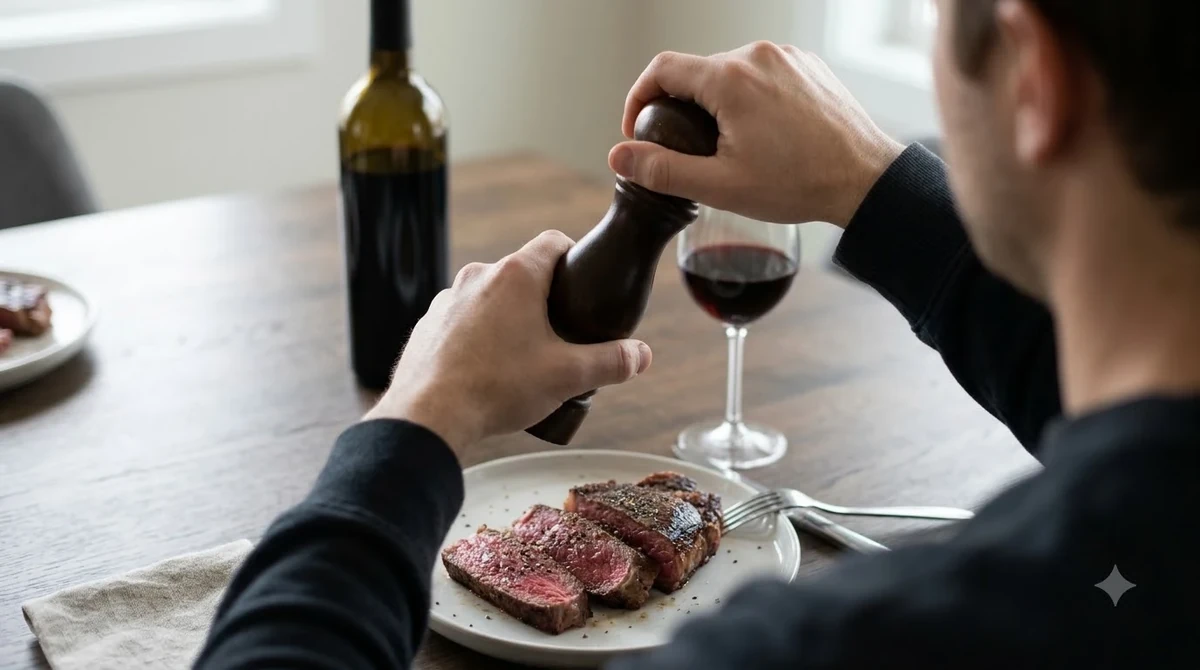
Its moderate tannin and acidity make Pinot Noir a natural partner for roast chicken, duck, pork, mushrooms, and salmon. Salt and fat soften tannin, while chili heat can make alcohol and tannin seem more pronounced. Strongly tannic reds are a poor match for oily fish, so lighter Pinot Noir is often a better choice. Match the weight of the dish with the wine rather than treating every bottle as identical.
For readers comparing styles, a guide to whether Pinot Noir is full-bodied can clarify how body varies by region and winemaking. The wider Wine by Type overview places the variety alongside other red, white, and sparkling styles. Practical cellar guidance on how long Pinot Noir lasts unopened can also help when deciding whether to open or store a bottle. For more background, the Bourgogne wines regional profile of Pinot Noir covers the local written record, while the University of California, Davis, documents North American development and clonal diversity in its history of Pinot varieties. Pinot Noir’s long history is not only about age or prestige; it is about the relationship between a sensitive grape and the people who learned to grow it in very different places.
Frequently Asked Questions
These answers add details about the grape’s names, pronunciation, and mutations beyond the key 1375 and 1395 milestones. They also explain why Pinot Noir can appear in wines that do not look red.
What does the name Pinot Noir mean?
“Pinot” is associated with the French word for pine, while “noir” means black. The compact bunches resemble a small pinecone, and the berries have dark blue-black skins. The name describes the grape’s appearance rather than a specific wine flavor.
How do you pronounce Pinot Noir?
In English-language wine references, the pronunciation is commonly rendered “pee-noh nwahr.” The final consonant in “noir” is not pronounced like the English word “war.” The French pronunciation is more fluid, but this guide is widely understood in U.S. restaurants and wine shops.
Is Pinot Noir the same grape as Pinot Nero?
Yes. Pinot Nero is the Italian name for Pinot Noir, just as Spätburgunder is the common German name. A bottle labeled Pinot Nero is not a separate grape, although its region and winemaking choices can give it a different style from a Burgundy or Oregon bottling.
What is the difference between Pinot Noir and Pinot Gris?
Pinot Gris is a closely related color mutation within the wider Pinot group, with grayish-pink to copper-toned skins rather than the deep color typical of Pinot Noir. It is usually made as a white wine because the juice is fermented with little skin contact. Pinot Gris is known as Pinot Grigio in Italy.
Can Pinot Noir produce a white sparkling wine?
Yes. A winemaker can press Pinot Noir gently and separate the juice from the dark skins before extended color extraction, producing a pale base wine for sparkling wine. Champagne labeled blanc de noirs is made from black grapes such as Pinot Noir, and the finished wine can be white even though the fruit was dark-skinned.
From medieval Burgundy to modern sparkling cellars, Pinot Noir’s identity has been shaped by both continuity and change. Its history offers a useful way to understand why the same grape can produce wines with very different textures, aromas, and expressions of place.
More in Wine Types & Grapes
 What Does Mourvèdre Taste Like? Flavor Profile, Regions, and PairingsUpdated Nov 20, 2026
 What Does Marsanne Taste Like? Flavors, Styles, and Food PairingsUpdated Nov 20, 2026
 What Does Malvasia Taste Like? Styles, Flavors, and Food PairingsUpdated Nov 20, 2026
 What Does Grenache Blanc Taste Like? Flavor Profile, Styles, and PairingsUpdated Nov 20, 2026
 What Does Garnacha Taste Like? Key Flavors, Styles, and Pairing TipsUpdated Nov 20, 2026
 What Does Fruit Wine Taste Like? A Complete Flavor and Style BreakdownUpdated Nov 20, 2026