

We may earn a commission when you buy through links on this page, at no extra cost to you. Learn more.
Chenin Blanc vs Sancerre is a comparison between a grape variety and a Loire Valley appellation, whose white wines are made from Sauvignon Blanc. Chenin Blanc can be dry, off-dry, sweet, or sparkling, while white Sancerre is usually a dry, brisk Sauvignon Blanc shaped by the hills and varied soils around the village of Sancerre. Choose Chenin for a wider range of textures and sweetness levels; choose white Sancerre for a more consistently citrus-led, herbal style.
These names often appear side by side on restaurant lists, but they do not describe two grapes grown in the same way. The most useful comparison is between Loire Valley Chenin Blanc—especially bottles from Vouvray, Anjou, or Savennières—and white Sancerre from the Centre-Loire. Once you know what each name tells you, the choice becomes much easier.
What the Names Actually Mean
The first distinction is simple: Chenin Blanc names a white grape, while Sancerre names a protected wine-growing area in central France. Most comparisons are between Chenin Blanc from the Loire and Sancerre blanc, which is Sauvignon Blanc from the Sancerre appellation.
Chenin Blanc is planted in several Loire appellations, including Vouvray, Anjou, Saumur, and Savennières. The same grape can produce a lean, dry white, a wine with a trace of sweetness, a rich late-harvest wine, or a traditional-method sparkling wine. The Vouvray winegrowers’ organization explains that Vouvray uses Chenin Blanc alone and makes dry, medium-dry, sweet, and sparkling expressions; its overview of Vouvray wine styles is a useful reference when a bottle carries that appellation name.
Sancerre works differently. The appellation’s white wine is made from 100% Sauvignon Blanc, while its red and rosé wines are made from Pinot Noir. The Sancerre growers describe three colors and report a production mix of 80% white, 13% red, and 7% rosé. For the bottle most diners mean by “Sancerre,” the relevant comparison is therefore Sauvignon Blanc against Chenin Blanc, not Chenin against a grape named Sancerre. The appellation’s vineyard and wine overview sets out the grape varieties and regional distinctions.
This difference also explains why “Chenin Blanc” alone gives you less information about a wine’s final profile than “Sancerre.” The grape name tells you the raw material, but the producer, place, harvest date, fermentation, and sweetness level still matter. The appellation name Sancerre narrows the origin and, for white wine, the grape variety; producers still have room to express different vineyard sites and cellar choices.
Flavor, Acidity, and Texture
Chenin Blanc usually brings high natural acidity and a broad fruit spectrum, while white Sancerre is known for vivid citrus, fresh fruit, and herbal or mineral detail. Both can feel fresh, but Chenin’s texture and fruit character change more noticeably with ripeness and winemaking.
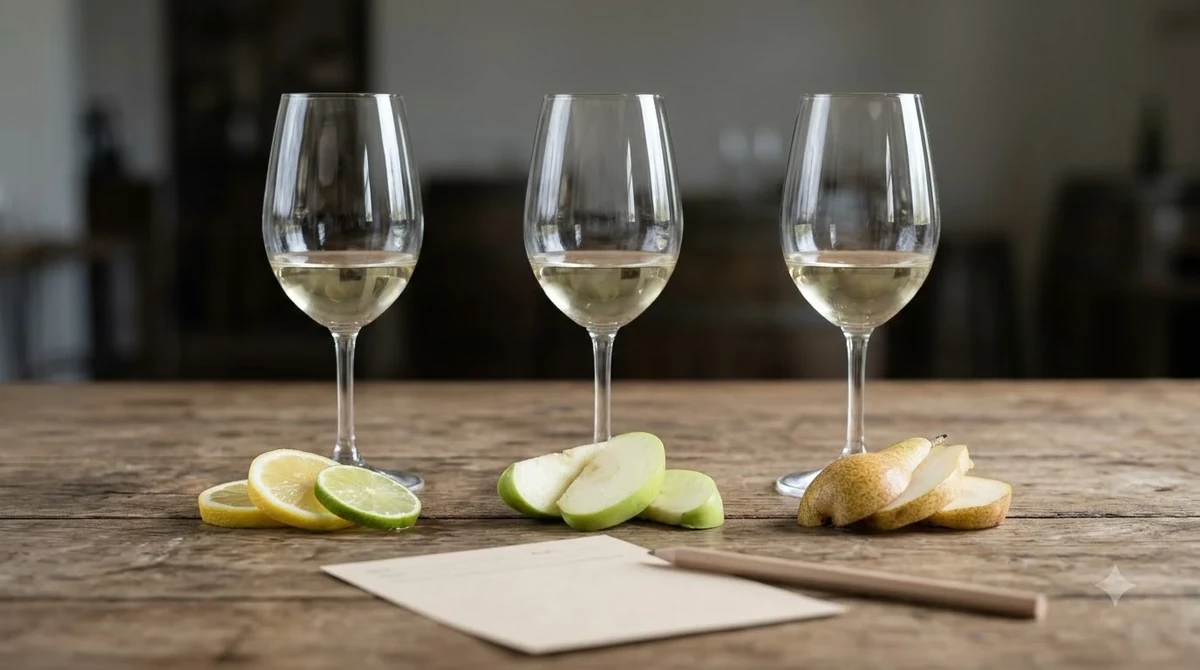
In a cool-climate Loire Chenin, expect green apple, lemon, pear, quince, or white flowers, sometimes with a chalky or waxy impression as the wine develops. Riper fruit can shift toward peach, apricot, pineapple, or mango. Oak can add smoke, toast, and vanilla, while lees contact may give the wine a rounder, creamier feel. Those are possible choices rather than fixed traits: a stainless-steel dry Chenin from Touraine can feel quite different from a barrel-fermented Savennières.
White Sancerre tends to keep the profile more tightly focused. Lemon, lime, grapefruit, green apple, white peach, and subtle floral notes are common reference points, with fresh herbs or a flinty impression in some bottlings. Sauvignon Blanc often has a more direct aromatic lift than Chenin, and the finish may seem lean, brisk, and mouthwatering. It is not always sharply grassy: Sancerre’s stony and clay-rich sites can give the wines more breadth and fruit weight.
Think of acidity as a shared strength, not a reason to assume the wines taste alike. Chenin’s acidity supports both dry and sweet styles, because freshness can balance residual sugar. Sancerre’s acidity usually supports a dry finish and makes it a natural partner for dishes with lemon, vinaigrette, or other bright flavors. If you enjoy the sharper citrus profile of Sancerre, you may also like a comparison of Chenin Blanc vs Pinot Grigio, where grape variety and acidity create another useful contrast.
Sweetness and Winemaking Styles
Chenin Blanc offers a much wider sweetness range than the familiar white Sancerre style. You can find still Chenin from bone-dry to lusciously sweet, as well as sparkling versions, whereas white Sancerre is generally a dry, still wine.
On a Chenin label, the French terms can help set expectations. “Sec” means dry; “demi-sec” signals an off-dry style; “moelleux” generally indicates a medium-sweet wine; and “doux” points to a sweet wine. The exact balance still depends on acidity and the producer’s choices, so the word alone does not tell you exactly how sweet the wine will feel. A demi-sec Vouvray, for example, can taste balanced rather than sugary because its bright acidity offsets the residual sugar.
Late harvesting and noble rot are important tools in some Loire Chenin areas. In favorable conditions, grapes left on the vine become more concentrated, and botrytis can add layers of apricot, honey, marmalade, and dried fruit. Coteaux du Layon, Bonnezeaux, and Quarts de Chaume are names associated with sweet Chenin. At the other end of the spectrum, Savennières is especially associated with dry, structured Chenin, while Vouvray spans dry through sweet and sparkling styles.
Chenin is also a major Loire sparkling grape. Vouvray sparkling and some Crémant de Loire are made by the traditional method, with a second fermentation in the bottle; this gives the bubbles a finer texture and can contribute bread, brioche, or biscuit notes as the wine ages on its lees. That range makes Chenin a flexible choice for a meal that moves from an aperitif to fruit or cheese. For another white-wine style comparison, see Chenin Blanc vs Riesling, particularly if sweetness and high acidity are the deciding factors.
Terroir: Vouvray and Anjou Versus Sancerre
Chenin Blanc’s profile depends heavily on its Loire home, while Sancerre’s identity comes from a compact group of hills and several distinct soil types. The named villages and the underlying ground can explain why two wines made from different grapes may both feel mineral, yet taste quite different.
Vouvray sits in Touraine, east of Tours, and is devoted to Chenin Blanc. Its wines can show apple, pear, citrus, acacia, and spice, with sweeter examples adding quince, honey, and ripe orchard fruit. Elsewhere, Anjou and Savennières can produce dry Chenin with more body and structure, while the Coteaux du Layon area is known for sweet wines. The region’s range matters: a dry Savennières is a closer comparison to a dry Sancerre at the dinner table than a sweet Vouvray is.
Sancerre lies in the Cher department on the eastern side of the Loire Valley, on hills above the river. Its growers identify three leading soil families: “terres blanches,” or clay-rich marl; “caillottes,” or stony limestone; and clay-siliceous soils with flint. Their descriptions give useful context for the geology, vineyard coverage, and style of each group:
| Soil in Sancerre | Geological age and area | Typical influence described by growers |
|---|---|---|
| Terres blanches | 157.3–152.1 million years old; about 40% of vineyards | Clay-rich marl; fuller, rounded, structured whites with aging potential |
| Caillottes | 163.5–157.3 million years old; about 40% of vineyards | Stony limestone; floral, fresh, fruit-focused wines with a chalky edge |
| Siliceous clay and flint | 56–33.9 million years old; eastern hillsides | Flint-bearing ground; crisp wines with citrus and a pronounced mineral impression |
These are broad tendencies, not a promise that every bottle from one soil tastes the same. A Sancerre from caillottes can be aromatic and open early, while one from terres blanches may feel broader and more structured. Flint sites can lend a distinctive smoky or struck-stone note, but site, vintage, picking decisions, and cellar work all contribute to the final wine.
Food Pairings and Serving Temperature
Both wines work well with food because they have refreshing acidity, but the best match depends on sweetness, body, and the dish’s intensity. Dry Sancerre is a natural choice for seafood and goat cheese, while Chenin Blanc can move from seafood and poultry to spicy dishes, blue cheese, and dessert when you select the right style.
Pair dry Sancerre with oysters, mussels, grilled white fish, shrimp, asparagus, or a salad dressed with lemon. Its citrus and herbal character also works with fresh goat cheese, especially the local Crottin de Chavignol style, and with dishes that include parsley, chives, or tarragon. The wine’s acidity can match the lift in a vinaigrette or citrus sauce. Avoid serving a very lean Sancerre with a heavily sweet glaze, which can make the wine seem austere.
Dry Chenin is versatile with roast chicken, pork tenderloin, scallops, creamy fish dishes, and vegetables with browned edges. Its fuller texture can stand up to a richer sauce, while the acidity keeps the pairing from feeling heavy. Off-dry Chenin can work with lightly spicy Thai or Indian food and sweet-savory glazes; choose a wine with moderate alcohol, because alcohol can make chili heat feel stronger. Sweet Chenin belongs with desserts that are no sweeter than the wine, such as pear tart or fruit-based pastries, and it can be excellent with salty blue cheese.
Serve light, dry white Chenin and Sancerre around 45–50°F so their aromas remain clear without losing freshness. Fuller, barrel-influenced Chenin can be served a little warmer, around 50–55°F, while sweet Chenin is best around 43–50°F. Sparkling Vouvray can be served around 40–50°F. A standard 5-ounce pour gives guests room to compare the wines side by side without warming the glass too quickly.
Tip: Taste the wine before adding lemon or vinegar to the plate. Acidic food needs a wine with equal or higher acidity; otherwise, even a lively Chenin or Sancerre can seem flat beside the dish.
How to Choose a Bottle
Start with the kind of experience you want, then use the appellation and style terms to narrow the choice. If you want a dry, crisp white with a familiar citrus-and-herb profile, choose white Sancerre; if you want more options in sweetness, texture, or bubbles, begin with Chenin Blanc.
For a dependable dry Chenin, look for Vouvray Sec, Anjou Blanc, Saumur Blanc, or Savennières. These names point to places with established Chenin traditions, but the styles are not interchangeable: Savennières is typically dry and structured, while Vouvray can be dry, off-dry, sweet, or sparkling. A bottle marked demi-sec is a useful direction for a gentle touch of sweetness; a bottle marked sec is the better starting point for someone who normally drinks crisp whites.
For Sancerre, the word “blanc” identifies the white Sauvignon Blanc; “rouge” and “rosé” identify Pinot Noir wines. Within white Sancerre, producers may blend wines from different vineyard sites to balance fruit, structure, and mineral character, or bottle individual sites to emphasize a particular soil. The wine is usually dry, so it is a straightforward choice for someone who wants a bright white without residual sweetness.
Think about oak and weight as well as grape. If you like Sauvignon Blanc’s freshness but want a little more body, seek a richer Chenin from Anjou or an older dry Vouvray; if you prefer lean, citrus-driven whites, a young Sancerre or fresh, unoaked Chenin from Touraine may be closer to your taste. Readers comparing Chardonnay-based Burgundy with Chenin can use the Chablis vs Chenin Blanc comparison to understand how acidity, fruit, and texture differ. There is no universal winner because these names answer different questions: Chenin Blanc tells you which grape is in the bottle, while Sancerre tells you where the wine comes from. For other grape-to-region matchups, the site’s Wine vs Wine section offers a useful way to compare like with like.
Frequently Asked Questions
These quick answers cover a few details that can help you understand the labels and decide how long to keep a bottle.
How large is the Sancerre wine-growing area?
The Sancerre growers describe an appellation measuring about 10 by 15 kilometers, or roughly 3,025 hectares. It spans 14 communes and includes nearly 300 winegrowing families, so the name covers a compact but varied landscape rather than a single vineyard.
How long can a good Sancerre age?
Many white Sancerres are enjoyed young for their fresh fruit, and the growers say Sauvignon Blanc wines can retain that freshness for up to about five years. They also note that the best vintages and more structured cuvées can age considerably longer, with some wines suitable for 10 to 20 years of cellaring.
Does Chenin Blanc have another name in the Loire?
Yes. Chenin Blanc is sometimes called Pineau de la Loire, a traditional regional synonym. The name appears in Loire wine material and can be useful to recognize when reading about the grape’s history.
How long does sparkling Vouvray spend aging before release?
The Vouvray winegrowers describe a minimum aging period of 12 months for sparkling Vouvray made by the traditional method. Some estates keep their bottles on the yeast lees for at least three years, which can bring more pronounced brioche and toast notes.
When did Sancerre receive its appellation recognition?
White Sancerre received AOC recognition in 1936. The red and rosé wines followed in 1959, reflecting the appellation’s two principal grapes and its three-color production.
For the simplest decision, choose white Sancerre when you want a dry Sauvignon Blanc with citrus, herbs, and a mineral finish. Choose Chenin Blanc when you want to explore a wider spectrum, from crisp dry whites to sparkling, off-dry, and richly sweet wines. Comparing a specific Chenin appellation with Sancerre blanc is the best way to make the choice match your meal and your palate.
More in Wine vs Wine
 Nero d’Avola vs Pinot Noir: Taste, Body, and Pairing DifferencesUpdated Nov 21, 2026
 Chenin Blanc vs Pinot Blanc: Key Differences in Taste, Acidity, and PairingsUpdated Nov 21, 2026
 Chardonnay vs Shiraz: Key Differences in Taste, Serving, and PairingUpdated Nov 21, 2026
 Chardonnay vs Verdejo: How Spain’s Crisp White Compares to the World’s ChameleonUpdated Nov 21, 2026
 Chardonnay vs Sancerre: Key Differences in Taste, Grapes, and PairingUpdated Nov 21, 2026
 Chardonnay vs Malbec: Key Differences in Taste, Body, and PairingUpdated Nov 21, 2026