

We may earn a commission when you buy through links on this page, at no extra cost to you. Learn more.
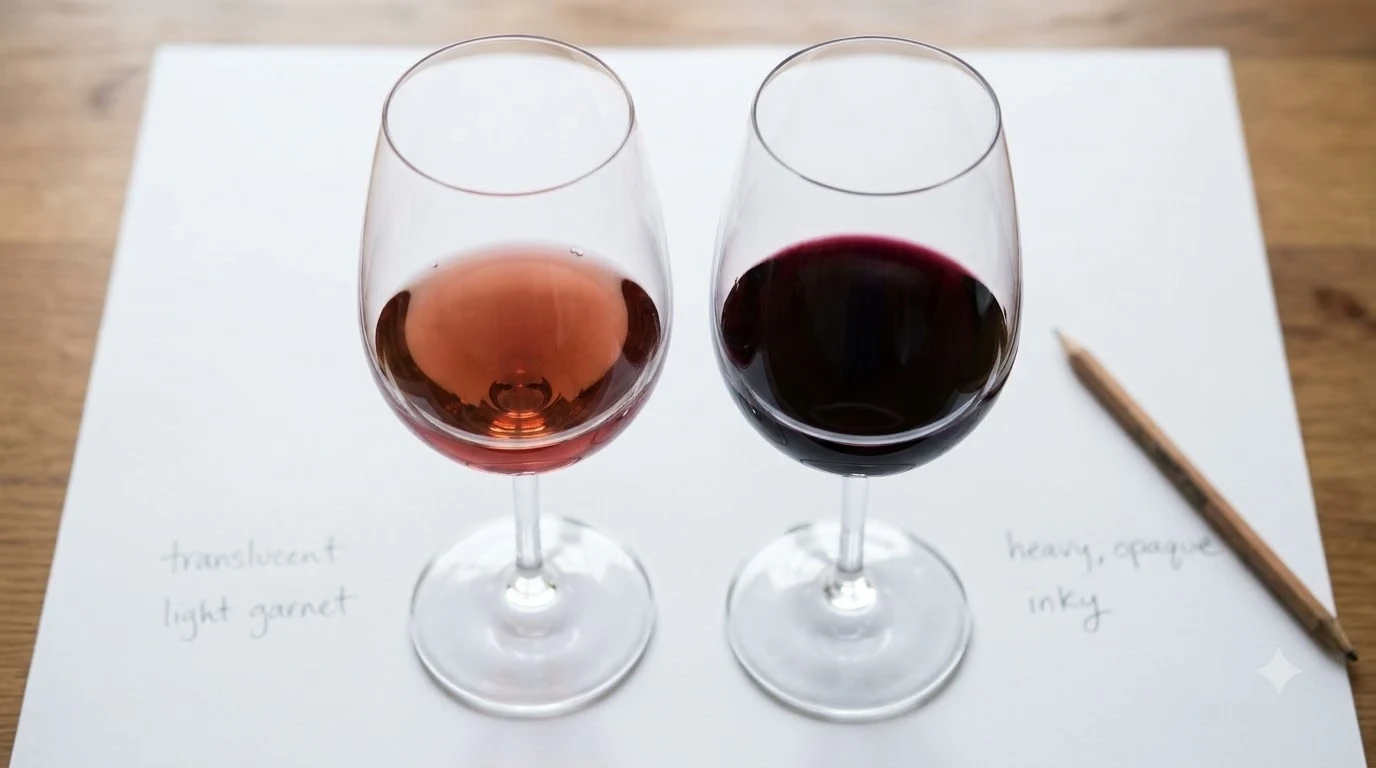
Bordeaux vs Pinot Noir is a comparison between a wine region and a grape variety, so the key difference is that red Bordeaux is usually a blend while Pinot Noir is made from one grape. Bordeaux reds often draw on Merlot and Cabernet Sauvignon, with Cabernet Franc and smaller additions adding detail. Pinot Noir usually offers lighter color, more delicate tannins, and bright acidity, although climate and winemaking can change its weight.
The useful question is which style suits the meal and the occasion. Knowing the grapes and growing regions makes labels easier to read and explains why two bottles can taste quite different.
The Essential Difference: Region Versus Grape
Bordeaux identifies a French wine region and its appellations; Pinot Noir identifies a grape variety. That distinction matters because a bottle marked Bordeaux can contain several authorized grapes, while a bottle marked Pinot Noir tells the buyer which grape supplies the wine.
Bordeaux sits in southwestern France around the Gironde estuary and the Garonne and Dordogne river systems. The name covers many wines, not one recipe. Its appellation recognizes six principal styles: red, Claret, Clairet, rosé, dry white, and sweet white. The Bordeaux PDO dates to 1936 and spans varied soils and climates. In wine shops, “Bordeaux” often means the region’s red blends. The Bordeaux appellation profile outlines the wider range of styles and authorized grapes.
Pinot Noir is a grape grown in many countries, with Burgundy in eastern France as its historic reference point. A red Burgundy is generally made from Pinot Noir, even when the grape name is not printed prominently on the label. The variety also appears in California, Oregon, New Zealand, Chile, Germany, and other cool or moderate climates. A Pinot Noir from Oregon and one from Burgundy share the same grape, but they do not have to share the same aroma, body, or texture.
For broader comparisons between wine styles, the Wine vs Wine guide explains how to separate a grape name, a region name, and a winemaking style. That framework is useful here: Bordeaux is a place with rules and traditions, while Pinot Noir is a variety that can express many different places.
Grapes and Blending in the Glass
Most red Bordeaux is assembled from complementary grapes, while classic red Pinot Noir is centered on one variety. Bordeaux blending gives the winemaker several components to balance; Pinot Noir places more emphasis on the character of a single grape and the site where it ripens.
Merlot and Cabernet Sauvignon are the two main red grapes to recognize on a Bordeaux label. Bordeaux’s official Merlot profile describes it as the region’s dominant red variety, accounting for about 60% of AOP plantings, and links it especially with Saint-Émilion, Pomerol, and Fronsac. It contributes plum, cherry, a rounded texture, and moderate acidity. The region’s Cabernet Sauvignon profile gives the grape 22% of red plantings and describes its firm tannins, cassis, dark fruit, and structure. Cabernet Sauvignon typically ripens later; Bordeaux’s profile says it is usually harvested 7 to 12 days after Merlot.
Cabernet Franc adds fragrance, freshness, and fine-grained structure. Smaller quantities of Petit Verdot, Malbec, and Carménère may also enter a blend. The proportions are not fixed across all estates or vintages: a Cabernet-led Médoc wine and a Merlot-led Pomerol can both be red Bordeaux but feel quite different. For another view of Merlot as a featured grape, see Chianti vs Merlot; Malbec’s role in a different regional red is explored in Chianti vs Malbec.
Pinot Noir follows another pattern. Most still red Pinot Noir is fermented as a varietal wine, so its naturally thin skins, moderate color, bright acidity, and fine tannins remain central to the finished style. A producer may use whole clusters, oak barrels, or different extraction choices, but those decisions modify Pinot Noir rather than turning it into a Bordeaux-style blend. This is one reason the same grape can seem delicate in one bottle and more concentrated in another.
Tip: On a Bordeaux label, start by identifying the appellation and producer, then look for a technical sheet or retailer description to learn whether the blend leans toward Cabernet Sauvignon or Merlot. On a Pinot Noir label, focus first on the region and vineyard, because the grape is already identified.
Flavor, Body, Acidity, and Tannin
Bordeaux reds are generally darker, more structured, and more tannic than the average Pinot Noir, although the exact gap depends on the Bordeaux blend and Pinot Noir’s growing climate. Pinot Noir is usually lighter in color and body, with fresher acidity and softer tannins.
A Cabernet-heavy Bordeaux often suggests blackcurrant, black cherry, cedar, tobacco, graphite, or savory spice. Its tannins can feel firm and drying, especially in youth, and its frame often suits substantial food. A Merlot-led Bordeaux tends toward plum, ripe cherry, violet, and a rounder mid-palate; its tannins are often softer than those of a Cabernet-dominant blend. Oak aging may add notes such as vanilla, toast, or baking spice, but oak is a winemaking choice rather than a guaranteed feature of every bottle.
Pinot Noir more often shows strawberry, raspberry, red cherry, cranberry, rose, tea, and earthy notes such as forest floor or mushroom. Burgundy from a cool site can be pale and fragrant, with lively acidity and a fine, persistent finish. Pinot from a warmer place such as California may show riper cherry, raspberry, cola spice, and a fuller texture. Wine Enthusiast’s Pinot Noir guide describes it as typically dry and light- to medium-bodied, with bright acidity and silky tannins; its typical alcohol range is 12% to 15% ABV.
These are tendencies, not guarantees. A ripe Pinot Noir from a warm climate can have more weight than a supple Merlot-led Bordeaux, while a young Cabernet-heavy Médoc can feel firmer than both. Vintage, extraction, oak, and bottle age all affect the balance. Use the comparison below as a starting point: appellation, producer, and climate matter as much as the broad category.
| Feature | Red Bordeaux | Pinot Noir |
|---|---|---|
| What the name identifies | A French region and appellation family | A red grape variety |
| Typical grape makeup | Merlot, Cabernet Sauvignon, Cabernet Franc; other permitted grapes may appear | Usually a single-variety wine |
| Body and color | Often medium to full-bodied; usually deeper in color | Usually light to medium-bodied; often paler ruby |
| Tannin and acidity | Medium to high tannin, especially with Cabernet Sauvignon; acidity varies | Low to medium tannin; generally bright acidity |
| Common flavor cues | Blackcurrant, plum, black cherry, cedar, graphite | Strawberry, raspberry, red cherry, rose, mushroom |
| Useful serving range | About 60–65°F for fuller reds | About 55–60°F for a lighter red style |
Regional Styles and Bottle Labels
Bordeaux’s Left Bank and Right Bank offer useful clues about the likely blend, while Pinot Noir labels often point to a village, vineyard, or growing region. A few place names can help predict style before a cork is pulled.
On Bordeaux’s Left Bank, especially the Médoc and Graves, warm gravelly soils suit Cabernet Sauvignon. Appellations such as Pauillac, Saint-Estèphe, Margaux, and Saint-Julien are well-known examples of Cabernet-influenced reds. These wines often have firm tannins, darker fruit, and the structure to develop with bottle age. The official Bordeaux profile for Cabernet Sauvignon specifically identifies the Left Bank’s gravelly soils as an important home for the variety.
On the Right Bank, Merlot is especially associated with Saint-Émilion, Pomerol, and Fronsac. Clay-limestone soils are common in Merlot country, and the grape’s earlier ripening and supple texture help explain its prominence there. Right Bank Bordeaux can still include Cabernet Franc and Cabernet Sauvignon, but the overall impression is often rounder and more plum-driven than a Cabernet-led Médoc. Entre-Deux-Mers also has sandy, clay-limestone soils, though its broader Bordeaux identity includes white wines as well as reds.
Pinot Noir buyers can begin with Burgundy’s Côte de Nuits and Côte de Beaune, then compare New World examples. The Bourgogne wine body notes that Pinot Noir suits the region’s northerly climate and limestone soils. Wine Enthusiast identifies Oregon’s Willamette Valley, California’s Russian River Valley, and New Zealand’s Marlborough as important sources. Cooler sites often emphasize tart fruit, flowers, and earthy detail; warmer sites can give riper fruit and a broader palate. French Burgundy often puts the place ahead of the grape: Gevrey-Chambertin, Volnay, and Vosne-Romanée are place names where Pinot Noir is the expected red grape. Bordeaux labels usually foreground the château or appellation, so names such as Pauillac, Margaux, Saint-Émilion, and Pomerol help identify the likely style.
Food Pairings for Each Red
Bordeaux is usually the stronger choice for rich, savory dishes that can stand up to tannin, while Pinot Noir is especially adaptable with poultry, pork, mushrooms, and richer fish. Match the wine’s weight and acidity to the food, not just the color of the meat.
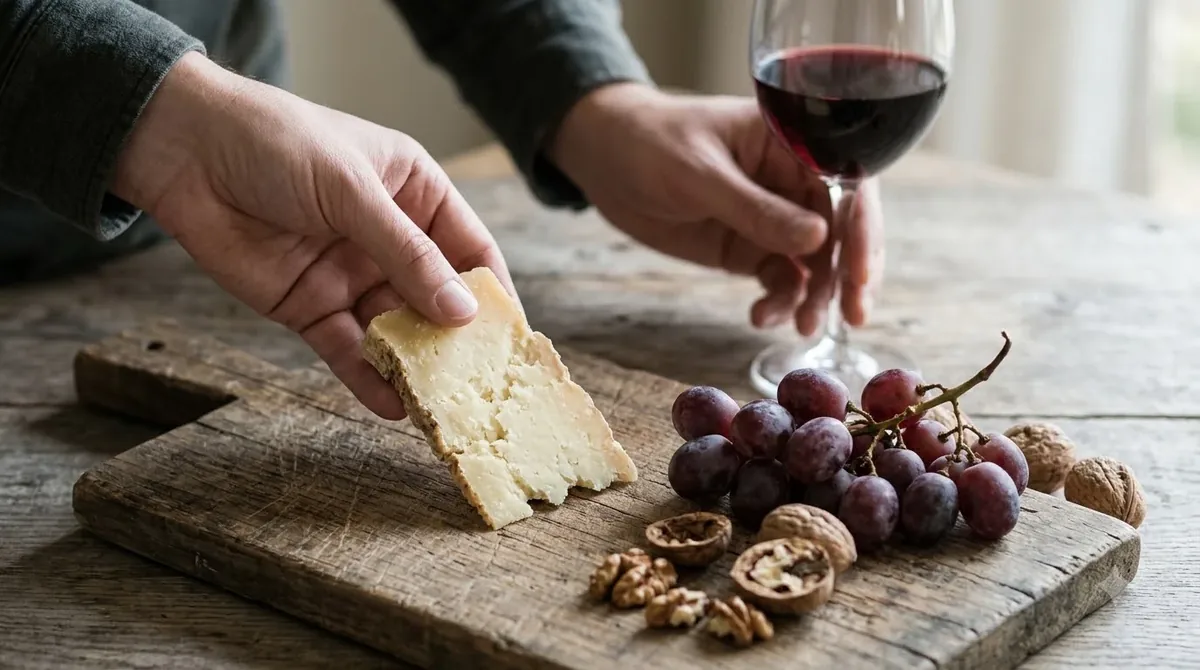
Cabernet-led Bordeaux works well with grilled steak, roast beef, lamb, and braised short ribs. Protein and fat soften the wine’s firm tannins, while browned meat and savory sauces complement dark-fruit and cedar notes. Merlot-led Bordeaux is a natural match for roast pork, meatloaf, duck, or mushroom dishes when the wine is rounder and less tannic. A younger, structured Cabernet blend can overwhelm a delicate preparation, so reserve it for dishes with enough richness and flavor.
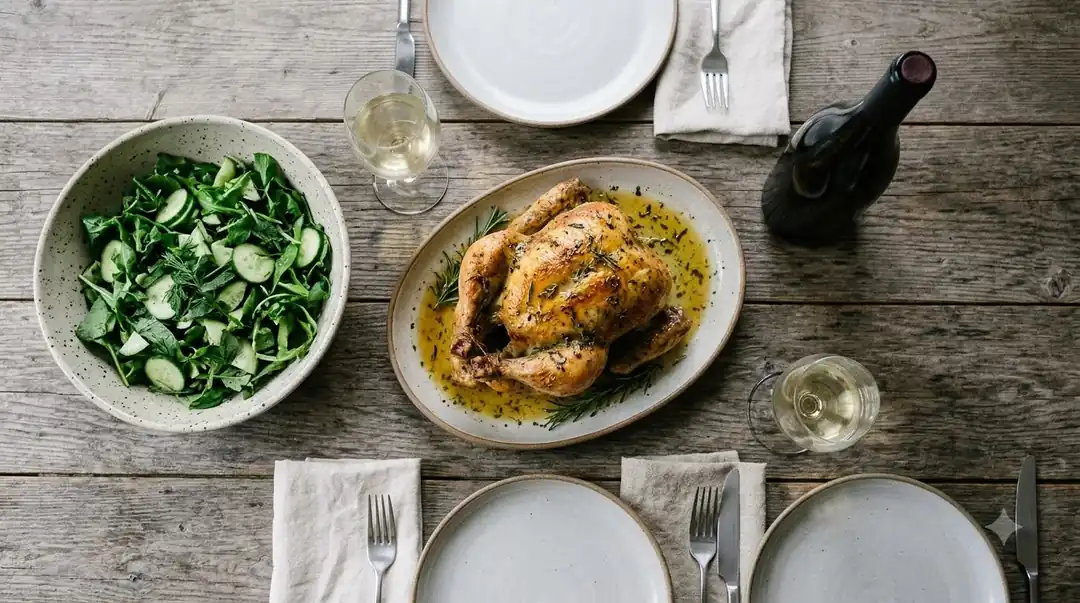
Pinot Noir’s lower-to-medium tannin and bright acidity make it more flexible at the table. Try it with roast chicken, pork loin, duck breast, salmon, trout, or mushroom risotto. Earthy ingredients such as thyme, mushrooms, lentils, and roasted beets echo the wine’s savory notes, while a fruit-forward Pinot can handle glazed pork or a lightly sweet cherry sauce. Pinot Noir is also a useful red option for a meal where a heavy Cabernet would dominate.
Pay attention to difficult ingredients. Chili heat can feel stronger with alcohol and tannin, so a soft Pinot may be easier than a powerful Cabernet blend, though very hot food can still overwhelm delicate wine. Oily fish can clash with tannic reds; salmon is usually a better match for Pinot Noir than deeply tannic Bordeaux. For highly acidic food, choose a wine with equal or higher acidity. For dessert, the wine should be at least as sweet as the food; dry Bordeaux and dry Pinot Noir rarely suit a very sweet pastry. Salty, fatty foods soften tannin, helping explain why Cabernet blend pairs better with seasoned steak than lean chicken.
Serving, Storing, and Choosing a Bottle
Temperature changes the way these wines feel: serve a lighter Pinot Noir slightly cool and give a full-bodied Bordeaux enough warmth to show its aromas. Proper storage and moderate pours also make it easier to compare bottles fairly.
For most Pinot Noir, aim for about 55–60°F, especially for a lighter-bodied bottle. A full, Cabernet-driven Bordeaux is better closer to 60–65°F; a softer Merlot-led Bordeaux can be served toward the cooler end of that red-wine range. “Room temperature” can be too warm in a heated home, which makes alcohol seem more prominent and can blur fruit. A short chill in the refrigerator is often more useful than serving either wine warm.
Young, full-bodied red Bordeaux can benefit from 30 to 60 minutes in a decanter, particularly when Cabernet Sauvignon gives the wine firm tannins. Decanting lets the wine meet oxygen and can help its aroma open up. Delicate or older Pinot Noir usually needs gentler handling; pour a small taste first, then decide whether a little air improves it. Sediment in an older bottle is another reason to decant carefully, leaving the deposit behind.
A 750 ml bottle provides about five 5-ounce servings. Refrigerate opened still wine and aim to finish it within 3 to 5 days. Store unopened bottles on their sides in a cool, dark place near 55°F, away from temperature swings and direct light. Choose Cabernet-led Bordeaux for steak or lamb, Merlot-led Bordeaux for a softer savory red, and Pinot Noir for poultry, salmon, mushrooms, or a lighter menu. Albariño vs Sauvignon Blanc offers another example of matching acidity to food. Producer and place are more useful than a broad stereotype: Bordeaux Supérieur can be approachable young, while a top Médoc or Saint-Émilion may need more time; an entry-level Pinot Noir may be made for early drinking, while a serious Burgundy can develop over years. Read the producer’s style notes and appellation, and check the label for blend details when provided.
Frequently Asked Questions
These quick answers cover a few details that do not always appear on the front label. They can help decode Pinot Noir terminology and understand why a wine may be labeled by place rather than grape.
What does the name Pinot Noir mean?
The name combines the French words for “pine” and “black.” It refers to the grape clusters’ compact, pine-cone-like shape and the dark color of the berries.
Is Pinot Noir known by another name?
Yes. In Italy it is commonly called Pinot Nero, while in Germany it is known as Spätburgunder. The names refer to the same grape variety, though local traditions and growing conditions influence the style in the bottle.
Is Pinot Noir used to make Champagne?
Yes. Pinot Noir is one of the principal grapes used for Champagne, alongside Chardonnay and Pinot Meunier. It can be blended with either of those base wines before the second fermentation that creates the bubbles.
Why do many Burgundy labels not say Pinot Noir?
Burgundy labels traditionally emphasize the place of origin because the region’s growers place strong value on differences between vineyards and appellations. The grape is often understood from the red-wine appellation, so a label may foreground a village such as Volnay rather than the variety.
How many Pinot Noir clones are there?
Wine Enthusiast notes that there are around 1,000 Pinot Noir clones worldwide. Clonal diversity is one reason the grape can show different growth patterns, ripening behavior, and flavor profiles from one vineyard to another.
Bordeaux and Pinot Noir reward different kinds of curiosity: one reveals the art of blending across a storied French region, while the other shows how one grape changes from site to site. For a fuller red with firm structure, look toward Cabernet-influenced Bordeaux; for freshness, fine tannin, and red-fruit detail, Pinot Noir is often the better fit.
More in Wine vs Wine
 Nero d’Avola vs Pinot Noir: Taste, Body, and Pairing DifferencesUpdated Nov 21, 2026
 Chenin Blanc vs Pinot Blanc: Key Differences in Taste, Acidity, and PairingsUpdated Nov 21, 2026
 Chardonnay vs Shiraz: Key Differences in Taste, Serving, and PairingUpdated Nov 21, 2026
 Chardonnay vs Verdejo: How Spain’s Crisp White Compares to the World’s ChameleonUpdated Nov 21, 2026
 Chardonnay vs Sancerre: Key Differences in Taste, Grapes, and PairingUpdated Nov 21, 2026
 Chardonnay vs Malbec: Key Differences in Taste, Body, and PairingUpdated Nov 21, 2026