

We may earn a commission when you buy through links on this page, at no extra cost to you. Learn more.
If you are wondering where is pinot noir from, the grape originated in the Burgundy region of eastern France, where Cistercian monks systematically cultivated and classified its vineyards during the Middle Ages. Today, this thin-skinned red variety is the sixth most planted red wine grape on the planet, covering more than 260,000 acres across cool-climate regions in France, the United States, Germany, New Zealand, Italy, Australia, and Chile.
Pinot Noir holds a unique place in the wine world because it acts like an unfiltered lens for the land where it grows. While its genetic birthplace is fixed in northeastern France, winemakers across six continents now produce distinct regional expressions that range from earthy and savory to plush and dark-fruited. Exploring its history and modern geography helps explain why two bottles labeled with the exact same grape variety can taste completely different in the glass.
What Is Pinot Noir?
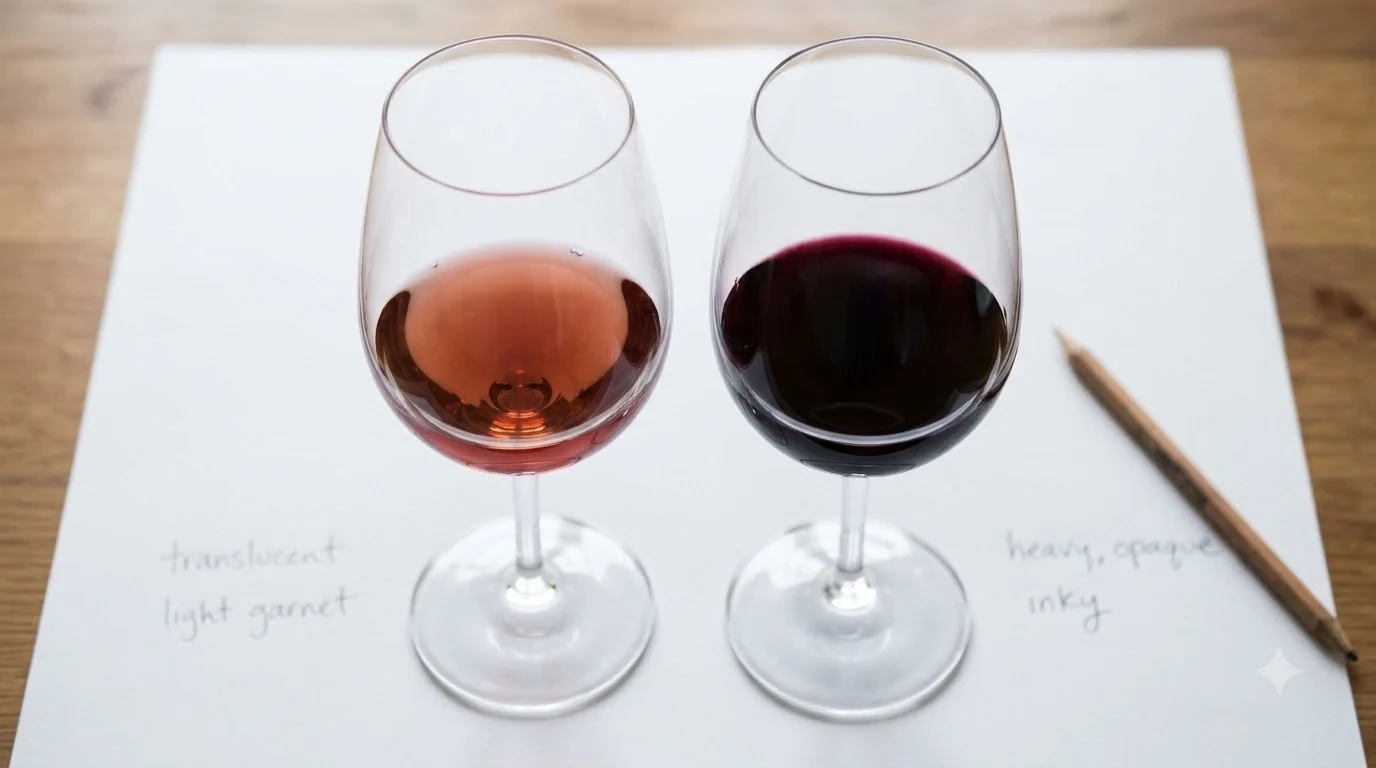
Pinot Noir is an ancient, thin-skinned black grape variety named after the French words for “pine” and “black,” a reference to its tightly packed, pine-cone-shaped clusters. Because its skins are unusually delicate, the grape produces light- to medium-bodied red wines with pale ruby color, low tannins, and bright natural acidity.
Ampelographers and wine historians trace Pinot Noir back more than a thousand years, making it significantly older than Cabernet Sauvignon. Its roots go back to the Roman era in Gaul, though it gained its modern reputation in Burgundy during the Middle Ages. Cistercian monks tending walled vineyards, known as clos, carefully observed how subtle shifts in limestone and clay soils changed the character of the wine, laying the groundwork for the modern concept of terroir.
In the vineyard, growers often call Pinot Noir the “heartbreak grape” because of its extreme sensitivity to weather, rot, and frost. It buds early in the spring, leaving shoots vulnerable to late frosts, and ripens early in the autumn. Furthermore, Pinot Noir is genetically unstable and mutates easily; over centuries, those natural mutations gave rise to hundreds of recognized clones as well as distinct grape varieties like Pinot Blanc and Pinot Gris (learn more about where is pinot grigio from).
Flavor and Styles
Pinot Noir is typically dry, light- to medium-bodied, and falls between 12 and 14 percent ABV, offering a silky texture defined by lively acidity and gentle tannins. Its core flavor profile centers on red berries, floral aromatics, and savory earth, though oak aging and regional climate heavily shape the final style.
In cooler climates such as Burgundy, Germany, and Oregon’s Willamette Valley, Pinot Noir leans toward tart cranberry, red cherry, pomegranate, hibiscus, and damp forest floor. Reviewers at Wine Folly note that these cooler-climate bottlings often carry savory secondary aromas of truffle, mushroom, and even a subtle green stem note when winemakers ferment whole grape clusters.
In warmer, sun-drenched coastal valleys—such as California’s Russian River Valley or New Zealand’s Central Otago—the grape develops riper, darker fruit character. These fuller expressions showcase black cherry, raspberry jam, plum, cola, and baking spices like clove and vanilla picked up from French oak barrels. Beyond still red table wine, Pinot Noir is also one of the three primary grapes used in traditional Champagne, providing structural backbone and depth to sparkling wines.
Where It Grows
Pinot Noir thrives in cool to moderate climates with long growing seasons, often near oceans, rivers, or sheltered valleys that protect its thin skins from extreme heat. France remains the global leader in vineyard acreage, followed by the United States, Germany, New Zealand, Italy, and Australia.
Burgundy’s Côte d’Or remains the spiritual and historical benchmark for the grape, where limestone-rich slopes yield structured, mineral-driven wines built to age for decades. Across the border in Germany—where the grape is known as Spätburgunder—regions like Baden and the Ahr Valley have earned international acclaim for producing refined, red-fruited bottlings on steep slate and volcanic slopes. Northern Italy’s Alto Adige and Trentino also cultivate the grape under the name Pinot Nero, crafting crisp, aromatic reds in the foothills of the Alps.
In the New World, coastal fog and ocean breezes make Pinot Noir possible at lower latitudes. Oregon’s Willamette Valley shares a similar latitude with Burgundy and produces balanced, earthy wines that bridge Old World structure and New World fruit. Farther south, California’s Sonoma Coast, Russian River Valley, and Santa Lucia Highlands rely on Pacific fog to cool the vines, creating lush, opulent styles. In the Southern Hemisphere, New Zealand’s Central Otago—the world’s southernmost wine region—along with Marlborough and Martinborough, produces vibrant, pure-fruited Pinot Noir, while Chile’s Casablanca Valley and Australia’s Mornington Peninsula and Tasmania add coastal freshness.
| Country / Region | Local Name | Climate & Terroir | Signature Tasting Notes |
|---|---|---|---|
| Burgundy, France | Pinot Noir | Cool continental; limestone and marl slopes | Tart red cherry, cranberry, rose petal, wet stone, forest floor |
| Willamette Valley, Oregon | Pinot Noir | Cool maritime; volcanic and marine sedimentary soils | Bing cherry, pomegranate, baking spice, earthy mushroom |
| Sonoma / Russian River, California | Pinot Noir | Fog-cooled coastal; Goldridge sandy loam | Black cherry, ripe raspberry, cola, vanilla, toasted oak |
| Baden & Ahr, Germany | Spätburgunder | Cool continental; steep slate and loess soils | Red currant, wild strawberry, smoky mineral, subtle herb |
| Central Otago, New Zealand | Pinot Noir | Cool semi-continental; glacial schist and gravel | Dark cherry, blackberry, dried thyme, velvety spice |
| Casablanca Valley, Chile | Pinot Noir | Cool Pacific coastal; sandy clay and granite | Fresh strawberry, hibiscus, crisp acidity, white pepper |
How to Serve Pinot Noir
Serve Pinot Noir slightly cooler than room temperature, ideally between 55 and 60 degrees Fahrenheit (12 to 15 degrees Celsius), using a wide-bowled glass to capture its delicate aromatics. Serving it too warm dulls its refreshing acidity and makes the alcohol stand out, while chilling it straight from a standard refrigerator mutes its fruit and floral notes.
If your bottle has been stored at typical household room temperature around 70 degrees Fahrenheit, place it in the refrigerator for 20 to 30 minutes before pulling the cork. A large, tulip-shaped Burgundy glass—often called an aroma collector—gives the wine plenty of surface area to swirl and directs subtle scents of berries, violets, and earth straight toward your nose.
Younger, fruit-forward bottles rarely require heavy aeration, though opening the bottle 15 to 30 minutes before pouring helps soften tight edges. Older, structured bottles from premier vineyard sites benefit from gentle decanting to separate any natural sediment and allow complex savory layers to open up in the glass.
Tip: Put your bottle of Pinot Noir in the fridge for 25 minutes before dinner so it hits the table at a crisp 58 degrees Fahrenheit rather than warm room temperature.
Food Pairing
Pinot Noir is widely considered one of the most food-friendly red wines on the table because its bright acidity and soft tannins complement delicate dishes without overpowering them. It bridges the gap between white and red wine pairings, working equally well with poultry, roasted vegetables, and rich seafood.
Classic pairings lean into the grape’s earthy, savory side. Roast duck, herb-crusted pork tenderloin, and coq au vin match the wine’s natural acidity, which cuts cleanly through rich fat and pan sauces. Wild mushroom risotto, roasted beets, and lentil dishes echo the damp forest floor and truffle notes found in cooler-climate bottlings.
Pinot Noir is also one of the few red wines that pairs effortlessly with fatty fish like cedar-plank salmon or seared tuna, where heavy-tannin reds would clash and taste metallic. For casual gatherings, serve a lightly chilled bottle alongside a charcuterie board featuring aged Gruyère, Comté, Brie, and cured meats, or use an affordable, fruit-driven bottle to mix a batch of pinot noir sangria.
How to Choose a Bottle
Choosing the right bottle of Pinot Noir starts with matching the wine’s origin on the label to the style you enjoy drinking. Because the grape reflects its environment so closely, the region listed on the front label tells you more about what is inside than almost any other cue.
If you prefer bright, crisp, earthy wines with brisk acidity, look for labels from Bourgogne (Burgundy), Oregon’s Willamette Valley, Germany (labeled Spätburgunder), or Northern Italy (labeled Pinot Nero). According to wine educators at VinePair, even within a single region like Oregon or Central Otago, sub-appellations can shift the profile from perfumed and silky to structured and punchy.
If you enjoy richer, plusher red wines with generous dark fruit and warm spice, reach for bottles from California’s Russian River Valley, Santa Barbara County, or New Zealand’s Central Otago. Checking the alcohol percentage on the back label is another reliable shortcut: bottles around 12.5 to 13.5 percent ABV tend to be lighter and more energetic, while those closer to 14 to 14.5 percent ABV deliver riper fruit and fuller body. You can also compare how Pinot Noir stacks up against other reds and whites in our guide to Wine by Type, or check nutritional details if you are tracking pinot noir carbs.
Frequently Asked Questions
Is Pinot Noir originally from France or California?
Pinot Noir is originally from the Burgundy region of eastern France, where it has been cultivated since at least the Roman era and perfected by medieval monks. California did not begin planting the grape on a commercial scale until the late nineteenth and twentieth centuries, adapting French cuttings to cool coastal valleys like Sonoma and Santa Barbara.
Why is Pinot Noir called the heartbreak grape?
Growers call Pinot Noir the heartbreak grape because its thin skins and tight clusters make it highly vulnerable to frost, rot, mildew, and heat spikes. A single late spring frost or heavy autumn rain can wipe out a harvest, requiring constant attention in the vineyard to bring healthy fruit to the winery.
Are Pinot Noir and Spätburgunder the same grape?
Yes, Spätburgunder is simply the German name for Pinot Noir, translating literally to “late Burgundian.” The exact same grape is also called Pinot Nero in Italy and Blauburgunder in Austria and parts of Switzerland, though local climate and winemaking give each country its own distinct flavor profile.
Why does Pinot Noir grow best in cool climates?
Pinot Noir ripens early in the growing season, so hot climates push its sugar levels up too quickly before complex flavors and natural acidity can develop. Cool, breezy regions near oceans, rivers, or mountains slow down ripening, preserving the bright acidity and delicate floral aromatics the grape is prized for.
From its ancient limestone slopes in Burgundy to fog-draped coastal valleys in Oregon, California, and New Zealand, Pinot Noir remains the ultimate expression of place in a wine glass. Understanding where a bottle comes from gives you an instant preview of its acidity, fruit ripeness, and earthy complexity before you ever pull the cork.
More in Wine Types & Grapes
 Zinfandel Sugar Content: Dry Red vs. White Zinfandel GramsUpdated Nov 21, 2026
 Best Zinfandel Substitute Options for Sipping and CookingUpdated Nov 21, 2026
 Zweigelt Food Pairing: Best Dishes, Cheeses, and Serving TipsUpdated Nov 21, 2026
 Zinfandel Tannins Explained: How Structure Shapes Every BottleUpdated Nov 21, 2026
 Zinfandel Sweetness Level: Dry Red vs. Sweet White Zin ExplainedUpdated Nov 21, 2026
 Xinomavro Food Pairing: Best Dishes, Styles, and Serving TipsUpdated Nov 21, 2026