

We may earn a commission when you buy through links on this page, at no extra cost to you. Learn more.
Barefoot wine price tiers sit squarely in the everyday budget category, with standard 750 ml bottles positioned as affordable entry-level picks and larger 1.5 L magnums or 3 L boxes lowering the cost per pour. Exact shelf totals vary across the United States based on packaging format, retail channel, promotional multipack discounts, and state alcohol taxes. Understanding how volume sizes compare on a per-ounce basis helps shoppers choose the most practical format without overbuying or sacrificing freshness.
Owned by Modesto-based E. & J. Gallo Winery, Barefoot Cellars produces more than two dozen still, sparkling, and fruit-infused wines aimed at casual, everyday drinking rather than cellar aging. Because the brand distributes nationwide across supermarkets, big-box chains, convenience stores, and neighborhood bottle shops, comparing packaging formats and retail channels is the clearest way to evaluate overall value.
Who This Barefoot Wine Price Guide Is For
This guide serves everyday wine buyers, party hosts, and budget-conscious shoppers who want to understand how Barefoot formats compare in per-glass value before heading to the store. It clarifies how single-serve packs, standard bottles, magnums, and boxed wines differ in shelf positioning and serving efficiency.
Casual weeknight drinkers benefit most from knowing when a standard 750 ml bottle makes sense versus a 4-pack of 187 ml mini bottles or 200 ml Tetra Pak cartons. A single 750 ml glass bottle holds roughly five 5-ounce pours, which works well for two people sharing dinner over two evenings. Single-serve packs cost slightly more per ounce than large glass bottles, yet they prevent oxidation waste for households that pour only one glass at a time.
Event planners and backyard hosts face a different calculation when stocking up for 10 to 50 guests. Moving up from standard 750 ml bottles to 1.5 L magnums or 3 L On Tap boxes significantly reduces the per-ounce outlay while cutting down on glass recycling and uncorking time. Readers exploring the broader Barefoot wine portfolio will find that nearly every core California varietal is bottled across multiple volume tiers to match both solo nights and large celebrations.
Key Factors That Shape Barefoot Wine Price Tiers
Four main variables determine what a shopper pays at checkout: container volume, product line tier, retail store channel, and state-level excise taxes. Packaging size exerts the strongest influence on per-ounce efficiency across the entire lineup.
According to the Barefoot Wine hosting guide, a standard pour measures 5 ounces, which translates to 5 glasses per 750 ml bottle, 10 glasses per 1.5 L magnum, and roughly 20 glasses per 3 L box. Buying in larger vessels spreads packaging, label, and closure expenses across more ounces of wine, making 1.5 L glass bottles and 3 L bag-in-box containers noticeably more economical per serving than 187 ml mini bottles or 250 ml cans.
| Packaging Format | Total Volume | 5-Ounce Pours | Closure Type | Relative Per-Ounce Tier | Opened Shelf Life (Refrigerated) |
|---|---|---|---|---|---|
| 187 ml Mini Bottle (Single or 4-Pack) | 187 ml (6.3 oz) | 1 glass | Screw cap | Highest per-ounce tier | 1 to 2 days |
| 200 ml Mini Box (4-Pack) | 200 ml (6.8 oz) | 1.3 glasses | Tetra Pak pull tab | Upper-mid per-ounce tier | 1 to 2 days |
| 250 ml Can (4-Pack) | 250 ml (8.5 oz) | 1.7 glasses | Aluminum can tab | Upper-mid per-ounce tier | Consume same day |
| 750 ml Standard Bottle | 750 ml (25.4 oz) | 5 glasses | Cork (reds/Chardonnay) or screw cap | Standard baseline tier | 3 to 5 days |
| 1.5 L Magnum Bottle | 1,500 ml (50.7 oz) | 10 glasses | Cork or screw cap | Value bulk tier | 3 to 5 days |
| 3 L On Tap Box | 3,000 ml (101.4 oz) | 20 glasses | Dispensing tap valve | Lowest per-ounce tier | Up to 30 days |
Retail channel and local tax structures create further variation from one zip code to the next. High-volume grocery chains and warehouse clubs frequently apply slim retail margins and offer multi-bottle case discounts of 10 to 20 percent when shoppers mix and match six or twelve 750 ml bottles. By contrast, convenience stores and small urban corner shops carry higher overhead per square foot and often place identical 750 ml bottles in a higher shelf tier. State excise taxes also shift checkout totals, as states such as California and Texas levy lower per-gallon wine taxes than states like Kentucky or Alaska.
Step-by-Step: How to Get the Best Value on Barefoot Wine
Follow these five practical steps to match container size, store type, and wine style to your exact serving timeline and budget.
- Calculate total pours before choosing a format: Multiply your guest count by 2 glasses for a casual two-hour gathering, or by 3 glasses for a three-hour dinner party, using a 5-ounce standard pour. If your total reaches 15 to 20 glasses, one 3 L box or two 1.5 L magnums will outperform four separate 750 ml bottles in both per-ounce value and counter space.
- Match container life to your weekly drinking pace: Choose a 3 L On Tap box if you drink one glass a few nights a week, because its internal vacuum bladder keeps wine fresh for up to 30 days after opening. Stick to 750 ml bottles or 187 ml 4-packs if you only open wine on weekends, since still wine in glass oxidizes within 3 to 5 days in the refrigerator.
- Compare unit pricing tags on the grocery shelf: Look at the small unit-cost per ounce or per 100 ml printed on supermarket shelf tags rather than the headline sticker alone. A 1.5 L magnum holds twice the liquid of a 750 ml bottle and routinely saves a noticeable percentage per ounce over buying two separate standard bottles.
- Watch for mix-and-match six-bottle retail promotions: Many national supermarkets and large wine superstores discount still wines by 10 to 15 percent when six 750 ml bottles are purchased together. Combining reds like Cabernet Sauvignon with whites like Pinot Grigio in a single six-pack opens bulk savings without locking you into one flavor.
- Check seasonal endcaps for sparkling and canned multipacks: Retailers frequently feature Barefoot Bubbly and 250 ml Spritzer 4-packs on promotional endcaps ahead of summer holidays and year-end celebrations, offering lower per-pack tiers than regular cold-box single cans.
Tip: When hosting a mixed crowd of red and white wine drinkers, pair one 1.5 L magnum of Pinot Grigio with one 1.5 L magnum of Merlot instead of six 750 ml bottles. You serve 20 total glasses while cutting packaging waste and per-ounce expense.
Barefoot Wine Styles and Product Lines Explained
Barefoot divides its catalog into four primary product families—Classic California Varietals, Barefoot Bubbly, Fruitscato, and Refresh Spritzers—each positioned in a distinct retail tier based on production method and packaging.
Classic Still Varietals (Red, White, and Pink)
The core California lineup anchors the brand’s standard retail tier and includes Pinot Grigio, Chardonnay, Sauvignon Blanc, Moscato, Riesling, White Zinfandel, Cabernet Sauvignon, Merlot, Pinot Noir, Malbec, Red Blend, and Sweet Red. According to VinePair’s brand profile, Barefoot uses screw caps on Moscato, Sangria, and select white wines while sealing its red varietals and Chardonnay with cork closures. These bottles are crafted in a fruit-forward, non-vintage California style intended for immediate enjoyment without decanting or cellar aging.
Barefoot Bubbly Sparkling Wines
Introduced shortly before the turn of the millennium, Barefoot Bubbly sits slightly above the classic still 750 ml tier in most stores due to pressurized sparkling glass bottles and wire-hooded mushroom corks. The sparkling range spans dry to sweet styles—including Brut Cuvee, Extra Dry, Prosecco, Moscato Spumante, Pink Moscato, Berry, and Pineapple—all produced via the tank method at roughly 8 to 11.5 percent ABV. Compared across wine brands in the entry-level sparkling aisle, Bubbly competes directly with domestic tank-method sparklers while staying far below traditional-method Champagne or Franciacorta tiers.
Fruitscato and Refresh Spritzers
Fruitscato blends combine traditional California Moscato with natural fruit flavors such as peach, strawberry, watermelon, blueberry, and mango at lower alcohol levels around 8 percent ABV. They share the same 750 ml shelf tier as core still varietals and pair easily with spicy takeout or fruit tarts. Meanwhile, Barefoot Refresh Spritzers and wine-based Hard Seltzers are packaged in 250 ml slim cans, placing single cans in the lowest entry tier at checkout while delivering crisp, lightly carbonated pours ideal for pools, beaches, and stadiums where glass is prohibited.
Common Mistakes That Reduce Everyday Bottle Value
Shoppers often spend more per ounce than necessary—or pour unfinished wine down the drain—by mismatching bottle formats to guest counts and neglecting basic post-opening care. Avoiding four frequent buying and serving habits protects both quality and budget across every Barefoot varietal.
Buying Single-Serve Packs for Group Gatherings
Four-packs of 187 ml mini bottles and 200 ml Tetra Pak cartons offer convenience for picnics, yet they carry the highest per-ounce tier in the Barefoot catalog. Using 187 ml bottles to serve 12 guests requires three separate four-packs and generates twelve glass empties, whereas a single 3 L On Tap box delivers 20 standard 5-ounce pours from one compact container. Reserve mini formats for solo weeknight glasses or portion-controlled lunches rather than multi-person parties.
Overlooking Sweet and Sparkling Varietal Pairings
Choosing an overly dry red for spicy takeout or fruit-heavy desserts often leaves bottles half-full at the end of dinner because capsaicin heat amplifies alcohol and tannin bitterness. Pairing chili-spiced noodles or berry tarts with sweeter, lower-alcohol selections such as Barefoot Moscato or Barefoot Pink Moscato balances heat and sweetness without requiring pricier specialty imports. Matching wine sweetness to the dish ensures every poured glass gets finished.
Letting Opened Bottles Sit on Warm Kitchen Counters
Leaving an opened 750 ml bottle of Pinot Grigio or Cabernet Sauvignon at 72 degrees Fahrenheit accelerates oxidation and flattens fruit aromas within 24 to 48 hours. Even red varietals sealed with natural or synthetic corks lose freshness rapidly when exposed to oxygen and warm indoor air. Re-corking or twisting the screw cap tightly and placing every opened bottle upright in the refrigerator extends drinkability to 3 to 5 days.
Serving Temperatures and Storage Tips to Prevent Waste
Serving each Barefoot style at its recommended temperature brings out clean fruit character and prevents harsh alcohol notes, while proper refrigeration maximizes shelf life after opening. Temperature control is especially important for value-tier wines bottled for immediate freshness.
Ideal Chilling Ranges by Wine Style
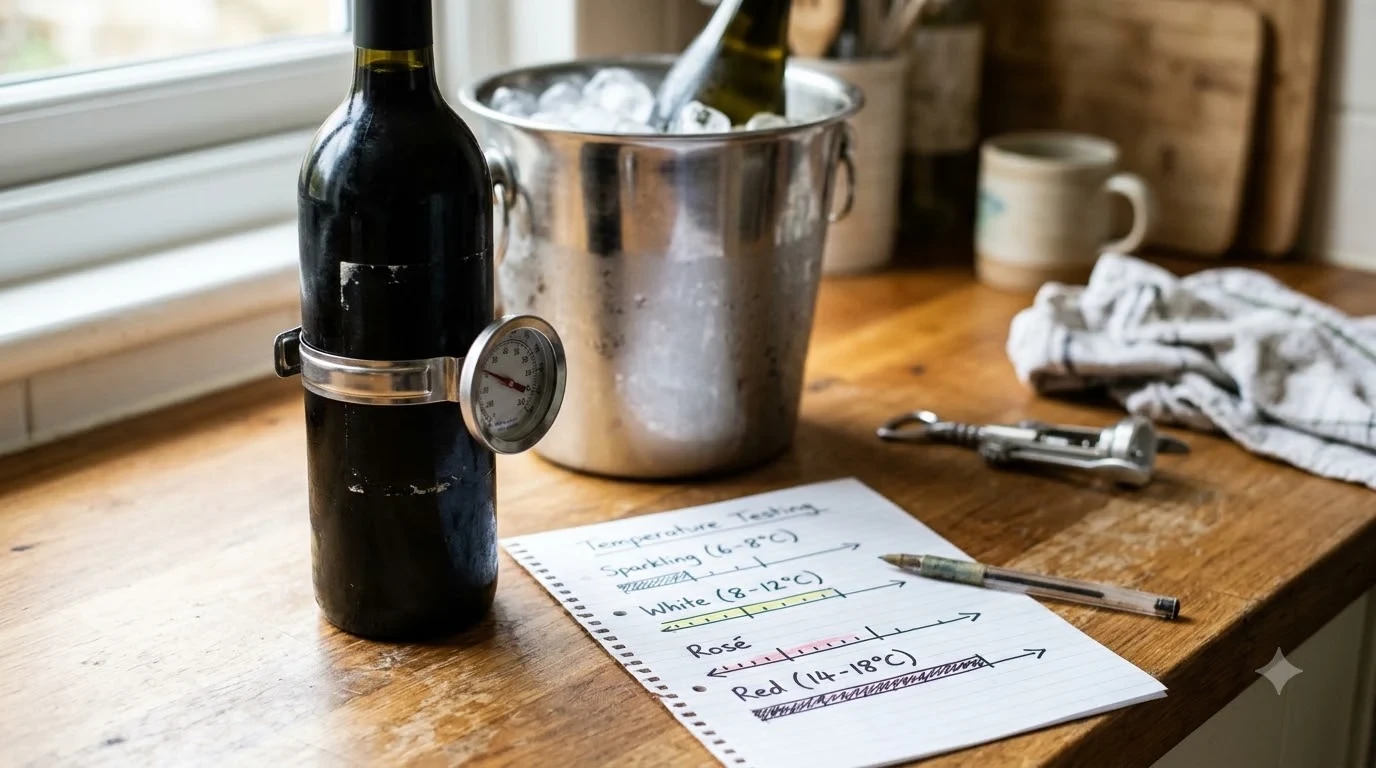
Chilling white, rosé, and sparkling wines to the right degree keeps acidity crisp without muting aromatics. Serve Barefoot Bubbly sparkling wines between 40 and 50 degrees Fahrenheit, which typically takes about two hours in a standard kitchen refrigerator or 25 minutes in an ice-and-water bucket. Sweet whites like Moscato and Fruitscato taste brightest between 43 and 50 degrees Fahrenheit, while crisp dry whites such as Pinot Grigio and Sauvignon Blanc shine at 45 to 50 degrees Fahrenheit. Fuller-bodied Chardonnay benefits from slightly warmer service at 50 to 55 degrees Fahrenheit so oak and orchard fruit notes stay expressive.
Red varietals also benefit from brief chilling rather than warm room-temperature service. Serve lighter reds like Pinot Noir between 55 and 60 degrees Fahrenheit, and pour fuller-bodied Cabernet Sauvignon, Merlot, and Malbec between 60 and 65 degrees Fahrenheit. Placing a room-temperature bottle of Cabernet Sauvignon in the refrigerator for 15 to 20 minutes before pouring softens perceived alcohol warmth, and decanting young full reds for 30 to 60 minutes smooths out firm tannins.
Preserving Unopened and Opened Containers
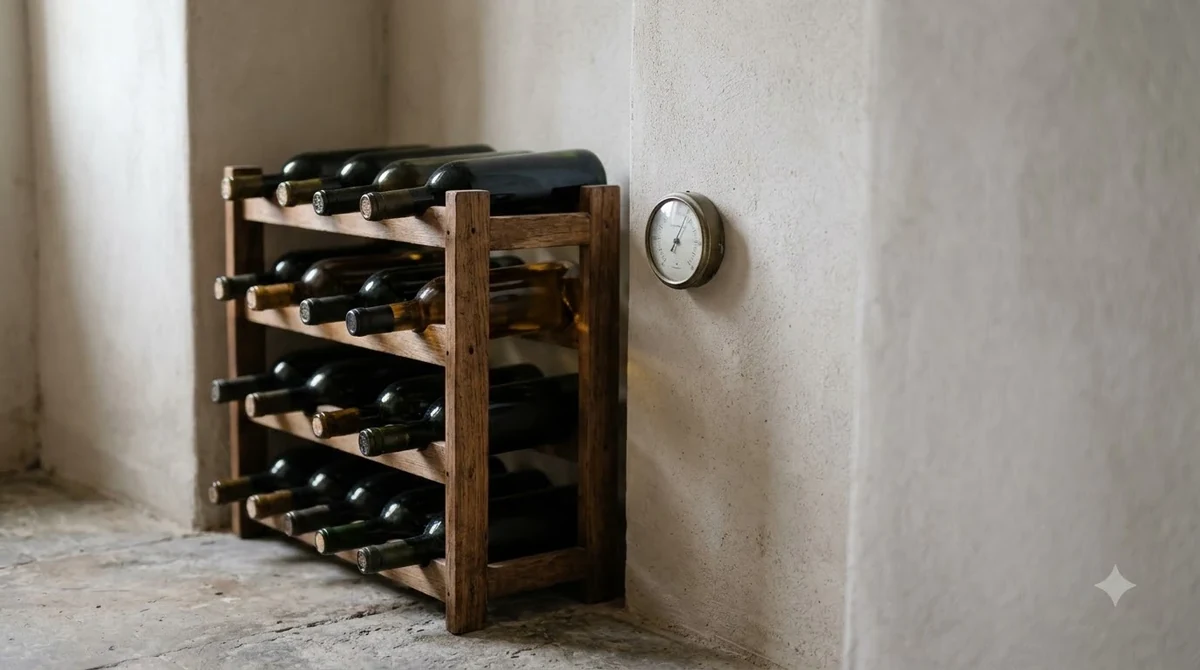
Unopened bottles sealed with corks—including Barefoot Chardonnay and red varietals sealed with corks or screw caps—should be stored in a cool, dark spot near 55 degrees Fahrenheit, with cork-sealed bottles resting horizontally so the cork stays moist and airtight. Screw-cap bottles and 3 L boxes can stand upright in a cool pantry away from direct sunlight and stove heat. Once opened, sparkling wines hold carbonation for 1 to 3 days with a tight sparkling stopper, still 750 ml and 1.5 L glass bottles remain fresh for 3 to 5 days in the refrigerator, and 3 L On Tap boxes resist oxidation for up to 30 days because the internal pouch collapses as wine is dispensed.
How Barefoot Compares to Other Everyday Wine Brands
Within the entry-level American wine aisle, Barefoot stands apart through massive multi-format distribution, consistent non-vintage blending, and backing from the largest family-owned winery in the United States. Examining its production scale and portfolio breadth clarifies where it outperforms narrower competitors.
Headquartered in Modesto, California, parent company E. & J. Gallo Winery acquired Barefoot in 2005 and integrated it alongside higher-tier sibling labels such as La Marca Prosecco and J Vineyards and Winery. In naming Barefoot its American Winery of the Year, Wine Enthusiast highlighted how the label delivers dependable, approachable California fruit at accessible everyday tiers while maintaining strict quality consistency across millions of cases. Winemaker Jennifer Wall has guided Barefoot’s blending program since 1995, according to Barefoot Wine’s winemaker biography, overseeing harvest sourcing across California’s Central Valley and coastal appellations.
Few competing value labels match Barefoot’s simultaneous availability across 187 ml glass bottles, 500 ml cartons, 250 ml cans, 750 ml bottles, 1.5 L magnums, and 3 L bag-in-box formats. While many regional labels restrict bottling to standard 750 ml glass, Barefoot’s wide packaging matrix lets shoppers scale up or down within the exact same flavor profile—whether picking up Pinot Grigio, which has grown into the brand’s highest-volume varietal since its 2006 launch, or stocking Bubbly for weekend brunch.
Frequently Asked Questions
When was Barefoot Wine founded and how did it get its name?
Winemaker Davis Bynum produced the original wine, called Barefoot Bynum Burgundy, inside his garage in Albany, California in 1965, naming it after the traditional method of crushing grapes barefoot. Entrepreneurs Michael Houlihan and Bonnie Harvey took over the label in 1986, renamed it Barefoot Cellars, and created the signature footprint emblem.
Which Barefoot varietal sells in the highest volume across the United States?
Pinot Grigio is the highest-volume wine in the Barefoot portfolio, according to Wine Enthusiast’s industry profile of the brand. Barefoot introduced its Pinot Grigio in 2006, one year after E. & J. Gallo Winery acquired the label.
How many glasses of wine should hosts plan per guest when buying Barefoot?
Barefoot Wine’s hosting guide recommends budgeting 1 to 2 five-ounce glasses per guest for a casual one-to-two-hour gathering, 2 to 3 glasses for a two-to-three-hour dinner party, and 3 to 4 glasses for an all-day celebration. Using those benchmarks, a 15-person dinner party requires roughly 30 to 45 glasses, which equals two 3 L On Tap boxes or four 1.5 L magnums.
Has Barefoot Wine won major industry awards despite its budget positioning?
Yes, Barefoot Wine reports earning more than 10,000 medals and accolades from domestic and international wine competitions. Judges frequently recognize its Moscato, Pinot Grigio, and Bubbly expressions for clean varietal character and consistency in value-tier blind tastings.
How can shoppers contact Barefoot Wine with questions about specific bottle lots or availability?
Barefoot Wine’s official website lists a consumer support line at 1-800-750-8828, staffed Monday through Friday from 8:00 AM to 5:00 PM Pacific Time. Representatives assist shoppers with local retail availability, packaging formats, and allergen or ingredient inquiries.
Choosing the right Barefoot format comes down to matching container capacity to your serving timeline, using 3 L On Tap boxes or 1.5 L magnums for group events and 750 ml or 187 ml sizes for smaller occasions. Storing opened containers in the refrigerator at proper serving temperatures ensures every glass tastes fresh and preserves maximum everyday value.
More in Wine Brands
 Underwood Wine Price: Compare Bottles, Cans, and Pack SizesUpdated Nov 21, 2026
 Zenato Wine Price: Compare Styles and Choose the Right BottleUpdated Nov 21, 2026
 Zuccardi Wine Price: Compare Bottles and Find the Right RangeUpdated Nov 21, 2026
 Yellow Tail Moscato Review: Taste, Sweetness and Serving TipsUpdated Nov 21, 2026
 Wolf Blass Yellow Label Review: Choose Your Best StyleUpdated Nov 21, 2026
 Wolffer Estate Rose Review: Choose the Right Bottle for Your TableUpdated Nov 21, 2026