

We may earn a commission when you buy through links on this page, at no extra cost to you. Learn more.
Chianti vs pinot noir is a comparison between an Italian regional red and a French-born grape, and the main difference is structure. Chianti is an Italian red from Tuscany, made mainly from Sangiovese, with firmer tannins and more savory, herbal notes. Pinot noir is a lighter, silkier red with high acidity, very low tannin, and red fruit flavors. Choose Chianti for a food-driven red with some grip, and pinot noir for a red that feels fresh and delicate.
This guide compares chianti and pinot noir on grape, body, tannin, flavor, serving temperature, and food pairing. It is written for shoppers who like red wine and want to know which one suits their taste, or who are trying to decide between two bottles on the same restaurant list.
Grape and Region: What Each Bottle Means
The first step is understanding the difference between a region and a grape. Chianti is a protected Italian wine from central Tuscany, and its main grape is Sangiovese. Pinot noir is a grape variety, which means it appears in wines from Burgundy, Oregon, California, New Zealand, Germany, and many other places. A bottle labeled chianti tells you where it comes from and what grape it must contain. A bottle labeled pinot noir tells you the grape but not the region.
Chianti also has layers of rules. Basic Chianti is a broad category, while Chianti Classico is a separate, more specific zone between Florence and Siena, marked by a black rooster seal on the bottle. Pinot noir has no comparable regional framework on most labels, so the producer’s region matters more when you are shopping.
Body, Tannin, and Acidity
Pinot noir is light to medium-bodied, with high acidity and low tannin, because the grape has thin skins. That combination gives it a silky, almost delicate feel in the mouth. Chianti is firmer. Sangiovese has medium-high tannin and medium-high acidity, and it reads as medium-full in body. A young Chianti can taste structured and dry, and Chianti Classico is usually medium-bodied with firm tannins that soften with age.
In practice, this means pinot noir feels lighter on the palate even when its flavors are rich. Chianti feels more substantial, and its tannins give it a gripping finish that pairs well with food. If you want a red that goes down easily, pinot noir is usually the more forgiving choice. If you want a red that holds its own next to a plate of grilled meat, Chianti has the backbone for it.
| Feature | Chianti (Sangiovese) | Pinot noir |
|---|---|---|
| Main grape | Sangiovese, mostly | Pinot noir |
| Body | Medium to medium-full | Light to medium |
| Tannin | Medium-high | Low |
| Acidity | Medium-high | High |
| Typical alcohol | About 13.5 to 15 percent ABV for Sangiovese | About 12 to 14 percent ABV |
| Serving temperature | 60 to 68 F (15 to 20 C) | 55 to 60 F (12 to 15 C) |
Flavor Profiles
Sangiovese, the grape behind most chianti, is often described with flavors of cherry, roasted tomato, sweet balsamic, oregano, and espresso. Those savory and herbal notes are what make Chianti distinctive. Basic styles can taste juicy, with cherry, plum, and raspberry, while Chianti Classico usually shows floral and cinnamon-spice aromas when young. With age, tobacco and leather notes can develop.
Wine Folly’s Pinot Noir guide describes the grape’s flavors as mainly red fruit, such as ripe cherry and raspberry, with earthy notes like forest floor and tea leaves. Oak aging adds vanilla and smoke, and older bottles can show mushroom and leather. Pinot noir is more fruit-forward and perfumed, while Chianti is more savory and structured.
Serving Temperature and Decanting
Pinot noir is best served slightly cooler than room temperature, around 55 to 60 degrees Fahrenheit. That keeps the acidity lively and the fruit clear. A standard Burgundy-style glass or a wider red wine glass works well. Decanting is rarely needed for pinot noir.
Chianti is served a little warmer, around 60 to 68 degrees Fahrenheit, and it often benefits from about 30 minutes of decanting, especially for a young or tannic bottle. Wine Folly notes that Sangiovese can be cellared for ten years or more. If you open a bottle that feels tight, give it time in the glass and the flavors will open up.
Tip: Chianti tastes best in a glass that gives the aromas room, while pinot noir shows its perfume in a slightly narrower glass. If you have only one glass type, a universal red wine glass covers both.
Food Pairing: Which Dish Fits Which Bottle
Chianti is one of the most food-friendly reds in Italy. Its high acidity suits tomato sauces, grilled vegetables, and anything with herbs. Wine Folly notes that Sangiovese’s acidity works with vegetable and spice-driven dishes, and with almost anything grilled. Classic matches include pasta with tomato sauce, roast chicken with herbs, and grilled steak or sausage.
Pinot noir is a classic partner for roast duck, salmon, mushroom dishes, and softer cheeses. Its low tannin makes it easy to match with fish and lighter meats, where a firmer red could feel heavy. It also works well with earthy foods such as roasted root vegetables and mushroom risotto, which echo its forest floor notes.
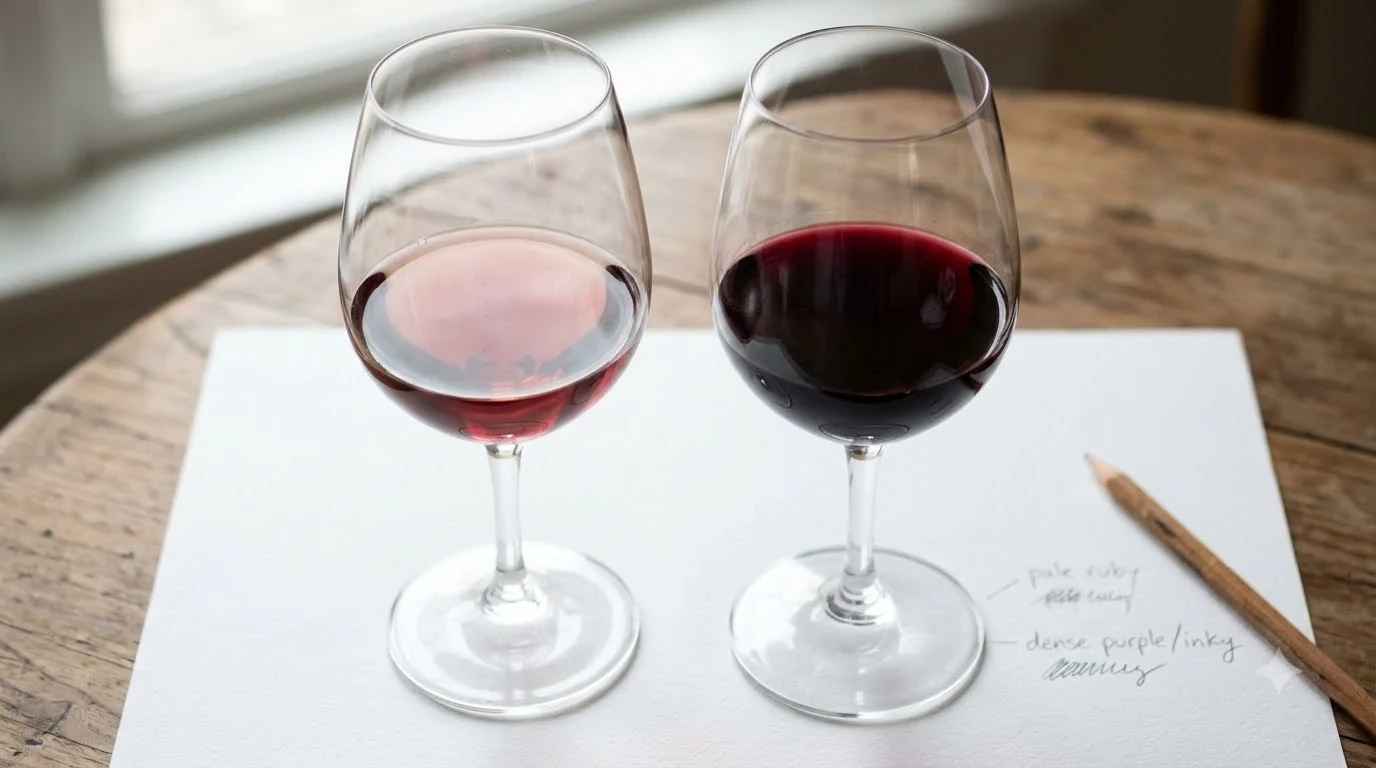
Tasting the two side by side is the clearest way to learn the difference. Pour a small amount of each into clean glasses and start with the nose. Chianti usually shows dried herbs, cherry, and a hint of spice, while pinot noir tends to lead with bright red berries and a floral lift. Then take a sip and notice the grip. The Chianti will leave a firmer, drier feeling on the gums, and the pinot noir will feel smoother and rounder.
Which One Should You Choose?
Choose Chianti when you want a red with structure and a savory edge, especially for a hearty meal with tomato, herbs, or grilled food. Choose pinot noir when you want a softer, fruitier glass that goes well with lighter dishes or drinks on its own. Both can be excellent, but they taste very different, and your favorite style is a good guide.
If you are new to both, try a basic Chianti and a pinot noir from a cool region. That gives you a clear contrast: the Chianti will show firmer tannin and savory notes, while the pinot noir will show the grape’s fresh red fruit and silky texture.
Price and quality do not always match the grape or the region, so use the label as a guide rather than a rule. A well-made basic Chianti and a well-made pinot noir can both be good value. Look at the producer, the vintage, and the style description to find the bottle that suits your meal.
Frequently Asked Questions
Is chianti the same as pinot noir?
No. Chianti is a regional Italian wine made mainly from Sangiovese, while pinot noir is a grape variety used in wines from many countries. Chianti is usually fuller and firmer, and pinot noir is usually lighter and silkier.
Which has more tannin, chianti or pinot noir?
Chianti usually has more tannin. Sangiovese is medium-high in tannin, while pinot noir is low, which is why pinot noir often feels smoother on the palate.
Can you drink chianti and pinot noir cold?
Pinot noir is fine slightly chilled, and many people enjoy it that way in warm weather. Chianti is better served a little warmer than pinot noir, closer to cellar temperature, so its tannins and aromas stay balanced.
Which is better for a dinner party?
Both work. Pinot noir suits a mixed menu with lighter dishes, while Chianti is a strong choice for a tomato-based or grilled meal. If you are serving several courses, offering one of each gives guests a good comparison.
Chianti and pinot noir are both reds worth knowing, and each rewards a different kind of meal. For more comparisons, read pinot noir vs zinfandel to see how a second red grape handles tannin, or browse Wine vs Wine to compare more pairs side by side.
More in Wine vs Wine
 Nero d’Avola vs Pinot Noir: Taste, Body, and Pairing DifferencesUpdated Nov 21, 2026
 Chenin Blanc vs Pinot Blanc: Key Differences in Taste, Acidity, and PairingsUpdated Nov 21, 2026
 Chardonnay vs Shiraz: Key Differences in Taste, Serving, and PairingUpdated Nov 21, 2026
 Chardonnay vs Verdejo: How Spain’s Crisp White Compares to the World’s ChameleonUpdated Nov 21, 2026
 Chardonnay vs Sancerre: Key Differences in Taste, Grapes, and PairingUpdated Nov 21, 2026
 Chardonnay vs Malbec: Key Differences in Taste, Body, and PairingUpdated Nov 21, 2026