

We may earn a commission when you buy through links on this page, at no extra cost to you. Learn more.
Pinot gris vs pinot noir sets a rich white against a light, fruity red. Pinot gris is a white wine with flavors of white peach, lemon zest and pear, with no tannin and a body that ranges from light and crisp to full and rich. Pinot noir is a red with raspberry, cherry and forest floor notes, low tannin and medium-high acidity. The two come from closely related vines, but they reward different tastes and different meals.
This guide explains how pinot gris and pinot noir differ in style, body, serving and food matches, so you can decide which one belongs on your table tonight.
Pinot gris and pinot noir are often shelved side by side, and both are widely sold in restaurants and wine shops. Shoppers sometimes assume the grapes are closely similar because the names share a word. In practice, pinot gris is a white wine with a texture closer to a light chardonnay, while pinot noir is a red that tastes of fruit and earth. Understanding that split helps you order with confidence.
Color, Names and Where the Two Grapes Come From
Pinot gris makes a white wine, although its grape skins are grayish pink and the wine is often pale gold. Pinot noir makes a red, and its skins are dark. Wine Folly’s pinot gris guide notes that the grape is called Pinot Grigio in Italy, where it is the country’s largest producer by volume, so the two names describe the same grape with different styles.
The homeland of pinot gris is generally considered to be Alsace in northeastern France. Wine Folly describes Alsatian wines as full bodied, with orchard and tropical fruit, fresh acidity and mineral notes, and says the label term “Grand Cru” marks the top wines. Pinot noir is most closely tied to Burgundy, where it is the only red grape allowed in many of the region’s classic wines, and it is now planted widely in cool climates around the world.
Flavor: Orchard Fruit Versus Red Berries
Pinot gris is built around stone fruit and citrus. Wine Folly lists white peach, lemon zest, cantaloupe, green almond and crushed gravel as its primary flavors. Aromas tend toward pear, apple and peach, with citrus and green apple in cooler climates. Late-harvest bottles add tropical fruit and honey, which makes them richer and more dessert-friendly.
Pinot noir tastes of red fruit and earth. Wine Folly names raspberry, cherry, mushroom, vanilla and hibiscus as its main flavors, with forest floor and tea leaves in the background. Oak-aged bottles show vanilla and smoke, and older examples develop mushroom and leather notes.
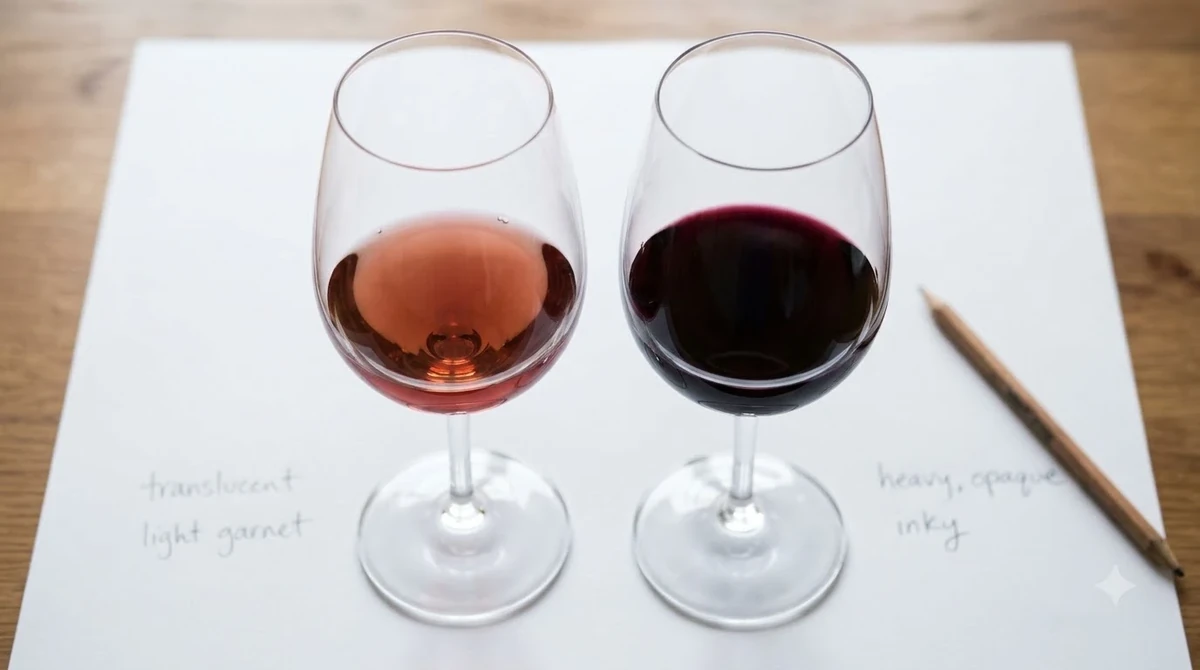
A simple way to remember the difference is this: pinot gris tastes like the inside of a ripe pear or peach, while pinot noir tastes like a cherry or raspberry with a forest-floor finish. Both are approachable, but they are not interchangeable in a glass or on a plate.
Body, Tannin and Acidity
Pinot gris has no tannin, because it is a white wine. Wine Folly describes its body as medium-light, while noting that styles range widely from light and crisp to full-bodied and rich. Its acidity is medium-high, which keeps even a rich bottle feeling lively.
Pinot noir has low tannin because its skins are thin, and its acidity is also medium-high. Its body is light to medium. That means pinot noir feels smooth and juicy, but it still has a red wine’s structure, which pinot gris does not. In a full-bodied Oregon or Alsace pinot gris, the wine can feel weightier than a light pinot noir, even though it is white.
Alcohol and Serving Temperature
Wine Folly gives pinot gris a typical alcohol range of 11.5 to 13.5 percent ABV. Pinot noir sits a little higher, usually 12 to 14 percent ABV, which can make it feel a touch more substantial in the glass.
Serving temperature is where the two wines differ most in practice. Pinot gris should be served chilled, at 45 to 55 degrees Fahrenheit, or 7 to 12 degrees Celsius. Light, zesty styles benefit most from that chill, and fuller or skin-contact bottles can be poured slightly warmer. Pinot noir is served a little cooler than room temperature, at 55 to 60 degrees Fahrenheit, or 12 to 15 degrees Celsius. A bottle left too warm can taste flat and alcoholic, while one that is slightly cool tends to show more fruit.
| Trait | Pinot gris | Pinot noir |
|---|---|---|
| Color | White, pale gold | Red, ruby to garnet |
| Main flavors | White peach, lemon zest, pear, green almond | Raspberry, cherry, mushroom, forest floor |
| Body | Medium-light, range from light to full | Light to medium |
| Tannin | None | Low |
| Acidity | Medium-high | Medium-high |
| Alcohol | 11.5 to 13.5% ABV | 12 to 14% ABV |
| Serving temperature | 45 to 55°F (7 to 12°C) | 55 to 60°F (12 to 15°C) |
| Famous regions | Alsace, Oregon’s Willamette Valley, northern Italy | Burgundy, Oregon, New Zealand |
Tip: Richer pinot gris from Alsace or Oregon can stand in for a light, creamy white when you want something fuller than a basic pinot grigio. Read the label for the region and the word “Grand Cru” if you want the top bottles from Alsace.
Food Pairing: Which Bottle Suits Each Dish
Pinot gris works well with dishes that have some richness and spice. Its fruit and acidity pair with roast pork, sweet and sour sauces, creamy seafood pasta, and mild Asian dishes. Lighter styles suit salads and grilled fish, while fuller bottles match roast chicken and soft, washed-rind cheeses.
Pinot noir is the more flexible red. Its low tannin keeps it from fighting delicate flavors, and its earthy notes line up with mushrooms, roast duck, salmon, grilled vegetables and dishes with herbs such as thyme. It is a common choice when a table has both fish and red meat, because it sits comfortably between the two.
When in doubt, match the sauce rather than the protein. Creamy or spiced sauces pair with pinot gris, while earthy or herb-driven sauces pair with pinot noir.
Which One to Choose
Choose pinot gris when you want a white with body and fruit that can handle more flavor than a standard light white. It suits people who like a rich texture without the heaviness of an oaked chardonnay. Look for an Alsace bottle if you want a classic, mineral-driven style, or an Oregon bottle if you prefer riper fruit and softer acidity. The style changes a great deal from region to region, so tasting a few bottles side by side is the best way to learn your preference.
Choose pinot noir when you want a red that stays light on the palate while still offering fruit and savory depth. Its character changes with climate. Wine Folly notes that pinot noir prefers intermediate climates with long, cool growing seasons. For a closer look at how a light red compares with a bold one, read our guide to merlot vs pinot noir. For another pair of reds to compare by region, see bordeaux vs burgundy, and for a related white-wine comparison, check our pinot grigio vs pinot noir guide.
Frequently Asked Questions
Is pinot gris a white or red wine?
Pinot gris is a white wine. The grape has grayish-pink skins, but the juice is usually pale and the wine is typically pale gold, with no red color from the skins.
Is pinot gris the same as pinot grigio?
Yes, they are the same grape. Pinot grigio is the Italian name for pinot gris, and the style is usually lighter and crisper in Italy than in Alsace or Oregon, where the wines are often richer.
Which is sweeter, pinot gris or pinot noir?
Most pinot gris and pinot noir are dry. Pinot gris may taste sweeter because of its ripe pear and peach aromas, and late-harvest bottles can be noticeably sweet. Check the label or ask a retailer for a style with more or less sweetness.
Which should I serve at a dinner party?
If the menu leans toward seafood, roast chicken or creamy dishes, a chilled pinot gris works well. If the main course is earthy, mushroom-based or roasted, a light pinot noir can be the better choice. Serving one of each gives guests two options.
Both wines are easy to enjoy and useful to know. Try a pinot gris and a pinot noir with the same meal and notice how one brings orchard fruit and texture while the other brings red fruit and earth. That side-by-side tasting will show you which style fits your table.
More in Wine vs Wine
 Nero d’Avola vs Pinot Noir: Taste, Body, and Pairing DifferencesUpdated Nov 21, 2026
 Chenin Blanc vs Pinot Blanc: Key Differences in Taste, Acidity, and PairingsUpdated Nov 21, 2026
 Chardonnay vs Shiraz: Key Differences in Taste, Serving, and PairingUpdated Nov 21, 2026
 Chardonnay vs Verdejo: How Spain’s Crisp White Compares to the World’s ChameleonUpdated Nov 21, 2026
 Chardonnay vs Sancerre: Key Differences in Taste, Grapes, and PairingUpdated Nov 21, 2026
 Chardonnay vs Malbec: Key Differences in Taste, Body, and PairingUpdated Nov 21, 2026