

We may earn a commission when you buy through links on this page, at no extra cost to you. Learn more.
Oyster Bay Sauvignon Blanc alcohol content is 13% ABV on the current US product listing. This means alcohol accounts for 13% of the wine’s volume. However, the percentage can vary between vintages, with Oyster Bay technical specifications documenting examples at both 12% and 13%. For the most accurate figure, look at the alcohol percentage associated with the particular bottle you are considering.
Oyster Bay Marlborough Sauvignon Blanc is a popular New Zealand white wine known for its lively acidity, citrus character, and tropical fruit aromas. Understanding its alcohol percentage helps put its body, serving size, and overall drinking experience into perspective. The important distinction is that a wine’s ABV tells you how much alcohol it contains, while its acidity, sweetness, temperature, and flavor determine how that alcohol is perceived in the glass.
Oyster Bay Sauvignon Blanc ABV and the Current Alcohol Percentage
The current US product listing gives Oyster Bay Marlborough Sauvignon Blanc an alcohol content of 13% ABV. That places it toward the middle of the typical range for Sauvignon Blanc, rather than among unusually low-alcohol or particularly strong white wines.
ABV stands for alcohol by volume. A wine labeled 13% ABV contains approximately 13 milliliters of pure alcohol in every 100 milliliters of wine. The figure describes the concentration of alcohol, not the total amount in the bottle. A larger serving contains more alcohol than a smaller serving even though both come from the same bottle.
For context, Wine Enthusiast describes Sauvignon Blanc as generally containing between 12.5% and 14% ABV, depending on its growing climate. Oyster Bay’s listed 13% fits comfortably within that range. It is a recognizable example of a moderately alcoholic dry white wine, with enough alcohol to contribute some weight without necessarily making the wine taste hot or heavy.
The producer’s technical information also provides useful confirmation. Its 2024 Sauvignon Blanc specifications list alcohol at 13.0% by volume, alongside 3 grams per liter of residual sugar and 7 grams per liter of titratable acidity. These measurements describe different characteristics: alcohol indicates strength, residual sugar indicates remaining grape sugar, and acidity contributes freshness and structure.
Readers who want to verify the technical measurements can consult Oyster Bay’s official 2024 Sauvignon Blanc technical specifications, which provide the wine analysis and production information for that vintage.
It is useful to distinguish the percentage from the wine’s flavor intensity. Oyster Bay’s tropical aromas and citrus flavors can seem expressive and concentrated, but that does not mean the wine has an unusually high alcohol concentration. Aromatic intensity and alcohol strength are separate qualities.
For a broader understanding of the producer and its other bottles, explore our Wine Brands information. When comparing wines, use the ABV printed for each individual bottling rather than assuming every white wine from the same producer has the same strength.
Why Oyster Bay Alcohol Content Changes Between Vintages
Oyster Bay Sauvignon Blanc does not necessarily have an identical alcohol percentage every year. The producer specifically explains that growing-season conditions can cause slight differences in alcohol percentage, which is why bottles from different vintages may display different ABV figures.
The main influence is grape ripeness. During the growing season, grapes accumulate natural sugars. Yeast converts much of that sugar into alcohol during fermentation. Grapes harvested with more sugar available for fermentation can produce wine with a higher potential alcohol level, while grapes with less sugar generally produce wine with lower potential alcohol, assuming comparable fermentation conditions.
Temperature, sunshine, rainfall, harvest timing, and vineyard conditions all influence how grapes develop. Marlborough’s climate is particularly important because warm sunny days and cool nights allow Sauvignon Blanc grapes to develop aromatic intensity while retaining natural acidity. The relationship between sugar accumulation and acidity is one reason individual vintages can differ.
The producer’s published technical specifications illustrate the variation clearly. Its 2024 technical information records 13.0% ABV, while its 2025 technical information records 12.0% ABV. Both are Oyster Bay Marlborough Sauvignon Blanc wines, but their listed alcohol percentages differ by one percentage point.
| Oyster Bay bottling information | Alcohol content | Other reported detail |
|---|---|---|
| 2024 Sauvignon Blanc | 13.0% ABV | 3 g/L residual sugar |
| 2025 Sauvignon Blanc | 12.0% ABV | 4 g/L residual sugar |
| Current US product listing | 13% ABV | Product-page listing |
| General Sauvignon Blanc range | 12.5–14% ABV | Wine Enthusiast reference range |
These figures should not be treated as a promise that every bottle from a particular calendar year will have precisely the same percentage in every market. Product listings and technical specifications can refer to particular releases, and regional distribution may involve different bottling information.
The difference between 12% and 13% might sound small, but it changes the amount of alcohol in a fixed serving. It is therefore useful to distinguish the current US product-page figure from a technical specification associated with a particular vintage. The two figures answer slightly different questions.
For readers comparing New Zealand Sauvignon Blanc labels, our article on Cloudy Bay Sauvignon Blanc alcohol content provides another useful reference point. Different producers and vintages can have different alcohol levels even when the wines come from the same broad region and grape variety.
How Much Alcohol Is in a Glass or Full Bottle?
A 5-ounce glass of 13% ABV Oyster Bay Sauvignon Blanc contains approximately 0.65 fluid ounces of pure alcohol. A standard 750 ml bottle contains approximately 97.5 ml of pure alcohol at that concentration.
The simplest way to understand the calculation is to multiply the wine volume by the ABV expressed as a decimal. For example, 5 ounces multiplied by 0.13 gives 0.65 ounces of pure alcohol. The same calculation works for a 12% or 12.5% bottle, allowing a straightforward comparison between vintages.
The following estimates assume that the bottle contains 750 ml and that the listed alcohol percentage applies throughout the bottle.
| Serving or bottle size | Wine volume | Pure alcohol at 13% ABV |
|---|---|---|
| Small pour | 3 oz | 0.39 oz |
| Standard wine pour | 5 oz | 0.65 oz |
| Large pour | 6 oz | 0.78 oz |
| Full bottle | 750 ml | 97.5 ml |
A typical 750 ml bottle provides approximately five standard 5-ounce glasses. This is a useful planning estimate for serving wine at dinner or deciding how many glasses a bottle contains. Actual pours can be smaller or larger, so the number of servings is not fixed.
Comparing the same serving size across the three percentages illustrates why vintage information matters. A 5-ounce serving at 12% contains 0.60 fluid ounces of alcohol. At 12.5%, it contains 0.625 fluid ounces. At 13%, it contains 0.65 fluid ounces.
That is a difference of 0.05 fluid ounces between the 12% and 13% examples for a 5-ounce glass. Across a complete bottle, the difference is 7.5 ml of pure alcohol. The percentage may look similar on a label, but the actual amount of alcohol changes with both ABV and serving volume.
For a useful comparison, think of the wine as two measurements rather than one: the concentration of alcohol and the volume poured. Neither figure alone tells you the total amount of alcohol in a glass. This distinction is especially important when comparing a modest pour with a restaurant serving that may be larger than 5 ounces.
How Alcohol Affects the Taste and Body of Oyster Bay Sauvignon Blanc
Oyster Bay’s 13% ABV contributes to the wine’s overall body and texture, but its lively acidity and aromatic fruit also play important roles. The wine is generally dry, crisp, and refreshing rather than sweet or heavy.
Alcohol can create a gentle sensation of warmth and contributes to the perception of body. Higher alcohol wines can feel fuller or rounder, while lower alcohol wines can feel lighter. At 13%, Oyster Bay Sauvignon Blanc sits in a moderate range that works well with its bright fruit and fresh acidity.
Acidity is particularly important to the wine’s overall balance. Oyster Bay’s 2024 technical specifications report 7 grams per liter of titratable acidity. This helps explain the refreshing impression associated with the wine. Its citrus character and natural acidity provide freshness that balances the impression of alcohol.
Residual sugar is another factor that deserves attention. The producer reports 3 grams per liter for the 2024 bottling and 4 grams per liter for the 2025 bottling. These are low residual-sugar figures, consistent with the producer’s description of the wine as dry.
A dry wine can still have flavors that seem sweet. Passion fruit, ripe citrus, and tropical fruit aromas may create an impression of sweetness even when very little sugar remains after fermentation. This is a sensory effect rather than evidence that the wine is a sweet dessert style.
The wine’s production method also contributes to its character. Oyster Bay explains that its Sauvignon Blanc undergoes slow, temperature-controlled fermentation in stainless steel tanks rather than oak aging. The wine is bottled young to preserve its fresh fruit aromas and crisp character.
For a closer look at its aroma and flavor profile, see our Oyster Bay Sauvignon Blanc tasting notes. Understanding the difference between perceived sweetness, actual residual sugar, acidity, and alcohol makes it easier to interpret why this wine tastes refreshing despite containing 13% alcohol.
Marlborough’s Climate and the Wine’s Alcohol Level
Oyster Bay Sauvignon Blanc comes from Marlborough, at the top of New Zealand’s South Island. The region’s sunny days, cool nights, and distinctive growing conditions help explain the wine’s combination of aromatic intensity, natural acidity, and moderate alcohol.
Marlborough is especially well known for Sauvignon Blanc. New Zealand Wine identifies it as the country’s largest Sauvignon Blanc region and explains that substantial temperature differences between day and night help grapes develop their characteristic flavors. These conditions are particularly relevant to wines that emphasize citrus, passion fruit, herbs, and fresh acidity.
Oyster Bay’s technical information identifies the Wairau Valley and Awatere Valley among the vineyard locations associated with its 2024 Sauvignon Blanc. Both are important Marlborough subregions, but they can produce different expressions of the grape.
The Wairau Valley is associated with ripe tropical fruit and more pungent Sauvignon Blanc characteristics. The Awatere Valley tends toward herbaceous and mineral expressions. These distinctions help explain why Sauvignon Blanc from the same wider region can show variations in aroma and flavor.
The producer’s 2024 technical specifications also describe shallow sandy loam soils over deep layers of free-draining river gravel in central Wairau, Renwick, and Brancott. These details provide context for the vineyard environment and the growing conditions behind the wine.
Harvest timing matters as well. Oyster Bay reports that the 2024 harvest took place between March 13 and April 1. Its technical information describes selecting fruit from progressively later-ripening vineyard blocks before fermentation in stainless steel tanks.
That fermentation took place at 54–59°F (12–14°C), a controlled temperature range intended to help preserve aromatic characteristics. After a short period of yeast lees contact, the wine was racked, blended, and bottled young.
These production choices help preserve the recognizable Marlborough Sauvignon Blanc style. However, regional climate alone does not determine a wine’s ABV. Grape maturity, harvest decisions, and fermentation also contribute to the final alcohol level. This is why two Marlborough Sauvignon Blanc wines, or two vintages from the same producer, can have different alcohol percentages.
Serving Temperature, Food Pairings, and Practical Storage
Oyster Bay recommends serving its Sauvignon Blanc at 46°F, a temperature that keeps the wine refreshing while allowing its citrus, tropical fruit, and herbal aromas to remain expressive. Proper chilling also helps prevent the alcohol from becoming more noticeable.
Wine Enthusiast recommends a broader Sauvignon Blanc serving range of 50–55°F, while Oyster Bay’s own recommendation is cooler at 46°F. Both approaches emphasize serving the wine chilled rather than warm. A practical starting point is to serve it around 46–50°F and allow it to warm slightly in the glass if its aromas seem muted.
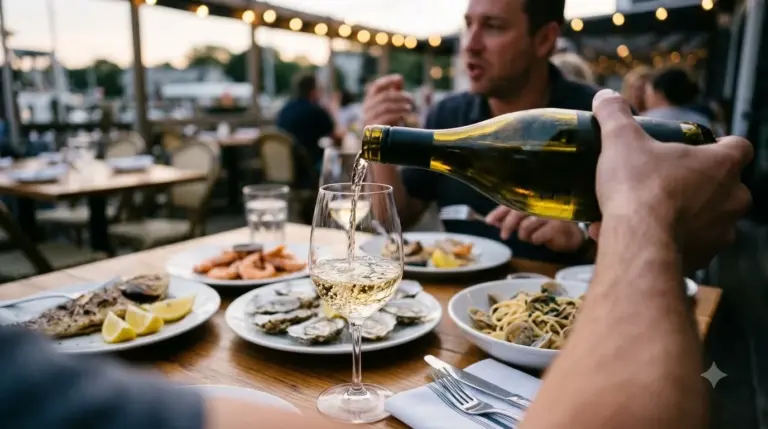
Food pairing is another area where the wine’s acidity matters. Its crisp structure and fresh fruit make it a natural match for seafood, shellfish, and white fish. New Zealand Wine specifically highlights these foods alongside citrus- and garlic-based sauces.
Seafood and shellfish
Fresh oysters, shrimp, scallops, and lightly prepared white fish are suitable choices. The wine’s acidity complements the delicate flavors of seafood, while its citrus character works naturally with lemon-based preparations. Fresh oysters are particularly appealing because their briny character can complement the wine’s crisp profile.
Salads and vegetables
Green salads, asparagus, herbs, and vegetables with citrus dressings can also work well. Sauvignon Blanc’s high acidity helps it stand up to tangy ingredients such as tomatoes and vinegar-based dressings. A salad with parsley, mint, cucumber, and lemon provides a particularly compatible flavor combination.
Chicken and lighter dishes
Grilled chicken, roasted vegetables, and simply prepared white fish offer additional options. Avoid overly sweet sauces that could make the wine taste sharper by comparison. For richer dishes, a little butter or olive oil can provide a useful contrast to the wine’s fresh acidity.
Serving temperature should also be considered when choosing food. Very cold wine can seem less aromatic, while warmer wine can make its alcohol more noticeable. Letting a glass sit briefly after pouring can help reveal more of its fruit character.
Tip: Chill Oyster Bay Sauvignon Blanc before serving and aim for approximately 46–50°F. If the wine tastes muted straight from the refrigerator, give it a few minutes in the glass rather than allowing the entire bottle to become warm.
After opening, reseal the bottle tightly and store it in the refrigerator. Oyster Bay says its properly stored white wines can remain fresh for up to five days after opening. For the best expression of fresh fruit and acidity, however, enjoying the remaining wine sooner is a sensible approach.
These practical details matter because alcohol is only one part of the experience. Temperature, food, glass size, and storage all influence how the wine performs at the table. A well-chilled 13% Sauvignon Blanc can feel lively and refreshing rather than heavy.
Frequently Asked Questions
Is Oyster Bay Sauvignon Blanc considered a strong wine?
Oyster Bay Sauvignon Blanc is a moderately alcoholic white wine rather than a particularly strong wine. Its 13% listing is within the broader range commonly associated with Sauvignon Blanc. The perception of strength can vary with serving temperature, glass size, and individual sensitivity to alcohol.
Does Oyster Bay Sauvignon Blanc contain sulfites?
Oyster Bay explains that its wines may contain residual and naturally occurring sulfites. Sulfites are associated with winemaking and can be present in both white and red wines. Their presence is a separate issue from the wine’s 13% alcohol concentration.
Is Oyster Bay Sauvignon Blanc made from 100% Sauvignon Blanc grapes?
Yes, the Oyster Bay Sauvignon Blanc 2024 listing from the International Wine and Spirit Competition identifies the wine as 100% Sauvignon Blanc. This confirms that the named grape variety accounts for the entire wine in that competition entry. The variety is responsible for its characteristic citrus, herbal, and tropical fruit profile.
Does Oyster Bay Sauvignon Blanc use a screw cap?
The International Wine and Spirit Competition identifies the 2024 Oyster Bay Sauvignon Blanc entry as using a screw-cap closure. This type of closure is practical for a fresh, aromatic white wine intended to be enjoyed relatively young. It also makes resealing an opened bottle straightforward.
Does Oyster Bay Sauvignon Blanc need decanting?
No formal decanting is generally necessary for this fresh, young white wine. Pouring it directly into a clean wine glass provides enough exposure to air for its aromatic character to develop. A few minutes in the glass can help reveal additional citrus and tropical fruit notes.
Oyster Bay Sauvignon Blanc is a moderately alcoholic New Zealand white wine, with the current US listing showing 13% ABV and individual vintages sometimes differing. Its crisp acidity, dry profile, and fresh tropical fruit character make it a versatile choice for seafood, salads, and lighter meals. For an accurate comparison, consider both the alcohol percentage and the specific vintage rather than relying on a single figure for every bottle.
More in Wine Brands
 Fess Parker Wine Review: Find the Right Santa Barbara BottleUpdated Nov 21, 2026
 Château Mouton Rothschild Wine Price: What to Expect Before BuyingUpdated Nov 21, 2026
 Fonseca Port Price: Compare Bottles, Styles, and ValueUpdated Nov 21, 2026
 Faustino Wine Review: Compare Rioja Styles and Find Your Ideal BottleUpdated Nov 21, 2026
 Fetzer Gewurztraminer Wine Review: Flavor, Sweetness and Food PairingsUpdated Nov 21, 2026
 Fetzer Wine Review: Find the Right Bottle for Your TasteUpdated Nov 21, 2026