

We may earn a commission when you buy through links on this page, at no extra cost to you. Learn more.
The chateau mouton rothschild wine price generally falls around $600 to $750 for many recent 750 ml bottles in US merchant listings, while older and particularly sought-after vintages can cost $1,000 to several thousand dollars or more. The final amount depends on vintage, bottle condition, provenance, availability, and format. Understanding these differences helps buyers distinguish the estate’s flagship Bordeaux from its second wine and avoid overpaying for a collectible bottle.
Château Mouton Rothschild is one of Bordeaux’s best-known First Growth estates, producing Cabernet Sauvignon-led wines from Pauillac on the Left Bank. Its reputation rests on the quality of its vineyard, careful grape selection, long barrel maturation, and distinctive artistic identity. Those qualities contribute to its premium market position, but not every bottle commands the same price. A recent release, a mature bottle from a sought-after vintage, and a historic collectible can occupy very different price categories. This guide examines American retail listings, explains the differences between the estate’s wines, and provides practical advice for choosing a bottle.
Who This Is For
Château Mouton Rothschild is primarily suited to Bordeaux collectors, experienced wine enthusiasts, and buyers looking for a significant bottle for a special occasion. Its premium market position makes it less suitable for casual everyday drinking, particularly when other Bordeaux wines offer similar broad stylistic characteristics at lower prices.
The estate is based in Pauillac, an appellation in the Médoc region of Bordeaux, southwestern France. Its vineyards are planted on deep gravelly soils, and Cabernet Sauvignon dominates the planting composition. According to the château’s official vineyard information, Cabernet Sauvignon accounts for 81% of plantings, followed by Merlot at 15%, Cabernet Franc at 3%, and Petit Verdot at 1%. These figures describe the vineyard rather than a fixed recipe for every bottle. The final blend changes according to the character of each harvest.
This grape composition helps explain the wine’s structure. Cabernet Sauvignon contributes substantial tannin, aromatic concentration, and aging potential, while Merlot adds suppleness and roundness. The resulting wine is generally full-bodied, structured, and suited to extended development in the bottle. It is a very different proposition from a soft, uncomplicated red intended for immediate consumption.
Collectors may be interested in several aspects of Mouton Rothschild simultaneously: the individual vintage, the wine’s condition, its storage history, and the illustrated label. These details can make a substantial difference when comparing bottles that appear similar in a retailer’s catalog.
Buyers primarily interested in affordable Cabernet Sauvignon should consider other producers. The Mouton name carries historical and collectible significance that contributes to its market value. Spending a premium makes more sense when those qualities are part of the purchase rather than when the only objective is finding a powerful red wine for dinner.
Readers comparing established producers can also browse our overview of Wine Brands for a broader understanding of wine regions, producers, and different market positions.
Key Factors to Compare
The most important price differences come from vintage, bottle condition, provenance, and format. Comparing these details before considering the asking price gives buyers a more realistic picture of a bottle’s market position.
Wine Decider’s US merchant comparison provides useful examples for standard 750 ml bottles. Its listings show approximately $645 for the 2019 and 2020 vintages, around $696 for 2018, and approximately $707 for 2022. The displayed figures are individual merchant offers rather than guaranteed market valuations, and prices vary by state and retailer.
| Price factor | What to compare | Why it matters |
|---|---|---|
| Vintage | 2018, 2019, 2020, 2021, 2022 | Harvest conditions, maturity, availability, and demand influence value. |
| Bottle size | 750 ml, 1.5 L, 3 L, 6 L | Large formats have different storage requirements and collector demand. |
| Condition | Fill level, capsule, cork, and label | Physical condition influences confidence in the bottle’s history. |
| Provenance | Original cellar and ownership records | Documented storage history supports authenticity and value. |
| Wine identity | Grand Vin or Le Petit Mouton | The two wines have different selections and market positions. |
| Retail channel | Specialist merchant or auction house | Seller reputation, availability, shipping, and fees affect the total cost. |
| Presentation | Label, capsule, and original packaging | Presentation can influence interest among wine collectors. |
Vintage is often the first comparison buyers make, but it should not be the only one. A bottle from a celebrated year with uncertain storage history may be less attractive than a less famous vintage with excellent documentation. For older Bordeaux, the condition of the wine inside the bottle is particularly important because decades of storage can produce considerable differences between individual bottles.
Provenance refers to the documented history of a bottle, including where it was purchased, who owned it, and how it was stored. A reliable specialist merchant should be able to explain the available history as clearly as possible. For an expensive purchase, request photographs showing the fill level, capsule, label, and actual bottle rather than relying entirely on generic promotional imagery.
Bottle format also deserves attention. Sotheby’s lists Mouton Rothschild in several formats, including standard 750 ml bottles, 1.5 L magnums, 3 L double magnums, and 6 L bottles for selected vintages. Larger bottles may attract collector interest, but their higher purchase cost does not automatically make them a better investment.
Another consideration is whether the asking price includes shipping, insurance, and applicable taxes. These expenses can change the final amount considerably, particularly when purchasing from another state or buying through an auction house. Compare the complete transaction rather than just the displayed bottle price.
Tip: Before purchasing an older Mouton Rothschild, request photographs of the actual bottle. Ask about storage conditions, provenance documentation, fill level, and any previous damage. A documented bottle in sound condition is generally a more defensible purchase than a seemingly inexpensive bottle with an unclear history.
Step-by-Step Buying Guide
A sensible purchase starts with identifying the exact wine, establishing a realistic budget, and comparing bottles of the same vintage and size. Following a consistent process makes it easier to avoid paying a premium for a bottle that does not meet expectations.
Use these steps when comparing American retailers and specialist Bordeaux merchants:
- Identify the wine. Establish whether the target is Château Mouton Rothschild Grand Vin, Le Petit Mouton, or Aile d’Argent. These are different wines with distinct production selections and price levels.
- Choose a vintage. Decide whether a relatively recent release or a mature bottle better suits the occasion. A younger wine may offer a longer period of cellar development, while an older vintage may be closer to its drinking window.
- Establish a budget range. Wine Decider’s US merchant comparison places several recent Grand Vin vintages around $600 to $750 per 750 ml bottle, although individual offers can differ and prices vary by state and retailer.
- Compare equivalent bottles. Check the same vintage, 750 ml format, and wine identity across several sellers. Comparing a magnum with a standard bottle or a second wine with the Grand Vin will produce misleading conclusions.
- Check the merchant. Look for an established specialist retailer, clear contact information, and a transparent returns policy. Ask whether the wine is physically in stock or available only through special order.
- Inspect the bottle’s condition. Examine the fill level, capsule, cork area, label, and any signs of leakage. Older bottles deserve particularly careful examination.
- Verify provenance. Ask where the wine was stored and whether the seller has ownership or purchase records. This is particularly important for bottles several decades old.
- Calculate the total cost. Include shipping, insurance, taxes, and any auction buyer’s premium. These expenses can materially affect the purchase.
- Plan storage and serving. Arrange appropriate storage before delivery, particularly if the wine is intended for long-term cellaring. Avoid leaving an expensive bottle in a warm room or exposed to sunlight.
For a recent vintage, comparing several established US merchants is often the simplest approach. A specialist retailer may provide a clearer description of provenance and storage than a general marketplace. For an older collectible, an established fine-wine auction house can provide access to rare bottles, although buyers should understand the additional fees and limitations of purchasing without inspecting the bottle in person.
Price comparison websites are useful starting points, but displayed offers should be treated as market observations rather than universal valuations. Availability changes, and a listing may disappear before a buyer completes a purchase. A bottle’s actual value depends on the specific transaction, including its condition and documentation.
For further comparison, the Wine Decider Mouton Rothschild US price comparison provides a useful overview of listed vintages, merchant offers, and different wines from the estate.
Types and Styles Explained
The Mouton Rothschild name covers more than one wine, and understanding the distinctions is essential when comparing prices. The Grand Vin, Le Petit Mouton, and Aile d’Argent occupy different roles within the estate’s production.

Château Mouton Rothschild Grand Vin
The Grand Vin is the estate’s flagship red wine and the bottle most buyers mean when they refer to Château Mouton Rothschild. According to the château, the wine is selected from the estate’s most exceptional parcels, older vines, and chosen fermentation vats. The selection is strict enough that the Grand Vin represents no more than half of the estate’s total production.
Its Cabernet Sauvignon-led composition gives it firm tannins, concentration, and considerable aging capacity. The deep gravelly soils of Pauillac contribute to its identity, while Merlot adds roundness to the blend. The estate’s official winemaking description states that the wines mature in new oak barrels for approximately 20 months.
This is the wine associated with the highest prices in the estate’s range. Wine Decider’s US comparison lists the 2019 and 2020 vintages at approximately $645 each for 750 ml bottles, with 2018 around $696 and 2022 around $707. These are displayed merchant offers, not fixed recommended prices, and prices vary by state and retailer.
Le Petit Mouton de Mouton Rothschild
Le Petit Mouton is the estate’s second wine. It is made particularly from grapes grown on younger vines, which are harvested earlier and vinified separately from the Grand Vin. It benefits from the estate’s winemaking resources but remains a distinct wine.
Its lower market position makes it an alternative for buyers interested in the Mouton Rothschild estate without committing to the full cost of the flagship wine. It should not, however, be described as simply a less expensive vintage of the Grand Vin. The two wines have different grape selections and production identities.
Wine Decider lists the 2020 Le Petit Mouton at approximately $193 for a 750 ml bottle, compared with approximately $645 for the 2020 Grand Vin. Its 2019 Le Petit Mouton listing is also around $193. These are individual merchant offers, and prices vary by state and retailer.
That difference makes the second wine relevant to buyers who want a connection to the estate without purchasing its most prestigious bottling. It also provides a way to compare the influence of vineyard selection and production choices on the price of Bordeaux wines.
Aile d’Argent
Aile d’Argent is the estate’s white Bordeaux wine. It comes from seven hectares of vineyard and uses Sauvignon Blanc or Sauvignon Gris, Semillon, and Muscadelle according to the estate’s published vintage information. Its listed vineyard composition is 56%, 43%, and 1%, respectively.
Half of Aile d’Argent is matured in new oak barrels. This combination of white Bordeaux grapes and oak maturation creates a different buying proposition from the Cabernet Sauvignon-led red wines. Aile d’Argent should therefore be compared with other premium white Bordeaux rather than treated as an inexpensive alternative to the Grand Vin.
Wine Decider’s US comparison lists the 2019 Aile d’Argent at approximately $211 for a 750 ml bottle. This is a displayed merchant offer, not a universal valuation, and prices vary by state and retailer.
These three wines demonstrate why the producer name alone is not enough to establish a bottle’s likely market value. A buyer comparing listings should identify the exact wine first, then consider vintage, format, and condition.
Readers interested in another prestigious Bordeaux estate can also explore our article on Château d’Yquem wine. Although it represents a different style of Bordeaux, it provides another example of how producer reputation, vintage, and scarcity influence premium wine prices.
Common Mistakes When Comparing Prices
The biggest buying mistakes involve comparing unlike bottles, assuming that famous vintages are automatically the best purchases, and overlooking storage history. A high asking price does not guarantee that a particular bottle is worth buying.
Confusing the Grand Vin with Le Petit Mouton
Both wines carry the Mouton Rothschild name, but they are not interchangeable. The Grand Vin uses the estate’s strictest selection of parcels and older vines, while Le Petit Mouton is made particularly from younger-vine fruit. A comparison that ignores this distinction can make one listing appear unusually inexpensive or another unnecessarily expensive.
Always confirm the complete wine name and vintage before comparing merchant offers. A 2020 Le Petit Mouton is not a substitute for a 2020 Château Mouton Rothschild Grand Vin when researching the flagship wine’s market value.
Assuming every old bottle is valuable
Age alone does not establish value. A mature bottle may have experienced temperature fluctuations, poor humidity, light exposure, or an unreliable storage environment. These problems can compromise the wine even when the label appears attractive.
Older bottles also vary in fill level. A lower fill can indicate evaporation or other storage issues, although the acceptable level depends partly on the bottle’s age. Buyers should ask a specialist to interpret the condition rather than applying one standard to every decade.
A particularly old bottle also presents a different drinking experience from a younger vintage. Mature Bordeaux can develop complex tertiary aromas, but its fruit may be less pronounced and its structure more fragile. The decision to buy an old vintage should take account of drinking condition as well as historical appeal.
Ignoring the influence of label artwork
Mouton Rothschild is particularly recognizable for its illustrated vintage labels. The estate’s artistic identity contributes to its appeal among collectors who appreciate both wine and fine art.
However, artwork does not automatically make every bottle more valuable. Label condition, authenticity, wine quality, scarcity, and market demand remain important considerations. A damaged label may also affect the presentation of a collectible bottle even when the wine itself remains sound.
Buyers should distinguish between the value of an original bottle and the appeal of its label as a collectible object. An attractive design is not a substitute for a reliable storage history.
Using one retailer’s listing as a universal valuation
Wine merchants can display different asking prices for the same vintage. Differences may reflect stock availability, bottle condition, storage history, taxes, and commercial positioning. A single listing is therefore insufficient evidence of a bottle’s general market value.
Compare at least three equivalent offers where possible. Make sure each listing refers to the same vintage and bottle size, and distinguish between an available bottle and an outdated or out-of-stock listing. Auction results also need careful interpretation because the hammer price may exclude buyer’s premiums and other expenses.
Buying without considering drinking maturity
A young Mouton Rothschild may require substantial cellar time before its tannins and fruit become more integrated. Buying a recently released bottle for immediate consumption can create disappointment if the buyer expects the softer character of mature Bordeaux.
Conversely, an older bottle may already be approaching the end of its ideal drinking period. Buyers should research the specific vintage and ask a knowledgeable merchant about its expected maturity rather than assuming that older always means better.
It is also important to separate drinking preferences from collectible demand. A highly sought-after vintage is not necessarily the most suitable bottle for someone who prefers mature, softer Bordeaux. Personal preference and the intended occasion should remain part of the buying decision.
Care and Storage Tips
Proper storage protects both the wine and the value of a collectible bottle. Château Mouton Rothschild is designed to develop with age, so temperature stability, humidity, darkness, and minimal vibration matter considerably.
Maintain a stable cellar temperature
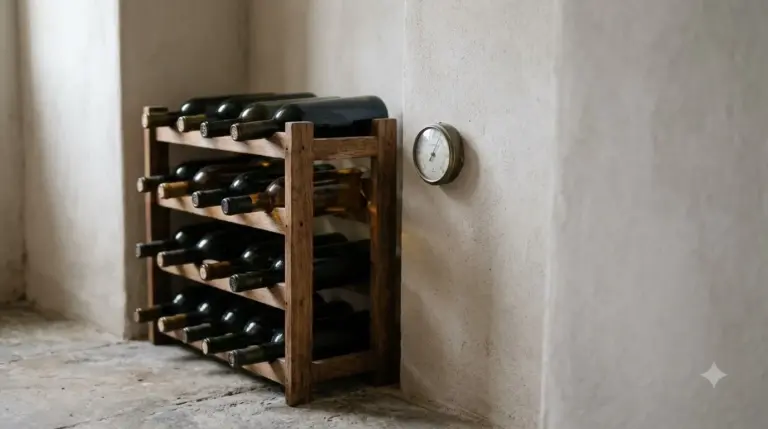
A temperature close to 55 F is a useful target for long-term wine storage. Stability is more important than repeatedly moving bottles between warm and cold environments. Large temperature swings can accelerate aging and potentially affect the seal between the cork and bottle.
Avoid storing expensive Bordeaux in a kitchen, garage, or ordinary cupboard where temperatures can fluctuate significantly. A dedicated wine refrigerator or professionally managed cellar is a better option for a bottle intended to mature over many years.
For a substantial collection, record the vintage, purchase date, merchant, storage location, and any available provenance information. Keeping these details together makes it easier to track the history of each bottle and provide documentation if the wine is eventually sold.
Store bottles horizontally
Traditional cork-finished bottles are generally stored on their sides to keep the cork in contact with the wine. This helps maintain the cork’s condition and protect the seal. Keep bottles away from direct sunlight and strong artificial lighting, which can damage wine quality and fade collectible labels.
Humidity should also be reasonably stable. Very dry environments can contribute to cork deterioration, while excessive moisture can damage labels and packaging. For collectors who value the original presentation, this balance is particularly important.
Serve at the right temperature
Full-bodied red Bordeaux is generally best served around 60 to 65 F. Serving it too warm can make alcohol seem more prominent, while serving it too cold can make the tannins appear more aggressive and restrict the wine’s aromatic expression.
A young full-bodied red may benefit from 30 to 60 minutes of decanting to allow some aeration. Older bottles require more caution. Extended exposure to air can cause fragile mature wines to lose their aromas quickly, so careful decanting immediately before serving may be preferable.
For an older vintage, consider opening the bottle before the meal rather than automatically giving it an extended decant. Taste a small amount first and assess how the wine responds to air. Some mature bottles improve with brief exposure, while others are already delicate.
Use appropriate glassware and portions
A large Bordeaux glass with sufficient room for swirling helps release the wine’s aromas. A standard 5 oz pour allows the wine to be assessed without filling the glass excessively. A 750 ml bottle provides approximately five such servings.
For an older collectible bottle, opening it carefully is particularly important. Fragile corks can break during extraction, so a specialist corkscrew or two-pronged opener may be useful. If the bottle contains sediment, allow it to stand upright before opening and pouring.
Once opened, the wine should be kept refrigerated and consumed relatively promptly. Still red wines generally retain their best qualities for approximately three to five days after opening, although a mature bottle may deteriorate more quickly. Re-corking the bottle and limiting unnecessary exposure to oxygen can help preserve what remains.
For a particularly expensive bottle, avoid unnecessary handling and keep the original packaging if it contributes to the wine’s collectible presentation. Record the opening date and any relevant storage information for bottles retained as part of a larger collection.
Frequently Asked Questions
Why is Château Mouton Rothschild called a First Growth?
Mouton Rothschild was originally classified as a Second Growth in the 1855 Bordeaux classification. It was officially promoted to Premier Cru Classé in 1973, following a long campaign led by Baron Philippe de Rothschild. The promotion made it the only estate to achieve an upward revision to the First Growth group within that classification.
Who owns Château Mouton Rothschild?
The estate belongs to the family-controlled Baron Philippe de Rothschild group. The Rothschild family’s involvement is closely associated with Baron Philippe de Rothschild and his daughter, Baroness Philippine de Rothschild. Their family history is closely connected to the development of the estate’s modern identity and international reputation.
Why does Château Mouton Rothschild have different artwork on its labels?
The estate commissions original artwork for its vintage labels as part of a tradition that began with the illustrated 1924 label designed by Jean Carlu. Artists associated with the tradition include Pablo Picasso, Salvador Dalí, and Andy Warhol. The annual artwork has become an important part of the estate’s cultural identity and attracts collectors interested in both wine and art.
Can Château Mouton Rothschild be purchased in magnum format?
Yes. Selected vintages are available in larger formats, including 1.5-liter magnums, 3-liter bottles, and 6-liter bottles. A magnum holds the equivalent of two standard 750 ml bottles. Larger formats are particularly interesting to collectors because wine can develop differently in a larger bottle relative to the amount of oxygen entering through the closure.
Is Château Mouton Rothschild included in the Judgment of Paris?
The 1970 Château Mouton Rothschild was not one of the Bordeaux wines included in the original 1976 Judgment of Paris red-wine tasting. That event compared selected California Cabernet Sauvignon wines with French reds, including Bordeaux estates such as Château Mouton Rothschild’s regional peers. Its significance should not be confused with the estate’s separate First Growth classification history.
Château Mouton Rothschild commands premium prices because of its First Growth classification, Pauillac terroir, careful grape selection, aging potential, and distinctive artistic heritage. The smartest purchase is not necessarily the oldest or most expensive bottle, but one with a suitable vintage, convincing provenance, and sound storage history. Compare equivalent US merchant listings, distinguish the Grand Vin from the estate’s other wines, and verify the bottle’s condition before committing to a collectible Bordeaux purchase.
For further Bordeaux comparisons and buying guidance, explore our articles on Château Mouton Rothschild wine and Château Ste. Michelle Riesling. Understanding the differences between producers, regions, and wine styles makes it easier to decide whether a premium Bordeaux bottle is the right purchase for your budget and occasion.
More in Wine Brands
 Matua Wine Review: Find the Right New Zealand Wine for Your TasteUpdated Nov 21, 2026
 Meerlust Wine Price: Compare Bottles and Find Your FitUpdated Nov 21, 2026
 Macari Wine Price: Compare Bottles by Style and TierUpdated Nov 21, 2026
 Marchesi Di Barolo Wine Review: Find The Right Piedmont BottleUpdated Nov 21, 2026
 Marqués de Riscal Wine Price: Compare Bottles and Find the Right RiojaUpdated Nov 21, 2026
 Mateus Rose Price: What to Expect for a 750 ml BottleUpdated Nov 21, 2026