


We may earn a commission when you buy through links on this page, at no extra cost to you. Learn more.
What wine goes with fondue? A dry, fresh white wine, especially Swiss Chasselas or Fendant, is the best choice for traditional cheese fondue. These wines complement the creamy texture of melted Gruyère and Vacherin without overpowering their flavors. Sauvignon Blanc, Pinot Blanc, and dry Riesling are excellent alternatives, while light Pinot Noir and Gamay can work if you prefer red wine.
Fondue is a rich, sociable dish, but its melted cheese, garlic, wine, and traditional accompaniments can make choosing a bottle more complicated than expected. The best pairing depends on what goes into the pot, how strong the cheese tastes, and whether you are serving bread, vegetables, meat, or seafood. Understanding a few basic wine characteristics makes it easier to select a bottle that complements the meal rather than competing with it.
Why Dry White Wine Is the Best Match for Cheese Fondue
A dry white wine with balanced acidity and restrained oak is the most dependable companion for traditional cheese fondue. Its freshness complements the richness of melted cheese, while moderate body allows the flavors of Gruyère, Vacherin, and garlic to remain the focus.
Traditional Swiss cheese fondue combines cheeses that are rich in fat and protein. Gruyère contributes savory, nutty depth, while Vacherin Fribourgeois adds a creamy texture. When these ingredients melt together, the resulting dish is concentrated, salty, and substantial. A heavy wine can make the meal feel even richer, so a fresh white is generally the better choice.
Dry wines also offer a useful contrast to the fondue’s natural richness. Acidity refreshes the palate between bites, helping the cheese taste balanced rather than excessively heavy. The wine should have enough flavor to stand alongside the cheese but should not be so aromatic, sweet, or heavily oaked that it dominates the dish.
Swiss Chasselas is particularly suitable because it combines subtle fruit, gentle floral aromas, and a relatively soft acidity. Unlike an intensely aromatic Sauvignon Blanc or a heavily oaked Chardonnay, it tends to let the cheese remain the central flavor. Its restrained character makes it especially useful when the fondue contains a mixture of several cheeses.
Another important consideration is the wine used in the cooking process. Many traditional cheese fondue recipes incorporate dry white wine directly into the melted cheese. Serving that same wine at the table creates continuity between the cooking liquid and the finished dish.
For a straightforward choice, consider these characteristics:
- Dryness: Choose a dry wine rather than a noticeably sweet style.
- Acidity: Look for freshness that balances the creamy cheese.
- Oak: Prefer unoaked or lightly oaked wines.
- Body: Light to medium-bodied wines generally work best.
- Aromatics: Subtle apple, citrus, pear, and floral notes complement the cheese.
These characteristics are more important than choosing an expensive or prestigious bottle. A well-made regional white can provide a more harmonious pairing than a powerful wine with greater intensity but less balance.
Chasselas and Fendant: The Traditional Swiss Choices
Chasselas is the classic wine for Swiss cheese fondue, while Fendant is the name commonly used for this grape in Valais. Both provide a dry, delicate profile that works naturally with Gruyère, Vacherin Fribourgeois, and traditional moitié-moitié fondue.
Chasselas is Switzerland’s most widely planted white grape variety. According to Swiss Wine, it is cultivated particularly in Vaud, Valais, Geneva, and the Three-Lakes region. Its understated character is one of its main advantages at the fondue table: rather than introducing strong tropical fruit or pronounced oak, it complements the cheese’s savory and nutty qualities.
Typical Chasselas aromas include apple, pear, citrus, acacia, and lime blossom. Some examples also show mineral characteristics associated with their growing areas. The overall style is generally dry, harmonious, and softly acidic. These qualities make it a natural companion for melted cheese.
The wine’s regional names and styles offer several useful choices:
Fendant from Valais
Fendant is a familiar choice for traditional Swiss fondue. It has the advantage of regional association with the country’s Alpine cheese traditions. Its relatively subtle fruit and rounded texture suit fondue that contains Gruyère, Vacherin, or a combination of both.
Chasselas from Vaud
Vaud offers several expressions of Chasselas. Wines from La Côte, including Mont-sur-Rolle, can provide a fresh and relatively light option. The Lavaux area is also worth exploring, particularly for more complex examples from places such as Dézaley and Saint-Saphorin.
Chasselas from the Three-Lakes Region
The Trois-Lacs region, which includes Neuchâtel, provides another traditional direction. Switzerland Tourism specifically recommends Chasselas from this region or the Côte vaudoise for moitié-moitié fondue. These wines are useful when the cheese mixture combines the nutty character of Gruyère with the creaminess of Vacherin.
Swiss Wine recommends serving Chasselas at 8-10°C, equivalent to approximately 46-50°F. This temperature keeps the wine refreshing while allowing its delicate aromas to show.
For more background on regional grapes, vineyard styles, and serving recommendations, explore the Swiss Wine Chasselas grape profile.
Other White Wines That Pair Well With Fondue
If Swiss Chasselas is unavailable, several dry white wines can provide an excellent alternative. Sauvignon Blanc, Pinot Blanc, dry Riesling, Arneis, and Petite Arvine each offer a different balance of acidity, fruit, and texture.
Sauvignon Blanc is a practical choice for people who enjoy a fresher, more aromatic style. Its lively acidity can balance the richness of melted cheese, especially when the fondue includes garlic, herbs, or vegetables. Choose a restrained example rather than one with extremely intense tropical fruit or pronounced grassy aromas.
Pinot Blanc is another dependable option. Its generally gentle fruit and moderate body make it suitable for traditional cheese mixtures. It offers a relatively neutral alternative for diners who want a white wine that supports the cheese without becoming the main attraction.
Dry Riesling works particularly well when the fondue includes strongly flavored accompaniments. Its high acidity provides freshness, while citrus and orchard-fruit notes offer contrast to the savory cheese. Avoid sweeter Riesling styles for a conventional cheese fondue unless the recipe includes ingredients that specifically benefit from sweetness.
Several other regional varieties deserve consideration:
| Wine | Typical character | Fondue pairing |
|---|---|---|
| Chasselas | Dry, subtle fruit, soft acidity | Traditional Swiss cheese fondue |
| Fendant | Delicate, rounded white | Gruyère and Vacherin mixtures |
| Sauvignon Blanc | Fresh citrus, herbal notes, high acidity | Garlic and herb fondue |
| Pinot Blanc | Light to medium body, gentle fruit | Mild and creamy cheese mixtures |
| Dry Riesling | Citrus, orchard fruit, high acidity | Rich fondue with stronger accompaniments |
| Arneis | Soft fruit, moderate acidity | Traditional Alpine-style fondue |
| Petite Arvine | Fresh citrus and distinctive mineral notes | Flavorful Swiss cheese mixtures |
| Pinot Gris | Ripe pear, moderate body, rounded texture | Rich fondue with nutty cheese flavors |
| Humagne Blanche | Characterful Swiss white wine | Regional Alpine cheese dishes |
Petite Arvine and Humagne Blanche are particularly interesting choices for people exploring Swiss wines beyond Chasselas. They offer more distinctive personalities while retaining a regional connection to Alpine food traditions. Arneis from Piedmont is another alternative, especially for those who enjoy Italian white wines.
When choosing between these styles, consider the intensity of the cheese. A mild fondue generally benefits from a subtle white, whereas a mixture containing mature Gruyère can support a wine with a little more flavor and structure.
Tip: If you are serving a traditional Swiss cheese fondue for the first time, buy a dry Chasselas or Fendant. It is a reliable starting point, and you can explore Sauvignon Blanc, Riesling, or Petite Arvine at another meal.
Can You Drink Red Wine With Cheese Fondue?
Yes, red wine can accompany cheese fondue, but choose a light, fruity wine with low to moderate tannin. Pinot Noir and Gamay are the strongest starting points because their softer structure is less likely to clash with the creamy, salty cheese.
Red wine is not automatically unsuitable for cheese fondue. The important distinction is tannin. Tannins create the drying sensation associated with many full-bodied reds. When a strongly tannic wine meets a rich, salty cheese, the combination can make the wine seem bitter, harsh, or metallic.
Cabernet Sauvignon, young Barolo, and powerful Syrah are therefore generally less successful choices for a traditional cheese fondue. Their stronger tannin and structure can overwhelm the dish. A softer Pinot Noir offers a gentler alternative, especially when served slightly cool.
Pinot Noir
Pinot Noir is a particularly good option for people who prefer red wine throughout dinner. It generally has low to medium tannin and refreshing acidity, with red cherry, raspberry, and subtle earthy characteristics. These flavors can complement the nutty elements of Gruyère without dominating the cheese.
Swiss Pinot Noir is a particularly relevant choice because it follows the same regional traditions as many classic fondue pairings. Look for a fruit-forward wine without substantial new-oak influence.
Gamay
Gamay is another suitable choice, particularly in a lighter, fruit-driven style. Its fresh red-fruit character and relatively modest tannins make it a better candidate than a heavily structured red. Beaujolais is a familiar example of a region producing approachable Gamay wines.
Dôle and Other Alpine Reds
Dôle from Valais is another regional option. It is often made with at least 85% Pinot Noir and Gamay, according to Coop’s wine guidance. This combination makes it an interesting accompaniment for traditional cheese dishes.
Serve light reds at approximately 55-60°F rather than at typical full-bodied red wine temperatures. Slightly cooler serving helps preserve their freshness and prevents the alcohol from becoming too prominent.
For additional guidance on matching red wines with rich main courses, the principles also apply to what wine goes with beef brisket, although brisket generally supports more powerful red wine styles than cheese fondue.
Pairing Wine With Different Fondue Styles and Ingredients
The best wine changes with the ingredients in the fondue pot. Traditional cheese fondue calls for a restrained dry white, while tomato fondue, meat fondue, and chocolate fondue require different levels of fruit, acidity, tannin, and sweetness.
Not every dish called fondue contains melted cheese. Some versions involve cooking meat in hot oil or broth, while dessert fondue typically features melted chocolate. Treating all these dishes as one pairing category can lead to disappointing combinations.
Traditional moitié-moitié fondue
Moitié-moitié means half and half. This classic Swiss mixture combines equal portions of Gruyère and Vacherin Fribourgeois. Gruyère contributes savory depth, while Vacherin creates a particularly creamy texture.
Chasselas from the Côte vaudoise or the Trois-Lacs region is an especially appropriate pairing. Fendant is another reliable choice. The wine should be dry and subtle enough to complement both cheeses rather than introducing competing flavors.
Fondue With Garlic and Herbs
Garlic is a common ingredient in traditional cheese fondue, and some recipes also include fresh herbs. A crisp Sauvignon Blanc can work well here because its citrus and herbal notes complement the seasoning. Dry Pinot Blanc is another option if you prefer a less aromatic wine.
Avoid heavily oaked Chardonnay for this style. Strong vanilla, butter, and toasted-wood characteristics can make the combination feel unnecessarily rich.
Tomato Fondue
Tomato fondue introduces acidity and sweetness that are not as prominent in a traditional cheese-only recipe. This changes the pairing slightly. A fresh dry white with enough acidity to complement the tomato is a sensible choice.
Fendant remains a regional option, while Sauvignon Blanc can provide additional freshness. Avoid a wine with very low acidity, since the tomato component may make it taste flat.
Meat Fondue
Meat fondue, including fondue bourguignonne, is a different dish. Instead of melting cheese, diners cook pieces of meat in hot oil or broth and serve them with sauces. The pairing should therefore focus on the meat, cooking method, and condiments.
Pinot Noir is a versatile choice for lighter meats and poultry. Merlot can work with richer beef preparations, while Cabernet Sauvignon may suit substantial beef fondue when the accompanying sauces are not excessively acidic or spicy.
For meat cooked in oil, consider the richness of the dipping sauces. Creamy sauces may benefit from a fresh white wine, while pepper-based or savory sauces can support a fruit-forward red. Strong chili heat is more challenging because alcohol and tannin can intensify the burning sensation.
Chocolate Fondue
Chocolate fondue requires a different approach because sweetness changes how wine tastes. The wine should be at least as sweet as the dessert; otherwise, the chocolate can make the wine seem sour, thin, or unpleasantly acidic.
Ruby Port, Banyuls, and other suitable sweet fortified wines can work with dark chocolate. Moscato can accompany lighter chocolate and fruit-based dessert combinations. A dry Sauvignon Blanc or Chasselas is generally not the right choice for a sweet chocolate pot.
For more guidance on matching wine with rich cheese dishes, see what wine goes with blue cheese, where the cheese’s stronger saltiness and distinctive flavor call for a different balance of sweetness and acidity.
How to Serve Wine With Fondue
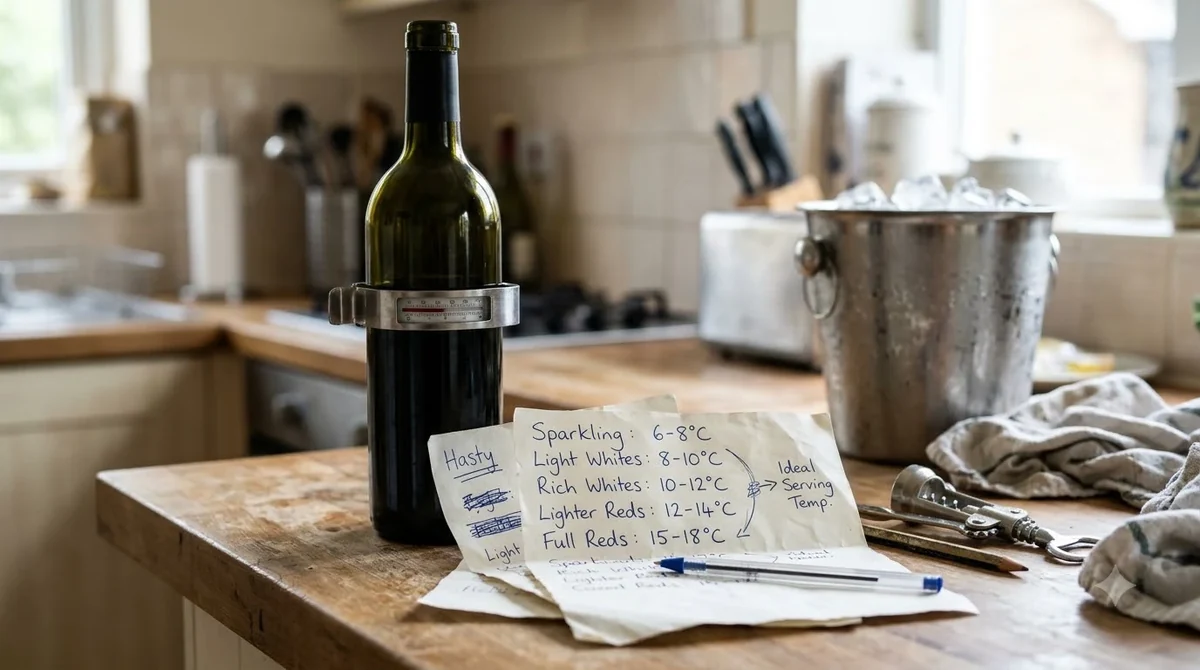
Serve white wine chilled but not ice-cold, generally around 45-50°F for light white styles. Use smaller pours, keep the bottle cool, and select a glass that allows the wine’s aromas to develop without taking up excessive table space.
Temperature can make a noticeable difference in the pairing. A white served too cold may seem muted, while one served too warm can lose its refreshing character. Chasselas and similar light whites are particularly enjoyable at approximately 46-50°F, consistent with Swiss Wine’s recommended 8-10°C serving range.
For other white wine styles, the ideal temperature depends on body and structure. A lighter Sauvignon Blanc can be served near 45-50°F, while a fuller white can benefit from a slightly warmer temperature of 50-55°F.
Red wine should also be served with some restraint. A light Pinot Noir or Gamay is generally more refreshing at 55-60°F than at a warm room temperature. This is particularly important when fondue is served in a warm dining room with a heated pot at the center of the table.
Choosing Glasses and Pour Sizes
A standard wine pour is approximately 5 ounces. A 750 ml bottle provides roughly five standard glasses, making it easy to estimate how much wine to purchase for a gathering.
For four adults, two bottles provide approximately ten standard glasses. That is a useful starting point for a dinner where wine is served alongside fondue, although guests’ preferences and the length of the meal will affect the amount needed.
Small or medium-sized white wine glasses work well for Chasselas and Fendant. Pinot Noir benefits from a glass with a somewhat wider bowl, which helps reveal its fruit and aromatic characteristics.
Serving Wine Alongside the Fondue Pot
Fondue is usually eaten slowly, with diners returning to the pot throughout the meal. Rather than filling glasses to the top, serve moderate portions and replenish them when necessary. This helps keep white wine at its intended temperature and makes it easier to enjoy the food and wine together.
Keep the bottle in a wine cooler or refrigerator between pours. If serving several wines, begin with Chasselas or another delicate white before moving to a more aromatic white or light red.
For general guidance on temperatures, glassware, and food combinations, the Wine Pairing resource provides additional context for selecting a wine that suits the full meal rather than just one ingredient.
Common Wine Pairing Mistakes to Avoid
The biggest fondue pairing mistakes involve excessive tannin, heavy oak, unsuitable sweetness, and incorrect serving temperature. Choosing a wine that complements the entire dish rather than focusing on its individual ingredients usually produces a more balanced result.
One common mistake is choosing a powerful red simply because cheese is rich. Although both cheese and full-bodied red wine can be intense, their characteristics do not necessarily complement each other. Cabernet Sauvignon has high tannin, while traditional cheese fondue generally works better with wines that have little or no noticeable tannin.
Another mistake is selecting an extremely oaky Chardonnay. Chardonnay can be a pleasant accompaniment to many cheese dishes, but its suitability depends on the style. A lightly oaked or unoaked example may work, whereas a rich, heavily barrel-aged version can compete with the fondue’s own creamy texture.
Sweetness is another important consideration. A sweet white wine can make savory cheese taste unusual, particularly when the fondue contains garlic or mature Gruyère. For traditional cheese fondue, choose a dry white. Save noticeably sweet wines for chocolate fondue and other desserts.
There are also practical serving mistakes. Leaving a chilled white on a warm dining table for the entire meal can cause it to lose its freshness. Similarly, serving red wine too warm can make its alcohol seem more prominent and its fruit less defined.
Consider these guidelines before opening a bottle:
- Do not pair traditional cheese fondue with heavily tannic Cabernet Sauvignon or Barolo.
- Avoid very heavily oaked Chardonnay when the cheese is already rich and creamy.
- Do not assume that all red wines are unsuitable; light Pinot Noir and Gamay are reasonable alternatives.
- Do not serve a dry wine with chocolate fondue when a sweeter style is needed.
- Keep light whites around 45-50°F and light reds around 55-60°F.
- Choose a wine that complements both the cheese and its accompanying bread, potatoes, vegetables, or sauces.
It is also useful to distinguish cheese fondue from raclette and other melted-cheese dishes. Their ingredients and accompaniments may overlap, but their textures and seasoning can differ. A wine that works with potatoes, pickled onions, and raclette may not be the most suitable choice for a garlic-heavy fondue mixture.
Likewise, a meal with several different courses may require more than one bottle style. If you are serving fondue as part of a larger menu, consider whether the next dish has stronger flavors or different acidity requirements before selecting the wine for the whole evening.
Frequently Asked Questions
Can you cook cheese fondue with wine that has been opened for several days?
Opened wine can be suitable for cooking if it has been stored correctly and still smells and tastes clean. Refrigerated still wine generally keeps for approximately 3-5 days after opening. Avoid wine that has developed pronounced vinegar, oxidation, or unpleasant aromas, since cooking will not remove those faults.
Is sparkling wine suitable for cheese fondue?
Yes, dry traditional-method sparkling wines can accompany cheese fondue. Brut Champagne, Cava, and other dry sparkling wines provide bubbles and refreshing acidity. Serve them around 40-50°F, and choose a dry style rather than a noticeably sweet sparkling wine for traditional savory fondue.
Does the region where the cheese comes from matter when selecting wine?
Regional matching is a useful starting point, although it is not a strict requirement. Swiss Chasselas is a natural partner for Swiss cheese fondue, while Arneis from Piedmont can accompany Alpine-style cheese dishes. Matching regional traditions can help create a coherent meal, but the wine’s dryness, acidity, and body remain more important than its geographical origin.
Can nonalcoholic wine accompany traditional cheese fondue?
Yes. A dry, alcohol-free white wine with fresh acidity can provide a similar flavor direction to traditional white wine. Sparkling water with a citrus garnish or unsweetened white grape alternatives can also be served alongside the meal. Choose an option without pronounced sweetness to preserve the savory character of the cheese.
Why is bread traditionally used for dipping into Swiss fondue?
Firm bread provides a convenient surface for collecting melted cheese and helps make each serving easier to handle. Slightly stale bread often holds together better than very soft fresh bread. Traditional accompaniments can also include boiled potatoes, although the selection varies between households and regional recipes.
For traditional cheese fondue, start with a dry Swiss Chasselas or Fendant served at approximately 46-50°F. If you prefer something more aromatic, choose Sauvignon Blanc or dry Riesling; if you prefer red, opt for a lightly chilled Pinot Noir or Gamay. Matching the wine to the cheese, seasoning, and accompanying ingredients will make the entire fondue meal more enjoyable.
More in Food & Wine Pairing
 Risotto With White Wine Recipe: Make a Creamy Dinner at HomeUpdated Nov 20, 2026
 Wassail With Wine Recipe for a Festive Spiced Holiday DrinkUpdated Nov 20, 2026
 Spritz Veneziano Recipe: Make a Classic Venetian Aperitivo at HomeUpdated Nov 20, 2026
 Summer Wine Punch Recipe for Easy Homemade EntertainingUpdated Nov 20, 2026
 Bishop Recipe: How to Make a Bright, Citrus-Forward Red Wine CocktailUpdated Nov 20, 2026
 Wine Cupcakes Recipe: Bake Rich Chocolate Cupcakes at HomeUpdated Nov 20, 2026