

We may earn a commission when you buy through links on this page, at no extra cost to you. Learn more.
What wine goes with blue cheese? Sweet wines such as Sauternes and Port are the most reliable matches because their residual sugar balances the cheese’s salt and pungency. Sauternes is a classic with Roquefort, while Port is the familiar partner for Stilton. For milder blues, try late-harvest Riesling or Moscato; the best bottle depends on the cheese’s intensity and texture.
Blue cheese can be creamy, crumbly, sharp, earthy, or intensely salty, sometimes all at once. That range explains why one bottle does not suit every wedge. Start by matching sweetness and intensity, then use acidity to refresh the palate and consider the food served alongside the cheese.
Sweet Wines Make the Most Dependable Blue Cheese Pairings
For a classic blue-cheese board, begin with a sweet wine that has enough acidity to keep its finish fresh. The contrast between ripe fruit and residual sugar on one side and salty, savory cheese on the other is the most dependable starting point.
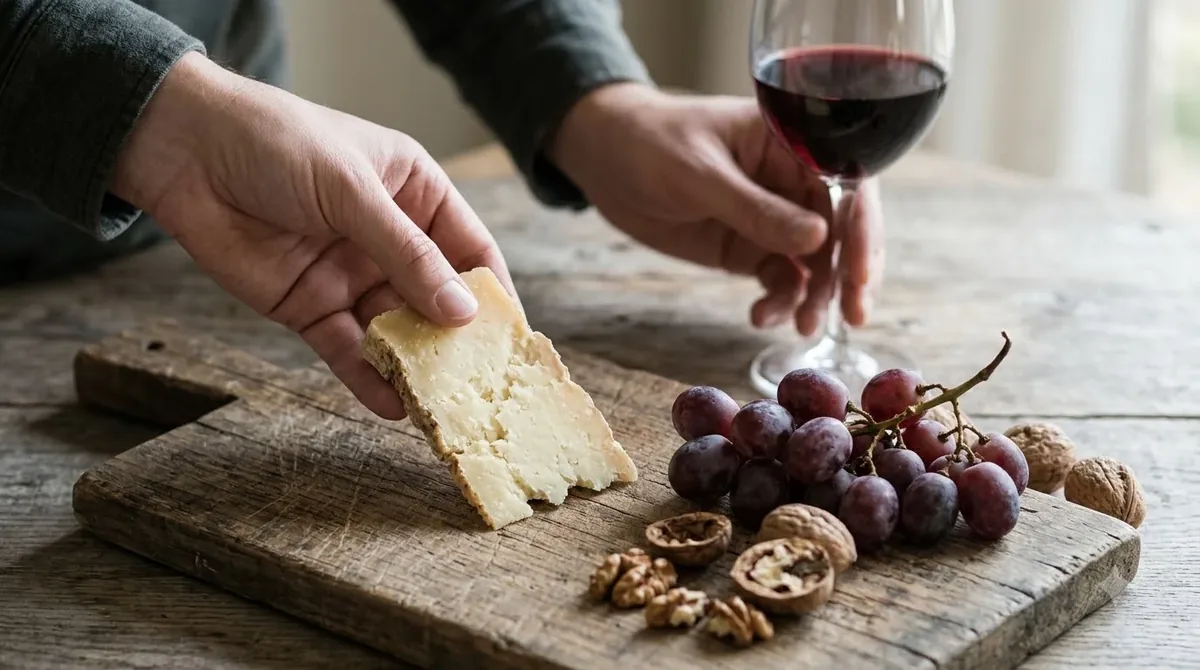
Salt changes how a wine tastes. A very dry wine can seem thinner, more bitter, or more severe beside a salty blue, while sweetness softens the cheese’s sharp edge and makes the wine feel more balanced. Acidity has a separate job: it refreshes the palate after the fat in a creamy cheese coats the mouth. The strongest matches therefore combine noticeable sweetness with enough acidity to prevent a heavy finish. A useful rule is to choose a wine at least as sweet as the food it accompanies; with intensely salty blue cheese, that often means a true dessert wine rather than a barely off-dry white.
Sauternes and Roquefort form one of the best-known examples. Sauternes brings honeyed, apricot-like fruit and a rich texture, while Roquefort contributes a forceful salty bite and sheep’s-milk tang. The contrast is clear but not random: the wine has enough concentration to meet the cheese, and its acidity keeps the combination from becoming cloying. Barsac and other botrytized dessert wines can work along the same lines, as can botrytized Riesling from Germany or sweet wines made from dried grapes.
Port and Stilton offer the other classic route. Port is a fortified wine from Portugal’s Douro Valley, and its sweetness and full body can stand beside Stilton’s dense, earthy, peppery character. Vintage Port or Late Bottled Vintage (LBV) has the structure for an assertive, mature blue; Ruby Port suits a less forceful wedge, while Tawny Port brings nutty, developed notes. For other pungent blues such as Cabrales, try Pedro Ximénez Sherry, whose concentrated dried-fruit sweetness can meet the cheese’s intensity. Decanter highlights Stilton with Port and Roquefort with Sauternes as classic contrast pairings in its cheese-and-wine matching guide.
Match the Bottle to the Blue Cheese on the Board
Blue cheese is a family of different textures and strengths, not a single flavor profile. A creamy, mild cheese needs a lighter partner than an assertive, salty cheese such as Roquefort or mature Stilton.

Use the following table as a starting point rather than a rigid rule. The cheese’s age, salt level, serving temperature, and accompaniments can all shift the ideal match, but these pairings provide a practical first pour.
| Blue cheese | Wine to try first | Why the pairing works |
|---|---|---|
| Cambozola | Late-harvest Riesling | Bright acidity and gentle sweetness suit a mild, creamy texture. |
| Gorgonzola Dolce | Moscato or off-dry Riesling | Fruit and modest sweetness complement the soft, buttery paste. |
| Gorgonzola Piccante | Vin Santo or Recioto di Soave | Concentrated fruit and sweetness meet a firmer, more assertive cheese. |
| Roquefort | Sauternes | Honeyed sweetness counters the cheese’s strong salt and tang. |
| Stilton | Vintage or LBV Port | Full body and rich fruit match the dense, peppery flavor. |
| Cabrales | Pedro Ximénez Sherry | Intense dried-fruit sweetness stands up to a pungent blue. |
| Danish Blue | Late-harvest Riesling | Acidity refreshes the palate while residual sugar balances its sharpness. |
Cambozola is a useful choice for guests who find traditional blue cheese too aggressive. Its texture is exceptionally creamy and its flavor is comparatively mild, so a floral, late-harvest Riesling or another gently sweet white is more suitable than a dense, powerful fortified wine. A large pour of Vintage Port can make the cheese seem faint; choose a lighter wine and let the cheese remain the focus.
Gorgonzola covers a wider range. Gorgonzola Dolce is soft, buttery, and approachable, while Gorgonzola Piccante is firmer and more forceful. Moscato’s fruit and sometimes gentle sparkle can work with the Dolce style; Vin Santo or Recioto di Soave gives a more concentrated partner to a stronger wedge. Wine Enthusiast’s blue-cheese overview also lists noble-rot dessert wines for sharp, salty blues and late-harvest Riesling or Gewürztraminer for less pungent examples. Its guide to blue cheese is useful when comparing the character of individual varieties.
Riesling, Sparkling Wine, and Other Alternatives
Dessert wine is the safest default, but it is not the only route. Off-dry Riesling, aromatic whites, and selected sparkling wines can bring sweetness or refreshing acidity without the weight of a fortified wine.
Late-harvest Riesling is especially versatile because it can combine noticeable fruit and residual sugar with high acidity. That balance makes it a natural partner for creamy Gorgonzola Dolce, Cambozola, and blues that are flavorful but not extremely salty. Look for a style with some sweetness rather than a bone-dry Riesling if the cheese has a strong salty bite. The acidity should keep the pairing lively, while the sugar gives the cheese a counterpoint.
Sparkling wine deserves consideration, especially for a board that includes mild blue alongside other cheeses. Sec Champagne or demi-sec Vouvray brings some residual sugar, while bubbles and acidity help clear the richness of a creamy bite. A very dry sparkling wine may work better with a milder cheese than with a salty, mature blue. Serve sparkling wines cold, generally between 40 and 50°F, and choose the sweeter end of the style range when the cheese is especially assertive.
Dry white wine is a conditional choice. A lively Sauvignon Blanc or dry Chenin Blanc can refresh the palate beside a mild blue served with pears, apples, or salad, but a bone-dry, light-bodied white may disappear beside a heavily salted wedge. Red wine can work when it has ripe fruit and restrained tannin: Grenache, Zinfandel, or Australian Shiraz is a better bet than a young, heavily structured Cabernet Sauvignon, whose naturally high tannin can seem drying beside salty blue cheese. For broader guidance on acidity, texture, and flavor, the site’s Wine Pairing resource explains the same balancing principles across different dishes.
Blue Cheese in Salads, Sauces, and Hot Dishes
The best wine for blue cheese changes when the cheese becomes part of a complete dish. A dressing, sauce, piece of grilled meat, or sweet garnish can have as much influence on the pairing as the cheese itself.
On a salad, blue cheese is often accompanied by bitter greens, nuts, fruit, and vinaigrette. A late-harvest Riesling can echo pear or apple in the salad while its acidity refreshes the palate; a slightly sweet sparkling wine can also work when the dressing is not too sharp. If the dressing contains a lot of vinegar or citrus, choose a wine with equal or higher acidity so the wine does not seem flat.
Blue cheese sauce on steak or a burger brings salt, fat, and savory depth to the plate. A ripe, lower-tannin red such as Grenache or Zinfandel can work with grilled beef, caramelized onions, and a restrained amount of cheese sauce. Take care with hot sauce or jalapeños: chili heat is amplified by alcohol and tannin, so avoid a high-alcohol, heavily structured red with a spicy blue-cheese dip.
Blue cheese in pasta or a baked dish often becomes creamier as it melts into the sauce. For rich Gorgonzola pasta, try an off-dry Riesling or a fresh, high-acid white; a full-bodied red may suit a version with mushrooms or grilled meat, but delicate Pinot Noir can be overwhelmed by a pungent sauce. For related comfort-food pairings, compare what wine goes with mac and cheese and what wine goes with grilled cheese. On a mixed board, remember that fresh goat cheese is tangy and high in acidity, so a crisp Sauvignon Blanc may suit that portion while Port or Sauternes remains the stronger match for blue; see what wine goes with goat cheese.
Serve the Cheese and Wine at the Right Temperature
Temperature affects both aroma and texture, so give the cheese time to soften and serve each wine style cool enough to retain freshness. A simple serving plan helps guests notice the contrast instead of tasting only cold fat or warm alcohol.
Take blue cheese out of the refrigerator about 45 to 60 minutes before serving, as Decanter recommends for cheese boards. Keep it covered while it comes closer to room temperature. Very cold cheese can seem firm and muted, while cheese that has become too warm may feel overly soft and release a stronger aroma than intended. Arrange the board from mild to intense so guests can begin with Cambozola or Gorgonzola Dolce before moving to Stilton, Roquefort, or Cabrales.
Serve sweet white wines such as Sauternes and late-harvest Riesling at about 43 to 50°F. That range keeps their sweetness fresh and their aromas expressive without making the wine feel syrupy. Sparkling wines are generally best at 40 to 50°F. If you choose a dry white to accompany a mild blue, 45 to 50°F is a useful range for lighter styles, while fuller whites can be served around 50 to 55°F.
Port and other fortified wines are often served in smaller pours than table wine because their flavors and alcohol are concentrated. Use a modest glass beside Stilton or Roquefort, then offer more only if guests want it. A standard wine pour is about 5 ounces, and a 750 ml bottle provides roughly five such glasses. For a tasting with two or three cheeses, smaller pours let people compare pairings without filling the glass each time.
| Wine style | Serving temperature | Blue-cheese use |
|---|---|---|
| Sweet white | 43–50°F | Sauternes with Roquefort; Riesling with mild blues |
| Sparkling | 40–50°F | Sec Champagne or demi-sec Vouvray with milder blues |
| Light white or rosé | 45–50°F | Dry styles with mild blue and fresh accompaniments |
| Full-bodied white | 50–55°F | Richer blue-cheese dishes |
| Light red | 55–60°F | Juicy, lower-tannin reds with milder dishes |
| Full-bodied red | 60–65°F | Fruit-forward reds with steak or burgers |
Tip: Set out two small pours rather than committing to one bottle for the entire board: try a late-harvest Riesling with a mild blue, then compare it with Port or Sauternes beside the strongest cheese. Taste the cheese first, take a sip of wine, and then try them together.
Common Pairing Mistakes and Simple Fixes
Most disappointing blue-cheese matches come from a mismatch in sweetness, intensity, or tannin. A few small adjustments can rescue a bottle that seems wrong with the first bite.
The most common mistake is serving an extremely dry wine or a very tannic red with a salty blue. A crisp white may taste thin beside Roquefort, while high tannin can seem drying and bitter beside a spicy blue. Move toward late-harvest Riesling, Sauternes, or a sweet fortified style; when red is essential, choose juicy Grenache or fruit-forward Zinfandel with softer tannins.
Excessive sweetness can also overwhelm the food. A concentrated dessert wine may flatten a mild, creamy blue, leaving the wine as the only noticeable flavor. Match intensity as well as salt: use a delicate sweet white for Cambozola, a medium-weight sweet wine for Gorgonzola Dolce, and save Port or Sauternes for a sharper, saltier cheese. This keeps the cheese present in the pairing rather than turning it into a small garnish for the wine.
Finally, avoid putting every strong item on the board at once. Aged blue cheese, spicy salami, hot mustard, very dark chocolate, and a high-alcohol red can create several competing sensations. Keep the main pairing simple: one or two blues, a suitable wine, neutral crackers or bread, and a few accompaniments such as pear or plain nuts. Add stronger flavors in small amounts and give guests room to compare each bite.
Frequently Asked Questions
These quick answers cover a few details about blue-cheese production and serving that can help make the next pairing more informed.
What creates the blue veins in blue cheese?
Blue cheeses use Penicillium mold cultures to create their characteristic veins. Cheesemakers pierce the cheese to create air passages, allowing oxygen to reach the mold and develop the blue, green, or teal veining. The same process contributes to the cheese’s distinctive aroma and flavor.
Is Cambozola a type of Gorgonzola?
Cambozola is a German cheese that combines elements of Gorgonzola with the triple-crème approach associated with Camembert. The result is milder and creamier than many traditional blues. That softer profile is why it often works with a lighter sweet white rather than a powerful fortified wine.
How should leftover blue cheese be wrapped?
Cheese specialist guidance recommends cheese paper for storing blue cheese. When cheese paper is unavailable, wax paper with an outer layer of plastic wrap is an alternative; placing it in a large resealable bag can help keep other refrigerator odors away while allowing the cheese some breathing room. Avoid tightly sealing a moist blue directly in plastic for extended storage.
Can frozen blue cheese be used in dressing?
Yes. Freezing a piece of blue cheese before grating can produce fine shreds that disperse through a dressing for a smoother texture. Add the grated cheese gradually and stir between additions to avoid clumps.
Which less familiar blue cheeses are worth trying?
Fourme d’Ambert and Bleu d’Auvergne are two French blues to look for beyond the best-known Roquefort, while Cabrales from Asturias offers a more assertive Spanish option. Their different levels of salt, texture, and pungency make them useful comparisons beside a sweet Riesling, Sauternes, or Pedro Ximénez Sherry.
For the most reliable match, start with the cheese’s intensity: choose late-harvest Riesling for a mild blue, Sauternes for Roquefort, and Port for Stilton. Keep sweetness, acidity, and serving temperature in balance, and the cheese board will offer more than one successful pairing.
More in Food & Wine Pairing
 Risotto With White Wine Recipe: Make a Creamy Dinner at HomeUpdated Nov 20, 2026
 Wassail With Wine Recipe for a Festive Spiced Holiday DrinkUpdated Nov 20, 2026
 Spritz Veneziano Recipe: Make a Classic Venetian Aperitivo at HomeUpdated Nov 20, 2026
 Summer Wine Punch Recipe for Easy Homemade EntertainingUpdated Nov 20, 2026
 Bishop Recipe: How to Make a Bright, Citrus-Forward Red Wine CocktailUpdated Nov 20, 2026
 Wine Cupcakes Recipe: Bake Rich Chocolate Cupcakes at HomeUpdated Nov 20, 2026