

We may earn a commission when you buy through links on this page, at no extra cost to you. Learn more.
For anyone asking how to serve white wine, start by matching its temperature to the wine’s body: serve light, crisp whites at 45–50°F and fuller whites at 50–55°F. Use a stemmed glass, pour a modest serving, and let the wine warm slightly in the glass rather than serving every bottle ice-cold. These small adjustments help preserve freshness while allowing fruit, floral, mineral, and oak notes to show clearly.
White wine is often chilled too much because the refrigerator seems like the obvious place to keep it. A better approach is to think about the grape, weight, sweetness, and winemaking style before opening the bottle. The following steps cover still whites as well as the sparkling styles often served alongside them, with practical guidance for a dinner at home or a larger gathering.
White Wine Serving Temperature Depends on Style
The best serving temperature depends more on body and style than on the wine’s color, as explained in Decanter’s white-wine temperature guide. Start light whites near 45–50°F, give fuller whites a little more warmth at 50–55°F, and serve sweet whites around 43–50°F.
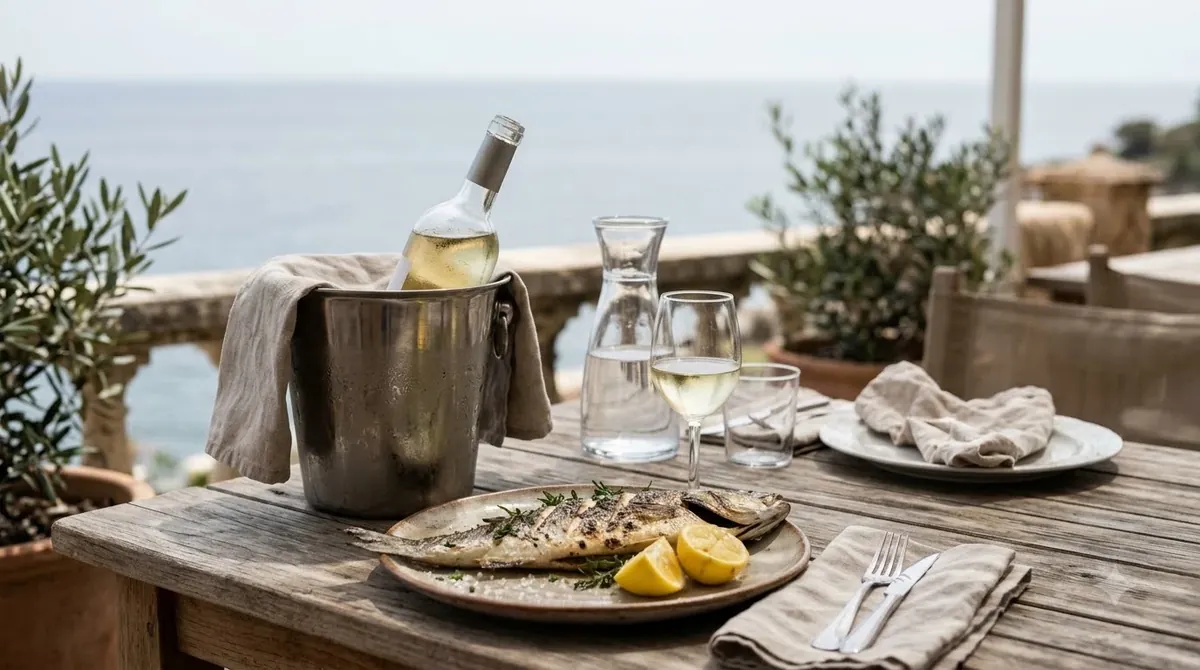
Use the chart as a starting point. A crisp Pinot Grigio or Sauvignon Blanc usually benefits from a brisk chill, while a barrel-aged Chardonnay needs a little more warmth to show its texture and layered aromas. The same grape can produce different styles, so a lean, unoaked Chardonnay can sit nearer the lower end of the full-white range than a broad, oak-influenced example.
| White wine style | Examples | Serving temperature | Serving approach |
|---|---|---|---|
| Light, crisp whites | Pinot Grigio, Sauvignon Blanc, unoaked Chenin Blanc | 45–50°F | Chilled; keep the first pour cool |
| Fuller-bodied whites | Chardonnay, Viognier, white Rhône blends | 50–55°F | Lightly chilled; allow aromas to open |
| Sweet whites | Moscato, late-harvest Riesling, Sauternes | 43–50°F | Well chilled, with sweetness balanced by freshness |
| Sparkling wines | Champagne, Cava, Prosecco | 40–50°F | Serve cold enough to retain lift and bubbles |
Temperature changes the balance a person notices in a glass. Cooler wine tends to make acidity feel more pronounced and can restrain fruit and floral aromas; warmer wine releases more aroma and makes its fruit seem broader. That is why a Sauvignon Blanc that tastes bracing straight from a cold refrigerator may become more aromatic after several minutes on the table, while an oaky Chardonnay can seem muted if it is poured close to freezing.
These are working ranges, not rigid rules. A young, high-acid Riesling can handle the cooler end of its range, while an older, complex white may show more detail closer to 50–55°F. The goal is not to hit a laboratory-perfect number and keep it there; it is to begin at a temperature that leaves room for the wine to evolve as it warms in the glass.
Chill the Bottle Without Flattening Flavor
Plan ahead with the refrigerator, then use an ice-water bath when time is short. A steady chill is easier to control than leaving a bottle in the freezer or burying it in ice for an unknown amount of time.
For a bottle starting near room temperature, allow about an hour or more in the refrigerator; timing changes with the fridge, bottle size, and starting temperature. Wine Enthusiast’s guide estimates about 1½ hours for light, dry whites and 1 hour for fuller whites. A bottle from cool storage may need only a short finishing chill, while one left in a warm kitchen will take longer. See Wine Enthusiast’s serving-temperature and glassware guide for more style-specific advice.
For a faster chill, use a bucket filled with a mixture of ice and water; water transfers cold to the bottle more evenly than air. Turn the bottle occasionally if part of it sits above the waterline, then dry it before taking it to the table. Keep the bottle away from sunlight, a hot stovetop, and warm parts of the room, and return it to the refrigerator or bucket between pours during a long meal.
Tip: Chill a light white a little below its target temperature when guests will be seated for a long meal. The wine will warm in the glass, and starting slightly cooler gives it time to reach its best aromatic range instead of becoming warm halfway through the first course.
Avoid serving a bottle straight from the coldest part of the refrigerator without tasting it. Excessive chilling can hide fruit and floral notes, making the wine seem sharp or thin; if the first sip feels closed, let the glass stand for five to ten minutes and taste again. Keep the bottle away from direct sunlight, a hot stovetop, and other warm spots, returning it to the refrigerator or bucket between pours during a long meal.
Choose a Glass That Lets the Wine Show Its Character
A clear, stemmed white-wine glass with a gently curved bowl works for most still whites. Use a slightly wider bowl for richer Chardonnay and other aromatic, full-bodied styles, and hold the glass by its stem to limit warming from your hand.
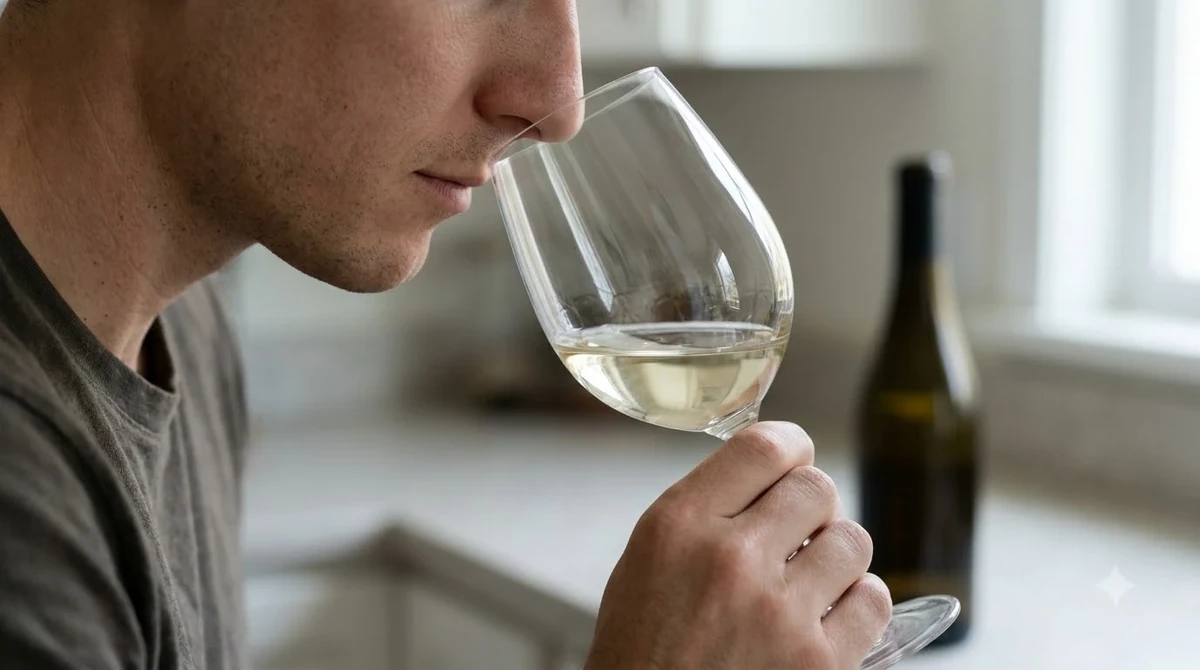
Glass shape influences how aromas collect above the wine and how easily a drinker can smell them. A modest U-shaped bowl is a practical choice for Sauvignon Blanc, Pinot Grigio, and Riesling because it gathers fresh fruit and floral notes without giving the wine a huge surface area. The stem also keeps warm fingers away from the bowl, which matters when the wine is being served at 45–50°F.
Fuller whites benefit from a little more space. Chardonnay, Viognier, and textured white blends can be poured into a glass with a rounder bowl and a wider opening, allowing more room to swirl and release aromas. This does not require a separate glass cabinet: one good all-purpose white-wine glass is enough for most occasions, with a larger bowl as a useful option for special bottles or oak-aged styles.
Pour about 5 ounces at a time, leaving room in the bowl to swirl without spilling. A standard 750-milliliter bottle holds a little over 25 fluid ounces, or about five 5-ounce servings. Avoid filling the glass to the rim: a smaller pour gives aromas room to gather, makes swirling easier, and lets guests compare the wine as it warms or as a new course arrives. Use clear, clean glass so you can see the wine’s color and avoid distracting detergent or cupboard aromas.
Open, Pour, and Serve White Wine at the Table
Most still white wines can be opened and poured without a long breathing period. Remove the capsule cleanly, pull the cork or open the closure, wipe the bottle lip if needed, and pour slowly so the wine reaches the glass without splashing.
Everyday whites are generally ready to enjoy soon after opening rather than after a long period in a decanter. A gentle swirl in the glass gives most light and medium-bodied examples enough air; a mature, delicate white may lose appeal if left exposed for too long. Open it shortly before serving, and do not shake the bottle or stir the wine with a utensil.
Serve sparkling white wine a little colder than still white, generally around 40–50°F. Champagne and Cava receive their second fermentation in the bottle, while Prosecco is made primarily from Glera using the tank method. A flute emphasizes the stream of bubbles, while a white-wine glass gives more room for aroma. At dinner, pour the lighter white before the richer one, and open sparkling bottles carefully to limit lost bubbles.
Match White Wine With Food and Seasoning
Good pairing begins with balance: match the wine’s acidity to the food, choose a wine at least as sweet as a sweet dish, and remember that salt and fat can soften tannin. White wines cover a wide range of acidity and body, so the best match depends on both the grape and the preparation.
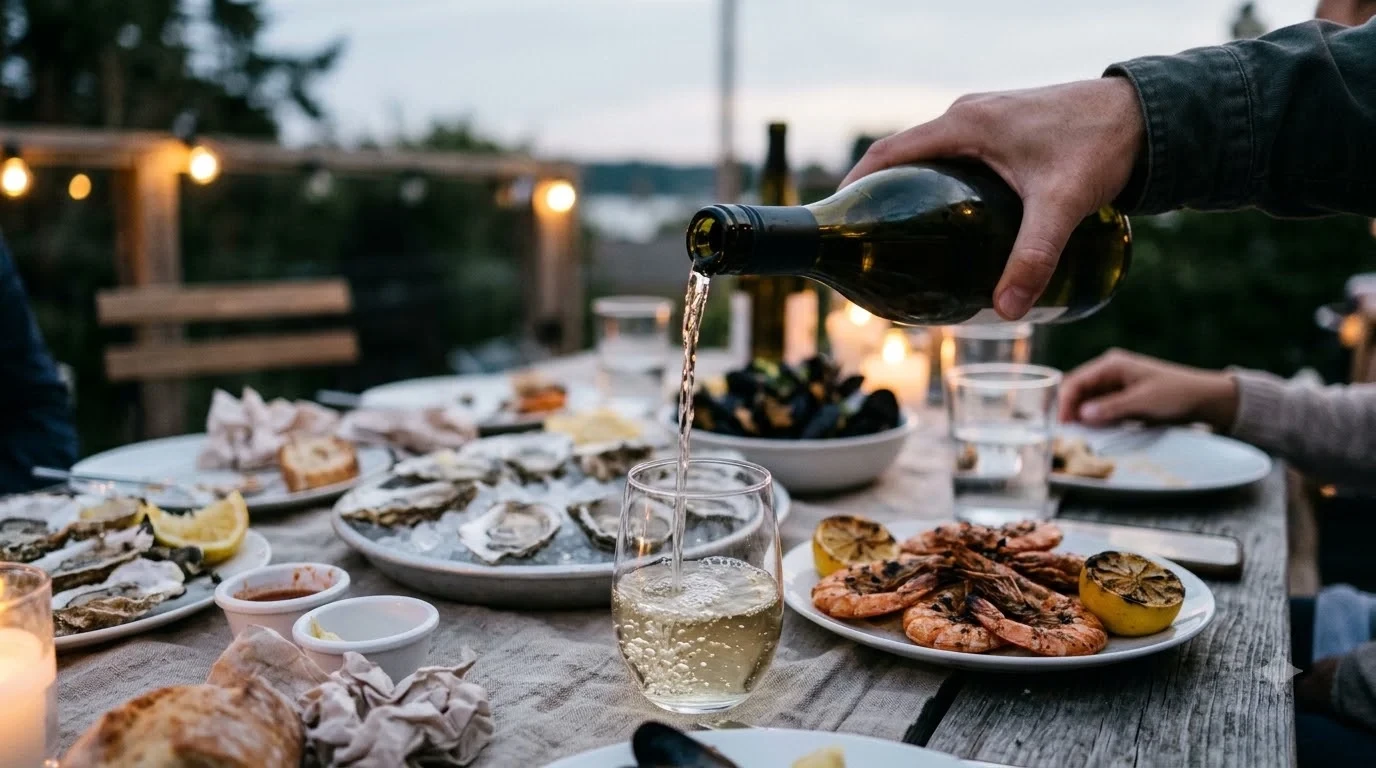
Sauvignon Blanc and Riesling are usually high in acidity, making them useful with lemon, vinaigrette, fresh herbs, goat cheese, oysters, and bright salads. Dry Riesling can work with pork, ginger, and aromatic herbs; an off-dry version may suit chile heat better because high alcohol and tannin can intensify the burn. Chardonnay generally has medium acidity and can match roast chicken, creamy pasta, or fish with butter sauce, while Pinot Grigio is often refreshing with shellfish and simply cooked seafood. For grape-specific details, see how to serve pinot grigio and how to serve pinot gris.
Sweetness matters most with dessert: the wine should be at least as sweet as the food, or it may taste thin and sour beside it. Moscato’s aromatic fruit can suit fruit-based desserts, while sweeter Riesling can work with peach, apple, or lightly spiced pastries. Match intensity as well as sugar; a very rich chocolate dessert can overwhelm a delicate white. Salt and fat can soften tannin, but most crisp whites have little tannin, so acidity is often the more useful pairing tool. Oily fish is more likely to clash with tannic reds than with fresh whites.
Temperature still matters at the table. A white served too cold can seem sharper beside lemon or vinegar, while a warm, full-bodied wine may feel heavy next to delicate seafood. For more grape categories, visit Wine by Type; for pink wines at the table, see how to serve rose. Make small adjustments after the first bites rather than assuming the first sip tells the whole story.
Store Bottles and Preserve Leftover White Wine
Keep unopened white wine in a cool, dark place with a steady temperature, ideally near 55°F, and protect it from direct light and repeated temperature swings. Once opened, seal the bottle and refrigerate it rather than leaving it on the kitchen counter.
For still white wine, plan to finish the opened bottle within about 3–5 days when it has been recorked or tightly sealed and kept in the refrigerator. Sparkling wine usually holds its character for about 1–3 days when closed with a proper sparkling-wine stopper and refrigerated. These windows are practical guidelines rather than a guarantee: a delicate aromatic white may fade sooner, while a fuller white can sometimes remain appealing a little longer. If the wine smells flat, bruised, or noticeably unlike it did when first opened, its best moment has likely passed.
Limit air contact after opening: replace the closure promptly, keep the bottle upright in the refrigerator, and do not leave it uncorked during a long meal. A smaller, clean bottle can hold a small remainder with less empty space above the wine. Keep it separate from wine already poured into glasses or left on the table.
For unopened bottles, a stable environment matters more than frequent handling. Store natural-cork bottles on their sides near 55°F, away from a radiator, sunny window, oven, or dishwasher. A cool cupboard can work for short-term storage, while a temperature-controlled wine refrigerator or cellar is better for bottles being held for months or years. Some whites naturally deepen from pale straw toward gold as they age, so judge leftovers by aroma and taste as well as color; refrigeration slows change but does not stop it.
Frequently Asked Questions
These quick answers cover a few serving situations that can come up beyond the basic temperature, glass, and storage routine. Use them as practical options rather than strict rules for every bottle.
Can I chill white wine in the freezer?
Yes, but use a timer and remove the bottle promptly. Decanter cites about 22 minutes for a light chill and 28 minutes for a fuller chill in a freezer; actual timing varies with the freezer and the bottle’s starting temperature. A forgotten bottle can become slushy or put pressure on its closure, so a refrigerator or ice-water bath is safer for routine chilling.
Should I decant white wine before serving?
Most white wines do not need decanting, and swirling the glass gives enough aeration for everyday styles. One exception is some sweet dessert wines, which can benefit from a little extra air before serving. Decant only when you have a clear reason, such as a specific bottle that seems unusually closed or a serving ritual you enjoy.
Can I put ice cubes directly into white wine?
You can, but melting ice dilutes the wine and changes its balance as the glass sits. A better option for a warm outdoor setting is to chill the bottle in advance or use a reusable chilling accessory that does not add water. If you do choose ice, use it as a personal preference rather than assuming it is the standard way to serve the wine.
Why does my white wine have small crystals in the bottle?
Clear or pale crystals can be tartrate deposits, sometimes called wine diamonds. They form naturally when tartaric acid and potassium combine and crystallize, often after a bottle has been chilled. They are not shards of glass and are generally harmless, though you can leave them in the bottle by pouring the final portion carefully.
Can I serve white wine in a red-wine glass?
Yes; a clean red-wine glass is usable, particularly for a richly textured Chardonnay or an aromatic skin-contact white that benefits from more air. The larger bowl may let the wine warm more quickly, so pour a smaller amount and pay attention to temperature. For a light, crisp white, a smaller-bowled glass is usually easier to keep cool.
Serving white wine well is mostly a matter of choosing a suitable temperature, using a clean glass, and pouring enough to let the wine breathe without warming too quickly. Start with the style-based ranges, then make small adjustments for the bottle, the food, and the room.
More in Wine Types & Grapes
 Zinfandel Sugar Content: Dry Red vs. White Zinfandel GramsUpdated Nov 21, 2026
 Best Zinfandel Substitute Options for Sipping and CookingUpdated Nov 21, 2026
 Zweigelt Food Pairing: Best Dishes, Cheeses, and Serving TipsUpdated Nov 21, 2026
 Zinfandel Tannins Explained: How Structure Shapes Every BottleUpdated Nov 21, 2026
 Zinfandel Sweetness Level: Dry Red vs. Sweet White Zin ExplainedUpdated Nov 21, 2026
 Xinomavro Food Pairing: Best Dishes, Styles, and Serving TipsUpdated Nov 21, 2026