

We may earn a commission when you buy through links on this page, at no extra cost to you. Learn more.
Shiraz tannins are medium-high to high, creating a plush, velvety grip that gives the wine its full-bodied structure and aging potential. Extracted from the grape’s thick dark skins, seeds, stems, and oak barrels, these natural polyphenols bind to proteins in your saliva to leave a drying sensation across the gums and tongue. While cool-climate Syrah often shows firmer, peppery grip, warm-climate Shiraz typically balances its abundant tannin with lush dark fruit and rounder texture.
If you have ever taken a sip of a bold Australian red and felt a rich, cocoa-like coating linger on your palate, you have experienced the structural backbone of this grape. Understanding how these compounds work—and how winemakers shape them—makes it much easier to pick a bottle that matches your meal and your mood.
What Shiraz Tannins Are and Where They Come From
Tannins in Shiraz are naturally occurring polyphenols that add both astringency and structural weight to the finished wine. According to wine educators at Wine Folly, these compounds come primarily from grape skins, seeds, and stems, as well as the wooden barrels used during aging.
Because the Shiraz grape has remarkably thick, deeply pigmented skins, it naturally yields higher tannin levels and darker color concentration than thin-skinned varieties. When grape skins soak in the fermenting juice during maceration, condensed tannins dissolve into the liquid alongside anthocyanins, the pigments responsible for the wine’s inky ruby-to-purple hue. Seeds and stems also contribute condensed tannins, though winemakers manage extraction carefully so the wine tastes structured rather than harshly bitter.
Oak aging introduces a second category known as hydrolyzable tannins, which leach slowly from barrel staves into the wine. Unlike the sharper grip of grape-skin compounds, barrel tannins tend to feel smoother and impart subtle notes of vanilla, clove, toast, and baking spice. Together, grape and oak polyphenols build a scaffold that supports the wine’s intense dark fruit and higher alcohol.
In the glass, these polyphenols behave like molecular chains that lengthen and soften over time. As a bottle rests in a cellar for five to ten years or longer, tannin molecules bind together and eventually fall out of suspension as harmless sediment, transforming an assertive young red into something supple and silky.
How Shiraz Tannins Taste and Feel on the Palate
Rather than tasting like a specific fruit or spice, tannins create a tactile sensation of dryness, grip, and gentle bitterness across the tongue and inner cheeks. While individual bottles vary, Wine Enthusiast notes that Syrah and Shiraz generally show firm to abundant tannins wrapped in a full-bodied, opaque profile.
That tactile sensation happens because polyphenol molecules bind directly to lubricating proteins in your saliva, temporarily reducing slipperiness in your mouth. Think of the dry, puckering feeling left behind by an over-steeped black tea bag or a square of high-cacao dark chocolate. In a well-made bottle, that drying grip feels finely grained—often described by tasters as velvety, dusty, or plush—rather than raspy or green.
The surrounding components in the glass dramatically influence how heavy that grip feels. Warm-climate styles often carry 14% to 15.5% alcohol by volume alongside generous blackberry, plum, and blueberry flavors, which cushion the astringency and make the texture feel round and mouth-coating. If you are exploring what Shiraz tastes like across different producers, notice how ripe fruit sweetness can make high tannin levels feel deceptive and smooth on the first sip.
By contrast, cooler-climate bottlings usually sit closer to 13% to 14.5% alcohol by volume with brisker natural acidity and savory notes of cracked black pepper, smoked meat, and violet. With less jammy fruit padding the mid-palate, the tannic backbone feels tighter, more linear, and noticeably firmer on the finish.
How Shiraz Compares to Other Red Wine Styles
On the broader spectrum of red wines, Shiraz sits comfortably in the upper tier for polyphenol structure, noticeably bolder than medium-bodied reds yet generally rounder than massive, angular varieties. Comparing its texture side by side with other classic grapes helps clarify what to expect before pulling a cork.
| Wine Style | Typical Tannin Level | Tannin Texture | Typical Body |
|---|---|---|---|
| Warm-Climate Shiraz (e.g., Barossa) | Medium-High to High | Plush, velvety, mouth-coating | Full-bodied |
| Cool-Climate Syrah (e.g., Northern Rhône) | High | Firm, fine-grained, savory grip | Medium-Full to Full |
| Cabernet Sauvignon | High | Structured, architectural, assertive | Full-bodied |
| Merlot | Medium to Medium-High | Soft, supple, rounded | Medium-Full |
| Pinot Noir | Low to Medium | Silky, delicate, light grip | Light to Medium |
Compared to Cabernet Sauvignon, which often builds an angular, jaw-gripping frame from front to back, Shiraz tends to deliver a broad, front-loaded wave of dark fruit followed by a spicy, lingering grip. Winemakers in both Australia and California frequently blend Cabernet Sauvignon and Shiraz together specifically because their tannin profiles complement each other: Shiraz fills out the mid-palate, while Cabernet extends the structural finish.
At the opposite end of the spectrum, thin-skinned grapes produce far less astringency because they have lower skin-to-juice ratios during fermentation. Reading up on Pinot Noir tannins highlights just how dramatic that contrast is—Pinot Noir relies on bright acidity and delicate, silky grip rather than dense polyphenol concentration. For drinkers browsing Wine by Type to find a middle ground, Merlot or Grenache blends offer softer astringency without sacrificing dark berry flavor.
Climate and Winemaking Factors That Shape Texture
Even though Shiraz and Syrah are genetically the exact same grape variety, vineyard climate and cellar decisions dictate whether the resulting wine feels plush and approachable or tightly wound. Sunlight, harvest timing, and fermentation techniques all leave a distinct fingerprint on the final mouthfeel.
In warm, sunny regions such as South Australia’s Barossa Valley or McLaren Vale, long growing seasons allow grape skins and seeds to ripen completely before harvest. Ripe seeds lose their harsh, green bitterness, yielding rounder, sweeter-feeling tannins that require less bottle age to enjoy. Conversely, cooler regions like France’s Northern Rhône Valley, Washington’s Columbia Valley, or coastal Victoria in Australia preserve higher natural acidity and produce firmer, more savory grip.
Inside the winery, cellar choices fine-tune how much astringency enters the bottle:
- Extended maceration: Leaving the fermenting wine in contact with grape skins for days or even weeks after fermentation finishes encourages small tannin molecules to polymerize into larger, softer chains.
- Whole-cluster fermentation: Including intact grape stems adds aromatic spice and floral lift, along with extra stem tannins that bring a crisp, herbal edge to the structure.
- Barrel selection: Aging in new American or French oak barrels contributes sweet spice and smooth wood tannins, while neutral barrels or concrete tanks emphasize pure grape-skin grip.
- High-volume production methods: Entry-level, large-production bottlings are often fermented shorter and gently fined to keep the texture round and soft right upon release.
Tip: If a young bottle feels too tight or astringent on the first pour, decant it for 60 minutes before serving so oxygen can soften the sharpest edges.
Serving and Pairing High-Tannin Shiraz
Proper serving temperature and thoughtful food pairings work together to keep dense polyphenols in balance rather than letting them overwhelm your palate. Because higher alcohol amplifies the drying sensation of tannins, temperature control matters just as much as glassware.
Aim to serve most bottles between 60°F and 65°F (15°C to 18°C), which is noticeably cooler than a warm dining room. Placing an unopened bottle in the refrigerator for about 15 minutes before pulling the cork brings it right into this sweet spot, keeping the fruit vibrant and preventing the alcohol from tasting hot. If you are wondering whether Shiraz should be chilled during warmer months, a brief stint in the fridge is one of the easiest ways to make big tannins feel fresher and more balanced.
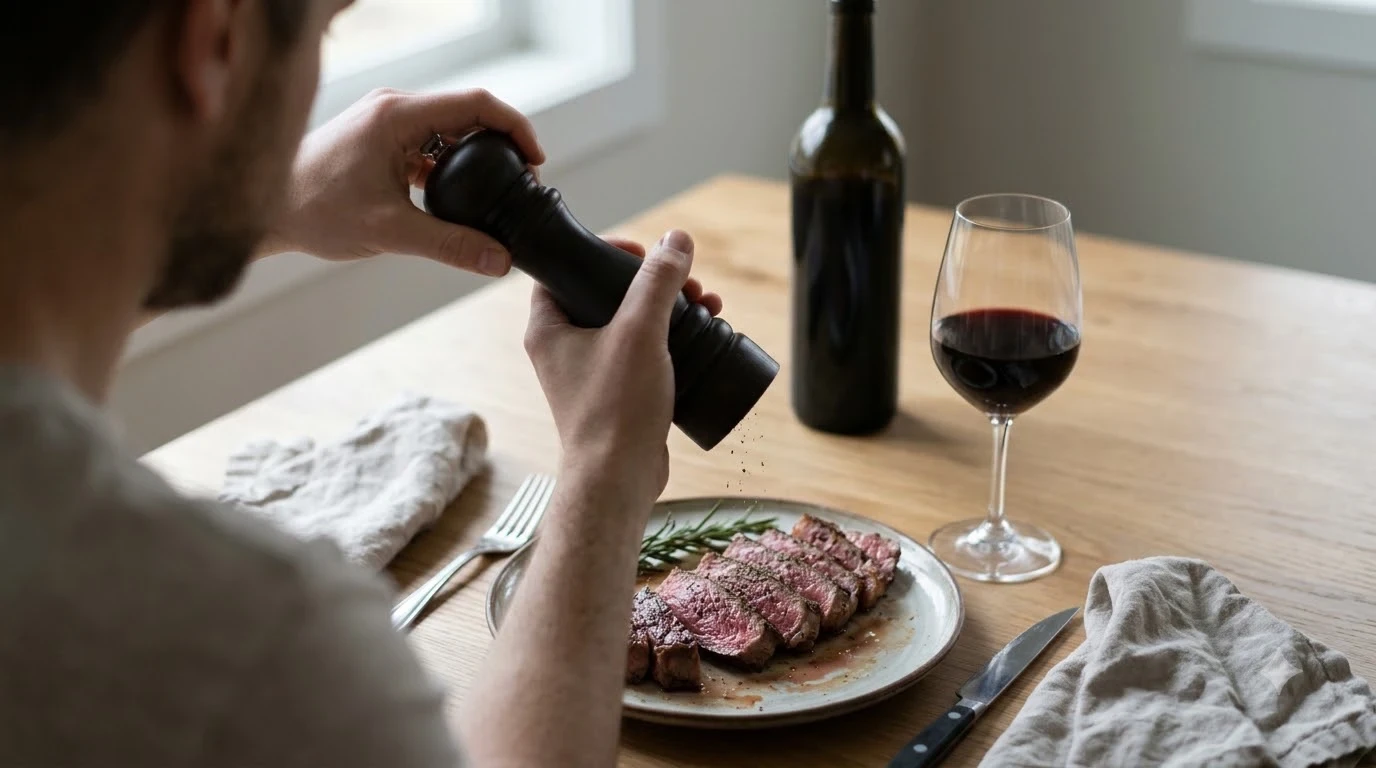
At the dinner table, rich proteins and savory fats are natural partners for structured reds. When you eat a bite of well-marbled steak or slow-cooked lamb, dietary fats and proteins coat your tongue, while the wine’s polyphenols bind to those proteins and cleanse your palate between bites. That chemical interaction softens the wine’s astringency and makes the meat taste richer at the same time.
Classic dishes that stand up to firm Shiraz grip include:
- Charred and smoked meats: Pepper-crusted ribeye, grilled lamb chops, smoked brisket, and barbecue ribs mirror the wine’s smoky, spicy undertones while providing plenty of protein and fat.
- Slow-braised comfort dishes: Beef stew, osso buco, and rich mushroom ragù match the wine’s full body and lush dark fruit.
- Boldly spiced dishes: Lamb shawarma, Chinese five-spice pork, and tandoori meats play off the natural black pepper and clove notes in the glass.
- Aged and semi-soft cheeses: Nutty aged Manchego, sharp cheddar, or earthy washed-rind cheeses absorb astringency and highlight subtle savory flavors.
Frequently Asked Questions
Are Shiraz tannins higher than Cabernet Sauvignon tannins?
Shiraz and Cabernet Sauvignon both have medium-high to high tannin levels, though Cabernet Sauvignon usually feels firmer and more angular on the palate. Shiraz tends to wrap its tannins in riper, more front-loaded dark fruit, giving it a plusher, more velvety impression even when total polyphenol levels are comparable.
Why does Shiraz dry out my mouth when I drink it?
That drying sensation happens because polyphenol molecules in the wine bind to lubricating proteins in your saliva, temporarily reducing moisture and friction across your tongue and gums. This natural astringency comes from the grape’s thick skins and seeds as well as oak barrel aging, and it softens immediately when paired with fatty or protein-rich foods.
Do Shiraz and Syrah have different tannin levels?
Shiraz and Syrah are the exact same grape variety, so their baseline skin thickness and natural polyphenol potential are identical. However, warm-climate Shiraz generally tastes rounder and softer due to riper fruit and higher alcohol, whereas cool-climate Syrah typically feels firmer and more linear because of higher acidity and leaner fruit concentration.
How can I soften strong tannins in a young bottle of Shiraz?
Pouring the wine into a wide-bottomed decanter for 45 to 60 minutes exposes it to oxygen, which helps harsh polyphenol chains bind together and feel smoother. Serving the bottle slightly cool at 60°F to 65°F and pairing it with grilled meats, stews, or aged cheese will also tame aggressive astringency right away.
Whether you prefer a plush, fruit-driven bottle from South Australia or a savory, pepper-laced expression from a cooler hillside, tannin structure is what gives this grape its unmistakable presence in the glass. Paying attention to climate, serving temperature, and food pairings lets you enjoy that bold grip at its most balanced and expressive.
More in Wine Types & Grapes
 What Does Mourvèdre Taste Like? Flavor Profile, Regions, and PairingsUpdated Nov 20, 2026
 What Does Marsanne Taste Like? Flavors, Styles, and Food PairingsUpdated Nov 20, 2026
 What Does Malvasia Taste Like? Styles, Flavors, and Food PairingsUpdated Nov 20, 2026
 What Does Grenache Blanc Taste Like? Flavor Profile, Styles, and PairingsUpdated Nov 20, 2026
 What Does Garnacha Taste Like? Key Flavors, Styles, and Pairing TipsUpdated Nov 20, 2026
 What Does Fruit Wine Taste Like? A Complete Flavor and Style BreakdownUpdated Nov 20, 2026