


We may earn a commission when you buy through links on this page, at no extra cost to you. Learn more.
The answer to “what does shiraz taste like” is a bold, usually dry red wine with ripe blackberry, plum, and dark-cherry flavors, often joined by black pepper, licorice, and smoky or chocolate notes. Most examples feel medium- to full-bodied, with noticeable but ripe tannins and enough acidity to keep the fruit from seeming flat. The balance depends on climate and winemaking, so Shiraz can be plush and warm or fresher, peppery, and savory.
Shiraz is the name commonly used for Syrah in Australia and for wines made in a broad, fruit-forward style elsewhere. It is one grape, not a separate variety, and the name alone does not guarantee a sweet, heavy, or heavily oaked wine. Knowing the main aromas, the texture, and the region on the label makes it easier to predict what will be in the glass.
Core Shiraz Flavors: Dark Fruit, Pepper, and Savory Notes
Shiraz most often tastes of dark-skinned fruit, especially blackberry, blueberry, plum, and black cherry, with black pepper providing its signature spicy edge. Depending on ripeness and winemaking, the fruit can taste fresh and juicy or dense and almost jam-like.
In a youthful wine, smell for blackberry, ripe plum, blueberry, and dark cherry first. The fruit can seem sweet because it is ripe and concentrated, but that does not mean the wine contains much sugar. Most Shiraz finishes dry, leaving fruit and spice rather than a sugary coating. A clear pepper note may sit beside the fruit, while other bottles lean toward licorice, mint, dried herbs, or earthy olive-like character.
Shiraz can also carry smoky or meaty aromas, such as smoked bacon, cured meat, or charred herbs. Oak maturation may add vanilla, toast, cocoa, coffee, or baking spice. New oak tends to be more obvious, while older barrels can contribute texture and subtle complexity without making the wine taste strongly of wood. The color is commonly deep ruby to purple, and young examples can look almost opaque in the center of the glass.
Body, Dryness, Tannin, Acidity, and Alcohol
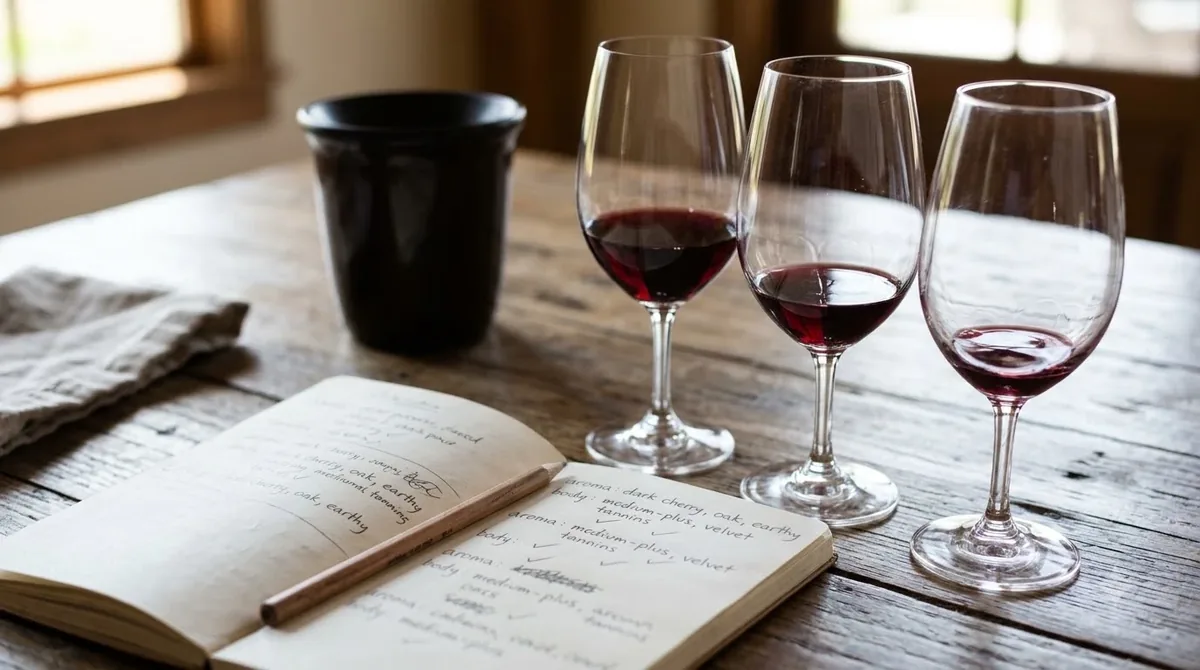
Most Shiraz is dry and medium- to full-bodied, with medium-plus or firm tannin, moderate acidity, and noticeable alcohol. These elements explain why the wine can feel rich and weighty even when its finish is not sweet.
Body describes the wine’s weight on the palate. A lighter Shiraz may feel medium-bodied, with red-fruit freshness; a fuller example feels broader, with concentrated dark fruit and more substantial tannin. Tannin is the drying or gripping sensation on the gums and cheeks. Ripe tannins may feel rounded or fine-grained, while a more extracted example can seem firmer. Tannin is tactile rather than sweet or sour, and food with protein or fat often makes it feel less prominent.
Acidity gives the wine freshness. Shiraz is not usually as sharply tart as high-acid whites such as Riesling or Sauvignon Blanc, but acidity can still lift ripe fruit and prevent a full-bodied wine from seeming flat. Alcohol adds warmth: Wine Enthusiast gives 14%–15.5% ABV as a common range for warm-climate South Australian Shiraz, compared with about 13%–14% for many cooler-climate Syrah examples. Those are tendencies, not fixed limits.
Ripe berry aromas do not make Shiraz a sweet wine. It is generally fermented dry, although some easy-drinking examples may retain a little residual sugar. For comparison, what does chenin blanc taste like can lead to a wider range of sweetness levels, because Chenin Blanc is made from bone-dry to sweet styles. Shiraz is much more commonly encountered as a dry red.
| Style cue | Typical alcohol range | Serving temperature |
|---|---|---|
| Cooler-climate Syrah style | About 13%–14% ABV | 55–60°F for a lighter red |
| Richer, warm-climate Shiraz | About 14%–15.5% ABV | 60–65°F for a full-bodied red |
The ranges are practical guides rather than promises for every bottle. A slightly cool serving temperature can help keep alcohol warmth in check and make the fruit, pepper, and herbal notes easier to distinguish.
How Australian Regions Change Shiraz Flavor
Australian Shiraz does not have one uniform flavor: Barossa Valley tends toward rich blackberry and spice, McLaren Vale often shows blueberry and chocolate, and Hunter Valley is commonly more medium-bodied and savory. Elevation, coastal influence, and day-to-night temperature differences help explain those contrasts.
Barossa Valley in South Australia is a classic reference point for powerful Shiraz. Wine Australia describes its wines as full-bodied and richly textured, with blackberry, pepper, and spice. The area includes old vineyards, including Langmeil’s Freedom vineyard, which Wine Australia says is believed to have been planted in 1843 and is still producing. Barossa Shiraz often has a generous dark-fruit center, ripe tannin, and a broad finish; oak can add vanilla, coffee, or toast.
McLaren Vale is influenced by its proximity to the sea and its Mediterranean climate. Wine Australia characterizes its Shiraz as typically full-bodied, with rich blueberry fruit and chocolate. Eden Valley, at higher elevations within the wider Barossa Zone, is often medium- to full-bodied with blackberry, sage, and pepper; harvest there can occur up to two weeks later than in Barossa Valley. Clare Valley combines warm days with cool nights and is associated with blackberry, black cherry, plum, and licorice.
Heathcote in Victoria offers medium- to full-bodied Shiraz with rich dark fruit, spice, and an iron-like mineral impression. Hunter Valley is a contrast: Wine Australia describes its wines as typically medium-bodied, with red fruit and savory character, and notes that the growing season is warm but avoids large heat spikes. Compare Hunter Valley with Barossa to see how the same grape can move from red-fruit freshness toward a darker, broader style.
Australian labels may identify a region, subregion, or vineyard, each of which offers a clue about style. For a broad overview of wine categories, the site’s Wine by Type resource can help place Shiraz alongside other familiar reds and whites. Start with the region, then use the producer’s description and alcohol level to refine your expectation.
Syrah and Shiraz: One Grape, Different Style Signals
Syrah and Shiraz are two names for the same grape variety, but the choice of name often hints at the style a producer wants to communicate. “Syrah” is frequently associated with cooler-climate, savory wines, while “Shiraz” often signals a riper, fuller-bodied expression.
The Northern Rhône in France is a classic reference for Syrah. Appellations such as Hermitage, Côte-Rôtie, Cornas, and Saint-Joseph can show black fruit, pepper, olive, smoke, violet, and savory complexity. Compared with many warm-climate Australian Shiraz wines, these examples may have more restrained fruit, firmer acidity, and a more linear impression. They can still be concentrated and ageworthy; cool-climate does not mean thin.
The distinction is not a strict rule. Producers in California, Washington, South Africa, Chile, and Australia may choose either name based on intended style or market. Wine Enthusiast describes Shiraz through blueberry, blackberry, ripe tannins, smoked-meat notes, and black pepper, with Barossa Valley as a benchmark; Decanter likewise describes the Shiraz style as generally richer and fuller in body and alcohol than the Northern Rhône-influenced Syrah style. Read Decanter’s comparison of Syrah and Shiraz for more regional context.
For a US shopper, the distinction is practical rather than absolute. Choose Shiraz from Barossa or McLaren Vale when you want ripe dark fruit and a generous texture; look for Syrah from a cooler region when you prefer pepper, freshness, herbs, and savory detail. Region and producer information help narrow the possibilities better than the grape name alone.
Oak, Blends, and Bottle Age Add More Layers
Oak can add vanilla, toast, cocoa, coffee, and baking-spice notes to Shiraz, while blending and bottle age can change its texture and savory character. Some wines are made for early drinking with little oak; others are built for concentration and development.
Oak maturation is common but not compulsory. Wine Australia notes that producers use French oak, combinations of oak types, older barrels, and sometimes no oak for early-drinking styles. New barrels can make vanilla and toast more obvious, while older barrels offer a gentler influence. The best-balanced examples let oak sit beside blackberry and pepper rather than cover them up.
Shiraz is also used in blends. An Australian GSM combines Grenache, Shiraz, and Mourvèdre: Grenache can contribute red fruit and a generous texture, Shiraz brings dark fruit and structure, and Mourvèdre adds savory depth. Shiraz Cabernet blends pair Shiraz’s ripe fruit and spice with Cabernet Sauvignon’s firmer tannin. A small amount of Viognier may also be co-fermented with Shiraz, adding floral lift and aromatic detail.
Bottle age changes the profile. Young Shiraz tends to emphasize blackberry, plum, pepper, and fresh spice; with time, some examples develop dried-fruit, leather, tobacco, cedar, and earthy notes as tannins integrate. Not every bottle is intended for long cellaring, and age does not automatically improve wine. A simple fresh style may be best enjoyed within a few years, while a concentrated wine with good balance can develop for longer.
Food Pairings and the Best Serving Temperature
Shiraz pairs especially well with grilled beef, lamb, barbecue ribs, savory stews, and aged cheeses because its dark fruit and tannin can match rich, flavorful food. Serve a full-bodied Shiraz around 60–65°F, cool enough to keep alcohol warmth in check while allowing the aromas to open.
Grilled or roasted meats are natural matches. Try Shiraz with lamb chops, roast leg of lamb, steak, smoked brisket, or beef short ribs. Ripe fruit can stand beside browning and char, while tannin works well with protein and the richness of meat. A savory barbecue sauce can echo smoke and spice in the wine; very sweet sauces can make a dry red seem more acidic or firm.
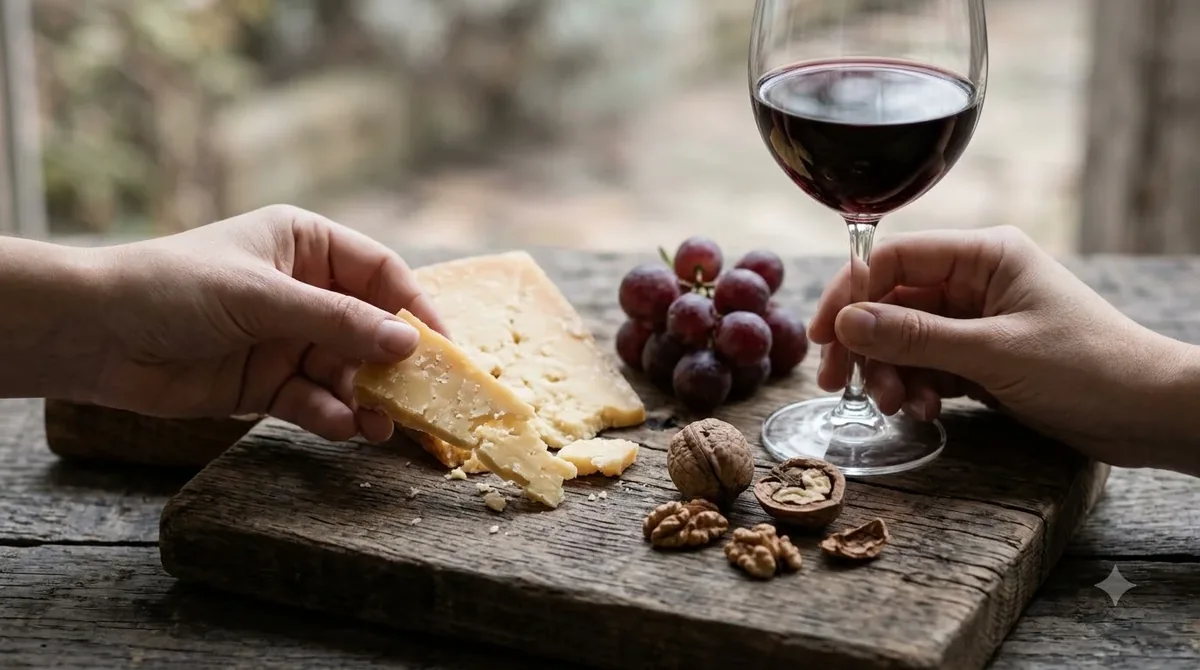
For a casual meal, pour a medium- to full-bodied Shiraz with a burger, grilled sausage, mushroom-topped steak, or meat lasagna. A Hunter Valley style with red fruit and savory detail may suit roast pork, mushrooms, or tomato-based pasta, while a fuller Barossa or McLaren Vale wine can stand up to intensely grilled beef or lamb. Firm, aged cheddar or Gouda, charcuterie, and cured sausage are also useful matches because salt and fat soften the impression of tannin.
Use care with very hot chili: alcohol and tannin can amplify chili heat, making a high-alcohol Shiraz feel hotter and rougher. Acidic sauces also need a wine with enough acidity so the wine does not seem flat. Oily fish can clash with tannic reds, so a lighter red or a fuller white is usually a better choice for simply grilled salmon or tuna.
Tip: If Shiraz tastes hot or overly heavy, chill the bottle briefly and serve it closer to 60°F than to room temperature. A little cooling can make the fruit clearer and keep pepper and savory aromas in focus.
Wine Australia lists charcuterie, grilled and roasted meats including lamb, beef, and game, as well as stews, casseroles, and firm aged cheeses among the wine’s useful pairings. Its Shiraz profile and regional overview is a helpful reference for matching a bottle’s origin with the food on the table. For service, a lighter red can be poured at 55–60°F and a full-bodied red at 60–65°F. A young, full-bodied Shiraz may benefit from 30–60 minutes in a decanter if its tannin feels firm or its aromas seem closed.
For another red-wine comparison, what does corvina taste like is a useful point of reference: Corvina-led wines from Valpolicella commonly give a different balance of red fruit, acidity, and body. Comparing the two can help clarify whether a meal calls for Shiraz’s darker fruit and firmer structure or a lighter red with more freshness.
Frequently Asked Questions
These quick answers address details that often come up after the main flavor profile is clear. They distinguish Shiraz from similarly named grapes and cover a few practical questions about serving and aging.
Is Petite Sirah the same grape as Shiraz?
No. Petite Sirah, also known as Durif, is a distinct grape variety rather than another name for Shiraz. It is a cross involving Syrah and Peloursin, and it is generally known for especially dark color and firm tannin.
Can Shiraz be made into rosé wine?
Yes, although rosé is not the style most people associate with Shiraz. The red-skinned grapes can be pressed after limited skin contact to produce a pink wine, with the exact color depending on the time the juice spends with the skins.
Does every bottle of Shiraz need to be decanted?
No. Decanting is most useful for a young, full-bodied example with firm tannin or aromas that seem closed. Older, delicate bottles may lose freshness if left exposed to air for too long, so handle mature wine more gently.
Why do some people smell much more black pepper in Shiraz than others?
A grape-derived aroma compound called rotundone is associated with peppery notes in Syrah and Shiraz. People vary in their sensitivity to it, so one drinker may find the pepper unmistakable while another notices mostly fruit, herbs, or oak.
Can a well-made Shiraz age for more than a decade?
Yes. A concentrated wine with balanced acidity, ripe tannin, and sound winemaking can develop for well over ten years, although the ideal window differs by bottle and vintage. Fresh berry notes can give way to dried fruit, leather, tobacco, cedar, and earth.
Shiraz is a good choice when you want a dry red with dark fruit, pepper, and enough body to stand up to grilled or slow-cooked food. For the richest style, start with Barossa or McLaren Vale; for more red-fruit freshness and savory character, explore Hunter Valley or a bottle labeled Syrah from a cooler region. Comparing those styles is the clearest way to find the Shiraz profile you enjoy most.
More in Wine Types & Grapes
 Zinfandel Sugar Content: Dry Red vs. White Zinfandel GramsUpdated Nov 21, 2026
 Best Zinfandel Substitute Options for Sipping and CookingUpdated Nov 21, 2026
 Zweigelt Food Pairing: Best Dishes, Cheeses, and Serving TipsUpdated Nov 21, 2026
 Zinfandel Tannins Explained: How Structure Shapes Every BottleUpdated Nov 21, 2026
 Zinfandel Sweetness Level: Dry Red vs. Sweet White Zin ExplainedUpdated Nov 21, 2026
 Xinomavro Food Pairing: Best Dishes, Styles, and Serving TipsUpdated Nov 21, 2026