

We may earn a commission when you buy through links on this page, at no extra cost to you. Learn more.
Ridge red wine is the range of California reds made by Ridge Vineyards, best known for Cabernet Sauvignon from Monte Bello and Zinfandel-led wines from Sonoma County. The name does not refer to one grape or one flavor profile: Ridge makes structured mountain Cabernet, powerful old-vine Zinfandel, and blends that reflect historic vineyard plantings. The most useful way to choose a bottle is to start with its vineyard name and grape mix, then match its body and tannin to the meal or occasion.
Ridge is a long-established California producer whose identity is closely tied to specific vineyards rather than a single house blend. Its reds can be savory and firm, richly berry-driven, or somewhere between those poles. Understanding the difference between Monte Bello, Geyserville, Lytton Springs, and the other vineyard bottlings makes the label easier to read and helps set realistic expectations before opening a bottle.
What the Ridge Name Means on a Red Wine Label
Ridge is a winery name, not a grape variety, appellation, or single recipe. A bottle may be Cabernet Sauvignon-led, primarily Zinfandel, or a field blend of several varieties, and the vineyard named on the front often tells you more about its style than the word “Ridge” by itself.
The range is anchored by two broad families. The Monte Bello and Estate Cabernet wines come from the Santa Cruz Mountains and emphasize Cabernet Sauvignon, structure, and age-worthy balance. Ridge’s Sonoma County reds, especially Geyserville and Lytton Springs, are generally built around Zinfandel and can include other traditional varieties planted in the same blocks. They are often more overtly generous in their berry fruit, spice, and savory character.
That variety is a strength, but a general statement such as “Ridge tastes like” can mislead. Cabernet-based Monte Bello and Zinfandel-led Geyserville share concentration, but express different grapes, sites, and blending traditions. Smaller bottlings such as Jimsomare Zinfandel add still more vineyard-specific expressions.
For readers comparing producers, the best starting point is to treat Ridge as a vineyard-focused brand with a recognizable approach rather than as a single flavor style. The wider Wine Brands overview can help put that distinction in context. When the label names a vineyard, look up the site and its grape mix before assuming that two Ridge reds will taste alike.
A California History Built Around Old Vineyards
Ridge’s modern identity grew from a much older California wine story. The Monte Bello property was first planted in the 1880s, the winery’s first Monte Bello wine dates to 1892, and the modern Ridge partnership took shape in 1962 after a group of Stanford Research Institute colleagues acquired vineyard land on the mountain.
According to Ridge’s history, San Francisco doctor Osea Perrone bought 180 acres on Monte Bello Ridge in 1885, terraced the slopes, and built a stone winery from local limestone. The first Monte Bello wine followed in 1892. After periods of abandonment and replanting, William Short replanted Cabernet Sauvignon parcels on the Torre Ranch in the late 1940s.
In 1959, four Stanford Research Institute engineers—Dave Bennion, Hew Crane, Charlie Rosen, and Howard Ziedler—bought Short’s property. Their Cabernet experiments led them to re-bond the winery and make the first modern Ridge Monte Bello in 1962. The first Ridge Zinfandel followed in 1964; Geyserville arrived in 1966, from Sonoma County vines planted in 1882. These dates explain the winery’s focus on vineyard identity and old plantings.
Paul Draper joined the partnership as winemaker in 1969 and helped establish the restrained, traditional style associated with the winery. Ridge produced its first Lytton Springs in 1972, from vines planted in 1901, and bought the Lytton Springs winery and its old vineyards in 1991. The timeline connects today’s red-wine range to a succession of particular places rather than to a single recipe created for a broad market.
Monte Bello and the Cabernet-Led Reds
Monte Bello is Ridge’s signature Cabernet-based red, made high in the Santa Cruz Mountains. It is typically the most structured and age-worthy expression in the range, with dark fruit, firm tannins, fresh herbal or mineral nuances, and the balance to develop over many years.
The site’s character is central to the style. Decanter describes Monte Bello as shaped by cool Pacific air and limestone-rich soils, conditions that help preserve freshness while allowing Cabernet Sauvignon to build concentration. The vineyard sits in mountainous terrain rather than the warmer valley floor, and that contrast is one reason its Cabernet can feel taut and savory beside many riper California examples. Ridge also uses American oak for its wines, a distinctive choice in a category where French oak is common.
Monte Bello is a blend, not necessarily a 100 percent Cabernet bottling. As one concrete example, Decanter’s review of the 2023 vintage lists 89 percent Cabernet Sauvignon, 9 percent Merlot, and 2 percent Petit Verdot, with 13.2 percent alcohol. Those proportions can change with the growing season and the final blend, so they describe that vintage rather than a permanent formula. In the glass, the 2023 review notes red and black fruit, mountain herbs, eucalyptus, mint, and substantial but lively tannin.
The neighboring Estate Cabernet Sauvignon, Estate Merlot, and historic-vineyard bottlings offer further expressions of the property without sharing a single selection or aging profile. Readers familiar with Cabernet-dominated Bordeaux, such as the wines discussed in this overview of Baron Philippe de Rothschild wine, may recognize the blending vocabulary, but Ridge’s mountain climate, soils, and American-oak tradition give its wines a distinct identity. Monte Bello’s reputation also rests on longevity: the 1971 vintage placed fifth at the 1976 Judgment of Paris, then won the 2006 thirty-year re-enactment, showing that California Cabernet could evolve over decades.
Zinfandel, Geyserville, and Lytton Springs
Ridge’s Zinfandel bottlings are not all straightforward, fruit-forward single-variety wines. Many come from old, dry-farmed Sonoma vineyards where Zinfandel grows alongside other historic grapes, creating field blends with layers of dark berries, spice, earth, and savory detail.
Geyserville has been part of the Ridge story since 1966 and comes from a Sonoma County vineyard whose vines were planted in 1882. Lytton Springs has an equally long connection to the winery: Ridge made its first vintage in 1972 from vines planted in 1901, then acquired the property and winery in 1991. These vineyard names are useful style cues, but they also identify distinct places with different histories and plantings.
Decanter’s producer profile explains that Ridge’s Zinfandel program draws on dry-farmed old vines and, in many vineyards, historic field blends containing as many as 23 varieties, with Zinfandel as the dominant grape. Petite Sirah and Carignane are among the varieties that can contribute color, structure, and savory depth. A blend built this way is different from a modern wine made by fermenting separately harvested varieties and combining them later: the grapes can grow together in the same block and enter the cellar as a mixed harvest.
In flavor, Geyserville and Lytton Springs can show blackberry, raspberry, plum, pepper, baking spice, and herbal or earthy notes. Decanter’s reviews have described briary fruit, espresso, soy, savory game, mulberry, and mocha across the two wines. A more focused parcel expression is the 2021 Jimsomare Monte Bello Vineyard Zinfandel: Wine Enthusiast lists it at 13.9 percent alcohol and notes blackberry, sagebrush, chaparral, oregano, bay leaf, charred black cherry, coffee bean, herbs, and licorice. Read the Wine Enthusiast review of the 2021 Jimsomare Zinfandel for the full tasting note.
Vineyard Character and Ridge Winemaking
Ridge describes its cellar philosophy as “pre-industrial”: the goal is to let the vineyard’s character lead and to intervene only when needed. Its method is not a claim that no decisions are made; it is a deliberate preference for traditional techniques, careful observation, and restraint rather than a standardized industrial recipe.
One concrete part of the approach is fermentation with native yeasts from the vineyard rather than selected cultured yeast strains. Ridge says its winemakers choose the vineyard, monitor the fermentation, and guide the wine through the process instead of trying to impose the same sensory profile on every lot. That approach makes vineyard selection and fruit quality especially important, since the cellar is not designed to erase differences between sites.
Ridge also emphasizes transparency. The winery says it has listed all ingredients on its back labels since the 2011 vintage. For readers who want to understand the approach in the producer’s own words, the Ridge winemaking overview explains its native-yeast fermentation and pre-industrial philosophy. The practical point is that a Ridge bottle is shaped by grape selection, vineyard conditions, harvest decisions, and blending, not simply by the winery name.
Oak is another part of the house style, especially for Cabernet. Decanter’s profile notes that Ridge has traditionally aged its wines in American oak rather than French oak. Oak can contribute notes of cedar, vanilla, toast, or baking spice, but the character should sit alongside fruit and vineyard detail rather than become the whole story. The amount of oak influence varies by wine and vintage, so do not assume that every Ridge red will have the same degree of wood flavor.
How to Choose, Serve, and Pair a Bottle
Choose the vineyard and grape style first, then consider vintage, structure, and the meal. Monte Bello is the natural choice for a Cabernet drinker seeking a structured wine with cellaring potential; Geyserville and Lytton Springs are strong starting points for someone who prefers Zinfandel-led blends with generous fruit and savory complexity.
| Wine or style | Concrete reference | What to expect | Good starting pairing |
|---|---|---|---|
| Monte Bello | 2023: 89% Cabernet Sauvignon, 9% Merlot, 2% Petit Verdot; 13.2% ABV | Full-bodied, firm tannin, dark fruit, herbs, long-aging structure | Grilled ribeye, lamb, or aged hard cheese |
| Jimsomare Zinfandel | 2021: 13.9% ABV; 750 ml bottle | Blackberry and black cherry with savory herbs, coffee, and licorice notes | Barbecue pork, grilled sausages, or mushroom dishes |
| Geyserville | First Ridge vintage: 1966; vineyard vines planted in 1882 | Zinfandel-led field-blend character, dark berries, spice, and savory depth | Smoked brisket, tomato-based braises, or grilled vegetables |
| Lytton Springs | First Ridge vintage: 1972; source vines planted in 1901 | Concentrated Zinfandel-led blend with juicy fruit and a chewy frame | Short ribs, roast chicken with herbs, or aged cheddar |
Serve full-bodied reds such as Monte Bello and richer Zinfandel blends at 60–65°F; lighter reds are usually better at 55–60°F. Match food intensity and manage tannin: Cabernet-based Monte Bello suits grilled beef, lamb, well-marbled steak, and aged cheese, while Zinfandel-led blends pair with barbecue, smoked meats, tomato-rich braises, and herbs. Salt and fat soften tannin, but very hot chili can taste hotter alongside alcohol and tannin. Oily fish also clashes with tannic Cabernet, so consider a lighter red or a Ridge white wine. For dessert, the wine should be at least as sweet as the food; dry Ridge reds are better suited to savory courses.
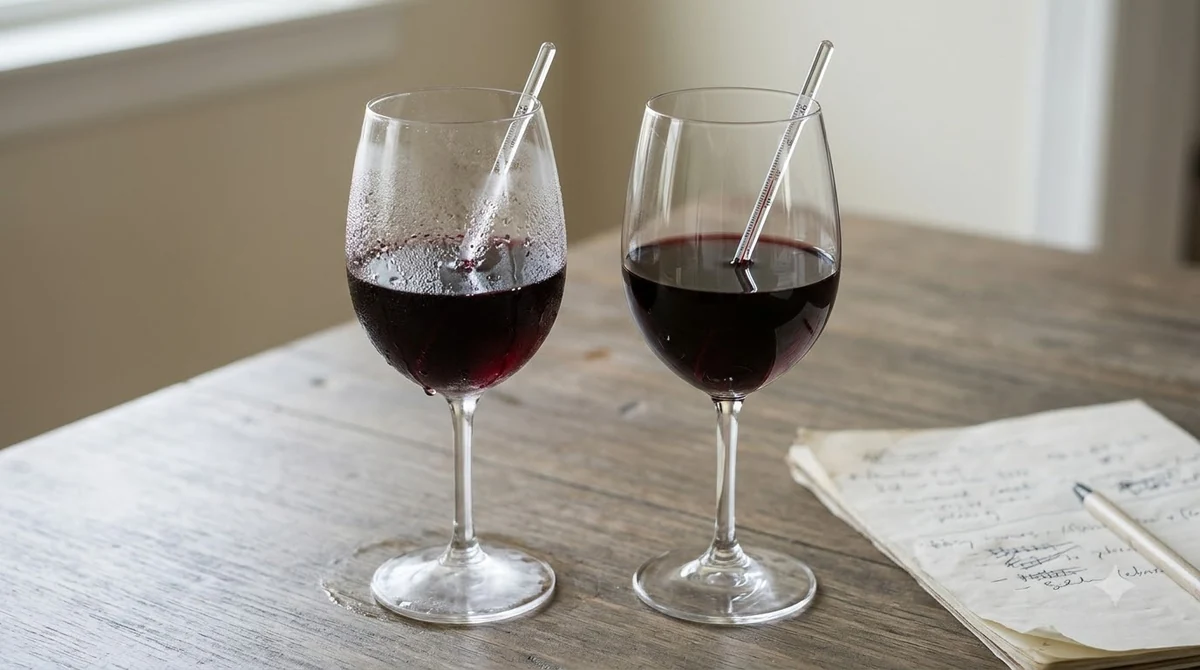
Tip: Young, full-bodied Cabernet can benefit from 30–60 minutes in a decanter. Start with a small pour, let the glass open for 10–15 minutes, and decide whether the wine needs more air before decanting the whole bottle.
For storage, keep unopened bottles on their sides in a cool, dark place near 55°F, away from large temperature swings. A young Monte Bello may reward patience over several years, while a ready-to-drink Zinfandel-led blend may be more enjoyable earlier; the right window depends on the vintage and the particular wine. Once opened, keep the bottle refrigerated and plan to finish a still red within about 3–5 days, bringing each glass back toward serving temperature.
Frequently Asked Questions
These five answers cover useful label and winery details that sit just outside the usual tasting description, including leadership, vineyard elevation, and early export history.
Who leads Ridge’s winemaking today?
John Olney became Ridge’s CEO and Head Winemaker in 2026 after joining the winery in 1996. He had been named Head Winemaker and Chief Operating Officer in 2021, overseeing the Monte Bello and Lytton Springs operations. Shauna Rosenblum leads winemaking at Lytton Springs.
How high is the Monte Bello estate?
Decanter describes a Ridge Estate Cabernet site reaching up to 814 meters, or about 2,670 feet. That high mountain setting helps explain why the wines can retain freshness alongside concentrated fruit and firm structure.
Where did Ridge send its first international wine shipment?
Ridge’s timeline records its first international shipment in 1974 to Averys Wine Merchant in Bristol, England. The early export marked a step in the winery’s move from a small California partnership to an internationally recognized producer.
What is unusual about the original Monte Bello winery building?
The historic cellar was built into the mountainside on three levels and constructed with native limestone. Ridge still identifies this structure as its production facility, linking the present winery to Osea Perrone’s original site.
Did Ridge receive recognition for its Jimsomare Zinfandel?
Wine Enthusiast rated the 2021 Jimsomare Monte Bello Vineyard Zinfandel 93 points. In the publication’s scoring scale, a 90–93 rating falls in the “Excellent” band, which it describes as highly recommended.
Ridge is best approached as a collection of vineyard-specific California reds, not as one standard flavor profile. Start with Monte Bello for mountain Cabernet structure or Geyserville and Lytton Springs for Zinfandel-led field blends, then choose the vintage and serving plan that suit your meal. The vineyard name is the most useful clue to what is in the bottle.
More in Wine Brands
 Underwood Wine Price: Compare Bottles, Cans, and Pack SizesUpdated Nov 21, 2026
 Zenato Wine Price: Compare Styles and Choose the Right BottleUpdated Nov 21, 2026
 Zuccardi Wine Price: Compare Bottles and Find the Right RangeUpdated Nov 21, 2026
 Yellow Tail Moscato Review: Taste, Sweetness and Serving TipsUpdated Nov 21, 2026
 Wolf Blass Yellow Label Review: Choose Your Best StyleUpdated Nov 21, 2026
 Wolffer Estate Rose Review: Choose the Right Bottle for Your TableUpdated Nov 21, 2026