

We may earn a commission when you buy through links on this page, at no extra cost to you. Learn more.
baron philippe de rothschild wine covers a portfolio that ranges from approachable Bordeaux labels such as Mouton Cadet to prestigious Pauillac estate wines, along with projects in Chile, California, and southern France. The name identifies a wine company and family legacy, not one grape or a single flavor profile. To choose well, start with the label: Mouton Cadet is a branded Bordeaux range, while Château Mouton Rothschild is a specific Pauillac estate wine with a very different role and style.
That distinction makes the portfolio easier to understand. The wines share a connection to the Rothschild family’s Bordeaux history, but they differ in origin, grape blend, production model, structure, and occasion. This guide explains the main labels, what to expect in the glass, and how to serve and pair them with confidence.
What the Name Covers
Baron Philippe de Rothschild is the name of a wine company whose activities span château estates and branded wines. Its Bordeaux identity is strongest, but its portfolio also reaches Chile, California, and the Languedoc, so a bottle bearing the name may represent very different vineyards and winemaking approaches.
The company describes two connected lines: estate wines and branded wines. On the estate side, it manages three classified growth properties in Pauillac, in the Médoc north of Bordeaux. Its branded wines are sourced from its own and partner vineyards, then blended, matured, and bottled for a broader market.
The producer name alone does not predict a wine’s tier or taste. Château Mouton Rothschild is a Pauillac First Growth; Mouton Cadet is a Bordeaux brand created to make the region’s character accessible to more drinkers. They share a company history, but they are not interchangeable. For a broader explanation of how producers, brands, and appellations fit together, see our guide to wine brands.
The name also appears in international partnerships. Opus One is based in Oakville in California’s Napa Valley, while Almaviva is a Chilean project in Puente Alto. Both have distinct regional identities, not Bordeaux origins.
A Bordeaux History That Changed Wine
The modern story begins in Pauillac, where Baron Philippe de Rothschild took charge of Château Mouton Rothschild in 1922. In 1924, he made the consequential decision to bottle the estate’s wine at the château rather than send it to merchants in barrels, strengthening the link between the estate and the finished bottle.
That decision helped reshape expectations for leading Bordeaux properties: the owner took responsibility for the finished bottle rather than leaving the wine to merchants. It also required new infrastructure, including the Grand Chai barrel hall built in 1926.
In 1930, at age 28, Baron Philippe launched Mouton Cadet as a branded Bordeaux wine for a wider audience. “Mouton” refers to the family château, while “Cadet” means younger son in French. The wine drew on different Bordeaux terroirs rather than being presented as the château’s classified estate bottling.
Mouton Cadet later gained places on leading restaurant wine lists and expanded beyond France to Britain and the United States. Baroness Philippine de Rothschild succeeded her father in 1988; the Mouton Cadet winery opened at Saint-Laurent-Médoc in 1993. Decanter traces the estate’s earlier history to Baron Nathaniel de Rothschild, who acquired Brane-Mouton in 1853 and renamed it Mouton Rothschild. For the company’s own outline, see its overview of estates and wine activities.
The Portfolio: Estates, Brands, and Partnerships
Read the portfolio by separating estate wines, branded ranges, and regional projects. The company manages three Pauillac classified growth estates, sources branded wines with partner growers, and has projects beyond Bordeaux.
Pauillac estate wines
Château Mouton Rothschild is the flagship estate wine and a Pauillac First Growth. Le Petit Mouton de Mouton Rothschild is its second wine, while Aile d’Argent is the estate’s white wine. The company also manages Château Clerc Milon and Château d’Armailhac, both classified growths in Pauillac; Pastourelle de Clerc Milon is the second wine of Clerc Milon.
These wines come from the Médoc’s Left Bank, where Cabernet Sauvignon is central to many red Bordeaux blends. Many estate reds show firmer tannin and more structure than a fruit-forward regional red, although the balance changes by vintage and cuvée.
Branded Bordeaux and beyond
Mouton Cadet is the best-known branded Bordeaux range. The company also lists Réserve Mouton Cadet, Les Cuvées Barons et Baronnes, Bordeaux Baron Philippe, Agneau, Berger Baron, La Bélière, and Mise de la Baronnie. Its Bordeaux wines are selected from appellations across the region, then blended and bottled under the company’s supervision at the Mouton Cadet winery in Saint-Laurent-Médoc.
Beyond Bordeaux, the portfolio includes Domaine de Baronarques near Limoux, Chilean brands such as Escudo Rojo, Mapu, and Anderra, and international projects including Opus One in Napa Valley and Almaviva in Chile. These have distinct origins and identities, not simply alternate Mouton Cadet labels. When comparing Bordeaux with a Spanish red such as Torres Sangre de Toro wine, compare region and grape blend rather than relying on a familiar producer name.
Mouton Cadet and the Other Branded Wines
Mouton Cadet is the most useful starting point for understanding the company’s branded-wine approach. Its classic Bordeaux range is assembled from fruit across the region, while its Reserve bottlings focus more closely on individual appellations such as Pauillac, Graves, and Saint-Émilion.
Wine Enthusiast’s account of the range describes the Classic wines as fruit-forward and fresh, with fruit drawn from across Bordeaux and a substantial contribution from Côtes de Bordeaux. It also notes the Reserve range’s more specific regional focus. That difference gives shoppers a practical way to choose: start with Classic for a broadly Bordeaux expression, or look to an appellation-named Reserve bottling when you want a clearer sense of a particular district. The publication’s overview of Mouton Cadet’s Bordeaux sourcing and ranges offers additional background.
In a typical red Mouton Cadet, Merlot and Cabernet Sauvignon provide the familiar Bordeaux framework. Merlot usually brings rounder fruit and softer tannin, while Cabernet Sauvignon contributes firmer structure and darker-currant character. The proportions vary by cuvée and vintage, so avoid assuming that every red bottle has an identical blend. A blend from a cool or wet growing season may feel more restrained; a warmer season can give riper fruit and a fuller impression.
The range also includes white and rosé bottlings. A white Bordeaux-style blend can show citrus, orchard fruit, and herbal notes, while rosé is generally best served chilled with lighter meals. Both call for different food matches and temperatures from a structured Pauillac red.
How to read a Reserve label
An appellation name is more than decoration. Saint-Émilion lies on Bordeaux’s Right Bank and is commonly associated with Merlot-led blends; Graves is known for both red and white wines; Pauillac is a Left Bank appellation strongly associated with Cabernet Sauvignon. These broad regional tendencies help set expectations, although the vintage and the producer’s blend still shape the final glass.
Choosing the Right Wine for the Occasion
Choose by occasion, structure, and food rather than the family name alone. A casual dinner may suit a fruit-forward Mouton Cadet red; a formal meal or cellar purchase may call for a named appellation or Pauillac estate wine.
For an everyday dinner
A classic Mouton Cadet red suits roast chicken, burgers, meatloaf, or tomato-based pasta. It has enough body for savory food without necessarily needing the decanting time a young, concentrated estate red may benefit from. Serve full reds at 60–65°F and lighter reds closer to 55–60°F.
A Mouton Cadet white or regional white blend suits seafood, salads, and simply prepared poultry. White Bordeaux can include Sauvignon Blanc and Sémillon: Sauvignon Blanc brings fresh acidity and citrus or herbal notes, while Sémillon can add texture.
For a special meal or a gift
A named Pauillac estate wine is more formal than a broad regional blend. Cabernet Sauvignon-led Bordeaux often has pronounced tannin for beef, lamb, or aged hard cheese. Younger vintages can taste firm, while bottle age may soften tannin and reveal cedar, tobacco, and dried herbs.
For a mixed group or a celebration where not everyone drinks red, consider the company’s white or rosé labels, or choose a sparkling wine from a different producer. A fresh sparkling option can open a meal in a way that a structured Pauillac red cannot; our guide to Sofia Blanc de Blancs explains one separate sparkling style. It is useful to keep categories clear: sparkling wine is not part of the core Mouton Cadet Bordeaux blend simply because it shares a place on a celebratory table.
Tip: When comparing two bottles, read the appellation and cuvée before the producer name. “Bordeaux” points to a regional blend, “Pauillac” identifies a specific Left Bank appellation, and “Château Mouton Rothschild” names the estate’s First Growth wine.
For a gift, consider the recipient’s usual style. Someone who enjoys softer reds may prefer a regional blend to a tannic Pauillac, while a collector may value a specific estate and vintage.
Serving, Pairing, and Storing the Bottles
Temperature and food change how Bordeaux wine feels. Serve fuller reds at 60–65°F, lighter reds at 55–60°F, light whites at 45–50°F, and fuller whites at 50–55°F to preserve freshness and aroma.
| Wine style | Serving temperature | Useful food matches |
|---|---|---|
| Light red Bordeaux blend | 55–60°F | Roast chicken, mushroom tart, charcuterie |
| Fuller red Bordeaux blend | 60–65°F | Grilled steak, lamb, beef stew |
| Dry white Bordeaux | 45–50°F | Oysters, white fish, goat cheese salad |
| Fuller white blend | 50–55°F | Roast poultry, creamy fish dishes |
| Rosé | 45–50°F | Salads, grilled shrimp, picnic foods |
Match red Bordeaux structure to the dish. Cabernet Sauvignon tends to have high tannin, while Merlot is softer and medium in tannin. Fat and salt soften tannin, making Cabernet-led Pauillac a good partner for ribeye, lamb shoulder, or aged cheese. Delicate white fish is usually better with white wine or a lighter red.
Acidity matters as much as body. Lemon, vinegar, and sharp tomato sauce need a wine with equal or higher acidity. For oily fish such as salmon or mackerel, choose an acidic white or a lighter red with modest tannin; a tannic red can clash with the fish’s oils.
Chili heat can feel stronger with alcohol and tannin, so a Cabernet-heavy red may exaggerate hot peppers. For spicy barbecue, consider a softer, fruitier wine. Salt and fat soften tannin, which helps structured reds match savory grilled meats.
Opening and keeping the wine
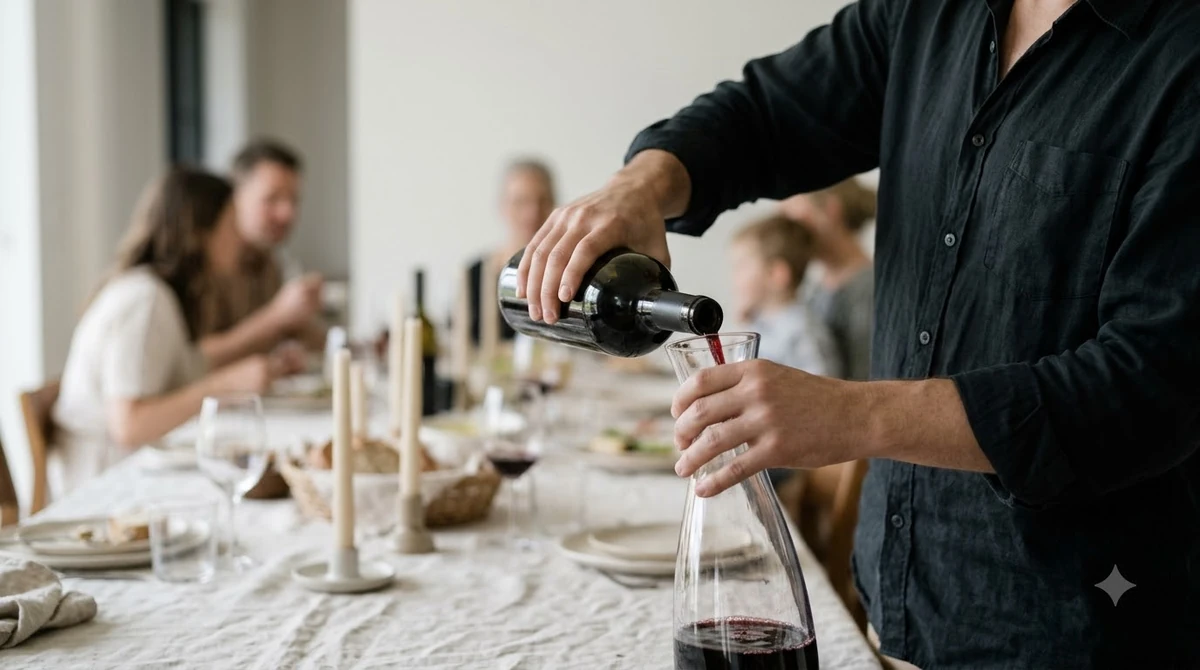
Pour about 5 ounces per glass; a 750 ml bottle yields roughly five servings. A young, full-bodied red may benefit from 30–60 minutes in a decanter. Lighter reds and whites usually need less time, while older bottles can lose delicate aromas with extended aeration.
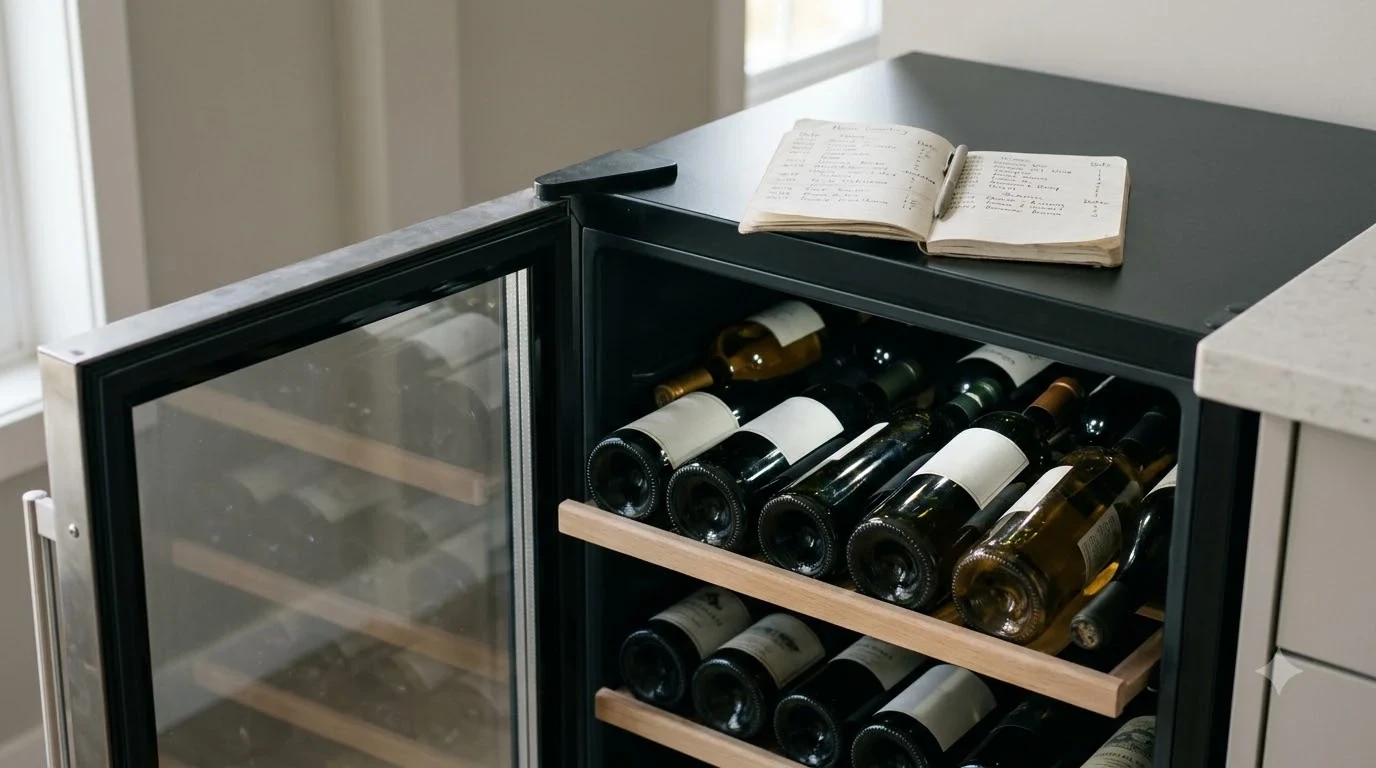
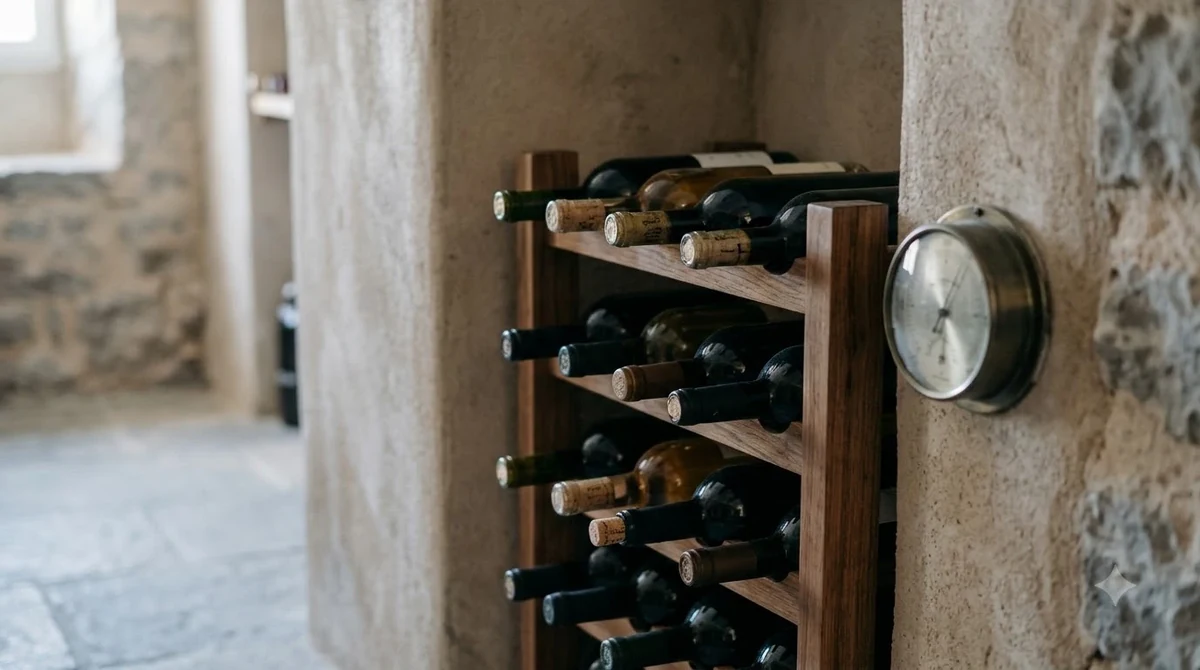
Store unopened bottles on their sides in a cool, dark place near 55°F. After opening, reseal and refrigerate the wine, even if it is red. Most still wines are best within 3–5 days; bring a red back toward its serving range before pouring.
Frequently Asked Questions
These answers clarify a few details about Mouton Cadet, the Chilean labels, and the wider Rothschild family portfolio.
What does the Barbacchus logo on Mouton Cadet represent?
The name combines the French word “barbe,” meaning beard, with Bacchus, the classical figure associated with wine. The Mouton Cadet history describes the 2004 logo as a drawing that joins a ram’s head with a cluster of grapes. It became a recognizable visual sign for the brand.
What does Escudo Rojo mean?
Escudo Rojo is the Spanish translation of “Rote Schild,” the German phrase for “red shield.” The red shield is the historical emblem associated with the Rothschild family. That name helps distinguish the Chilean range from the Bordeaux Mouton Cadet labels.
How many growers have worked with Mouton Cadet?
In its report on the brand’s relaunch, Decanter described contracts with 453 Bordeaux winegrowers and sourcing oversight from seven full-time winemakers. The same account put the contracted vineyard area at 1,300 hectares. Those figures describe the sourcing arrangement reported for that relaunch, not a fixed count for every later vintage.
Who succeeded Baron Philippe in the family’s wine business?
Baroness Philippine de Rothschild succeeded her father in 1988 and became a major ambassador for Mouton Cadet and Bordeaux. The next generation includes her children Camille Sereys de Rothschild, Philippe Sereys de Rothschild, and Julien de Beaumarchais de Rothschild. Their roles span oversight of the family estates and the wider company.
Is every wine with the Rothschild name made by the same company?
No. The Rothschild name appears across several family branches and wine businesses, which have distinct ownership and operating structures. For example, Champagne Barons de Rothschild was created as a joint venture among three family branches, while Baron Philippe de Rothschild SA has its own Bordeaux, Chilean, and international activities.
Baron Philippe de Rothschild’s wines make the most sense when you treat each label as a clue to origin and style, not as a single house flavor. Start with Mouton Cadet for an accessible Bordeaux reference, then explore the named appellations and Pauillac estates when you want more specific regional character. Match the bottle to the food, serve it at the right temperature, and the portfolio becomes much easier to enjoy.
More in Wine Brands
 Louis Latour Wine Price: Compare Bottles by Style and TierUpdated Nov 20, 2026
 Yellow Tail Moscato Price: What to Expect Before You BuyUpdated Nov 20, 2026
 Sutter Home Sweet Red Review: Find the Right Food PairingsUpdated Nov 20, 2026
 Franzia Chillable Red Review: Find the Right Serving StyleUpdated Nov 20, 2026
 Veuve Clicquot Rose Review: Flavor, Food Pairings and Buying AdviceUpdated Nov 20, 2026
 Rombauer Wine Price: Compare Bottles Before You BuyUpdated Nov 20, 2026