

We may earn a commission when you buy through links on this page, at no extra cost to you. Learn more.
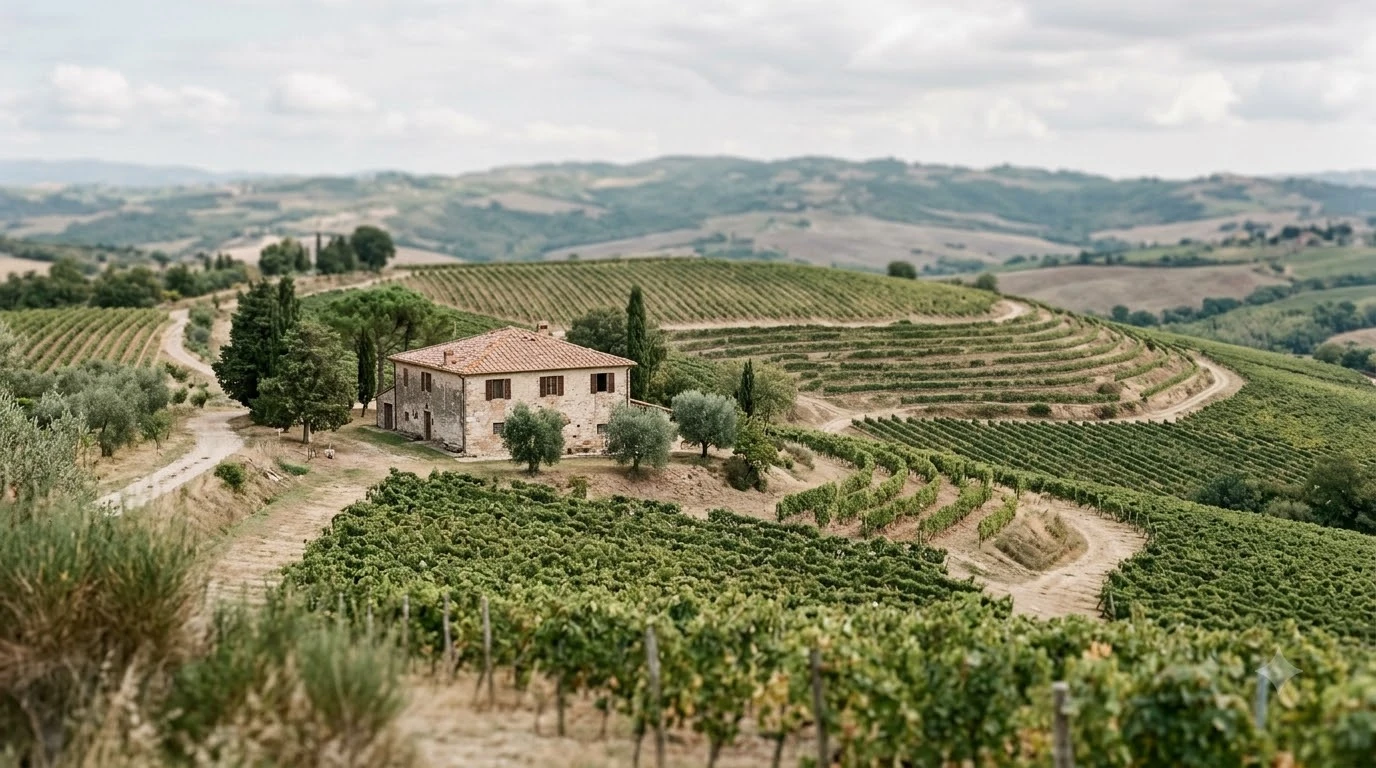
Where is zinfandel from? Its genetic roots trace to Croatia, where the grape is historically known as tribidrag, while California is where it grew into America’s signature red. UC Davis researchers confirmed through DNA analysis that California’s zinfandel matches an old Croatian variety. The same grape is grown in southern Italy as primitivo, and California remains by far the main place it is planted today.
Zinfandel has one of the more unusual biographies in wine. For much of its life in America it was treated as a homegrown original, yet its family tree leads across the Adriatic. Researchers spent decades sorting out the grape’s identity, and the answers changed how winemakers, label writers, and buyers understand the bottle in front of them. This guide covers the origin story, the California regions that shape the wine’s style, and the practical details that help you enjoy it.
Croatia Is Where the Grape Began
Genetic research points to Croatia as the vine’s original home, and the evidence was built piece by piece through years of fieldwork and DNA testing.
The turning point came through the work of Carole Meredith, a UC Davis researcher who confirmed that California zinfandel is genetically identical to a Croatian variety called crljenak kastelanski, also known as pribidrag. Her collaborators at the University of Zagreb, Ivan Pejic and Edi Maletic, searched Croatian vineyards for matches at a time when only a handful of the original vines remained. According to Wine & Spirits, the team later planted the first significant block of rediscovered material in Split on the Dalmatian coast, in the heart of the vine’s historic territory.
The historical record supports the genetics. Croatian historian Ambroz Tudor found references to tribidrag in trade documents, deeds, tax records, land records, and wills that reach back to the 1300s. Those records suggest the grape was an economically important variety along the Adriatic for several centuries, not a backyard curiosity. Tribidrag remains the historical name for the grape in its native Croatia.
Croatia’s own red wine landscape adds another layer to the story. Plavac mali, the dominant red of southern Croatia, is itself mostly a cross of zinfandel and another native variety called dobricic, so the Croatian and American vines share a close family line. The search for true matches took patience, because the researchers had to separate the real zinfandel relatives from look-alike vines in the same region.
Primitivo in Puglia: The Italian Cousin
In southern Italy, the same genetic grape carries the name primitivo, and it has been part of the Puglia wine scene for generations.
Primitivo arrived in Puglia in the mid-1800s or earlier, according to Wine & Spirits, and for a long time it was simply a local red. The DNA findings reframed it as a close relative of American zinfandel rather than a separate Italian story, and that shift changed how growers on both sides of the Atlantic thought about the vine.
The connection also changed how California growers view their own vineyards. Since the 1990s, growers in the state have had access to primitivo material, and it has proven to behave differently in practice. Trials at the UC Davis experimental vineyard in Oakville planted primitivo alongside California heritage selections and farmed them identically. The primitivo selections were clear outliers, with smaller berries, looser clusters, earlier ripening, faster sugar accumulation, and lower yields.
Those differences make primitivo a tool rather than a simple substitute. Growers who want an earlier-ripening, more aromatic component can work with it deliberately, while others keep the heritage selections for a more traditional California character. For a consumer, the lesson is that a bottle labeled primitivo and one labeled zinfandel can share a genetic origin yet taste different because of clonal choices and winemaking decisions.
How Zinfandel Took Root in California
Despite its reputation as the quintessentially American grape, zinfandel is not native to California. Like nearly every wine grape, it is a Vitis vinifera variety, a species that originated in Europe and points east. Its American story begins on the East Coast, where it was grown as a table grape before anyone pressed it for wine.
According to Sonoma County Tourism, zinfandel reached America in the 1830s and was soon used as an East Coast table grape. It later set out for San Francisco and reached Sonoma County in the early 1850s, and by 1857 it had begun to usurp the old Spanish Mission grape. That year Hungarian entrepreneur Agoston Haraszthy founded Buena Vista Winery in Sonoma. For decades Haraszthy was credited with discovering zinfandel, a reputation that owed more to his son Arpad’s lobbying than to historical fact.
Later in the nineteenth century, Italian immigrant farmers in Sonoma planted zinfandel alongside black grapes such as Petite Sirah and Carignane to make field blends with extra tannin and acidity. After Prohibition, surviving vineyards supplied the jug wine market, and it was not until the 1970s and 1980s that varietal zinfandel had a full-fledged revival. The sweet pink style that many people associate with the name has its own history, which is covered in our guide to where is white zinfandel from.
The California Regions That Shape Zinfandel’s Style
Sonoma County is one of California’s premier zinfandel regions, and its valleys show how strongly site and climate change the finished wine.
The county has about 5,200 acres of zinfandel, roughly 12 percent of its red wine grape acreage, and the vines are famously long-lived. They can produce for more than 100 years, decades longer than is typical for many other varieties. Some describe zinfandel as the heartbreak grape because its berry set and ripening are uneven and it is vulnerable to late-season rot, but old vines that have survived those challenges are among the most prized sources of fruit in the state.
Each valley has its own character. Sonoma Valley, with important vineyards around Glen Ellen and Kenwood, produces wines that tend toward complexity and earthiness. The Russian River Valley is famed for Pinot Noir, but it also has a sweet spot for zinfandel and vineyards that date back a century or more, with wines that may highlight deep boysenberry fruit. Dry Creek Valley has been a farming community for decades and is now regarded as the spiritual home of zinfandel, with juicy blackberry fruit and rugged tannins. Alexander Valley is the warmest zinfandel area in the county and tends toward predominantly jammy flavors with real elegance.
| Region | Key detail | Typical character |
|---|---|---|
| Sonoma Valley | Vineyards around Glen Ellen and Kenwood | Complex and earthy |
| Russian River Valley | Vineyards dating back a century or more | Deep boysenberry fruit |
| Dry Creek Valley | Regarded as zinfandel’s spiritual home | Juicy blackberry, rugged tannins |
| Alexander Valley | Warmest zinfandel area in Sonoma County | Jammy with real elegance |
| Temecula Valley, Southern California | Vineyards at about 1,500 feet of elevation | Very ripe fruit, dried fruit, peppery spice |
Southern California offers a different picture. Zinfandel Advocates and Producers notes that the Cucamonga Valley near Los Angeles was one of the state’s earliest wine-growing regions, with a warm climate and sandy soil well suited to the grape, although urban development has taken some of that land. Temecula’s vineyards sit at about 1,500 feet, where daytime sun gives way to cool afternoon breezes and a little coastal fog. The organization describes southern zinfandel as tending toward very ripe fruit, dried fruit, and peppery spice.
Zinfandel Plantings Across the Wine World
California is by far the main home of zinfandel, but the grape has spread beyond the state. Zinfandel Advocates and Producers reports that it has also been planted in Australia, South Africa, New Zealand, Chile, Argentina, France, Italy, and Croatia, which gives it a broader footprint than most American-born reputations suggest.
The two Old World homes are closely tied to each other. In Italy the grape is a familiar regional red under the primitivo name, while in Croatia it is still known historically as tribidrag and survives in the older vineyards that gave researchers their genetic material. The Croatian story has also reached American soil. Wine & Spirits reported that Ridge, which helped fund the research in Croatia, planned to plant one acre of three different Croatian clones at its Lytton Springs vineyard. The goal was to learn what the Croatian material could add, since researchers had not yet made valid comparisons between Croatian and California heritage vines.
For a home tasting, line up a bottle from Sonoma, one from Puglia, and one from Croatia. All three trace back to the same genetic family, so the differences you notice will come mostly from place, climate, and winemaking. That exercise is one of the clearest ways to understand how flexible this grape is.
What Zinfandel Tastes Like and Why Origin Matters
Zinfandel is usually described as a claret-style red: supple, easy to drink, and carrying a moderate tannic grip.
Black or white pepper notes are a hallmark of many zinfandels, and they often stand out beside the brambleberry fruit. Sonoma County Tourism notes that the fruit can range from dark plum-jam to light, perfumy strawberry, so the same variety can taste very different from one bottle to the next. The Russian River Valley can lean toward boysenberry, Dry Creek Valley toward juicy blackberry with firmer tannin, and Alexander Valley toward jammy richness. Those patterns are not rules, but they give you a useful map when choosing a bottle.
Old vines are a key part of the appeal. Because zinfandel can produce for more than 100 years, a bottle from a century-old block connects directly to the early days of California viticulture. Warmer sites push the fruit toward jam, while more moderate sites tend to keep flavors brighter and more complex, which is why the same grape can serve such different styles.
Serving and Pairing Zinfandel Well
Zinfandel is a full-bodied red, so it shows best slightly cooler than typical room temperature. The target range is 60 to 65 F, and a bottle that has been sitting in a warm room benefits from a short stay in the refrigerator before pouring.
| Wine style | Serving range | Where zinfandel fits |
|---|---|---|
| Light whites and rosé | 45 to 50 F | Dry rosé of zinfandel |
| Light reds | 55 to 60 F | Lighter, cooler-site bottlings |
| Full reds | 60 to 65 F | Most zinfandel |
Give young full reds time to open. Decanting a young zinfandel for 30 to 60 minutes softens the edges and lets the aromas develop. Pour about five ounces per glass, since a 750 ml bottle yields roughly five glasses, which keeps portions sensible for a wine of this intensity.
Tip: Store bottles on their side in a cool spot near 55 F. Once opened, a still wine usually keeps three to five days in the refrigerator, so plan to finish it within that window.
Pairing comes down to balance. Zinfandel’s brambleberry fruit and pepper suit grilled and smoked meats, roasted poultry with herbs, and sharp aged cheeses. Salt and fat soften tannin, so a rich, salty dish helps the wine feel smoother, while oily fish should be kept away from it because tannic reds clash with oil. Spicy food needs care: alcohol and tannin amplify chili heat, so a fiery dish can taste hotter next to a bold zin. For a broader look at how red styles differ, browse Wine by Type.
Frequently Asked Questions
These questions cover the points readers ask about most often, from Croatian history to labeling and rosé.
Why did zinfandel nearly disappear from Croatia?
According to Wine & Spirits, Carole Meredith suspects that powdery and downy mildew, fungal diseases that reached Europe from North America in the 1800s, played a part. Croatia’s periodic summer rains also encourage mold on thin-skinned grapes like zinfandel. The more disease-tolerant plavac mali may have taken over quietly, without anyone realizing what was happening.
Which names can a US label use for this grape?
The Alcohol and Tobacco Tax and Trade Bureau allows only three names for this variety: zinfandel, primitivo, or tribidrag. Wines made from the imported Croatian selections must use one of those three labels. The rule means a bottle labeled tribidrag or primitivo still comes from the same family as the zinfandel on the shelf next to it.
Is rosé of zinfandel the same as white zinfandel?
No. Sonoma County Tourism explains that a pink zinfandel from the county is probably a Rosé of Zinfandel rather than a sweet white zin. The rosé is usually made dry, and its crisp raspberry fruit provides all the flavor needed on the palate. The sweet style is the one that has been called both the bane and the savior of the grape.
Do California winemakers blend zinfandel with primitivo?
Some do. Wine & Spirits reported that Hugh Chappelle at Quivira had been co-fermenting zinfandel and primitivo on the Dry Creek bench to lower the pH and brighten the acidity of the estate zin. He said the blend freshened the wine aromatically, even though it made the wine a little harder.
Which states outside California grow zinfandel?
Zinfandel Advocates and Producers says California is by far the primary zinfandel-growing state, but small amounts are also grown in Arizona, Colorado, Illinois, Indiana, Iowa, Massachusetts, Nevada, New Mexico, North Carolina, Ohio, Oregon, Tennessee, Texas, and Washington. The spread reflects the grape’s early life as an East Coast table grape.
Zinfandel rewards curiosity. Its story runs from Croatian vineyards to Sonoma’s old blocks, and each stop helps explain why a glass can taste so different from one region to the next.
More in Wine Types & Grapes
 Zinfandel Sugar Content: Dry Red vs. White Zinfandel GramsUpdated Nov 21, 2026
 Best Zinfandel Substitute Options for Sipping and CookingUpdated Nov 21, 2026
 Zweigelt Food Pairing: Best Dishes, Cheeses, and Serving TipsUpdated Nov 21, 2026
 Zinfandel Tannins Explained: How Structure Shapes Every BottleUpdated Nov 21, 2026
 Zinfandel Sweetness Level: Dry Red vs. Sweet White Zin ExplainedUpdated Nov 21, 2026
 Xinomavro Food Pairing: Best Dishes, Styles, and Serving TipsUpdated Nov 21, 2026