

We may earn a commission when you buy through links on this page, at no extra cost to you. Learn more.
The best quietest wine fridge for most homes is a single-zone compressor unit with a solid door, placed where its fan has room to breathe. Thermoelectric models are generally described as the quieter design, but they lose cooling power when the room gets warm. Compressor models hold a steady temperature for longer, which is why many buyers accept a little more hum in exchange for stable storage. Choose by where the fridge will sit and how many bottles you plan to keep, not by a single noise label.
Noise is the complaint that comes up most often once a wine fridge moves out of the garage and into a living space. A unit that cycles quietly in a basement can sound loud in a bedroom at night. This guide groups the best quietest wine fridge options by room type, explains which cooling designs keep sound down, and shows how placement changes what you hear. Decibel ratings differ from model to model and are listed on each manufacturer’s spec sheet, so use them as a starting point and compare the same measurement across brands.
Quick Comparison of Wine Fridge Designs
Cooling design decides most of the noise profile, so start with the type rather than the brand name. The table below compares the three common designs on the criteria that matter in a quiet room, from how the unit sounds to where it works best.
| Design | Noise profile | Cooling strength | Best placement |
|---|---|---|---|
| Compressor, single zone | Steady hum while running, then silence between cycles | Strong, holds temperature even in warmer rooms | Kitchens, dens, rooms with a door |
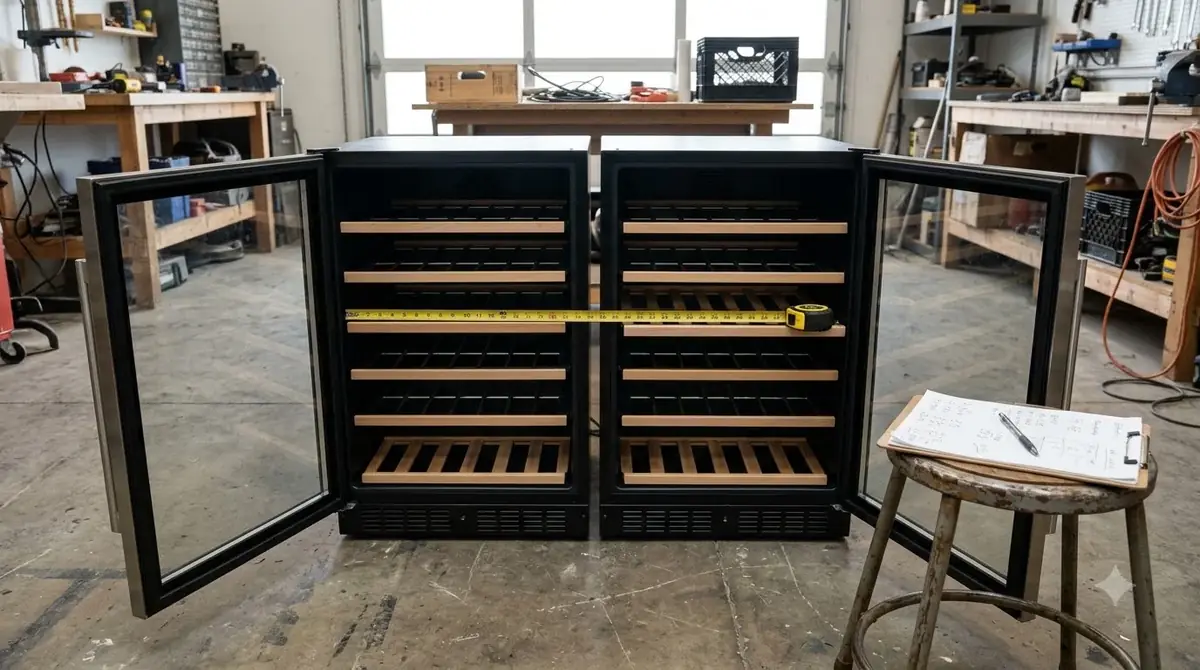
| Compressor, dual zone | Similar hum, with a second fan in some models | Strong, with two separate temperature bands | Entertaining spaces, mixed red and white collections |
| Thermoelectric | Usually quieter, mostly fan noise | Modest, closer to room temperature in heat | Bedrooms, home offices, cool corners |
Dual-zone models split the interior into two temperature bands, which helps if you keep reds and whites at different settings. The extra compartment and second fan can add a little sound, so a single-zone unit is usually the quieter choice unless you truly need both bands. Thermoelectric units avoid a compressor altogether, which is the main reason they are associated with low noise, but that same design makes them sensitive to heat in the room.
Best for Bedrooms and Sleeping Spaces
A bedroom wine fridge needs to be the quietest appliance in the room, so thermoelectric and low-speed designs get the most attention here.

Thermoelectric designs are generally described as the quieter option, and they suit bedrooms that stay cool through the night. The trade-off is cooling power. In a warm room, a thermoelectric unit may struggle to reach the target temperature, so the cabinet can drift upward during a heat wave. For a bedroom in a climate with mild nights, that trade-off is usually acceptable.
Placement matters as much as the model. Keep the fridge off carpet and away from the head of the bed, and leave the back and sides clear so warm air can leave the cabinet. Setting the unit on a hard surface away from walls reduces vibration that can carry through a floor.
Why it stands out: Thermoelectric and low-noise designs are the first place to look when the fridge must sit close to sleep.
Keep in mind: Confirm the room stays below the unit’s rated ambient temperature, and expect slower cooling if you load it with warm bottles.
Best for: Bedrooms, guest rooms, and studio spaces where the fridge shares a room with sleep.
Best for Open-Plan Living Rooms
In an open-plan layout, sound travels across the whole space, so a fridge that is only slightly audible in a kitchen can become noticeable in a lounge. Single-zone compressor models with a sealed door and a steady cycle tend to fit better than units with a second fan.
Visual placement is the other half of the problem. Built into a sideboard or tucked against a wall, a wine fridge looks like furniture and draws less attention to its hum. The wine fridge sideboard style is one way to combine storage with a quieter, tucked-away placement, because the cabinet acts as a sound buffer when the unit is closed in.
Keep the vents unblocked and avoid sealing the unit inside a tight cabinet with no airflow. Restricted airflow raises the compressor’s workload, and a harder-working compressor is usually a louder one.
Why it stands out: A single-zone compressor holds temperature without the constant fan noise of some dual-zone designs.
Keep in mind: Plan the spot before buying, since the fridge needs open space at the back and sides.
Best for: Open-plan homes, apartments with a lounge that shares a space with the kitchen, and anyone who hosts often.
Best for Kitchens and Kitchen Islands
Kitchens are often the warmest room in the house, and ovens, dishwashers, and sunlit windows all push the ambient temperature upward. That makes the kitchen a good place for a compressor, which handles warm air more reliably than a thermoelectric unit.
For a kitchen island or freestanding placement, look for a fridge with front or side venting so the unit can sit flush against a cabinet run without starving for air. The wine and beer fridge category is useful here because many of these units share a compact footprint and a similar compressor design, which makes it easier to match a model to a kitchen layout.
Keep the fridge away from the oven and dishwasher where possible. Heat from neighboring appliances is one of the most common reasons a quiet unit starts to run longer and sound louder than expected.
Why it stands out: A compressor handles a warm kitchen better, and its cycle is predictable once the unit settles.
Keep in mind: Check the venting direction before you commit to a built-in or island placement.
Best for: Kitchens, islands, and dining areas that sit close to cooking heat.
Best for Built-In Under-Counter Spaces
Built-in units slide into a cabinet opening and vent through the front or the toe kick. The cabinet itself can amplify sound, so the fit and the venting path matter more than the rated noise figure alone.
Leave the recommended clearance, check that the door gasket seals fully, and confirm the cabinet opening matches the unit’s dimensions. A snug fit with a slightly open door is one of the most common causes of a fridge that sounds louder than its spec sheet suggests. Some installers also suggest a small rubber or felt pad under the feet to reduce vibration against the cabinet floor.
Why it stands out: Under-counter placement keeps the unit out of sight and can sit well away from the main living area.
Keep in mind: Front venting is essential in a tight cabinet, and the spec sheet should show the required clearance.
Best for: Kitchen runs, bars, and built-in wine walls where the fridge needs to disappear into the cabinetry.
Best for Small Apartments and Studios
In a small apartment, the wine fridge is often within a few steps of the bed, the sofa, and the desk at the same time. Choosing a compact, single-zone unit with a quiet cycle keeps the space usable and avoids the constant sound that can wear on a small room.
Small units also have less thermal mass, so they respond faster to room temperature changes. That can mean more cycling in a warm apartment, so a thermoelectric model in a cool room or a compact compressor placed away from heat sources tends to work best.
Why it stands out: A compact footprint and a low-noise cycle suit the shared space of a studio.
Keep in mind: Compact units hold fewer bottles, so plan around the collection you actually keep.
Best for: Studios, small apartments, and anyone who wants wine storage without a noisy appliance in the main room.
How to Choose a Quiet Wine Fridge
Noise depends on the design, the room, and the installation, so run through these checkpoints before buying. The table gives a simple order of operations you can apply to any model.
| Checkpoint | What to look for |
|---|---|
| Cooling design | Thermoelectric for cool, quiet rooms; compressor for warm rooms and steady storage |
| Decibel rating | Listed on the manufacturer’s spec sheet; compare the same measurement across models |
| Zone count | Single zone for quiet, simple storage; dual zone only if you need two temperatures |
| Venting | Clear rear or front airflow that matches the planned placement |
| Door seal | A gasket that closes evenly so the compressor does not run longer than needed |
Storage temperature matters as much as noise. Wikipedia’s overview of wine cellars gives 13 °C (55 °F) as an ideal temperature for short-term storage and long-term aging, and it describes 7–18 °C (45–64 °F) as satisfactory if changes happen gradually. A quiet fridge that cannot hold that range in your room is the wrong fridge, even if it sounds ideal. Check the room temperature first, then match the design to it.
Tip: Place the fridge in the coolest spot that still has airflow, and test the temperature for a few days before you start loading bottles.
Frequently Asked Questions
Are thermoelectric wine fridges really the quietest option?
They are generally described as the quieter design because they have no compressor, so most of the sound is a fan. Their cooling power depends on the room, and they can struggle to hold temperature in a warm space.
Do compressor wine fridges make noise at night?
A compressor cycles on and off, so you will hear a steady hum while it runs and then silence between cycles. A well-sealed door and clear airflow keep the cycles shorter and the sound lower.
Where should a quiet wine fridge be placed?
Keep it on a hard, level surface away from heat sources such as ovens and sunny windows. Leave clearance at the back and sides, and avoid tight cabinets with no airflow.
Should I choose a dual-zone model for a quiet room?
Only if you truly store reds and whites at different temperatures. Dual-zone units add a second compartment and sometimes a second fan, which can make them slightly louder than a single-zone model.
Once you have a short list, check each spec sheet for the decibel rating and the recommended room temperature, then compare the results with the storage ranges above. If you are still deciding how much capacity to buy, the guide on how many glasses in a bottle of wine helps you estimate how many bottles a typical evening uses. A quiet, well-placed fridge is easier to live with than the loudest model on the list.
More in Wine Fridge Features
 Best Wine Fridge Bar Cabinet Setups for a Better Home BarUpdated Nov 20, 2026
 Wine Fridge for Champagne Bottles: Sizes and Storage GuideUpdated Nov 18, 2026
 Best Wine Fridge for Champagne Bottles: Shelf and Bottle FitUpdated Nov 18, 2026
 Best Wine Fridge with Display Shelf: Glass Doors and Open RacksUpdated Nov 18, 2026
 Best Wine Fridge With Drawers for Easy Access to Every BottleUpdated Nov 18, 2026
 Best Wine Fridge With Freezer: Combo Styles for Kitchens and BasementsUpdated Nov 18, 2026