


We may earn a commission when you buy through links on this page, at no extra cost to you. Learn more.
The best wine fridge with display shelf is one that shows the labels you want to see while keeping the bottles away from direct light and temperature swings. A display shelf is usually a glass door, a raised rack near the front, or an open shelf at eye level. Each option changes how much light reaches the bottles, how easily the door seals, and how well the cabinet holds a steady temperature, so the best choice depends on where the unit will sit and which bottles you plan to show.
Many collectors want to see their bottles, and a display shelf makes a cabinet feel like part of the room rather than a closed appliance. The trade-off is that a window or open shelf also lets in light and warm air. This guide explains the common display designs, what to check on the spec sheet, and how to pick a cabinet that shows the labels without exposing the wine to more than it needs.
Quick Comparison
Display features come in several forms, and each one balances visibility against protection. Glass doors show the most bottles but need good seals and sometimes UV-filtering glass. Open shelves at the front show a few bottles clearly, while a closed cabinet with a single display rack keeps most of the wine hidden. The table below compares the main designs by what matters most in a home.
| Design | Visibility | Light exposure | Best placement |
|---|---|---|---|
| Full glass door | Highest; most bottles visible | Higher; depends on glass and room light | Dining room, living room, bar away from windows |
| Partial glass or window panel | Good for a few featured bottles | Moderate | Kitchen or home bar |
| Front display rack | Good for a small set of bottles | Low to moderate | Under-counter or built-in runs |
| Solid door with an interior display shelf | Only when the door is open | Lowest | Basements, cellars, rooms with steady light |
Best for Full Glass Doors
A full glass door shows every bottle inside and suits a room that is used for entertaining. It is the most striking option, and it works best where the cabinet is not in direct sun.
Why it stands out: The label is visible from across the room, which makes the cabinet a display piece as well as storage. Dual-zone models with glass doors let you separate red and white wines at different temperatures while keeping every bottle visible.
Keep in mind: Glass lets in light, and the Wikipedia article on wine cellars notes that wine left exposed to heat, light, vibration, or temperature changes can spoil. Place the cabinet away from windows and check whether the glass is tinted or treated.
Best for Partial Glass Panels
A partial glass panel or window in the door lets you show a few favorite bottles while keeping the rest of the collection in the dark. It is a useful middle ground for a kitchen or bar.
Why it stands out: A smaller window limits the amount of light that reaches the stored wine, and it is easier to keep the glass clean. Many owners use the window to display a few bottles that they open most often.
Keep in mind: Ask how the panel is sealed. A window that is not well insulated can let warm air in, which makes the compressor work harder.
Best for a Front Display Rack
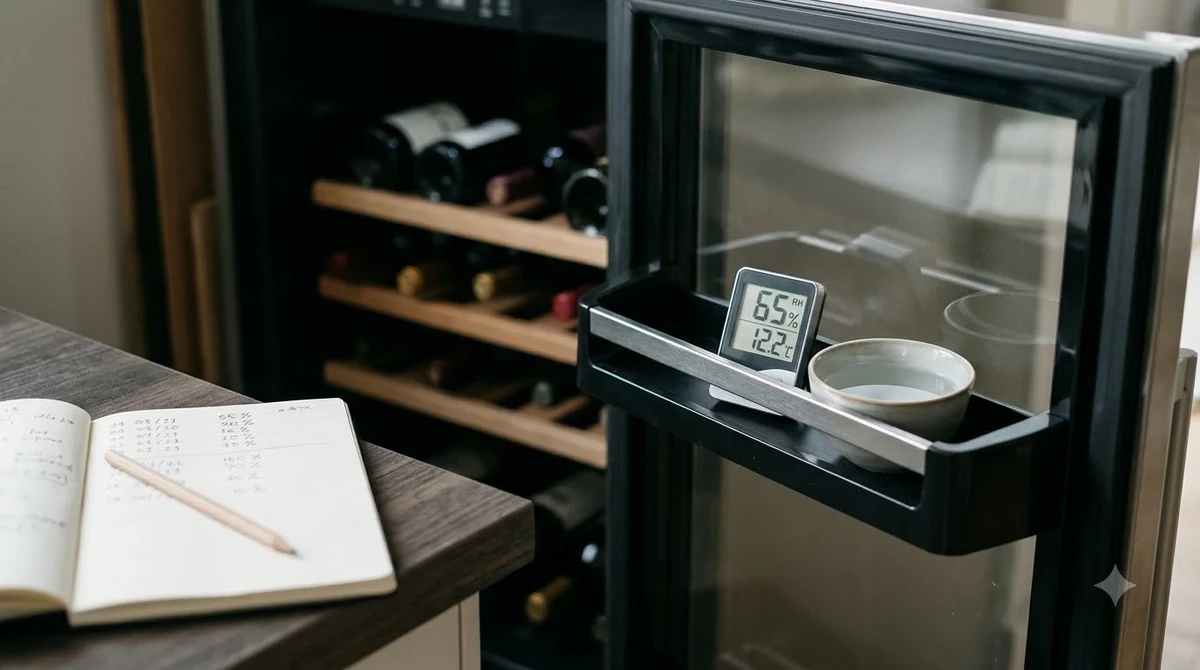
A front rack is a raised shelf near the door that holds a few bottles at eye level, while the main storage sits behind a solid door. It suits a bar or kitchen island where space is limited.
Why it stands out: The featured bottles are visible without exposing the whole collection. The rack also keeps the most-used bottles within easy reach.
Keep in mind: Check that the rack does not block the door seal or the cooling vents. A rack that sits too close to the door can cause the bottles to shift when the door closes.
Best for Dark Basement or Cellar Rooms
A solid door with an interior display shelf suits a room that already has low light and steady temperatures. The display is opened only when a guest wants to see the bottles.
Why it stands out: Keeping the door closed gives the least light exposure, and the stored wine stays protected for most of the day. The interior shelf still lets you present a few bottles when the door opens.
Keep in mind: If the room is not steady in temperature, a solid-door cabinet is the better choice than a glass model, because glass tends to show more heat gain from the room.
Best for Bars and Entertaining Spaces
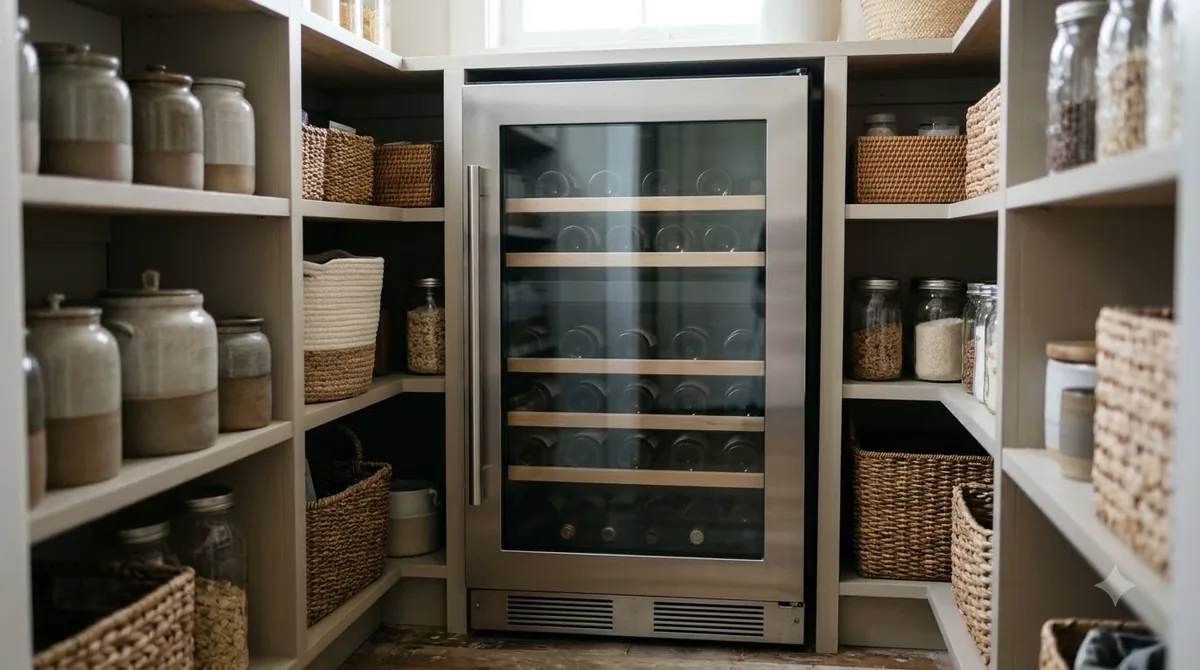
A display cabinet in a bar or entertaining area is often the focal point of the room. It needs to look finished on all sides and to hold a steady temperature when guests open the door often.
Why it stands out: A well-lit display shelf can feature a few bottles for a party without moving the rest of the collection. Some models add interior lighting, which makes the labels easier to read.
In a bar, the display also needs to fit the traffic pattern. Put the cabinet where guests can see the labels without standing in the path of the door, and leave room for the door to open fully when a bottle is taken out. A display placed in a corner can look attractive, but a cramped door swing makes it harder to load and unload bottles during a busy evening.
Keep in mind: Interior lights add heat and can run longer than planned, so check whether the lighting is on a separate switch or built into the cabinet’s controls.
How to Choose
Start with the room. A display cabinet near a window or a sunny wall will expose the wine to more light than the same cabinet in a windowless space. Measure the distance from the nearest window and look at the time of day when the room gets the most light.
Next, look at the door. A tight, well-sealed glass door keeps cold air inside. Check whether the door has a lock, whether the glass is tinted or treated for UV, and whether the handle is comfortable to open when a bottle is near the front.
Temperature still matters most. The Wikipedia article on wine cellars gives 13 °C (55 °F) as ideal for short-term storage and long-term aging, and describes 7 to 18 °C (45 to 64 °F) as satisfactory if changes are gradual. A display cabinet that holds a steady reading is more valuable than one that only looks good on the showroom floor.
Finally, consider how you will use the display. If you change the featured bottles often, a front rack or a partial glass panel is easier to manage than a full glass door, which is better for a fixed set of labels.
Frequently Asked Questions
Does a glass door damage wine?
Glass lets in light, and light can affect wine over time. Keeping the cabinet away from windows and direct sun reduces that risk. The Wikipedia article on wine cellars lists light among the external influences that can spoil wine.
Is a display shelf the same as a glass door?
No. A display shelf is usually a raised or open rack, sometimes behind a partial window, while a glass door shows the whole interior. Each design changes how much light and warmth reaches the bottles.
Where should a wine fridge with a display sit?
Choose a spot away from windows, heaters, and direct sun. A steady room temperature and a level floor help the cabinet hold its setting and keep the bottles still.
Can I show bottles without opening the door every day?
Yes. A partial glass panel or a front rack lets you display a few bottles while the main storage stays closed. Rotating the featured bottles occasionally helps you use them before they are past their best, and it gives the rest of the collection a longer stretch in the dark.
A wine fridge with a display shelf is a good choice when you want the labels visible and the cabinet looks like part of the room. Decide how much you need to show, place the unit away from light, and confirm the temperature range before buying. For related features, see wine fridges with humidity control and wine fridges with an ice maker, or browse the full specs and features section for the other options available.
More in Wine Fridge Features
 Best Wine Fridge Bar Cabinet Setups for a Better Home BarUpdated Nov 20, 2026
 Wine Fridge for Champagne Bottles: Sizes and Storage GuideUpdated Nov 18, 2026
 Best Wine Fridge for Champagne Bottles: Shelf and Bottle FitUpdated Nov 18, 2026
 Best Wine Fridge With Drawers for Easy Access to Every BottleUpdated Nov 18, 2026
 Best Wine Fridge With Freezer: Combo Styles for Kitchens and BasementsUpdated Nov 18, 2026
 Best Wine Fridge for Magnum Bottles: Shelf Depth and Upright FitUpdated Nov 18, 2026