

We may earn a commission when you buy through links on this page, at no extra cost to you. Learn more.
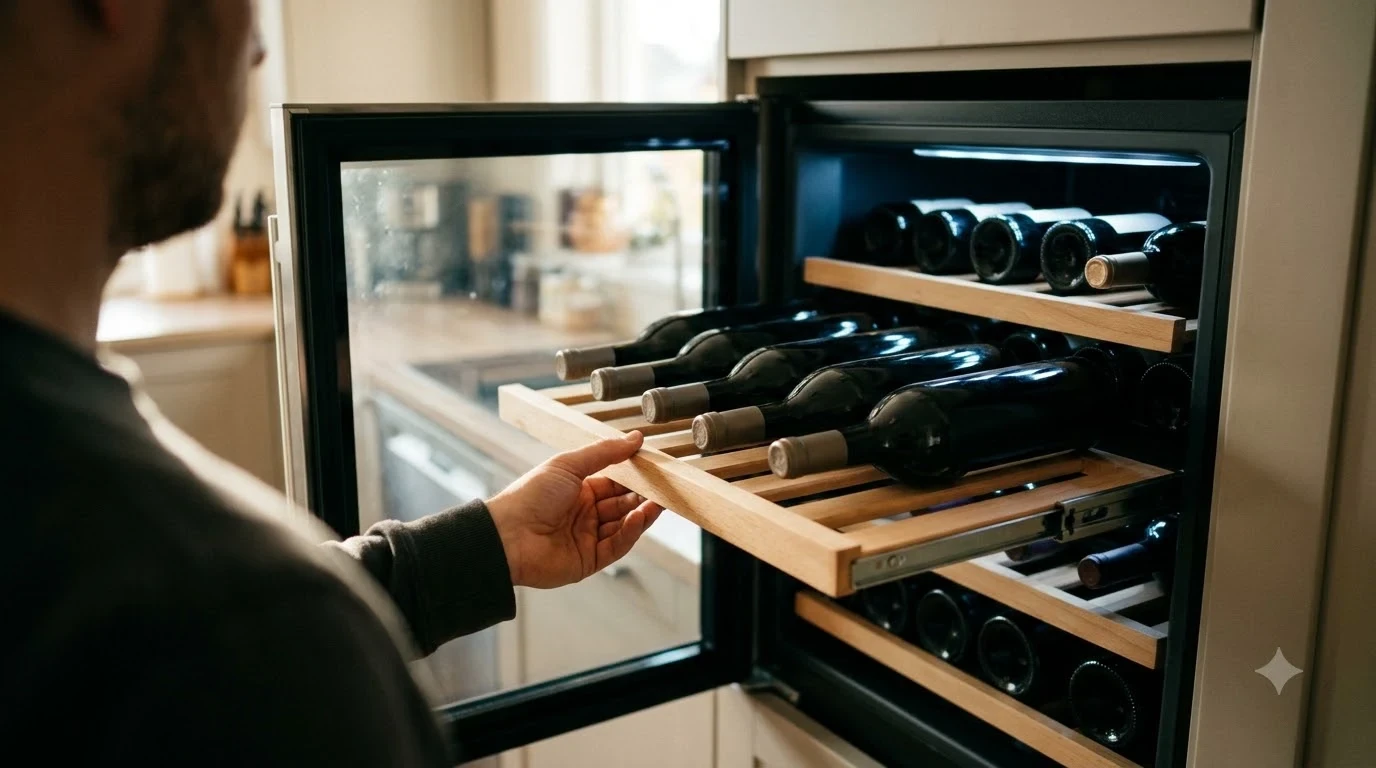
The best wine fridge for magnum bottles is a unit whose shelves and door clearance hold a 1.5-liter bottle upright or on its side without forcing it. A magnum holds the equivalent of two standard bottles, and it is taller and heavier than a 750 ml bottle, so a cabinet that lists a large bottle count may still fit fewer magnums than the label suggests. The useful checks are shelf height, shelf depth, and whether the door closes cleanly with a bottle in the top row.
Magnums are common on dinner tables and in gift collections, and many owners want them stored in the same cabinet as their everyday bottles. The problem is that most wine fridges are measured in 750 ml bottles, which means the advertised capacity often assumes a standard shoulder height. This guide explains how to measure for magnums, which unit types handle them best, and which features reduce the frustration of loading a heavy bottle into a tight space.
Quick Comparison
The main difference between cabinets for magnums is how the interior is laid out. Some units have uniform racks that work for standard bottles only. Others use shelves that can be lifted out, raised, or set farther apart. The table below compares the common product types by the features that matter most for magnums.
| Type | Magnum fit | Shelf style | Best placement |
|---|---|---|---|
| Freestanding single-zone | Often good, if shelves are removable | Sliding or removable shelves | Kitchen, dining room, living room |
| Freestanding dual-zone | Check each zone separately | Mix of fixed and removable racks | Kitchen or bar |
| Under-counter | Limited by counter height | Often fixed racks | Bar or kitchen island |
| Built-in column | Set by the cabinet opening | Varies by brand | Planned kitchen cabinetry |
Best for Upright Magnum Storage
This group suits people who want each magnum standing upright on its base, with the label visible. It needs a cabinet with enough vertical room above the top shelf.
Why it stands out: Upright storage keeps the bottle easy to read and reach. A unit with adjustable shelf spacing lets you set a tall row for magnums and keep the lower rows for standard bottles.
Keep in mind: Measure from the shelf surface to the underside of the shelf above, then subtract the top clearance you want for the cork and capsule.
Best for Side-Laid Magnums
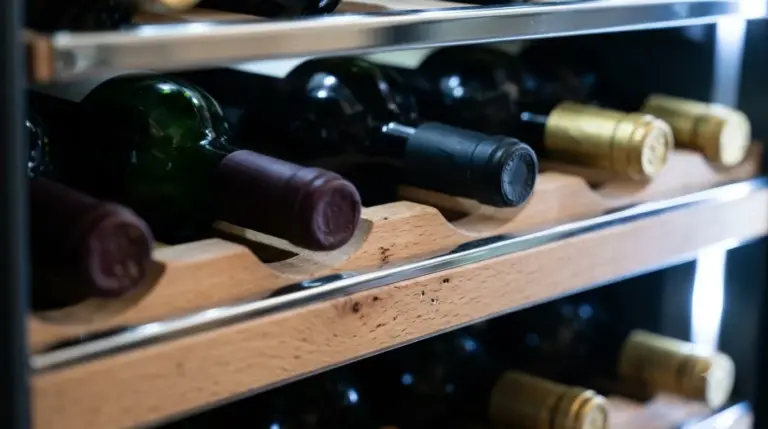
Some owners prefer to lay magnums on their sides, especially for bottles with natural corks they plan to keep for a while. This layout depends on shelf depth more than height.
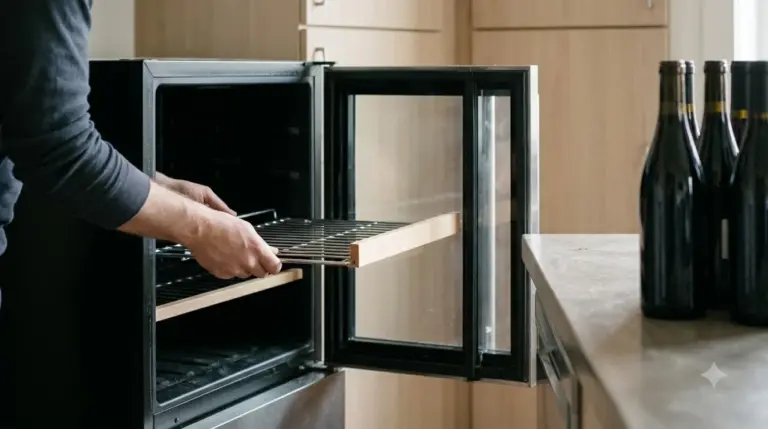
Why it stands out: A deeper shelf can hold a magnum on its side without the neck hanging over the front edge. Shelves that slide out on rails make the bottle easier to lift without bumping the others.
Keep in mind: Lying bottles take more horizontal space, so a cabinet that holds 20 standard bottles upright may hold far fewer on their sides.
Best for Mixed Collections
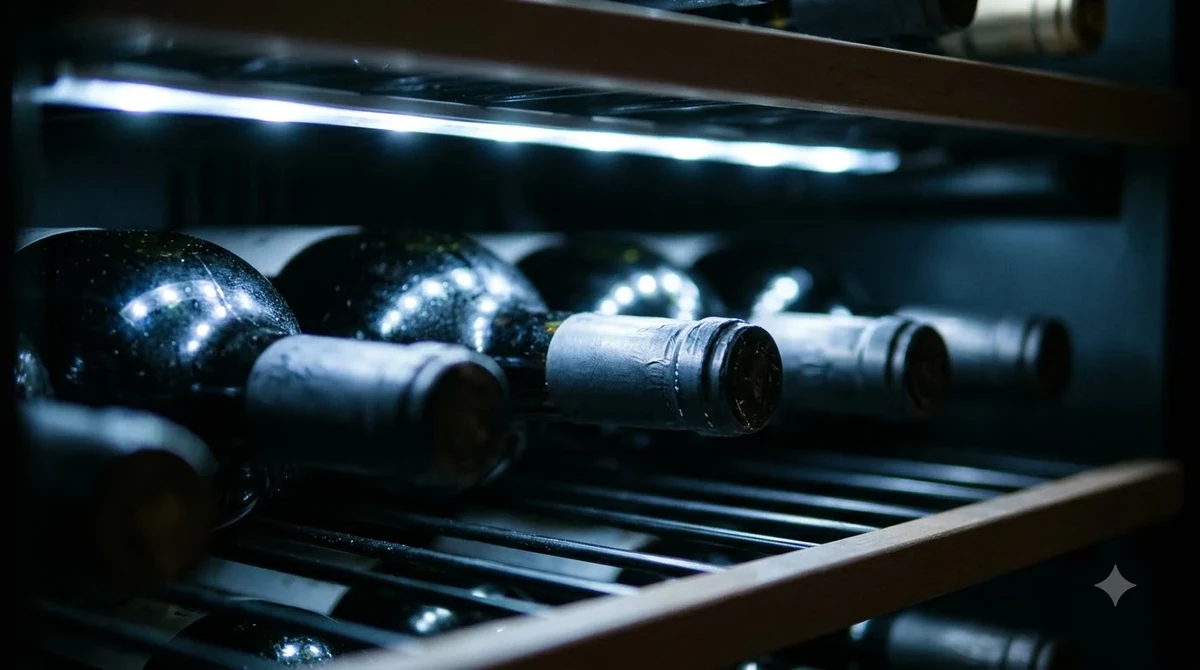
A collection with magnums and standard bottles needs both height and flexibility. The best fit is a cabinet with uneven shelf spacing, so the magnums do not take over every row.
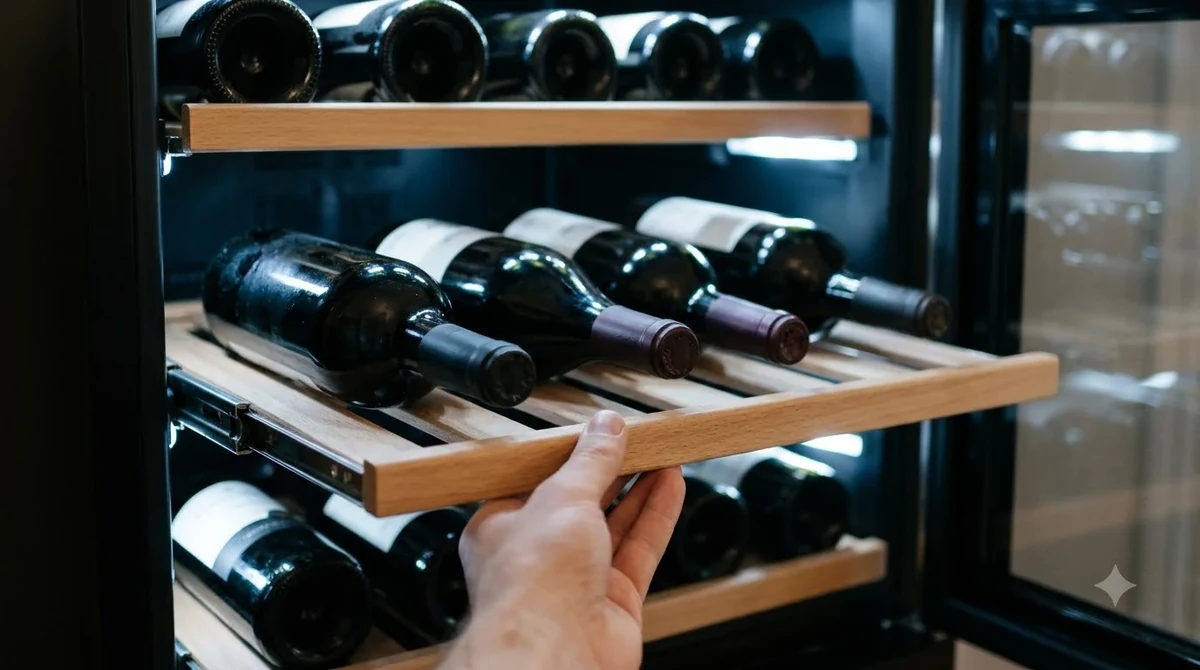
Why it stands out: A cabinet that lets you remove a shelf or move it up a notch can store a few magnums and still have room for the everyday bottles. That flexibility usually matters more than a higher bottle count on the spec sheet.
Keep in mind: Check whether the shelves stop short of the front edge. A shelf that ends early makes it harder to lift a heavy bottle out safely.
Best for Built-In Columns
A built-in column gives a clean finish in a kitchen run or home bar. It fits magnums well when the opening was planned with the tallest bottle in mind.
Why it stands out: Built-in cabinets sit flush with the surrounding cabinetry and look planned rather than added. The shelf layout is often fixed at the factory, so the spec sheet should be read closely before the opening is cut.
Before ordering a built-in model, ask the installer to confirm the opening height and the depth behind the panel. Some cabinet systems need a little extra clearance for the cooling vents, and that space can affect how far the shelves can slide.
Keep in mind: Changing the interior later is not simple. Measure the magnum and add room for the door, the top shelf, and the hand needed to lift the bottle.
Best for Tight Spaces
When the floor space is limited, a narrower unit with more height can hold magnums without taking up much room. It works best when the depth still lets the bottle sit fully on the shelf.
Why it stands out: A tall, slim cabinet puts more of its capacity into vertical space, which is what magnums need. It can also sit beside a wall or a tall appliance.
Keep in mind: Narrow units usually hold fewer bottles overall, so decide early whether you need height or total capacity.
How to Choose
Start with the tallest magnum you own, not the average one. Measure from the base of the bottle to the shoulder, then add room for the shelf thickness, the door, and the top of the cabinet. Many buyers skip the shelf depth, but a magnum on its side needs more room front to back than a standard bottle does.
Next, check how the shelves are built. Removable and sliding shelves handle heavy bottles better than fixed racks. If the rack is a thin wire, look at reviews or the spec sheet for weight ratings, because a full magnum can flex a light shelf over time.
Consider where the cabinet will sit. A kitchen or dining room gets frequent door openings and changes in temperature, which makes steady performance more important. A basement or cellar room is usually more stable. For the temperature range, the Wikipedia article on wine cellars gives 13 °C (55 °F) as ideal for short-term storage and long-term aging, with normal aging between 10 and 14 °C (50 to 57 °F).
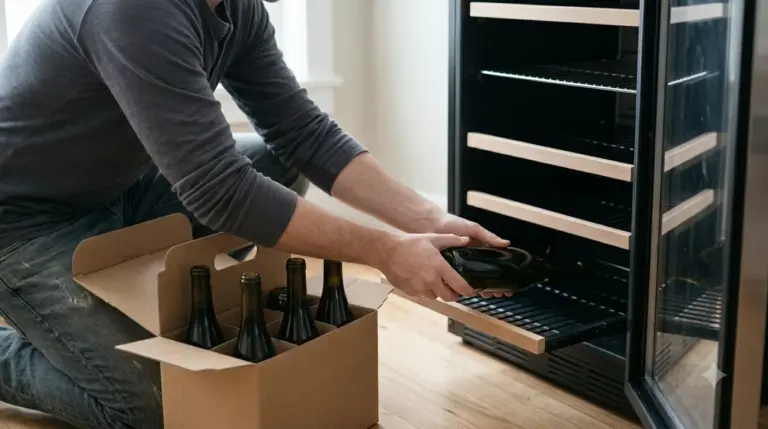
Think about how often the magnums will be moved. A bottle that stays in place for months needs less handling than one you take out for every dinner. If you expect frequent access, a cabinet with a sliding shelf at a comfortable height saves wear on your back and reduces the chance of a bottle knocking against the rack.
Finally, plan the path for loading. Make sure the door opens fully without hitting a wall or chair, and that you can reach the top shelf without straining. A heavy bottle is easier to handle when it can be lifted straight up rather than pulled around a tight corner.
Frequently Asked Questions
How many magnums fit in a standard wine fridge?
It depends on the cabinet layout. Many standard units are built around 750 ml bottles, so the number of magnums can be much lower than the advertised count. Measure the interior and compare it with the bottle height.
Is a magnum twice the size of a regular bottle?
A magnum holds 1.5 liters, which is equal to two standard 750 ml bottles. It is also taller and heavier, so the storage space it needs is not simply double. The Wikipedia article on wine bottles lists the standard sizes.
Should a magnum lie on its side?
Either position can work if the bottle will not roll and the shelf is stable. Upright storage is easier for reading labels, while side storage needs more shelf depth. Choose the layout that fits the cabinet you have. Whichever position you pick, keep the bottle away from direct sunlight and the vibration of a nearby appliance.
What temperature should magnums be stored at?
A steady temperature matters more than a specific setting for most home collections. The Wikipedia article on wine cellars describes 13 °C (55 °F) as ideal for short-term storage and long-term aging, with 10 to 14 °C (50 to 57 °F) as a normal aging range.
A wine fridge for magnum bottles is a practical choice when the sizing is right. Measure the tallest bottle, choose shelves you can adjust or remove, and confirm the temperature range before buying. For a comparison of other large formats, see the best wine fridge for Champagne bottles, and for a quick reference on bottle volume, how many glasses are in a bottle of wine shows how a large format compares with a standard one.
More in Wine Fridge Features
 Best Wine Fridge Bar Cabinet Setups for a Better Home BarUpdated Nov 20, 2026
 Wine Fridge for Champagne Bottles: Sizes and Storage GuideUpdated Nov 18, 2026
 Best Wine Fridge for Champagne Bottles: Shelf and Bottle FitUpdated Nov 18, 2026
 Best Wine Fridge with Display Shelf: Glass Doors and Open RacksUpdated Nov 18, 2026
 Best Wine Fridge With Drawers for Easy Access to Every BottleUpdated Nov 18, 2026
 Best Wine Fridge With Freezer: Combo Styles for Kitchens and BasementsUpdated Nov 18, 2026