

We may earn a commission when you buy through links on this page, at no extra cost to you. Learn more.
How to move a wine fridge safely: empty it, unplug it, secure its shelves and door, and transport it upright with at least two people. Keeping the cabinet vertical helps protect the compressor and sealed cooling system. Once it reaches its new location, allow the manufacturer-recommended settling time before reconnecting the power. The correct waiting period depends on how the appliance was transported and its specific model instructions.
Moving a wine refrigerator requires more preparation than moving an ordinary piece of furniture. Its glass door, adjustable shelving, compressor, refrigerant lines, and temperature-control components can be damaged by sudden movements or improper positioning. Whether you are moving a compact 12-bottle cooler across the kitchen or relocating a 150-bottle cabinet to another home, a careful plan can prevent expensive problems. The following steps cover preparation, packing, transportation, installation, and restarting your appliance.
1. Plan the Move Before Disconnecting Your Wine Fridge
A successful wine fridge move starts with checking the appliance dimensions, weight, route, and destination. Measure the refrigerator and every doorway, stairwell, and hallway along the planned route before attempting to move it.
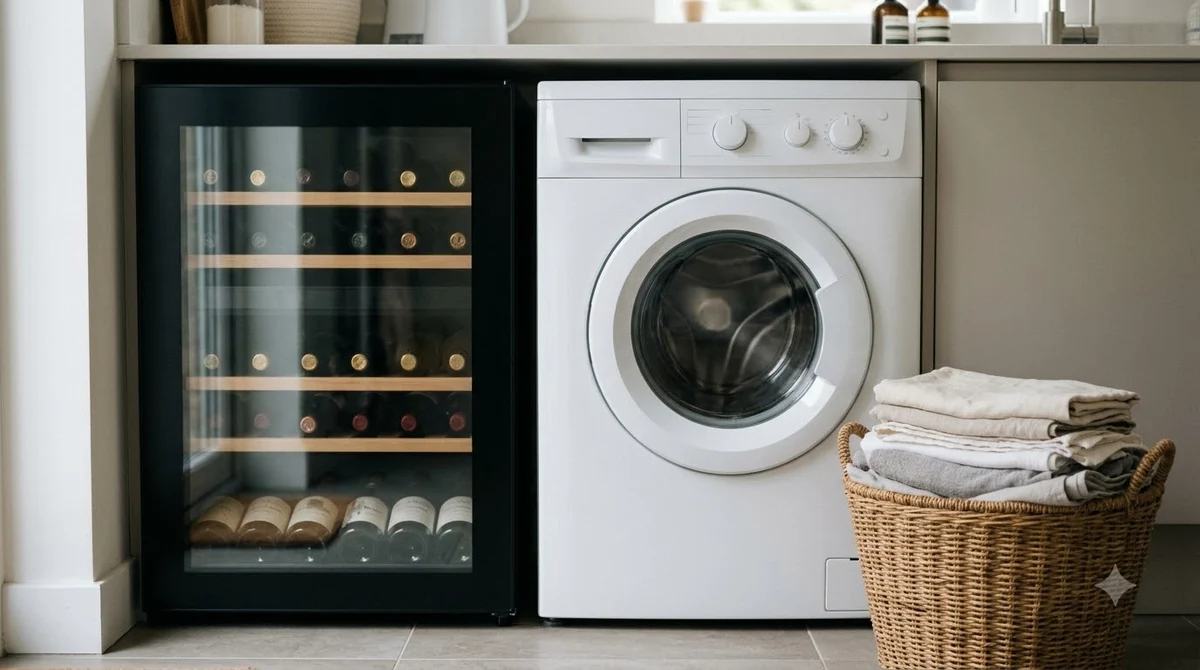
Start by locating the manufacturer’s owner manual. Different models have different requirements for transportation angles, leveling feet, ventilation clearance, and restarting after relocation. For example, Fisher & Paykel recommends upright transportation for its wine cabinet and explains that transporting it on its side can damage the sealed cooling system. A smaller freestanding cooler may have different handling instructions, so avoid assuming that every model follows the same procedure.
Next, measure the appliance at its widest, deepest, and tallest points. Include protruding handles, hinges, and decorative trim in your measurements. Compare these dimensions with the narrowest doorway and hallway on the route. If the fridge measures 24 inches wide, for example, a 23-inch doorway will require another route or professional assistance. Do not assume that removing a door from the refrigerator will solve the problem without checking whether the manufacturer permits it.
Check the total weight and arrange enough help. A small countertop-style wine cooler may be manageable for two people, while a large dual-zone cabinet holding more than 100 bottles can be substantially heavier. Use two or more people for lifting, particularly when negotiating stairs, thresholds, or tight corners. If the appliance is built into kitchen cabinetry, determine how it is secured before attempting to pull it out.
Prepare the destination as carefully as the departure point. Choose a stable, level indoor surface away from direct sunlight, ovens, radiators, and other heat-producing equipment. Check the available electrical outlet and make sure the appliance will have the ventilation clearance specified in its installation instructions. A wine fridge should not be squeezed into a space that blocks its ventilation openings.
Finally, decide whether you need an appliance dolly, moving blankets, protective floor coverings, packing tape, and a vehicle with enough cargo space. Planning these details before unplugging the refrigerator reduces the time it spends disconnected and makes the actual move easier.
2. Empty, Clean, and Secure the Interior
Remove every wine bottle, shelf accessory, and loose item before moving the appliance. An empty cabinet is easier to handle, and removing the contents prevents bottles from colliding with one another or damaging the interior during transportation.
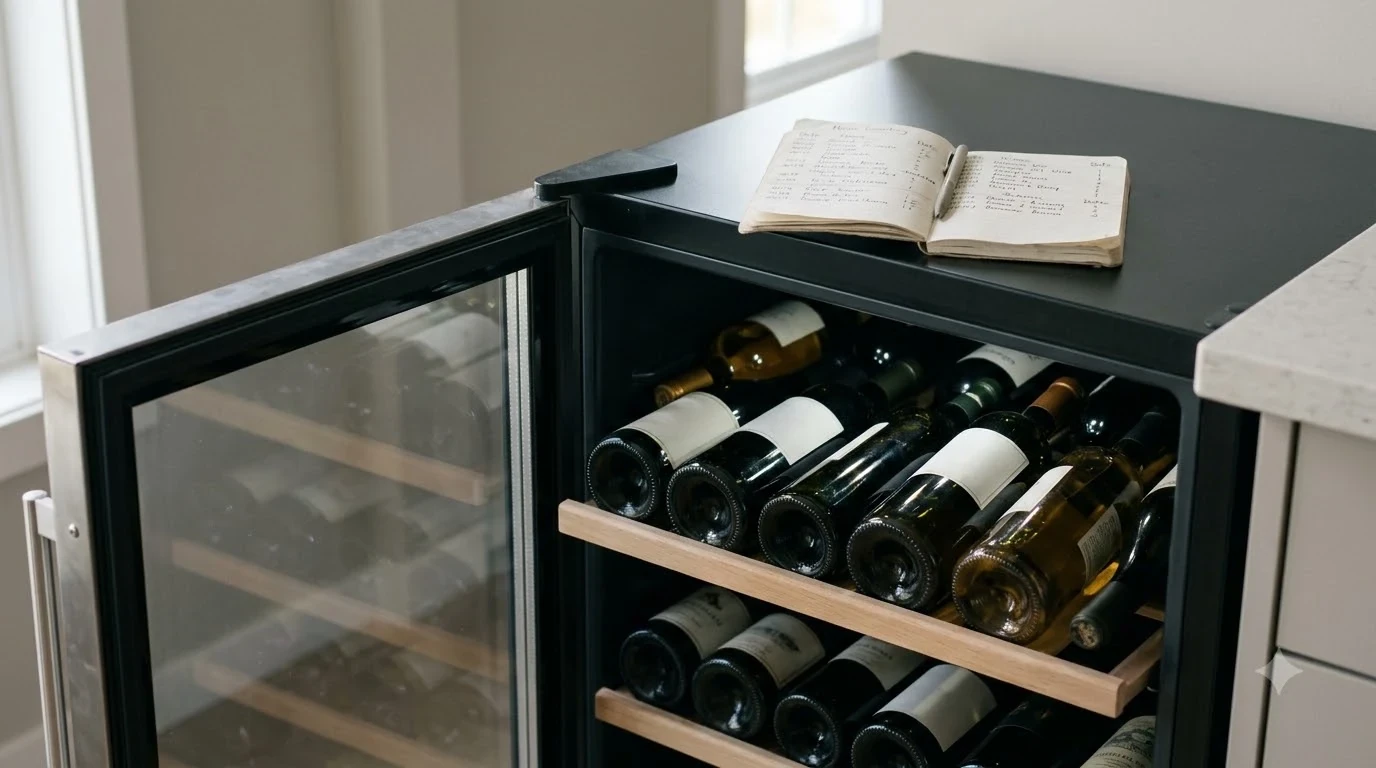
Begin by taking an inventory of the wine. Record the bottle names, vintages, quantities, and original shelf positions if you have a large collection. This is particularly helpful for dual-zone refrigerators, where reds and whites may be stored at different temperatures. Pack bottles individually in suitable wine cartons or protective dividers rather than leaving them inside the refrigerator.
Keep bottles away from direct sunlight and excessive heat while the refrigerator is disconnected. A short local move may not require elaborate temperature-control arrangements, but a long-distance relocation deserves more planning. Use insulated containers when appropriate, avoid leaving wine in a hot vehicle, and transfer valuable bottles to a suitable temperature-controlled location if the journey will take several hours.
After emptying the cabinet, remove detachable shelves, drawers, and accessories when the manual permits. Wooden shelves, sliding racks, and glass components can shift during transport and strike the cabinet walls. Wrap removable pieces separately in moving blankets or suitable protective material. Keep their screws, clips, and other fittings together in a labeled bag.
Wipe up spills and clean the interior with a soft cloth and a cleaner approved by the manufacturer. Dry the shelves, walls, and bottom of the cabinet before packing. Moisture left inside a closed refrigerator can contribute to unpleasant odors and mold growth during storage.
Check the drainage area and drip tray if your model has them. Remove standing water according to the owner’s instructions, but do not dismantle refrigeration components or attempt to disconnect sealed tubing. Keep cleaning gentle and avoid abrasive tools that could scratch interior surfaces or damage protective coatings.
Once the interior is empty, secure anything that cannot be removed. Fisher & Paykel specifically recommends taping shelves in position and closing the door before moving its wine cabinet. For a model with removable shelves, taking them out is generally preferable to allowing them to rattle during the journey.
Tip: Photograph the shelf arrangement, temperature settings, and control panel before packing. These pictures make it easier to restore the original setup after installation, especially on wine fridges with separate red and white wine zones.
3. Gather the Right Moving Equipment and Protect the Cabinet
Use an appliance dolly, moving blankets, protective straps, and floor coverings to reduce the chance of scratches, broken glass, and physical damage. The correct equipment also makes it easier to maintain a stable upright position throughout the move.
A standard furniture dolly may not provide enough support for a tall wine refrigerator. An appliance dolly with a suitable weight rating, padded contact points, and secure straps is a better choice for larger cabinets. Check the dolly’s maximum capacity against the refrigerator’s weight rather than estimating whether it looks strong enough.
Prepare the cabinet by completing these steps:
- Unplug the refrigerator and secure the power cord to the rear of the cabinet.
- Remove detachable shelves and accessories, then wrap them separately.
- Secure any remaining loose interior components according to the manual.
- Wind adjustable leveling feet upward if the manufacturer recommends doing so.
- Protect exposed corners and the glass door with suitable padding.
- Close and secure the door with tape or a suitable transport strap.
- Cover the floor along the moving route with cardboard or hardboard.
Pay particular attention to the glass door. Many wine fridges use large glass panels that can crack if the cabinet twists or receives a direct impact. Place a protective blanket over the door and secure it without putting excessive pressure on the glass. Avoid wrapping straps tightly around the door frame, handles, or control panel.
Use moving blankets around the exterior to protect painted metal, stainless steel, and decorative finishes. Secure the blankets so they cannot slip during lifting. Do not cover ventilation openings with adhesive tape or use packing materials that could leave residue on the cabinet.
Check the leveling feet before placing the appliance on the dolly. Some wine coolers have adjustable feet that should be raised before movement, while other models use a different base design. Follow the instructions for your particular refrigerator rather than forcing a foot or wheel into position.
For the moving route, remove obstacles, loose rugs, and objects that could cause someone to trip. Protect hardwood, tile, and laminate flooring with hardboard or another suitable covering. Whirlpool’s wine cellar manual specifically recommends floor protection and advises pulling the appliance straight out rather than wiggling or walking it across the floor.
If the refrigerator is built into cabinetry, disconnect any permitted mounting hardware and follow the manufacturer’s removal instructions. Built-in wine columns may have brackets, trim pieces, or custom panels that require careful handling. If electrical connections or specialized installation hardware are involved, arrange qualified assistance instead of improvising.
4. Transport the Wine Fridge in an Upright Position
Keep the wine refrigerator vertical throughout the move whenever possible. Upright transportation reduces the risk of compressor oil entering parts of the cooling circuit and helps protect the sealed refrigeration system.
Before lifting, position two people on opposite sides of the appliance. Hold the refrigerator securely at its base or designated lifting points, as specified by the manufacturer. Avoid lifting by the glass door, handle, shelves, hinges, or decorative trim. These components are not designed to support the full weight of the cabinet.
If using an appliance dolly, slide it into position carefully and secure the cabinet with its straps. Apply enough tension to prevent movement without crushing the door frame or damaging the exterior panels. Keep the refrigerator upright as the dolly is tilted onto its wheels. Move slowly over thresholds and uneven flooring.
Do not drag the appliance across the floor. Dragging can scratch flooring, bend leveling feet, and place unwanted stress on the refrigerator’s base. Whirlpool advises pulling its wine cellar straight out instead of wiggling it from side to side. This is particularly important when removing a built-in unit from a tight installation opening.
Take stairs one step at a time with adequate help. Keep the appliance balanced and avoid sudden changes in angle. If the refrigerator is too large or heavy to control safely, stop and hire professional appliance movers. A dropped wine fridge can damage its cabinet, door, compressor, or refrigerant lines.
For vehicle transportation, choose a cargo area that allows the appliance to remain upright. Secure it against movement using appropriate straps attached to stable vehicle anchor points. Use padding between the refrigerator and the vehicle walls, and prevent other furniture or boxes from pressing against its glass door.
Do not place heavy items on top of the refrigerator. Even if the exterior appears strong, concentrated weight can damage the cabinet structure or door assembly. Keep the appliance away from loose equipment that could fall or strike it during braking.
Some manufacturers permit limited tilting during handling, but this does not mean that every refrigerator can be transported horizontally. The Bordeaux BEWC-171 manual, for example, says not to tilt its wine cooler more than 45 degrees and recommends keeping it upright. That limit is model-specific, not a universal allowance for all wine refrigerators.
If the only available vehicle cannot accommodate the appliance upright, consult the owner manual before making alternative arrangements. Some manufacturers specify an acceptable alternative orientation, while others warn against laying the cabinet down altogether. Never assume that placing a wine fridge on its front, door, or side is harmless.
5. Allow the Compressor to Settle Before Restarting
After transportation, leave the wine fridge standing upright before reconnecting it to electricity. The required waiting period depends on the model and whether the refrigerator remained upright or was transported horizontally.
The reason for this waiting period relates to the compressor and its lubricating oil. During horizontal transportation, oil can move away from its normal position and enter the cooling circuit. Restarting the appliance too soon may place unnecessary stress on the compressor. Allowing it to stand upright gives the oil time to return as intended.
Manufacturer instructions demonstrate why there is no single waiting time that applies to every wine fridge. Fisher & Paykel specifies that its cabinet can be switched on after 10 minutes if transported upright. If it has been left on its side for any length of time, the manufacturer recommends standing it upright for as long as possible, at least a few hours. Its wine cabinet installation and user guide provides the model-specific handling instructions.
By comparison, the Bordeaux BEWC-171 manual recommends waiting 4–6 hours after horizontal transportation. A Whirlpool wine cellar manual specifies at least 24 hours upright if the appliance has been transported on its back. These differences make the owner’s manual the most reliable source for your particular model.
| Transportation situation | Example manufacturer guidance | What to do |
|---|---|---|
| Upright transport | 10 minutes | Follow the Fisher & Paykel model instructions. |
| Left on its side | At least a few hours | Stand upright and follow the model-specific guidance. |
| Horizontal transport | 4–6 hours | Follow the Bordeaux BEWC-171 manual. |
| Transported on its back | At least 24 hours | Follow the Whirlpool wine cellar instructions. |
These times are examples from different appliances, not interchangeable rules. If your manual specifies a longer waiting period, use that longer period. If you cannot determine the correct procedure, contact the manufacturer’s customer support before switching on the refrigerator.
During the waiting period, keep the refrigerator unplugged and in its final upright position. Avoid moving it again unnecessarily. This is also a good opportunity to check the cabinet exterior, power cord, door hinges, and ventilation openings for visible damage.
Do not try to speed up the process by repeatedly plugging in the refrigerator for short periods. Avoid resetting the temperature controls or experimenting with electrical components while the appliance is waiting to restart. Give the cooling system the full settling period specified by its manufacturer.
6. Reinstall, Level, and Check the Wine Refrigerator
Place the wine fridge on a stable, level surface with the ventilation clearance specified in its installation manual. Correct positioning helps the door seal properly, reduces unwanted movement, and gives the cooling system room to operate.
Start by checking the floor. A hard, flat surface is preferable to a soft or uneven one. Avoid placing the refrigerator on thick carpet unless the manufacturer specifically permits it. Uneven support can cause the cabinet to twist, affect door alignment, and interfere with the operation of sliding shelves.
Position the appliance carefully without pushing it against walls or cabinetry. Check the required clearance around the rear, sides, and top. Different models have different ventilation arrangements, so there is no universal clearance measurement. A built-in wine column, for example, may use front ventilation, while a freestanding cooler may require open space around its rear and sides.
Adjust the leveling feet until the refrigerator is stable. Whirlpool specifies that all four leveling legs must contact the floor to support its wine cellar after installation. Fisher & Paykel also emphasizes firm support at all four corners and warns that an uneven floor can twist the cabinet and cause poor door sealing.
Check that the door opens and closes without rubbing against surrounding cabinetry. Inspect the gasket around the door for gaps, folds, or visible damage. A poorly aligned door can allow warm air to enter and make it harder for the refrigerator to maintain its selected temperature.
Before connecting the power, inspect the electrical cord and plug. Make sure the cord is not trapped underneath the appliance or pressed against a sharp edge. Use the grounded outlet and electrical connection specified by the manufacturer. Do not remove the grounding pin or use an unsuitable extension cord.
Once the waiting period has passed, reconnect the refrigerator and switch it on. Restore the original temperature settings using the photographs you took before the move. For a dual-zone wine fridge, check both zones separately and confirm that each displays the intended setting.
Give the refrigerator time to cool before loading it with bottles. The time required varies according to the cabinet size, room temperature, initial interior temperature, and cooling system. Avoid assuming that the display reaching its target temperature means every shelf has already stabilized.
Check that the compressor operates normally, the display responds to adjustments, and the door closes securely. Listen for unusual rattling, repeated clicking, or other sounds that were not present before the move. A short period of normal operating noise may occur as the appliance starts cooling, but persistent unusual sounds deserve attention.
If the refrigerator does not cool properly, begin with basic checks such as the power connection, temperature settings, door seal, and unobstructed ventilation. For troubleshooting specific models, see our guides to Allavino wine fridge not cooling, Allavino wine fridge repair, and Magic Chef wine fridge not cooling. For additional installation and maintenance information, visit Installation & Care.
If the cabinet still fails to cool after the manufacturer’s recommended startup period, or if you notice a damaged power cord, unusual mechanical noise, or suspected refrigerant leakage, stop using the appliance and contact an authorized technician. Do not open the sealed cooling system or attempt compressor repairs yourself.
Frequently Asked Questions
Can I move a wine fridge with wine bottles still inside?
It is best to remove every bottle before transportation. A standard 750 ml wine bottle contains liquid that can shift during movement, while the glass itself can strike shelves or other bottles. Even a short journey across a room can create enough vibration to loosen unsecured contents. Pack bottles separately in divided wine cartons and keep them protected from excessive heat.
Can a wine fridge be transported lying flat?
Most wine refrigerators should remain upright, but some models permit a specific alternative orientation. Whirlpool’s wine cellar instructions permit transportation on the back when upright transport is not possible, followed by at least 24 hours standing upright. Other manufacturers provide different instructions, so never apply one model’s transportation allowance to another refrigerator.
Does moving a wine fridge affect its temperature calibration?
Physical relocation does not automatically mean that the temperature sensor needs recalibration. However, a refrigerator may display a different reading when moved into a room with different ambient conditions or ventilation. Some models also have separate temperature sensors for individual storage zones. Compare the displayed readings with the manufacturer’s operating specifications before assuming that the sensor has failed.
Can I store a wine fridge in an unheated garage during a move?
That depends on the refrigerator’s specified climate operating range. Some wine cabinets are designed for controlled indoor environments rather than extreme garage temperatures. For example, the Fisher & Paykel RS60RDWX1 guide specifies an indoor ambient operating range of 16°C to 25°C. Check the permitted storage and operating conditions before leaving the appliance in an unheated space.
Should I leave the wine fridge door open while it is unplugged?
If the refrigerator will remain unplugged for an extended period, leaving its cleaned and dried door slightly open can help prevent trapped moisture and unpleasant odors. Use an appropriate door spacer if necessary, and keep children and pets away from the opening. If the appliance is being transported immediately, secure the door closed during the journey and follow the manufacturer’s storage instructions after arrival.
Moving a wine fridge safely comes down to preparation, upright transportation, proper support, and patience before restarting the compressor. Empty the cabinet, protect its glass and interior components, and follow the waiting period specified for your model. With careful handling and a suitable final installation location, you can relocate your wine refrigerator while reducing the risk of cooling-system damage and unnecessary repairs.
More in Storage & Fridge Care
 How Long Can You Store Wine in a Wine Fridge? Protect Bottle QualityUpdated Nov 20, 2026
 Can You Store Beer in a Wine Fridge? Keep Both Drinks FreshUpdated Nov 20, 2026
 Is It Worth Repairing a Wine Fridge? Spot the Cheap Fixes Before You ReplaceUpdated Nov 20, 2026
 Wine Fridge Condensation: Identify Causes and Fix Moisture ProblemsUpdated Nov 20, 2026
 Wine Fridge Too Cold: Protect Your Wine and Fix the TemperatureUpdated Nov 20, 2026
 How to Reset Wine Fridge: Restore Cooling and SettingsUpdated Nov 20, 2026