
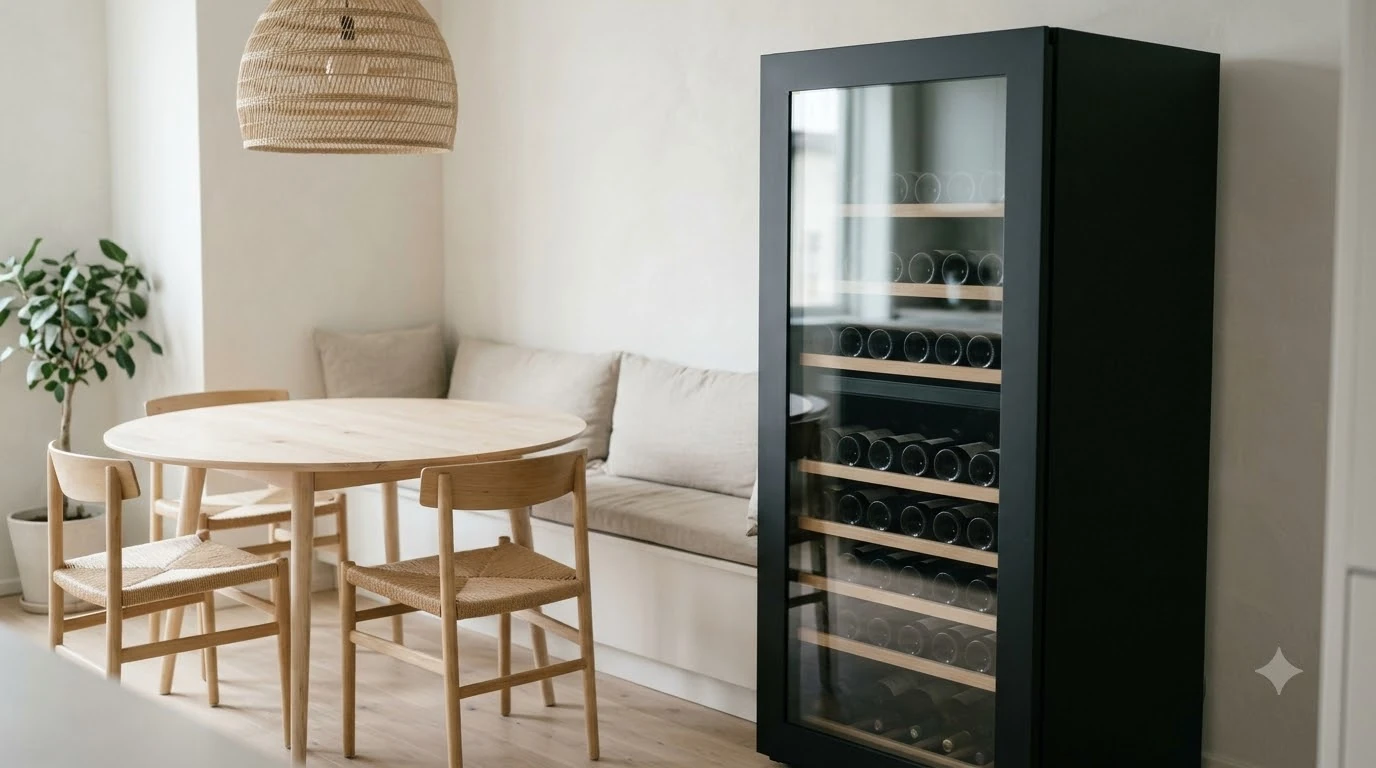

We may earn a commission when you buy through links on this page, at no extra cost to you. Learn more.
allavino wine fridge repair usually starts with checking power, temperature settings, ventilation, and the door seal before replacing any parts. Many problems have a simple cause, such as a tripped breaker, a blocked vent, or a door that is not closing fully. The right diagnosis depends on the model number because Allavino uses different controls and fault codes across its wine refrigerator lines. Stop before opening electrical or sealed cooling components, and contact Allavino support when a sensor or refrigeration fault appears likely.
An Allavino wine refrigerator is designed to protect a collection through steady temperature control, so a sudden change deserves attention even if the cabinet still feels cool. Start by recording the model, the displayed temperature, the set temperature, the symptoms, and any code on the control panel. The checks below focus on the problems an owner can safely inspect without turning a small fault into a larger repair.
Start With the Model, Installation, and Symptoms
The most reliable repair path begins with the exact model and installation type. Allavino sells single-zone and multi-zone designs, as well as freestanding and built-in-capable cabinets, and the correct airflow and control instructions can differ between them.
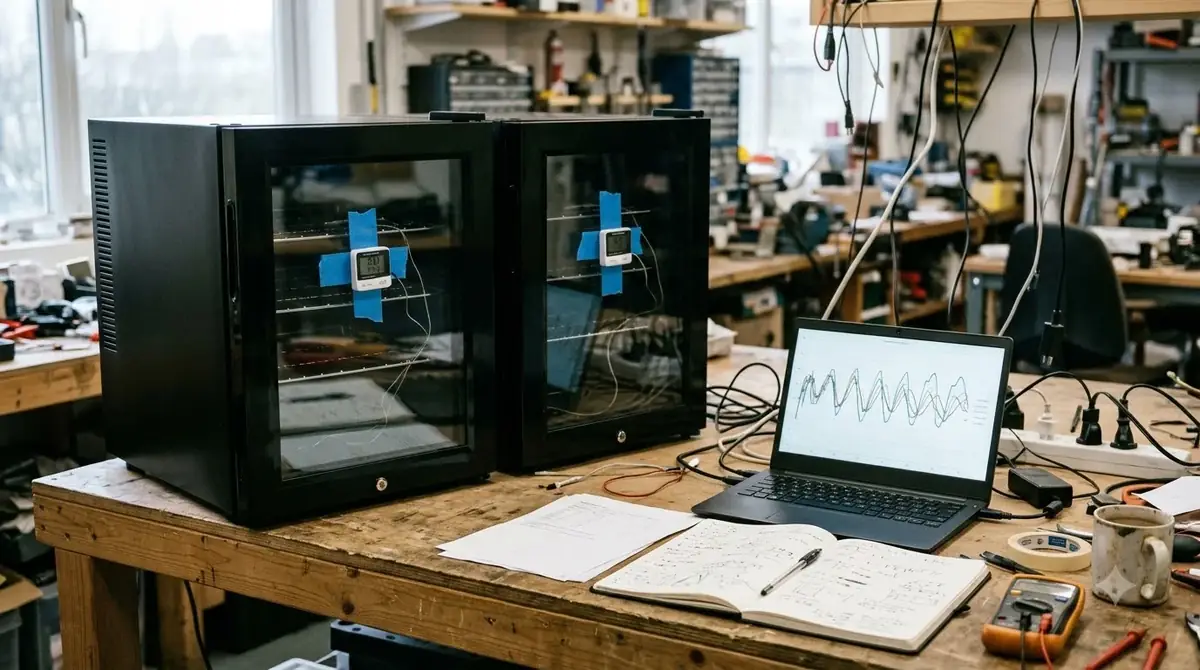
Find the model and serial information on the appliance label or original paperwork, then locate the matching owner’s manual. Vite, Cascina, FlexCount, and Reserva units may use different control sequences and fault codes. If you have a dual-zone cabinet, record the upper and lower readings separately.
Describe the symptom precisely. A blank display, a compressor that never starts, one warm zone, continuous running, and fluctuating temperatures point toward different checks. A dark panel suggests a power or control issue; a running cabinet that misses its set point calls for an airflow, door-seal, setting, or cooling-system assessment.
Note whether the problem began after moving the refrigerator, cleaning behind it, adding bottles, changing the set point, or leaving the door open. A unit moved into a tight alcove may have lost needed ventilation, while a shelf pushed out of position can prevent the door from sealing.
Protect the wine during diagnosis. If the interior temperature keeps rising, move valuable bottles to another temperature-controlled location instead of repeatedly opening the door. Allavino identifies a steady 55°F as a suitable long-term preservation target for both red and white wine.
Check Power and Control Settings Before Opening Anything
A wine refrigerator that appears dead may have a basic electrical or control problem rather than a failed cooling system. Check the outlet, plug, breaker, power switch, and panel lock before considering internal parts. Allavino explains its compressor and Tru-Vino temperature-control approach in its manufacturer FAQ.
Confirm that the cord is fully seated and the outlet works. Check the household breaker once; if it trips again, stop resetting it and arrange qualified electrical service. Do not use a damaged cord, remove the grounding pin, or pull the refrigerator out by its power lead.
If the display is lit but will not respond, check whether the panel is locked. Some Allavino models have a lock function, but the button combination differs by design. Use the exact model manual, and confirm that the display shows the intended zone and temperature unit before changing a setting.
Make small, deliberate adjustments. The available set-point range and button sequence vary by Allavino model. On a dual-zone unit, verify that you are adjusting the upper or lower compartment you intend to change.
After correcting a setting, let the cabinet respond rather than pressing the controls repeatedly. Compressor systems cycle, so air temperature can move as cooling starts and stops. Keep the door closed and record the setting and actual display. If controls remain unresponsive, the display flickers, or the breaker trips again, leave internal electrical diagnosis to a technician.
Restore Airflow and Check Cooling Performance
Poor ventilation is a frequent reason a wine refrigerator runs longer than expected or struggles to maintain its temperature. Allavino describes different ventilation arrangements for freestanding and built-in-capable cabinets, so the model’s installation instructions matter before you move the unit or alter the surrounding cabinetry. For a focused symptom checklist, see the Allavino wine fridge not cooling troubleshooting page.
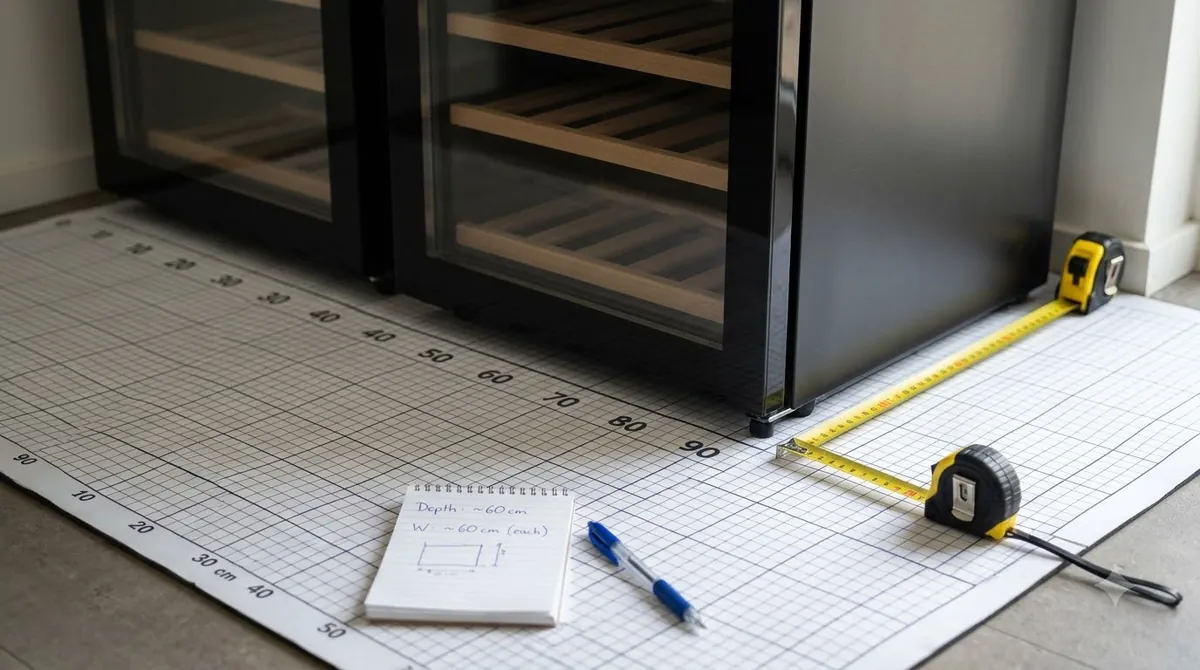
For a freestanding model, make sure there is open space around the cabinet and that curtains, boxes, furniture, or stored items are not blocking the ventilation openings. Allavino says freestanding wine refrigerators need several inches of clearance for proper ventilation. Built-in models are designed to release heat through a front vent; do not cover that grille with a decorative panel, rug, or kick plate. A refrigerator installed in a cabinet that blocks its designed air path may run continuously without reaching the target temperature.
Check the room, too. A cooler next to an oven, radiator, sunny window, or other heat source has to work harder. Correct the location where possible and stay within the ambient-temperature limits listed in the model manual.
Inspect exterior air openings for dust and lint. Unplug the appliance before cleaning accessible grilles, using a soft brush or vacuum attachment gently. Do not bend fins, spray liquid into vents, remove an unapproved service panel, or reach into a running fan. A Sub-Zero guide recommends cleaning its Model 315W condenser every 3 to 6 months and warns that damaged fins reduce efficiency; this is a maintenance reference, not permission to dismantle an Allavino cabinet.
Check cooling with an appliance thermometer near the bottles, away from a vent or cooling surface. Compare it with the display over several readings. Air temperature shifts as the compressor cycles, so one reading just after opening the door does not prove a thermostat failure. Record any persistent difference for support.
Allavino says red and white wines can share a single-zone cabinet, with 55°F as a steady preservation target. Serving temperature is a separate decision; chill or warm an individual bottle before pouring rather than sharply changing the refrigerator setting.
Inspect the Door Seal, Shelves, Level, and Everyday Noises
A door that does not close squarely lets warm room air enter the cabinet and can cause frequent cycling or a high-temperature alarm. Allavino’s troubleshooting manual specifically lists a poorly sealing gasket, a dirty gasket, misplaced shelves, and an unlevel cabinet among the causes owners should check.
Inspect the full gasket for gaps, folds, tears, or hardened spots. Wipe it with a soft cloth and mild soap, then dry it. Make sure bottles do not project past the shelf edge and every shelf is seated; a bottle neck or misaligned shelf can keep the door slightly open.
Check that the cabinet is level and stable. A unit that rocks can vibrate, leave the door uneven, or make shelves rattle. Adjust the leveling feet according to the manual, and remove objects touching the cabinet that could amplify normal vibration.
Not every noise signals a problem. The Allavino VSW16371S-1 manual describes faint humming from refrigerant flow as normal, along with gurgling at the end of a cooling cycle and occasional popping or crackling as interior walls expand and contract. A sudden grinding, scraping, repeated hard impact, or fan noise that changes when the door opens deserves closer inspection. Note when the sound occurs and whether the refrigerator is cooling normally.
Frequent cycling can follow a warm room, repeated door openings, a poor seal, or a wrong setting. Reduce door openings and let the cabinet settle after loading or cleaning. If the compressor starts and stops every few minutes, the cabinet overheats, or a burning smell appears, turn it off and arrange service.
Read Allavino Error Codes by Model
An error code narrows the fault, but it does not automatically identify a part an owner should replace. Allavino’s manuals use different code systems, so match the code to the exact model and treat a sensor or temperature alarm as a reason to contact support if it persists.
The Allavino VSW16371S-1 troubleshooting manual lists five display messages: C1, U1, HH, LL, and DO. In that manual, C1 indicates an open temperature-sensor circuit, U1 indicates a shorted temperature-sensor circuit, HH is a high-temperature alarm, LL is a low-temperature alarm, and DO appears when the door has remained open for 3 minutes. Other Allavino models can use different codes, so this chart must not be applied to every cabinet.
| Code in VSW16371S-1 manual | Meaning | Owner’s first check |
|---|---|---|
| C1 | Temperature sensor open circuit | Record the code and model; arrange technical diagnosis if it remains displayed. |
| U1 | Temperature sensor short circuit | Do not bridge wires or replace a sensor without model-specific service instructions. |
| HH | High-temperature alarm | Check the set point, door closure, room heat, and ventilation. |
| LL | Low-temperature alarm | Confirm the set point and compare the cabinet with an independent thermometer. |
| DO | Door open for 3 minutes | Close the door and inspect shelves, bottles, and the gasket for interference. |
For HH or LL, distinguish a temperature problem from a door or setting issue. Check whether the cabinet is newly loaded, the door has been left open, or an air opening is blocked. If the alarm persists, give support the code, set point, measured temperature, room conditions, and start time.
For C1 or U1, the manual points to an electrical fault in the sensor circuit. Diagnosis may require internal wiring checks, so it is not a trial-and-error repair. Do not short terminals, splice wires, or order a sensor based on a code from another Allavino line.
Tip: Photograph the control panel when a code appears, and include the full model number in your support request. A clear photo helps distinguish similar-looking characters and prevents a code from one Allavino series being mistaken for another.
Know When to Stop and Call for Service
Owner checks should end when the suspected fault involves wiring, a sensor circuit, the compressor, a fan behind a service cover, or the sealed refrigerant system. Allavino states that it offers lifetime technical support for its wine coolers; contact the company with the model information before authorizing an invasive repair.
Call Allavino support at 1-888-980-4809. Have the model and serial numbers, purchase information, code, set point, measured temperature, and a list of checks already completed. Explain whether the unit is freestanding or under-counter and whether one or both zones are affected.
Before paying for parts or labor, review the refrigerator’s warranty documents and ask whether the proposed work affects coverage. Terms can differ by model and seller. Keep the receipt, manual, and service correspondence together, and check the approved process before opening a cabinet that may still be covered.
Stop using the refrigerator if you notice a damaged power cord, repeated breaker trips, a burning or hot-plastic smell, liquid near electrical components, or signs of a refrigerant leak. Unplug the unit only if the plug and surrounding area are safe to reach; otherwise shut off the circuit at the breaker and call a qualified professional. Never puncture refrigerant tubing, handle a capacitor, or attempt to recharge a sealed cooling circuit. These are service tasks, not routine wine-fridge maintenance.
For a different brand, use the correct repair guidance rather than applying Allavino-specific instructions. The troubleshooting paths for Zephyr wine fridge repair and Marvel wine fridge repair are separate because control layouts, parts, and error codes are not interchangeable. For broader maintenance and storage advice, the Brand Troubleshooting section can help organize the next steps.
If cooling cannot be restored, move valuable bottles to stable storage and keep the door closed. A steady environment near 55°F is preferable to repeatedly warming and chilling the collection. After repair, monitor the cabinet with a thermometer and confirm each zone holds its target before restocking.
Frequently Asked Questions
These answers cover common display, cooling, and maintenance questions that come up after the basic checks. Use the exact model manual for procedures that differ between Allavino series.
How does Allavino Tru-Vino temperature control respond near the set point?
Allavino says Tru-Vino gradually reduces cool-air delivery as the target temperature is reached, then gradually increases cooling as the temperature begins to change. The design is intended to avoid drastic temperature drops rather than keep every air reading perfectly motionless.
Why does my Allavino display show the set temperature and a different actual temperature?
Some Allavino control panels distinguish the target setting from the measured cabinet temperature. The two values are not expected to match at every instant because the cooling system cycles and the air warms when the door is opened; use a separate thermometer to check whether the cabinet is trending toward a stable range.
Can a large bottle load trigger a temperature warning?
It can contribute to a temporary rise because room-temperature bottles add heat to the cabinet and loading usually keeps the door open longer. Close the door, avoid another large load, and watch whether the temperature returns toward the set point; a continuing HH alarm needs further diagnosis.
Should I unplug an Allavino refrigerator to clear an error code?
Do not use a power cycle as a substitute for understanding a sensor or temperature fault. A reset may clear a temporary display condition, but a recurring code should be recorded and checked against the exact manual before the unit is returned to normal use.
Can I replace an Allavino temperature sensor myself?
Only follow a model-specific procedure if Allavino explicitly identifies the task as owner service and the instructions address electrical isolation. The C1 and U1 descriptions in the VSW16371S-1 manual refer to sensor-circuit faults, not a guarantee that the sensor itself is the only failed component.
Most Allavino wine-fridge problems become easier to diagnose once the model, installation, temperature readings, and any displayed code are recorded. Start with safe external checks, protect the wine from temperature swings, and let Allavino support or a qualified technician handle internal electrical and refrigeration work.
More in Storage & Fridge Care
 How Long Can You Store Wine in a Wine Fridge? Protect Bottle QualityUpdated Nov 20, 2026
 Can You Store Beer in a Wine Fridge? Keep Both Drinks FreshUpdated Nov 20, 2026
 Is It Worth Repairing a Wine Fridge? Spot the Cheap Fixes Before You ReplaceUpdated Nov 20, 2026
 Wine Fridge Condensation: Identify Causes and Fix Moisture ProblemsUpdated Nov 20, 2026
 Wine Fridge Too Cold: Protect Your Wine and Fix the TemperatureUpdated Nov 20, 2026
 How to Reset Wine Fridge: Restore Cooling and SettingsUpdated Nov 20, 2026