

We may earn a commission when you buy through links on this page, at no extra cost to you. Learn more.
Primitivo food pairing works best with grilled meats, tomato-based pasta, barbecue, roasted vegetables, and aged cheeses because the wine’s ripe dark-fruit flavors, medium tannins, and full body complement rich, savory dishes. This southern Italian red also pairs particularly well with lamb, beef, sausages, and traditional Puglian recipes. For the most balanced experience, choose foods with enough flavor and richness to match the wine without overwhelming its fruit character.
Primitivo comes primarily from Puglia, the sun-warmed region forming the heel of Italy’s boot. Known for flavors of blackberry, plum, ripe cherry, and baking spice, it is a natural companion for substantial meals and Mediterranean ingredients. Whether you are preparing a Sunday roast, ordering pizza, or serving a cheese board, understanding the wine’s structure makes choosing the right food considerably easier.
Understanding Primitivo’s Flavor and Structure
Primitivo is generally a full-bodied red with ripe fruit, medium acidity, medium tannins, and noticeable alcohol. Its generous texture and dark-fruit character explain why it works especially well with flavorful foods rather than delicate dishes.
Blackberry, plum, ripe cherry, and sometimes dried fruit form the central flavor profile. Depending on the growing area and winemaking approach, additional notes can include black pepper, tobacco, licorice, vanilla, and baking spices. Some examples emphasize fresh fruit, while others develop richer, almost jam-like characteristics through warm growing conditions and extended ripening.
For a specific producer example, Cantele’s Primitivo tasting notes and technical details describe ripe cherry, blackberry, dried plum, black pepper, cinnamon, and subtle oak-derived vanilla. Its description also emphasizes fresh acidity and soft, integrated tannins, illustrating why Primitivo can offer generous fruit without every example feeling heavy.
Primitivo is genetically identical to Zinfandel, but the two names generally describe wines associated with different growing regions and styles. Italian examples from Puglia can have an earthy, savory character alongside their ripe fruit. The wine’s relatively substantial alcohol and full texture also make it more comfortable alongside rich meat dishes than delicate seafood or lightly seasoned vegetables.
Its regional origins provide useful clues for choosing food. Primitivo di Manduria, Gioia del Colle, and Salento are important names associated with the grape in Puglia. These areas do not produce identical wines, so the exact balance of fruit, acidity, alcohol, and tannin can vary. Producers increasingly show a range of styles, from powerful, concentrated reds to fresher interpretations.
A particularly useful way to approach the wine is to think about intensity. A lightly seasoned chicken salad can disappear beside a powerful Primitivo, whereas grilled lamb with rosemary or slow-cooked beef has enough flavor to create a satisfying match. The same principle applies to sauces, vegetables, and cheeses.
For additional background on regional Italian wine styles, the Wine Pairing guide provides a useful starting point for understanding how body, acidity, tannin, and food preparation influence a match.
Beef, Lamb, and Other Red Meats
Beef and lamb are among the strongest choices for Primitivo because their rich flavors and savory textures complement the wine’s ripe fruit and substantial body. Grilled steaks, braised short ribs, roast lamb, and slow-cooked beef are particularly dependable options.
For grilled beef, choose preparations with browned surfaces and moderate seasoning. Ribeye, sirloin, and grilled flank steak all have enough flavor to stand alongside a fruit-forward Primitivo. The fat in a ribeye also helps soften the perception of tannin, making the wine feel rounder and less drying.
Slow-cooked beef is another excellent match. Braised short ribs, beef brisket, and traditional beef stew develop concentrated savory flavors during cooking. Their gelatin-rich sauces and tender meat provide a substantial counterpart to Primitivo’s warmth. A sauce made with tomatoes, onions, garlic, and herbs adds further compatibility through its savory character.
Lamb deserves particular attention because it is closely associated with southern Italian cooking. Roast leg of lamb with rosemary, garlic, and olive oil works well with Primitivo’s ripe cherry and dark berry notes. Lamb chops cooked over charcoal offer a slightly smokier variation, while lamb and pea stew creates a softer, more rustic combination.
Matching Different Meat Preparations
Grilling, roasting, and braising each bring different characteristics to meat. Grilled food introduces char and smoky flavors, roasted food develops concentrated savory notes, and braised dishes emphasize tenderness and sauce. Primitivo can work with all three because its fruit and body provide enough intensity to meet these different preparations.
For a straightforward dinner, try grilled sirloin with rosemary potatoes and roasted onions. For a more elaborate meal, serve braised beef short ribs with tomato-rich sauce and polenta. A roast lamb shoulder with garlic, thyme, and olive oil is another excellent choice for a traditional Italian-inspired menu.
Pork also works particularly well. Grilled pork chops, Italian sausages, roasted pork shoulder, and stuffed pork rolls provide enough richness for the wine. Sausages seasoned with fennel, black pepper, and garlic are especially appealing because their aromatic ingredients complement the grape’s natural spice notes.
For mixed grills, consider beef skewers, lamb kebabs, and Italian sausages served together. Avoid relying exclusively on extremely hot chili marinades, however. Primitivo’s alcohol can intensify the sensation of chili heat, making a heavily spiced dish less comfortable than a moderately seasoned one.
Tomato Pasta, Pizza, and Italian Sauces
Tomato-based dishes are among the most reliable choices for Primitivo, particularly when the sauce contains meat, olive oil, garlic, or roasted vegetables. Pizza, lasagna, baked pasta, and Bolognese provide the concentrated flavors needed to match the wine’s ripe fruit and full body.
Tomatoes introduce acidity and savory depth, while slow cooking creates a richer sauce with concentrated flavors. This combination works particularly well with Primitivo when the wine retains sufficient freshness to balance the dish. A meat-based tomato sauce is generally a safer choice than an extremely sharp, vinegar-heavy preparation.
Spaghetti Bolognese is an easy starting point. Ground beef or a mixture of beef and pork adds savory richness, while tomatoes, onions, carrots, and herbs create a layered sauce. A modest amount of Parmesan provides additional saltiness and savory flavor that complements the wine.
Lasagna offers an even richer option. Layers of meat sauce, pasta, and cheese provide multiple textures and flavors that can stand alongside a generous red wine. Traditional baked pasta with sausage, tomato, and mozzarella is another suitable combination, especially when the cheese develops a browned surface in the oven.
Pizza Combinations
Pizza is a particularly flexible partner because its toppings can be adjusted to match the wine. A classic pepperoni pizza combines tomato sauce, melted cheese, savory meat, and seasoning. These ingredients provide enough intensity to balance Primitivo without requiring complicated preparation.
Other suitable options include sausage and mushroom pizza, roasted vegetable pizza with mozzarella, and a meat-lover’s pizza featuring beef or Italian sausage. Mushroom toppings contribute earthy flavors, while browned cheese and tomato sauce create a rich, savory foundation.
For a more traditional Italian approach, try a pizza topped with tomato, mozzarella, roasted peppers, and spicy sausage. Keep the chili seasoning moderate so the wine’s alcohol does not amplify the heat excessively.
Primitivo can also accompany stuffed ravioli with meat sauce, baked rigatoni, and pasta alla norma. The latter combines eggplant, tomato, and cheese, creating a vegetable-centered dish with enough depth for the wine. For a different Italian red pairing, Barbera food pairing offers another useful comparison, particularly for tomato-forward dishes that benefit from a brighter acidity.
Vegetables, Mushrooms, and Mediterranean Dishes
Primitivo is not limited to meat-based meals. Roasted eggplant, stuffed peppers, mushroom dishes, and vegetable gratins can all work well, especially when olive oil, tomatoes, herbs, and browned ingredients provide additional richness.
Puglia’s cooking offers several natural examples. Orecchiette con cime di rapa combines small ear-shaped pasta with turnip greens, garlic, olive oil, and often anchovy. Its savory ingredients and olive oil give the dish enough character to accompany a fruit-forward Primitivo, although particularly bitter greens may make a very tannic or alcoholic example seem less balanced.
Stuffed eggplant is another useful regional match. Eggplant has a soft, substantial texture, and baking it with tomatoes, herbs, breadcrumbs, and cheese creates a dish with considerable savory depth. The sweetness of roasted eggplant also complements the ripe plum and blackberry notes found in the wine.
Roasted bell peppers, zucchini, onions, and mushrooms provide additional options. Toss the vegetables with olive oil, garlic, rosemary, and black pepper before roasting. Browning concentrates their natural flavors, making them more suitable for a full-bodied red than lightly steamed vegetables.
Vegetarian Main Courses
For a substantial vegetarian meal, consider eggplant Parmesan, mushroom risotto, lentil stew, or baked pasta with roasted vegetables. Each dish provides a combination of texture, seasoning, and savory flavor that can match Primitivo’s intensity.
Mushrooms are especially useful because their earthy, savory qualities complement the wine’s fruit and spice. A mushroom and tomato ragù served over pappardelle creates a satisfying alternative to beef-based pasta. Mushroom risotto with Parmesan also works, particularly when the dish is prepared with roasted mushrooms rather than delicate, lightly seasoned ingredients.
Legume dishes offer another route. A lentil and vegetable stew with tomatoes, carrots, garlic, and herbs has sufficient body to accompany the wine. Traditional Puglian cooking also includes ciceri e tria, a chickpea dish combining pasta and fried pasta pieces. Its contrasting textures and savory ingredients make it a distinctive regional food option.
Vegetarian dishes need not be heavy, but they should have enough flavor to meet the wine. A simple plate of raw lettuce and cucumber will generally feel too delicate. Roasted vegetables, tomato sauces, caramelized onions, and mushrooms provide more suitable foundations.
For a broader look at the regional food traditions behind these combinations, Decanter’s profile of Puglia’s wines and cuisine discusses dishes including orecchiette con cime di rapa, ciceri e tria, and cheese-stuffed pork rolls called bombette.
Cheese, Charcuterie, and Appetizers
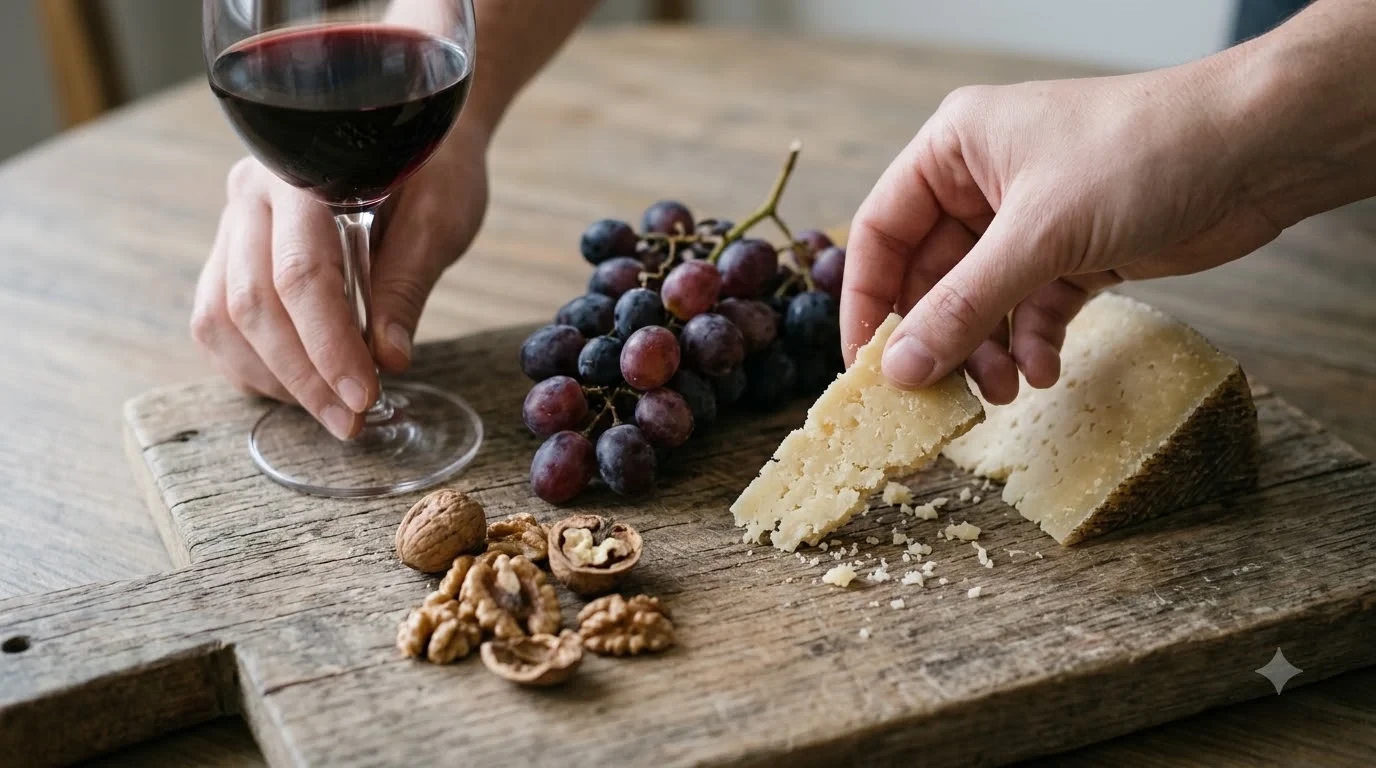
Primitivo pairs well with medium-aged and aged cheeses, particularly those with concentrated savory flavors and enough fat to soften the wine’s tannins. Pecorino, provolone, Asiago, and Grana Padano are useful choices for a cheese board.
Pecorino is particularly appropriate because sheep’s milk cheese is closely associated with Italian food traditions. Younger pecorino tends to have a softer, creamier texture, while aged examples become firmer, saltier, and more concentrated. The latter generally provide a stronger match for a full-bodied Primitivo.
Provolone is another flexible choice. Aged provolone offers a firm texture and more pronounced savory character, making it suitable alongside ripe red fruit flavors. Asiago and Grana Padano also work well, especially when served in small pieces rather than as part of a delicate cheese preparation.
For a balanced board, combine two or three cheeses with cured meats, olives, roasted peppers, and crusty bread. Prosciutto, salami, and fennel-seasoned sausage introduce salt and fat that help soften the wine’s tannin. Olives add a savory element, while roasted peppers reinforce the wine’s ripe fruit character.
Building a Simple Appetizer Board
A practical serving arrangement could include the following ingredients:
- Aged pecorino or Grana Padano for firm, savory flavors.
- Aged provolone for a slightly sharper cheese option.
- Italian salami or prosciutto for salt and richness.
- Roasted red peppers and marinated mushrooms for vegetable depth.
- Olives, toasted bread, and rosemary crackers for additional texture.
Avoid making the board entirely from very mild cheeses. Fresh mozzarella and young ricotta can be delicious, but their delicate flavors may be overshadowed by a concentrated Primitivo. If serving softer cheeses, include roasted vegetables, cured meats, or a tomato-based accompaniment to create a more balanced combination.
For a larger Italian-inspired meal, a board of cured meats and aged cheeses can serve as the opening course before roast lamb, baked pasta, or grilled beef. This creates a consistent progression of flavors rather than introducing a delicate appetizer before a powerful wine.
Serving Temperature and Practical Pairing Tips
Primitivo is generally best served slightly cooler than a typical warm room, around 60-65°F for a full-bodied red. This temperature helps retain the wine’s fruit character and keeps its alcohol from dominating the overall impression.
Some producer recommendations specify 18-20°C, approximately 64-68°F. However, a slightly cooler serving temperature can be helpful in a warm dining room. If the bottle has been stored at ordinary room temperature, place it in the refrigerator briefly before serving rather than pouring it immediately.
A standard 750 ml bottle provides approximately five 5-ounce glasses. For a dinner with four people, this allows each guest a generous initial serving with some wine remaining for a second pour. A larger red-wine glass is useful because it provides enough room for the aromas to develop.
Young, particularly concentrated Primitivo may benefit from 30-60 minutes of decanting. Exposure to air can help the wine’s aromas become more expressive and soften the initial impression of a powerful red. Older bottles require more care because prolonged aeration can diminish delicate developed aromas.
| Food or preparation | Pairing suitability | Why it works |
|---|---|---|
| Grilled ribeye | Excellent | Fat and char complement ripe fruit and tannin. |
| Roast lamb | Excellent | Herbs and savory meat match the wine’s intensity. |
| Beef Bolognese | Excellent | Tomato and meat create a rich, savory combination. |
| Pepperoni pizza | Very good | Cheese, tomato, and cured meat match the wine’s body. |
| Eggplant Parmesan | Very good | Roasted vegetables and tomato provide depth. |
| Aged pecorino | Very good | Salt, fat, and concentrated cheese flavors balance tannin. |
| Mushroom risotto | Good | Earthy mushrooms complement the wine’s savory notes. |
| Light white fish | Less suitable | The wine’s body and alcohol can overwhelm delicate flavors. |
These ratings are practical guidelines rather than strict rules. A lighter Primitivo from a fresher growing area may work with dishes that would be overwhelmed by a more concentrated Primitivo di Manduria. Similarly, oak aging, ripeness, and alcohol level can influence how a particular bottle performs with food.
Tip: If you are unsure what to serve, choose grilled or roasted meat with rosemary, garlic, and olive oil. These familiar ingredients provide a dependable match for Primitivo’s ripe fruit, medium tannins, and full body. For a vegetarian alternative, use roasted eggplant and a rich tomato sauce.
Foods and Flavors to Approach Carefully
Not every dish works equally well. Delicate white fish, lightly seasoned shellfish, and subtle vegetable preparations can be overwhelmed by Primitivo’s body and alcohol. Oily fish can also clash with tannic red wines, creating an unpleasant metallic or drying impression.
Very spicy food deserves caution as well. Chili heat can become more pronounced alongside alcohol and tannin. If you are serving spicy sausage, barbecue, or pepper-based dishes, choose moderate seasoning and emphasize herbs, smoky flavors, and savory ingredients instead of intense chili heat.
Highly acidic sauces may also create an imbalance if the wine has relatively modest acidity. A tomato sauce is not automatically a problem, particularly when it includes meat, olive oil, or slow-cooked vegetables. The goal is to avoid a dish whose sharpness completely overwhelms the wine.
For a comparison with another concentrated Italian red, Amarone food pairing offers useful ideas for rich meat dishes and aged cheeses. Amarone is generally more concentrated and often has a different balance of alcohol, fruit, and texture, so the two wines should not automatically be treated as interchangeable.
Frequently Asked Questions
Is Primitivo the same grape as Zinfandel?
Yes. DNA research established that Primitivo and Zinfandel are genetically identical, with Tribidrag being another historical name associated with the variety in Croatia. The grape has a much longer history in the Adriatic region than its modern American popularity might suggest.
Is Primitivo always a dry red wine?
No. Although most everyday Primitivo bottlings are dry reds, the grape can also produce sweet wines. Primitivo di Manduria Dolce Naturale DOCG is a notable example, made using concentrated grapes that develop additional sugar through drying.
What does Primitivo mean in Italian?
Primitivo refers to the grape’s early ripening behavior. The name is derived from the Latin word associated with being first or early. This characteristic helps explain why the variety is particularly suited to the growing conditions of southern Italy.
Does Primitivo have a connection to Croatian wine history?
Yes. The variety is associated with Croatian grape names including Tribidrag and Crljenak Kaštelanski. Its genetic connection to these varieties provides evidence of a historical link between grape-growing traditions on both sides of the Adriatic Sea.
What is Primitivo di Manduria Riserva?
Riserva is a regulated designation for a more extensively aged version of Primitivo di Manduria. Its production rules require at least 24 months of aging, including a minimum of 9 months in wood, and a minimum alcohol level of 14% ABV. These requirements distinguish it from the standard dry DOC bottling.
Primitivo is one of the most versatile bold Italian reds for meals built around grilled meats, tomato sauces, roasted vegetables, and aged cheeses. Start with a classic combination such as roast lamb or Bolognese, then explore regional Puglian recipes to discover additional matches. Serve the wine around 60-65°F and choose dishes with enough savory richness to complement its generous fruit and full-bodied character.
More in Food & Wine Pairing
 Risotto With White Wine Recipe: Make a Creamy Dinner at HomeUpdated Nov 20, 2026
 Wassail With Wine Recipe for a Festive Spiced Holiday DrinkUpdated Nov 20, 2026
 Spritz Veneziano Recipe: Make a Classic Venetian Aperitivo at HomeUpdated Nov 20, 2026
 Summer Wine Punch Recipe for Easy Homemade EntertainingUpdated Nov 20, 2026
 Bishop Recipe: How to Make a Bright, Citrus-Forward Red Wine CocktailUpdated Nov 20, 2026
 Wine Cupcakes Recipe: Bake Rich Chocolate Cupcakes at HomeUpdated Nov 20, 2026