

We may earn a commission when you buy through links on this page, at no extra cost to you. Learn more.
Petite Sirah vs Shiraz: Petite Sirah is a distinct grape variety called Durif, while Shiraz is another name for Syrah, and the two produce noticeably different red wines. Petite Sirah typically delivers exceptionally deep color, firm tannins, concentrated blueberry, and dark chocolate flavors. Shiraz ranges from peppery, savory, medium-bodied wines to rich, full-bodied reds with ripe blackberry, licorice, and spice. Your choice depends on whether you prefer powerful tannic structure or a more varied balance of fruit, spice, and texture.
Petite Sirah and Shiraz can look remarkably similar in the glass. Both produce dark-colored red wines, both can have substantial alcohol and body, and both work well with hearty meals. However, their genetic identities, growing regions, and typical winemaking styles set them apart. Understanding these differences makes it easier to select a bottle for dinner, compare tasting notes, or decide which grape deserves a place in your wine collection.
Petite Sirah and Shiraz Have Different Grape Identities
The most important distinction is that Petite Sirah and Shiraz are not two names for the same grape. Petite Sirah is primarily associated with Durif, a French crossing involving Syrah and Peloursin, while Shiraz is simply the Australian name for Syrah. Their shared genetic connection explains some similarities in flavor and color, but their identities remain separate.
Petite Sirah originated in southeastern France during the 1860s. French botanist François Durif propagated the variety, which became known by his surname. DNA research subsequently identified Peloursin as its female parent and Syrah, also known as Shiraz, as its male parent. This makes Petite Sirah a relative of Shiraz rather than a synonym or smaller version of the same grape.
The name Petite Sirah became established in California after the grape arrived in the late nineteenth century. The spelling is important: Petite Sirah is the conventional American name, while Durif is the name commonly used in Australia. Although Petite Syrah appears in some historical references, it is not the standard spelling for the American variety.
Shiraz, meanwhile, is genetically identical to Syrah. The grape originated in France, and its parent varieties are Dureza and Mondeuse Blanche. French producers generally use the name Syrah, particularly in the Northern Rhône, while Australian producers popularized Shiraz as the name for their distinctive expressions of the grape.
According to Decanter’s explanation of Syrah and Shiraz, the naming distinction often communicates regional style rather than genetic differences. A bottle labeled Shiraz from Australia’s Barossa Valley is made from the same grape as a Northern Rhône Syrah, although climate and winemaking can create very different results.
For additional comparisons between related grapes, the Wine vs Wine section provides a useful starting point for understanding how grape identity, growing conditions, and winemaking affect the finished wine.
Flavor Profiles: Blueberry, Blackberry, Pepper, and Chocolate
Petite Sirah typically tastes darker, denser, and more concentrated than many Shiraz wines. Its characteristic flavors include blueberry, blackberry, dark plum, and dark chocolate, supported by pepper and earthy notes. Shiraz generally offers a broader range of expressions, from black pepper and fresh blackberry to ripe plum, licorice, and sweet spice.

Petite Sirah is particularly recognizable for its combination of dark fruit and substantial structure. The wine often has an almost opaque purple-black appearance. Blueberry and blackberry flavors can seem concentrated, while dark chocolate, espresso, and black pepper contribute complexity. Some examples also show herbal or earthy characteristics that become more noticeable as the wine develops in the glass.
Shiraz has a more climate-sensitive flavor profile. Cooler-climate Syrah from places such as France’s Northern Rhône often emphasizes blackberry, black pepper, violet, olive, and savory herbs. The fruit may taste fresher and less jammy, and the overall impression can be more restrained than a warm-climate Australian Shiraz.
Warm-climate Shiraz from Australia’s Barossa Valley and McLaren Vale often presents ripe blackberry, plum, licorice, and baking spice. Depending on ripeness and oak treatment, it may also show vanilla, chocolate, or roasted coffee. These wines frequently feel richer and more generous on the palate.
Oak aging can influence both varieties. American oak may introduce vanilla, coconut, and sweet spice, while French oak can contribute more restrained toast, cedar, and baking-spice notes. The degree of oak influence depends on the producer’s choices rather than the grape name alone.
Tip: When comparing these wines, smell them before tasting. Petite Sirah often announces itself through concentrated blueberry and dark chocolate, while Shiraz may show a more recognizable combination of blackberry, black pepper, and savory spice.
For a useful comparison, serve a California Petite Sirah beside a Barossa Shiraz. Both may have deep color and ripe fruit, but the Shiraz will often feel more immediately generous, while the Petite Sirah may leave a firmer impression on the gums.
Body, Tannins, Acidity, and Alcohol Differences
Both varieties can produce full-bodied red wines, but Petite Sirah is particularly associated with powerful tannins and concentrated texture. Shiraz ranges from medium- to full-bodied, with tannins and alcohol varying according to climate, grape ripeness, and winemaking. Petite Sirah generally feels more structurally forceful, while Shiraz offers greater stylistic flexibility.
Tannins are natural compounds extracted from grape skins, seeds, and sometimes oak. They create the drying, gripping sensation that can make a red wine feel firm. Petite Sirah is known for high tannin levels, partly because its small berries have a relatively high skin-to-juice ratio. This allows considerable color and tannin extraction during fermentation.
Shiraz also has meaningful tannin, typically ranging from medium-plus to high. Northern Rhône Syrah often combines structured tannins with noticeable acidity, whereas warm-climate Shiraz can have softer-feeling tannins despite substantial body and alcohol. The difference is especially apparent when comparing a restrained Saint-Joseph Syrah with a ripe Barossa Shiraz.
Acidity contributes freshness and helps balance concentrated fruit. Petite Sirah generally has moderate acidity, although individual wines vary. Syrah and Shiraz can show medium to medium-plus acidity, with cooler-climate examples often feeling fresher and more energetic. Neither grape should automatically be described as sweet simply because its fruit flavors are ripe.
Alcohol levels also vary. Warm growing conditions and fully ripe grapes can produce higher-alcohol wines, particularly in parts of Australia and California. Petite Sirah from warm California vineyards may feel especially powerful because concentrated fruit, firm tannins, and alcohol combine in a dense palate.
The following figures are practical style comparisons rather than fixed legal specifications. Actual values depend on the vineyard, vintage, harvest decisions, and fermentation.
| Characteristic | Petite Sirah | Shiraz |
|---|---|---|
| Grape identity | Durif | Syrah |
| Body | Full | Medium to full |
| Tannin | High | Medium-plus to high |
| Acidity | Moderate | Medium to medium-plus |
| Typical color | Deep purple-black | Deep ruby to purple |
| Common fruit flavors | Blueberry, blackberry, plum | Blackberry, plum, black cherry |
| Common secondary flavors | Dark chocolate, espresso | Black pepper, licorice, vanilla |
| Typical alcohol range | About 14–15.5% ABV | About 13–15.5% ABV |
| Serving temperature | 60–65°F | 60–65°F |
| Decanting guideline | 30–60 minutes for young, full-bodied examples | 30–60 minutes when young and concentrated |
The alcohol ranges in this comparison are indicative rather than universal. Lighter Syrah styles can fall below the stated Shiraz range, while particularly ripe examples of either grape may exceed it. The most useful comparison is the wine’s actual balance of fruit, alcohol, acidity, and tannin rather than a single number.
Growing Regions and Regional Wine Styles
California is the leading association for American Petite Sirah, while Australia is particularly important for Durif and Shiraz. The Northern Rhône remains a reference point for traditional Syrah, and Australia’s Barossa Valley and McLaren Vale are recognized for expressive Shiraz. Regional climate and vineyard conditions have a major influence on the character of both wines.
In California, Petite Sirah is grown in regions including Lodi, Paso Robles, Napa Valley, Livermore Valley, Sonoma County, and the Sierra Foothills. These areas offer different combinations of temperature, elevation, and soil conditions, allowing producers to create everything from fruit-forward wines to concentrated, age-worthy bottlings.
Wine Enthusiast identifies Petite Sirah as an important California red variety, noting that it ranked sixth among the state’s most widely planted red-wine varieties in 2021, with more than 11,000 acres. Although the grape is sometimes blended with other varieties, it also has an established identity as a standalone wine.
Australia has an interesting relationship with Petite Sirah because the grape is generally known there as Durif. It was introduced to Rutherglen in 1908 by François de Castella. The Australian Wine Research Institute identifies Rutherglen, Riverina, and Barossa Valley among the country’s important Durif-growing regions.
Rutherglen Durif is especially associated with deeply colored, structured red wine. Riverina also produces Durif, while Barossa Valley is better known internationally for its Shiraz. Australian Durif can offer a useful alternative for American drinkers who enjoy California Petite Sirah but want to explore a different regional expression.
Shiraz has an equally broad international footprint. Australia’s Barossa Valley and McLaren Vale are associated with ripe, powerful expressions, while France’s Northern Rhône provides a more savory reference point. In the United States, Washington State also produces Syrah with its own regional character, including wines from the Walla Walla Valley.
These regional differences explain why choosing Shiraz does not automatically mean choosing an extremely ripe, heavy wine. A cooler-climate Syrah can be noticeably more restrained than a warm-climate Australian Shiraz, even though both use the same grape.
Food Pairings: Steak, Barbecue, and Rich Dishes
Petite Sirah is especially well suited to fatty, richly flavored foods that can soften its substantial tannins. Shiraz is more versatile across grilled meats, roasted vegetables, spiced dishes, and savory meals. Both pair naturally with beef and lamb, but the intensity of the food should match the wine’s body and tannin.
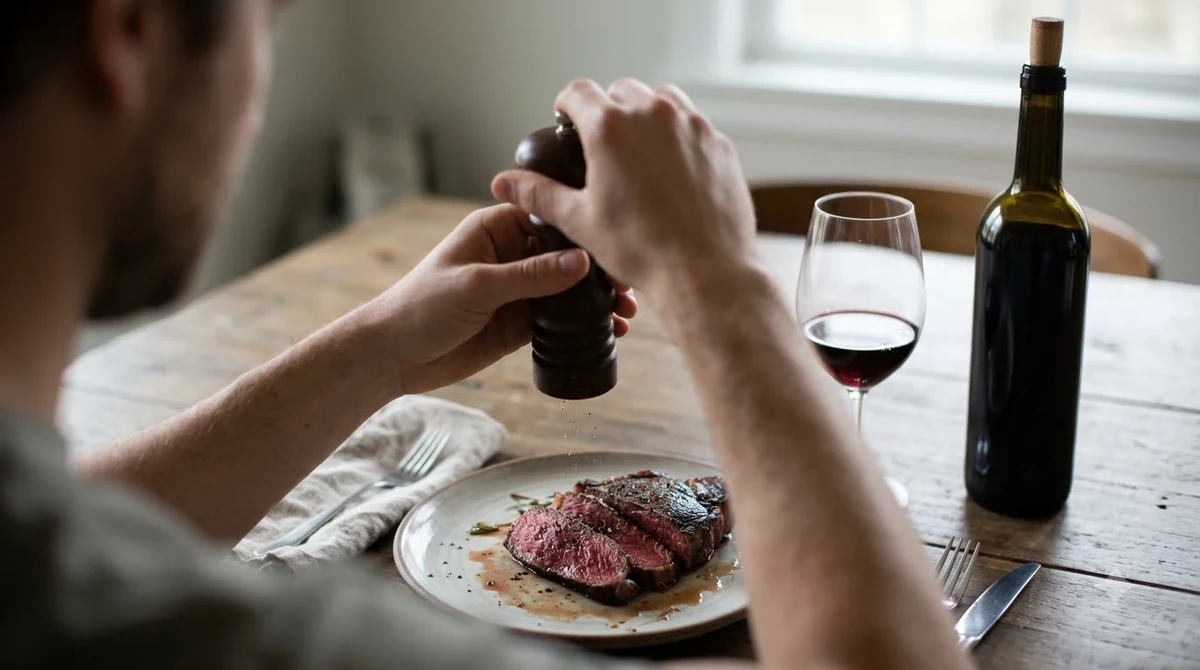
Petite Sirah works particularly well with grilled ribeye, smoked brisket, beef short ribs, and slow-cooked lamb. Fat and protein help soften the perception of tannin, making the wine feel less drying. Concentrated dark fruit also complements the roasted, smoky, and caramelized flavors that develop during grilling.
For barbecue, Petite Sirah is a strong match for smoked beef brisket with a pepper-based rub or grilled sausages with herbs. It can also accompany burgers topped with aged cheddar. Avoid overly sweet barbecue sauces if the wine is particularly tannic and dry, since a sugary sauce can make the wine seem more bitter by comparison.
Shiraz offers excellent flexibility. A warm-climate Barossa Shiraz pairs well with grilled lamb, barbecue ribs, and pepper-crusted steak. Cooler-climate Syrah is often a better choice for roast duck, herb-roasted chicken, mushroom dishes, and lamb with rosemary because its savory character can complement these foods without overwhelming them.
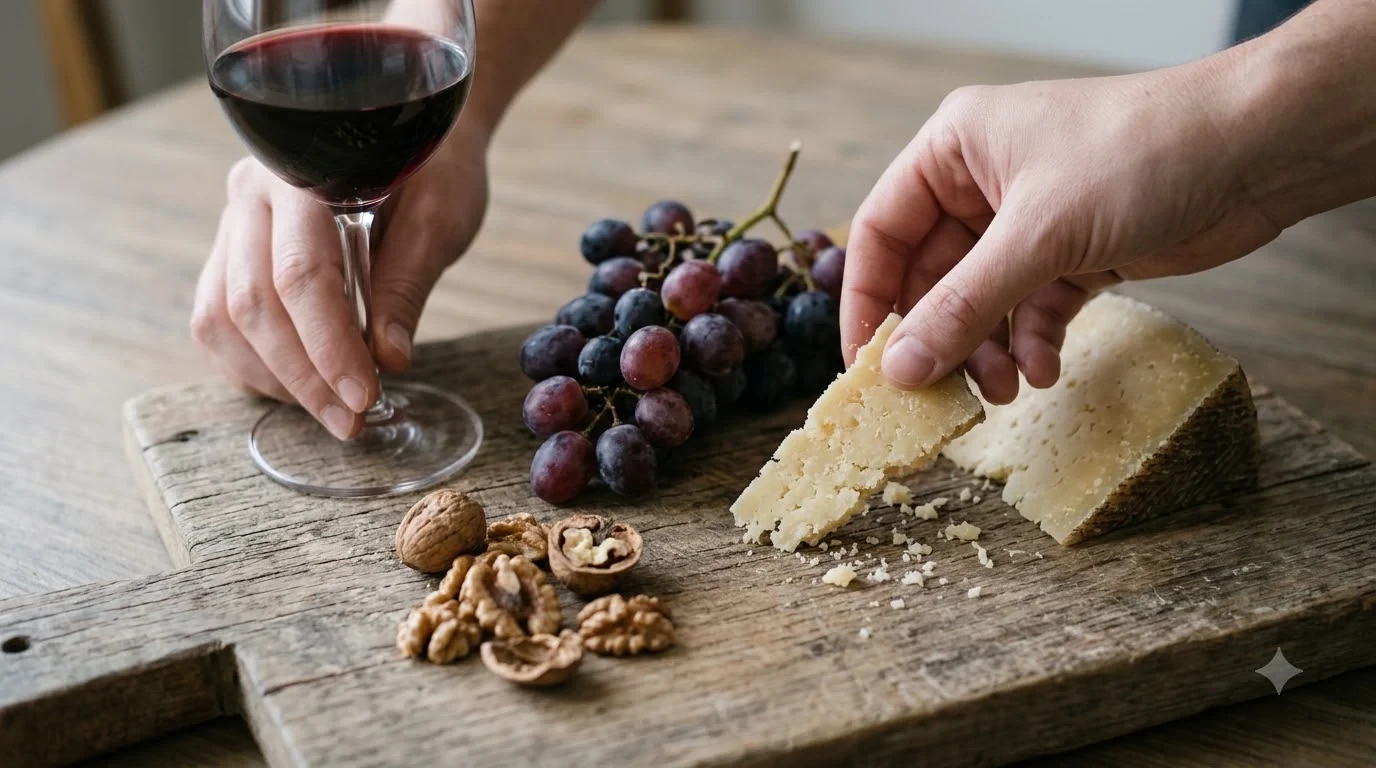
Both wines can work with hard cheeses. Aged cheddar, Gouda, and mature Parmesan provide savory intensity and fat that complement concentrated red wine. For a cheese board, Petite Sirah suits strongly flavored aged cheeses, while Shiraz can accommodate a broader range of roasted and herbal accompaniments.
Spice requires some care. Black pepper and mild seasoning can complement both wines, but very hot chili can make alcohol feel more pronounced. A high-alcohol Shiraz or tannic Petite Sirah may therefore be uncomfortable with extremely spicy food. For chili-heavy meals, a softer, fruit-forward Shiraz is generally the more accommodating choice.
Oily fish is usually a difficult match for these tannic reds. If serving salmon, tuna, or another substantial fish, a less tannic wine or a suitable white wine will often produce a better result. A lightly seasoned mushroom or vegetable dish is another way to enjoy either red without requiring a heavy meat course.
Serving Temperature, Decanting, and Aging Potential
Petite Sirah and Shiraz benefit from thoughtful serving temperatures and aeration, particularly when they are young and concentrated. Serve full-bodied examples around 60–65°F, and consider decanting young, tannic bottles for 30–60 minutes. Both varieties can age, although Petite Sirah is especially known for its ability to develop over extended bottle maturation.
Serving red wine too warm can emphasize alcohol and make the wine seem heavy. Serving it too cold can suppress aromas and make tannins feel harder. A temperature of approximately 60–65°F is a practical target for full-bodied Petite Sirah and Shiraz. If the bottle has been stored at room temperature in a warm home, a short period in the refrigerator can help bring it closer to the ideal range.
Decanting introduces oxygen and allows a wine’s aromas to open. Young Petite Sirah can benefit from 30–60 minutes of aeration, especially when its tannins initially seem aggressive. Young, concentrated Shiraz can benefit from similar treatment, although lighter Syrah styles may need less time.
Older wines require more care. Extended aeration is not automatically beneficial, since mature wine can lose its delicate aromas relatively quickly after opening. If sediment has formed in an older bottle, carefully decanting the wine away from the sediment can improve the serving experience without unnecessary exposure to air.
Petite Sirah has considerable aging potential. Traditional, tannic examples can need 10 or more years for their structure to soften, and well-made bottles may continue developing beyond that period. Dark fruit can gradually evolve toward dried berries, leather, tobacco, and savory notes.
Shiraz also ages well, especially examples with concentrated fruit, balanced acidity, and firm tannins. Premium Australian Shiraz and structured Northern Rhône Syrah can develop complexity over many years. However, not every Shiraz is designed for long-term cellaring; approachable, fruit-forward examples are often best enjoyed relatively young.
For storage, keep bottles on their sides when they have natural cork closures, in a cool, dark environment near 55°F with reasonably stable conditions. Avoid direct sunlight and frequent temperature changes. A consistently cool storage space is more useful than trying to maintain an exact temperature while allowing large daily fluctuations.
Once opened, both wines generally keep for approximately 3–5 days in the refrigerator when properly recorked. Allow the wine to warm slightly before serving again. A vacuum stopper can help limit oxygen exposure, although the wine’s aromas and fruit may gradually become less expressive.
Which Wine Should You Choose?
Choose Petite Sirah if you prefer deep color, powerful tannins, concentrated dark fruit, and a substantial palate. Choose Shiraz if you want more flexibility, with styles ranging from peppery and savory to ripe, rich, and full-bodied. The best choice depends on your preferred texture, meal, and interest in regional wine styles.
Petite Sirah is particularly appealing to drinkers who enjoy Cabernet Sauvignon but want a different dark-fruit profile. Both can have firm tannins, but Petite Sirah often combines its structure with blueberry, dark chocolate, and a dense mouthfeel. If you enjoy wines that leave a lasting drying sensation and work well with fatty red meat, Petite Sirah deserves consideration.
Shiraz is a better starting point for someone who wants to explore different expressions of one grape. A Northern Rhône Syrah provides pepper, herbs, and savory depth, while an Australian Shiraz can deliver ripe blackberry, plum, and licorice. You can move between these styles without changing grape varieties.
Petite Sirah is also worth considering if you enjoy powerful red blends. Its deep color and tannin make it a useful blending partner for grapes with softer structure. For another comparison involving a dark, structured red variety, explore Petit Verdot vs Petite Sirah.
Drinkers who prefer fruit-forward wines with a softer impression may also enjoy exploring Zinfandel. California Zinfandel can share ripe blackberry and plum flavors with Petite Sirah, although its typical tannin structure and fruit expression differ. The comparison in Petite Sirah vs Zinfandel explains how these two California favorites compare.
There is no universal winner. Petite Sirah is the more obvious choice for concentrated tannic power, while Shiraz is the more flexible option for exploring different climates and winemaking traditions. If you enjoy lighter reds, another useful comparison is Petite Sirah vs Pinot Noir, which highlights just how different red wines can be in body and tannin.
For a straightforward first comparison, select one California Petite Sirah and one Australian Shiraz from similar quality levels. Serve them at the same temperature, use identical glasses, and taste them alongside grilled beef. Comparing the wines under the same conditions will make their differences in tannin, fruit concentration, and texture much easier to recognize.
Frequently Asked Questions
Is Petite Sirah the same as Durif?
Yes, Petite Sirah is the established American name for Durif. The names refer to the same grape variety in modern usage, although historical California vineyards sometimes included other varieties under the Petite Sirah name. Australian producers generally favor the name Durif.
Is Petite Sirah related to Cabernet Sauvignon?
No, Petite Sirah is not a parent or offspring of Cabernet Sauvignon. Its identified parents are Peloursin and Syrah. The two wines can seem similar because both can produce dark, tannic reds, but their grape ancestry is different.
Can Petite Sirah be used to make dessert wine?
Yes. Petite Sirah can be used to make Port-style wines as well as dry reds. These richer styles can retain concentrated dark-fruit flavors and provide a different expression of the grape. A sweet version should generally be served with a dessert that is no sweeter than the wine.
Why is Petite Sirah called petite if it makes such a powerful wine?
The name refers to the grape’s relatively small berries, not the size or intensity of the finished wine. Smaller berries provide a higher proportion of skin relative to juice, helping produce deep color and substantial tannin. This is one reason the variety can create such concentrated red wines.
Can Shiraz be blended with other grape varieties?
Yes. Shiraz is frequently blended with Grenache and Mourvèdre, particularly in southern French-inspired and Australian red blends. These varieties can contribute different combinations of fruit, spice, body, and texture. Shiraz may also be bottled as a single-variety wine.
Petite Sirah and Shiraz share a genetic connection but offer distinct experiences in the glass. Petite Sirah is the choice for deep color, concentrated dark fruit, and powerful tannins, while Shiraz offers everything from peppery elegance to rich Australian fruit. Try both alongside a hearty meal to discover which structure and flavor profile best suits your palate.
More in Wine vs Wine
 Chenin Blanc vs Pinot Gris: Acidity, Body, and Pairing DifferencesUpdated Nov 20, 2026
 Chianti vs Lambrusco: How Tuscany and Emilia-Romagna Reds CompareUpdated Nov 20, 2026
 Chianti vs Primitivo: Key Differences in Taste, Body, and PairingUpdated Nov 20, 2026
 Chianti vs Rioja: Key Differences in Taste, Aging, and PairingUpdated Nov 20, 2026
 Chianti vs Shiraz: How Acidity, Body, and Food Pairings CompareUpdated Nov 20, 2026
 Chianti vs Syrah: Key Differences in Taste, Body, and Food PairingUpdated Nov 20, 2026